Electric

Electric, Sports Car, News

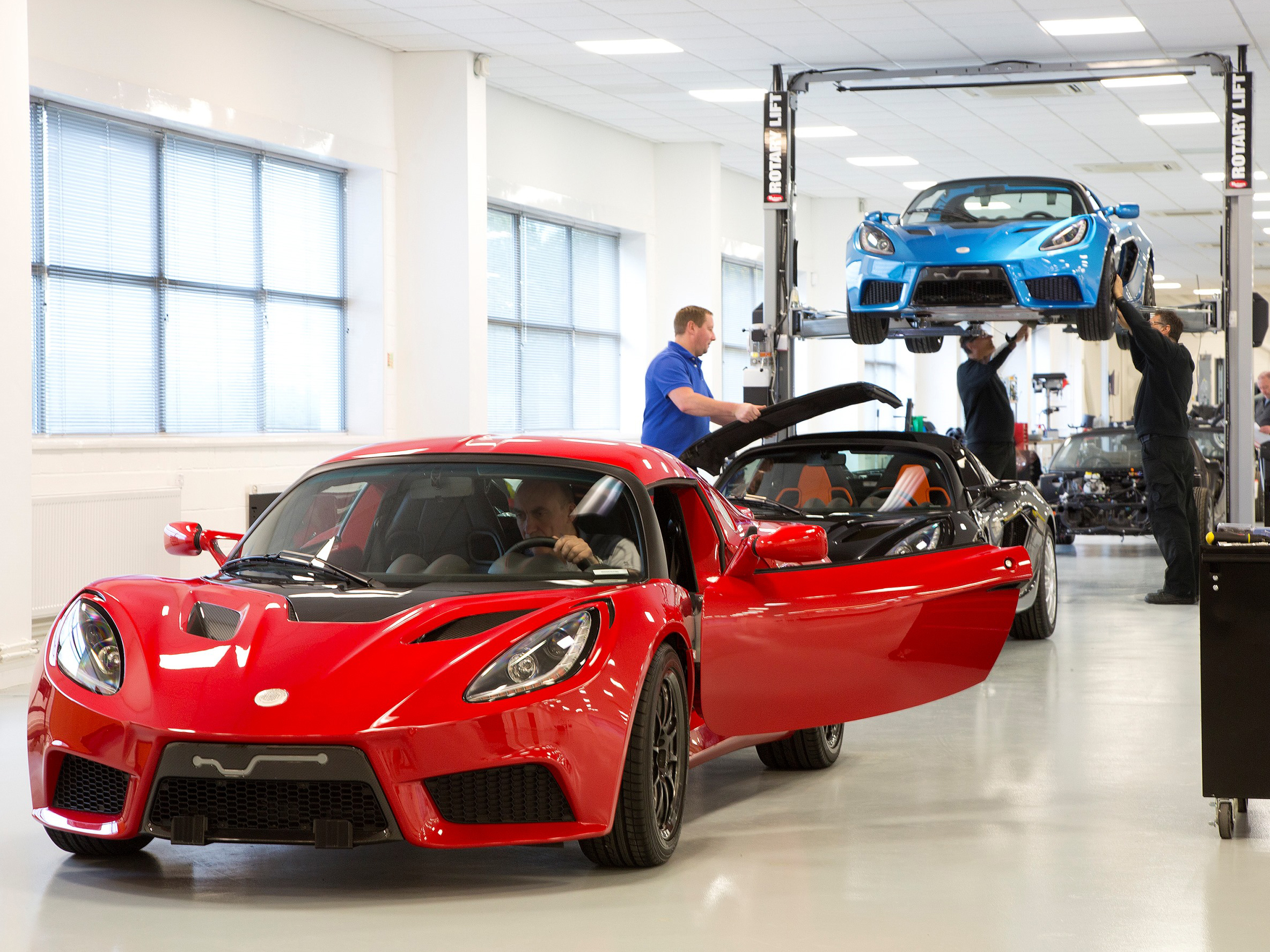
First Detroit Electric SP:01 leaves factory

The first Detroit Electric sports car has rolled off the production line.

The SP:01 is described as the 'lightest and fastest two-seat pure-electric sports car in the world', and is manufactured in Leamington Spa.

The lightweight SP:01, which goes on sale in Asia and Europe over the coming weeks, combines a carbon fibre body with an aluminium chassis and features a 0-60mph time of 3.7 seconds, with the 6-speed manual, and a top speed of 155mph.

Powered by a 285HP / 210kW electric motor, the car is fitted with a single-speed automatic transmission as standard, with the option of twin-speed automatic or the 6-speed manual transmissions.

Albert Lam, Chairman and Group CEO of Detroit Electric commented: "We are thrilled to see our first production car roll off the line at our UK manufacturing site. Our first customer is sure to appreciate the unique experience of driving the SP:01 as we've worked hard to develop technologies that ensure it is one of the most rewarding pure electric sports cars to drive.

"Seeing our vision realised is hugely satisfying and we can now focus on fulfilling a growing bank of orders. As our production process builds momentum, we look forward to providing this unique electric sports car to our customers all over the world," he added.

Detroit Electric describes the battery as the most 'energy-dense automotive battery pack in the world', offering over 140Wh/kg and comes with built-in bi-directional charge and discharge capability. Made possible via the Detroit Electric home charging and power back-up unit - named '360-Powerback' - the unit turns the vehicle into a power source for both the grid and the home.

Pricing for the Detroit Electric SP:01 will be announced shortly.
News, Electric, Saloon

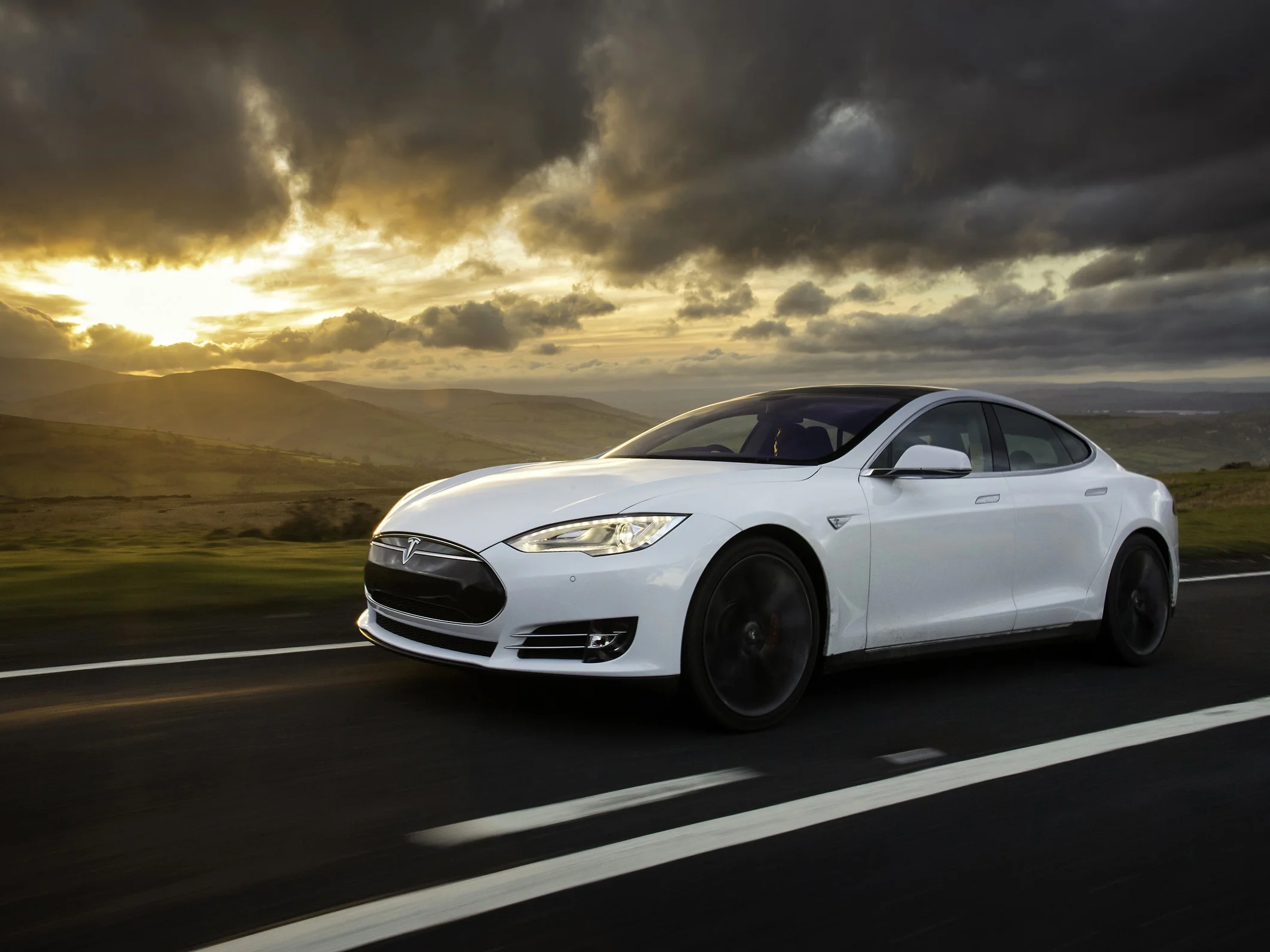
Tesla Model S Software update adds Autopilot

Tesla has released a software update - Version 7.0 - with new Autopilot capabilities.

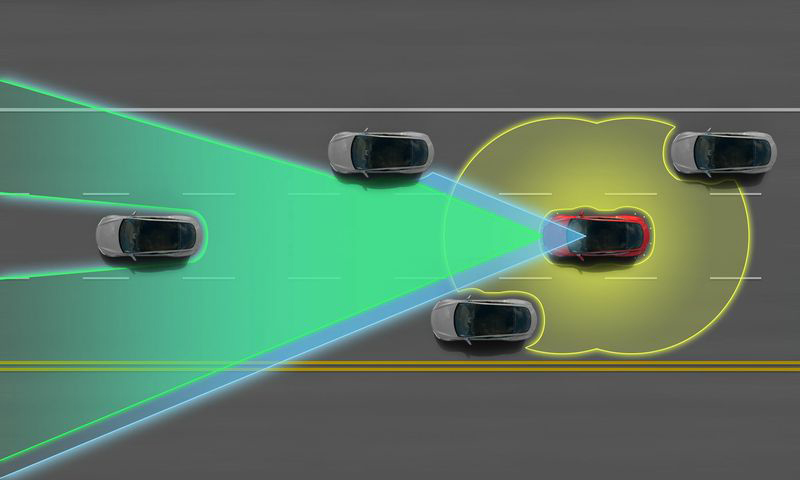
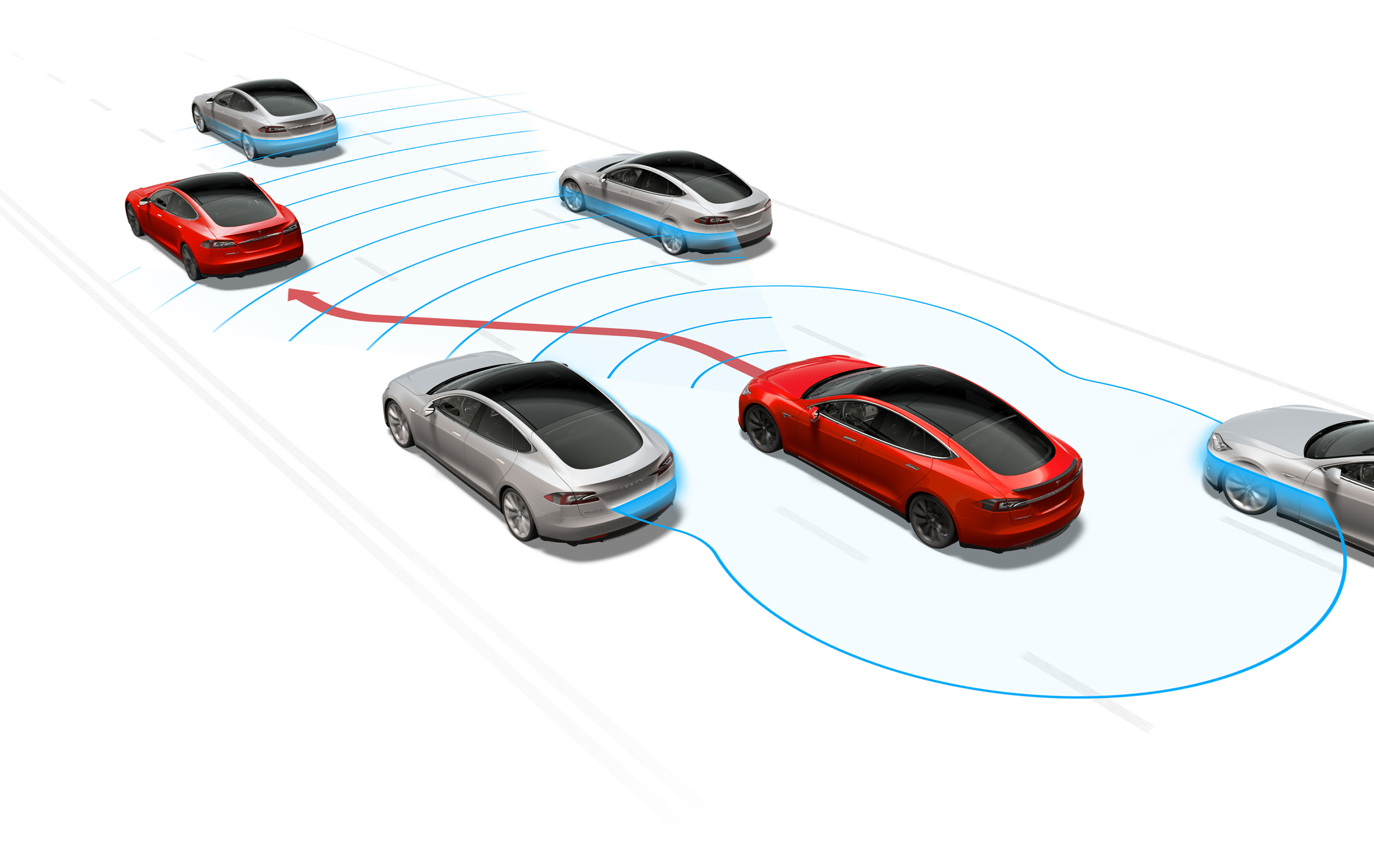
Designed to 'keep getting better over time', the latest software update allows the Model S to use its combination of cameras, radar, ultrasonic sensors, and data to autonomously steer down the motorway, change lanes, and adjust speed in response to traffic. Once you've arrived at your destination, the Model S will also scan for a parking space and parallel park on your command.

Tesla says its commitment to 'developing and refining' the technologies to enable self-driving capability is a core part the brands mission, 'building Autopilot to give you more confidence behind the wheel'.

In October of last year Tesla started equipping the Model S with hardware to allow for the incremental introduction of self-driving technology: a forward radar, a forward-looking camera, 12 long-range ultrasonic sensors positioned to sense 16 feet around the car in every direction at all speeds. A high-precision digitally-controlled electric assist braking system was also added.

The Version 7.0 software release allows those tools to deliver a range of new active safety and convenience features, designed to work in conjunction with the automated driving capabilities already offered in Model S.

Tesla says this combined suite of features 'represents the only fully integrated autopilot system involving four different feedback modules', namely camera, radar, ultrasonics, and GPS. These mutually reinforcing systems offer realtime data feedback from the Tesla fleet, 'ensuring that the system is continually learning and improving upon itself'. Digital control of motors, brakes, and steering helps avoid collisions from the front and sides, as well as preventing the car from wandering off the road.

The new software update also features a significant visual refresh of the digital displays for the Model S.

Hybrid, News, Electric, Saloon

Volvo details electric car strategy

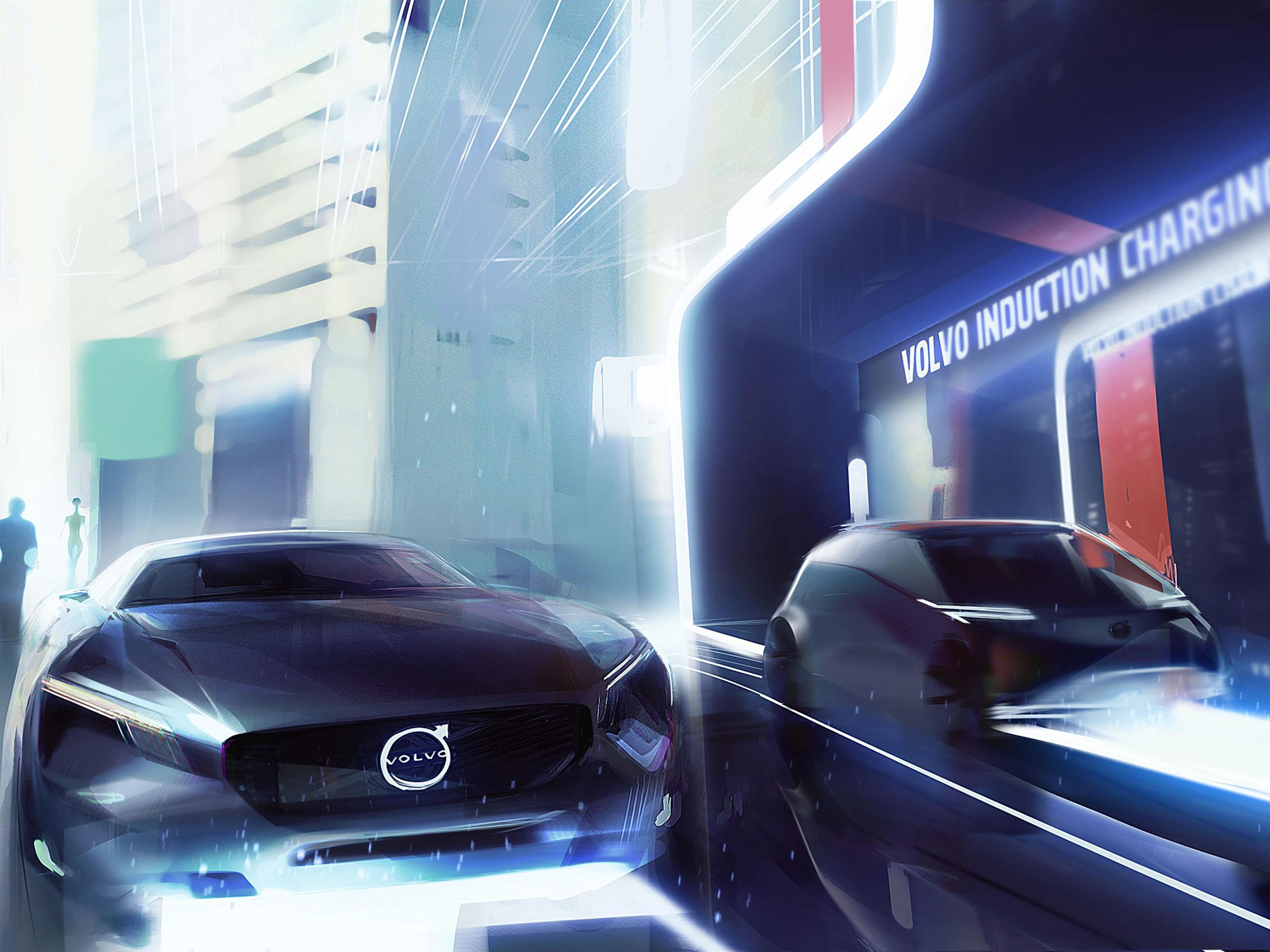
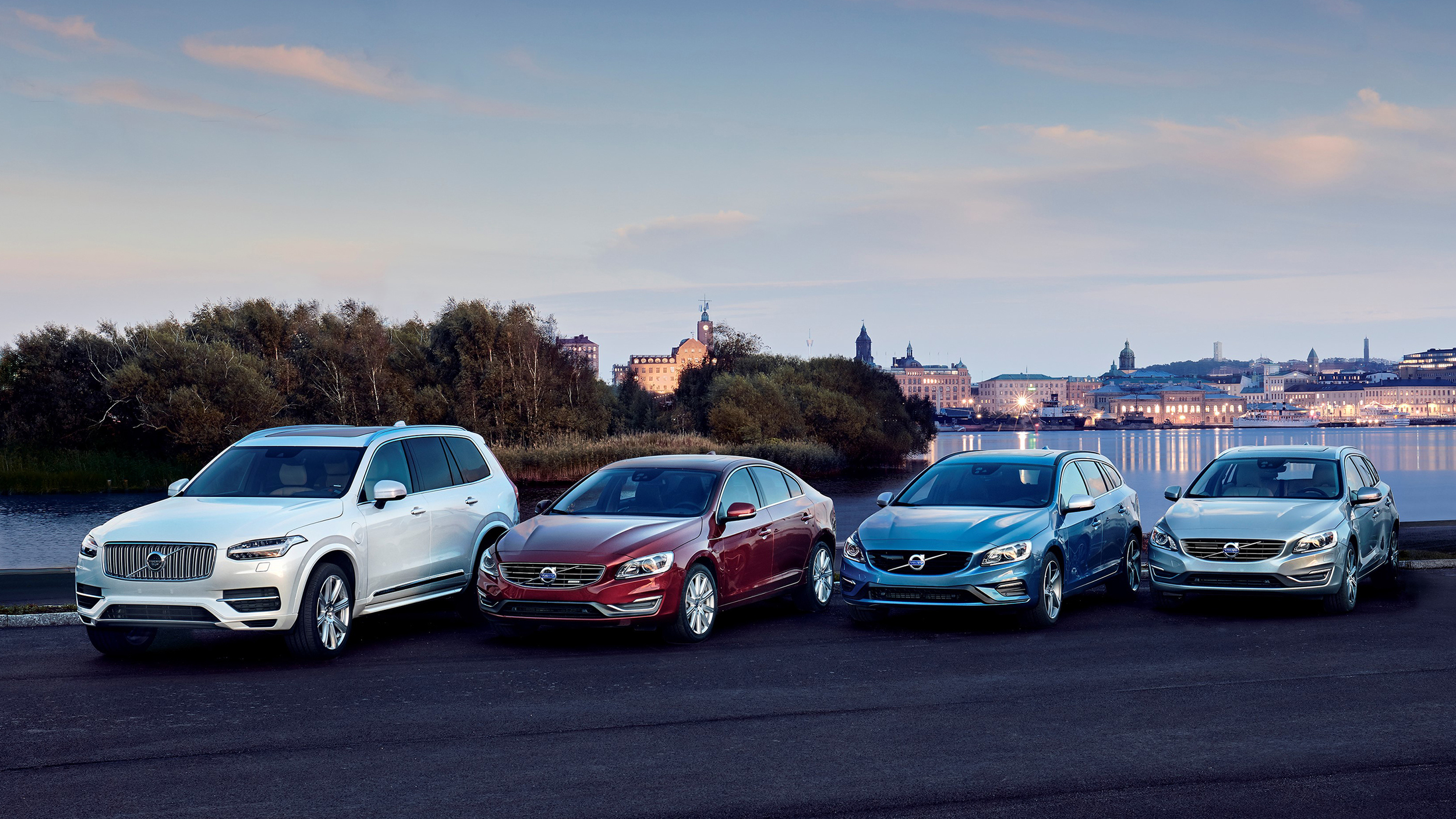
Volvo has announced a comprehensive electrification strategy in which plug-in hybrids will be introduced across its entire range.

The Swedish car maker will develop an entirely new range of electrified smaller cars and build a fully electric car for sale by 2019. Volvo says it expects electrified vehicles to account for up to 10 per cent of total car sales in the medium term.

The first phase of the new electrification strategy involves the introduction of plug-in hybrid versions of its 90 series and 60 series larger cars, based on the company's new Scalable Product Architecture (SPA). This process has already begun with the launch of the T8 Twin Engine All-Wheel Drive plug-in hybrid version of its new XC90 SUV and will continue with plug-in hybrid versions of the new S90 premium saloon and other forthcoming models.

Volvo will also broaden the range of plug-in hybrid cars it offers with the introduction of a new front-wheel drive Twin Engine variant.

The Swedish car maker will further deepen its product offering with the introduction of an entirely new range of smaller 40 series cars based on its newly-developed Compact Modular Architecture (CMA) which, like the SPA, has been designed from the outset for electrification.

Further details of the all-electric car for 2019 will be released at a later date.

Electric, Hybrid, Hydrogen Fuel Cell Car, News, Saloon

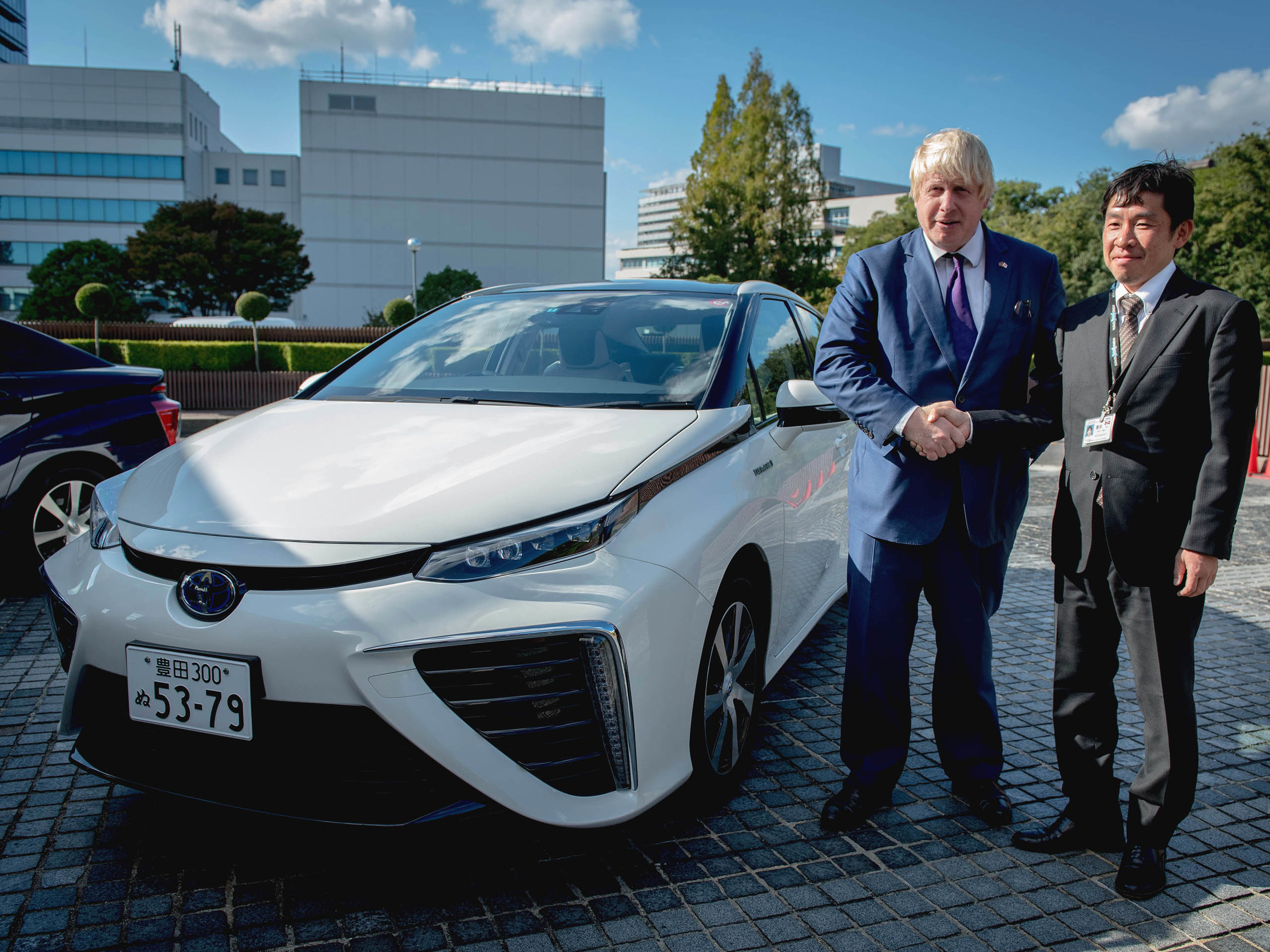
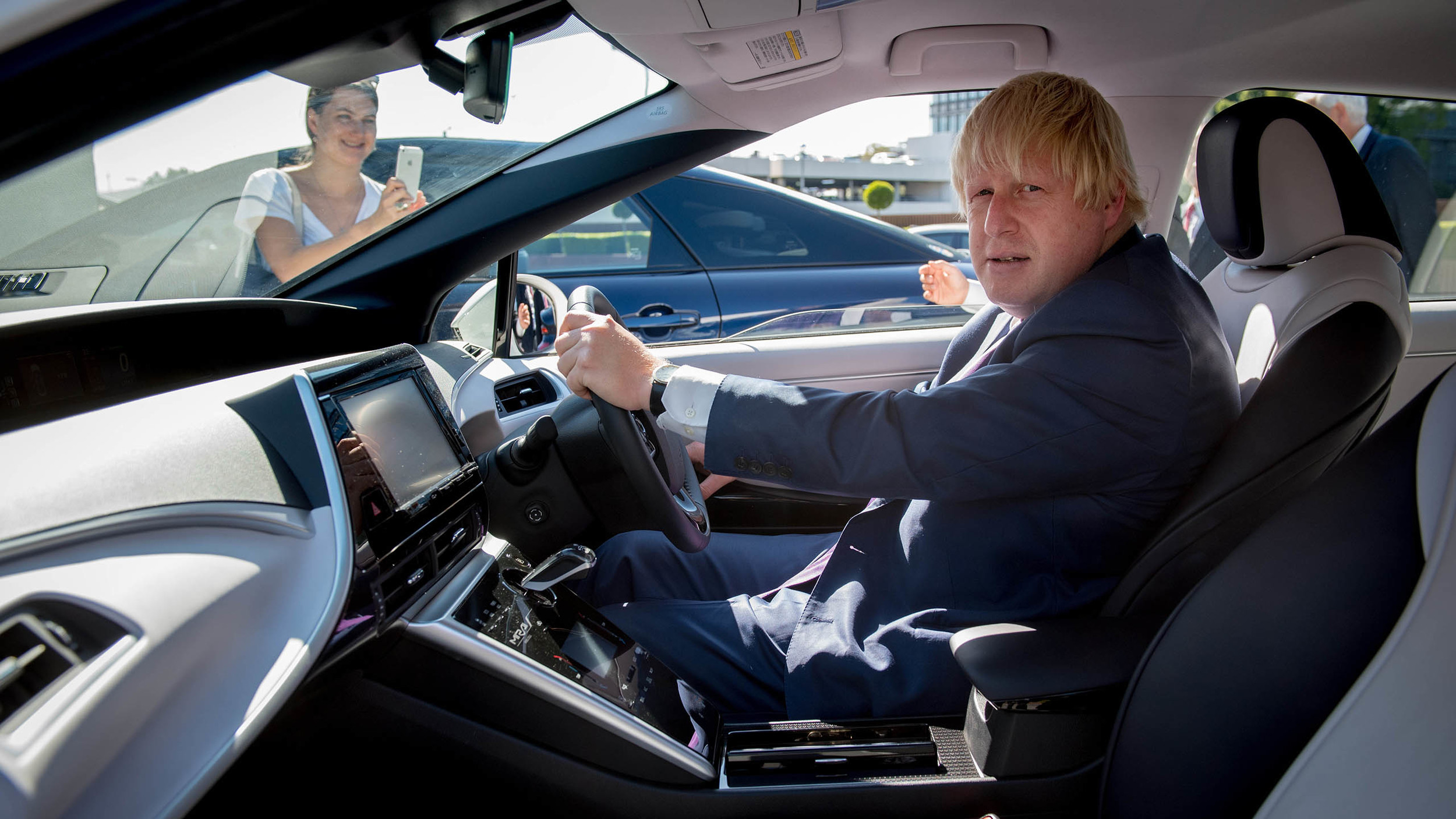
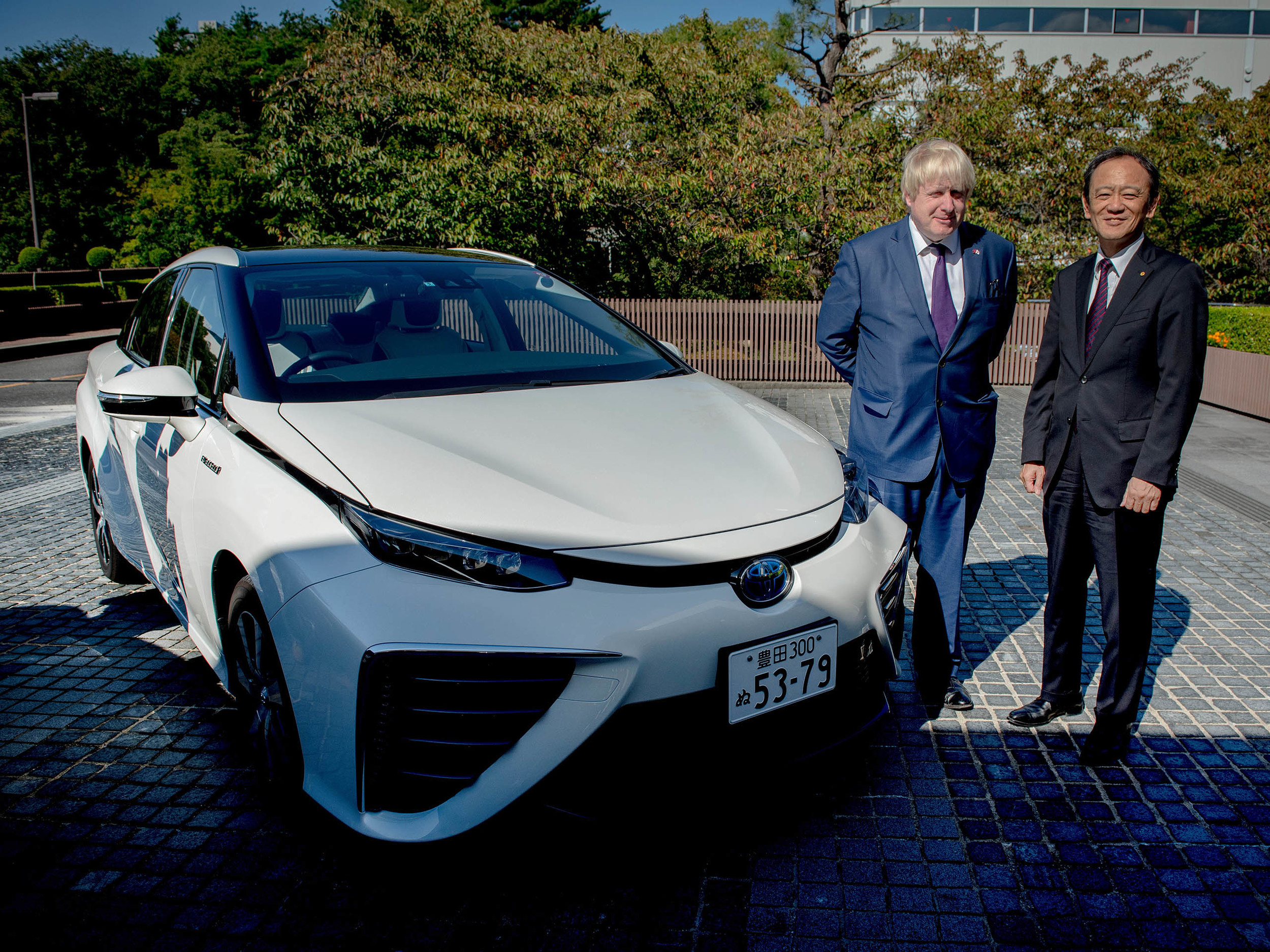
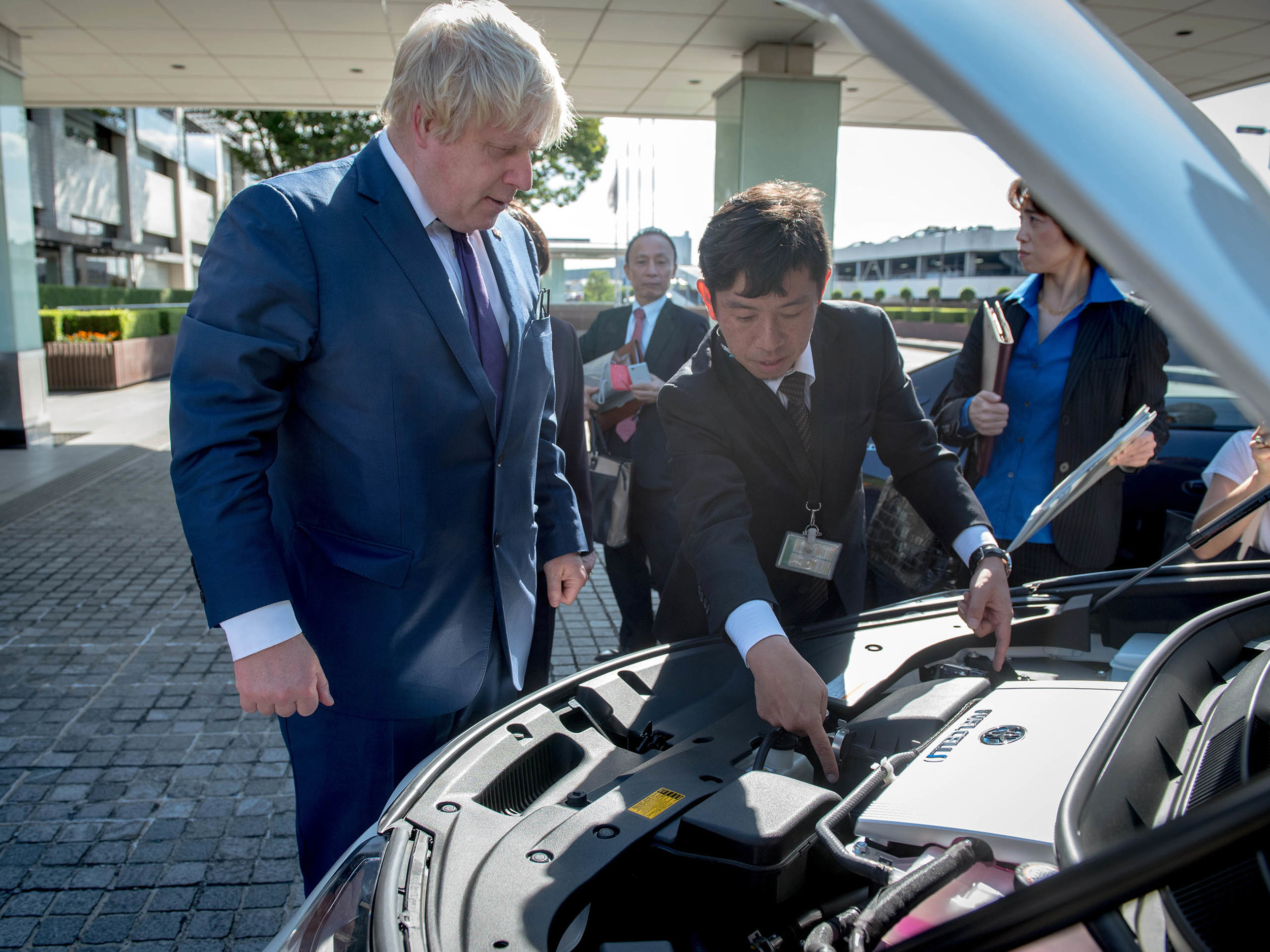
Boris Johnson confirms hydrogen Toyota for TfL

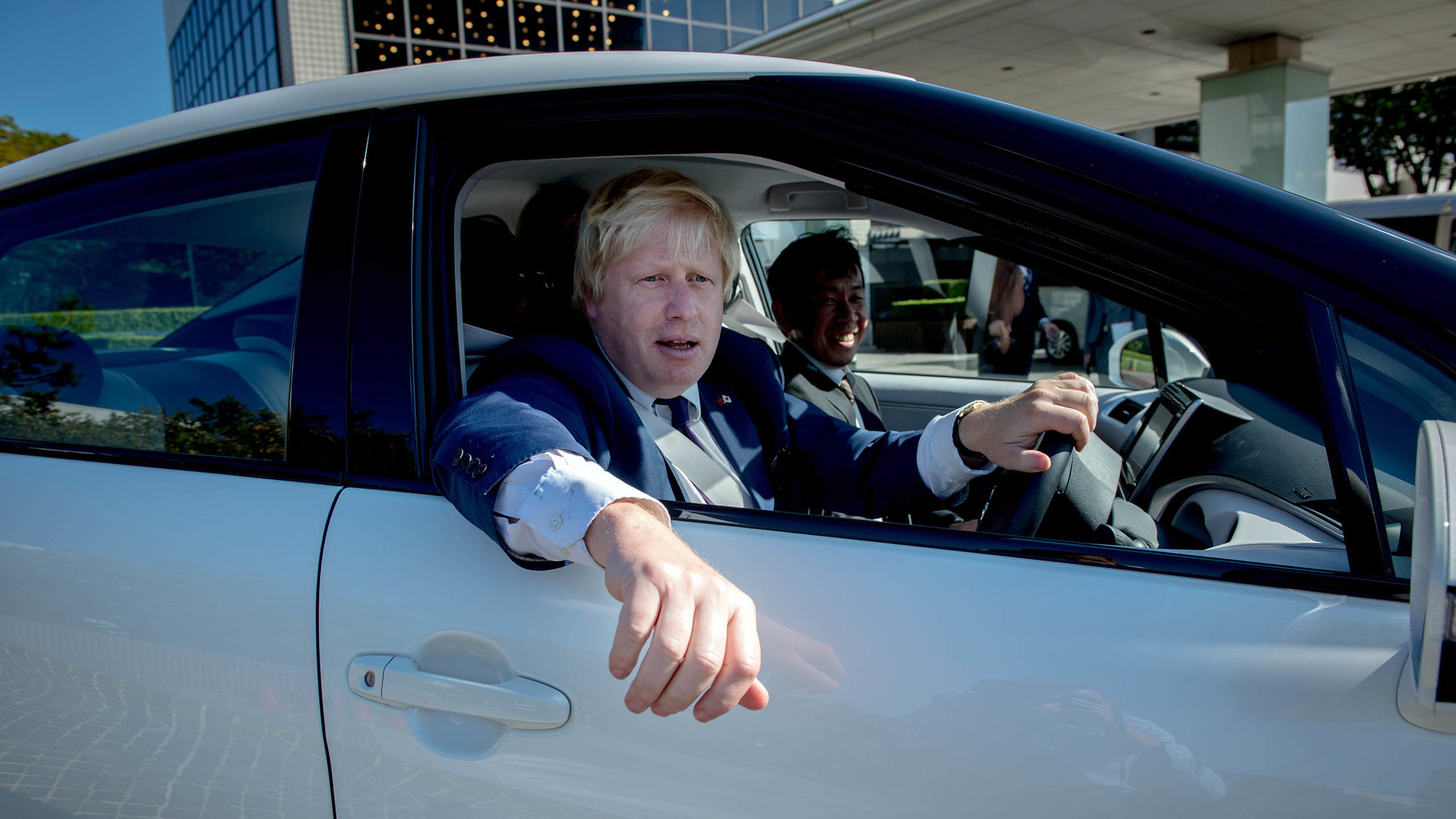
Mayor of London Boris Johnson has confirmed the Toyota Mirai, the world's first hydrogen fuel cell saloon, is coming to the capital.

As part of his work to pioneer use of cleaner technology for the future of the capital's transport and infrastructure, Transport for London (TfL) will be in the first group of UK Mirai customers.

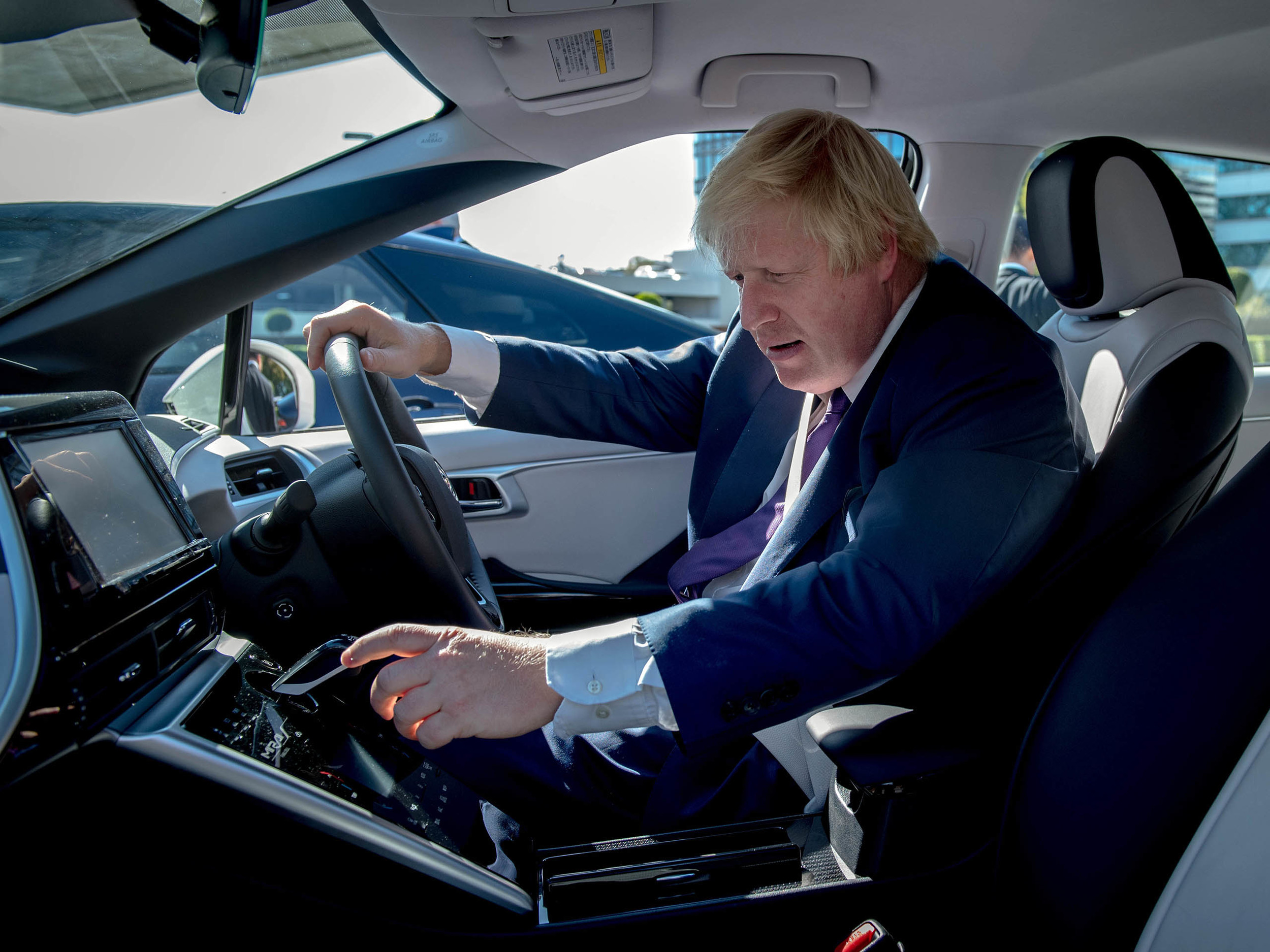
The mayor visited Toyota's headquarters today during a three-day trade mission to Japan and took the opportunity to test drive Mirai for himself. He said: "It is fantastic that London will benefit from these new state-of-the-art hydrogen vehicles. By embracing this technology of the future, we aim to consolidate hydrogen's role as a practical alternative fuel for the 21st century and beyond. I am sure that Transport for London will provide the ideal environment for us to see everything Mirai can do and, in doing so, take another great step towards improving air quality in our city and protecting the health of Londoners."

The mayor also discussed London's position as a market for alternative fuel cars, with Toyota senior management. Paul Van der Burgh, Toyota (GB) PLC President and Managing Director said: "We have been delighted to welcome the Mayor of London to our headquarters in Japan to see for himself Toyota's commitment to sustainable mobility. Toyota believes in hydrogen as a key enabler for building a future zero emissions society and we applaud the mayor's commitment to embracing new technology in his mission to make London a leading global city for low-emission, low-carbon transport.

"The success of hydrogen will require constructive dialogue and action, bringing together industry, national governments and city authorities like London to share and develop skills and experience and to communicate the benefits that can be delivered to business and to individuals. Our Mirai fuel cell vehicle is a milestone in the history of the motor car and opens up unprecedented opportunities for cleaner, sustainable transport. Transport for London and the city it serves will provide the ideal environment for Mirai to demonstrate the significant potential of hydrogen as a practical alternative fuel for the next century and beyond."

Transport for London sees Mirai as an exciting opportunity that the mayor is keen to exploit. The TfL Mirai cars and the development of a hydrogen refuelling infrastructure are considered important first steps towards the wider adoption of the technology.

Hybrid, Sports Car, News, Electric, Concept Car

Rinspeed reveals new driverless Etos concept car

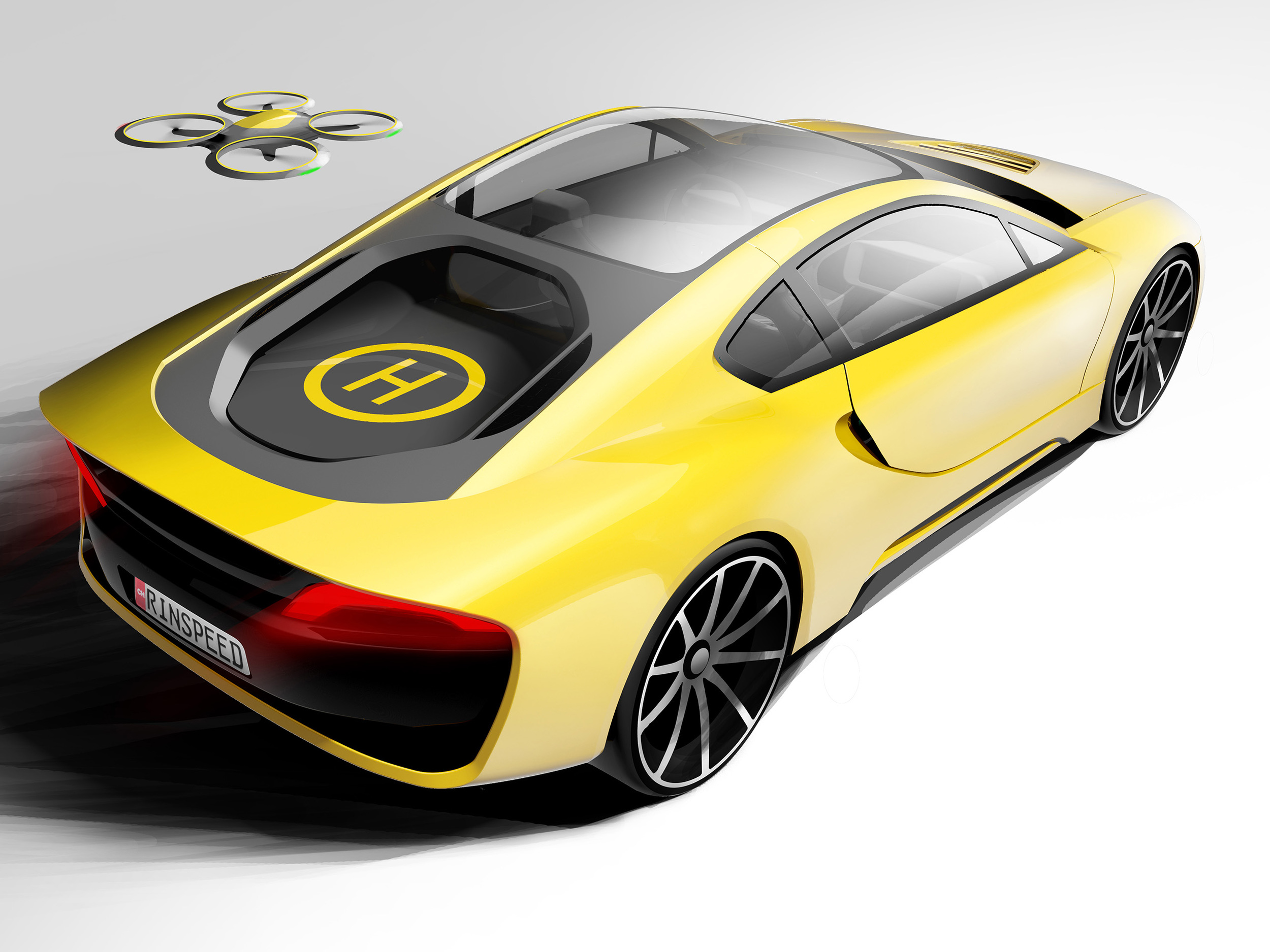
Rinspeed has revealed plans to show a new driverless Etos concept car, at the CES Consumer Electronic Show 2016 in Las Vegas 2016.

The hybrid sports car features a personal autopilot and drone on board. Frank M. Rinderknecht, the boss of Rinspeed said: "The major and especially the disruptive innovations in future automotive engineering will come from the digital realm. That is why all major manufacturers and suppliers are now present at the CES Consumer Electronic Show."

The Swiss company's approached to the topic of 'driverless cars' is largely from the point of view of drivers and passengers, and has generated a number of ideas including an 'intuitive, adaptive autopilot capable of learning'.

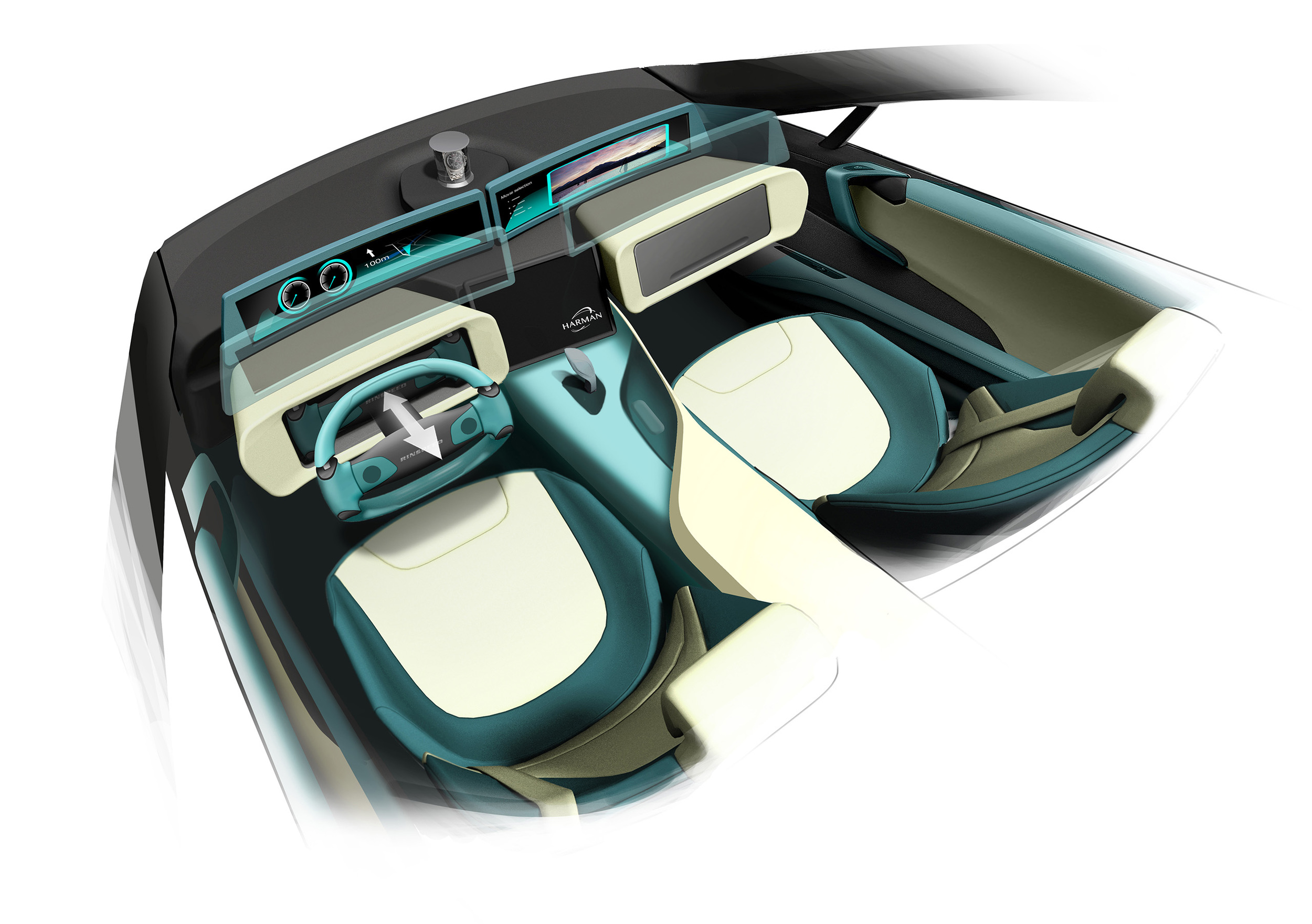
The new concept's interior adapts to the particular driving situation 'as if by magic' according to Rinspeed: In autonomous mode, the steering wheel folds up and retracts completely into the dashboard. The two curved widescreens individually move closer to the occupants to provide a better view.

To provide the passengers with a unique infotainment experience, the Etos uses Harman Connected Car technologies. Like a personal assistant, the system operates in a thinking, courteous and anticipatory manner. In addition, it delivers entertainment, connectivity and maximum safety.

The sporty hybrid is also fitted with its own drone that has its a landing pad on the rear end. The Swiss firm says the drone 'could fetch a bouquet of flowers the driver ordered online and even deliver it directly to the lucky recipient. It could also take a video of the wild ride on your favourite road and stream it live to friends'.

The 22nd concept vehicle designed in-house at the brands "innovation lab" also includes innovative surface finishes that are still completely alien to car designers, asking CES visitors to 'touch it, feel it - it's magic!'.

The CES Consumer Electronic Show Las Vegas runs from 6-9 January 2016.

Concept Car, News, Electric

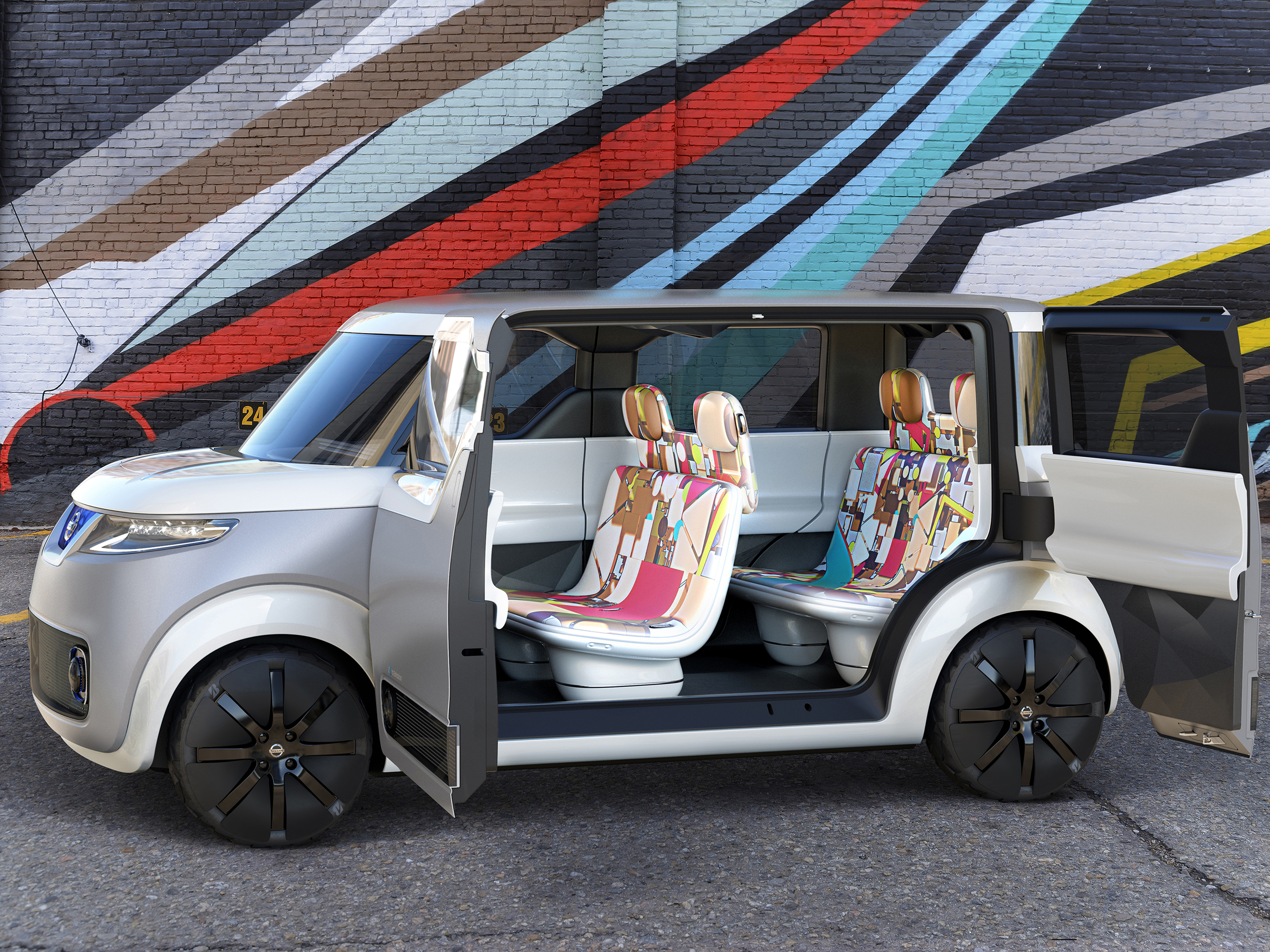
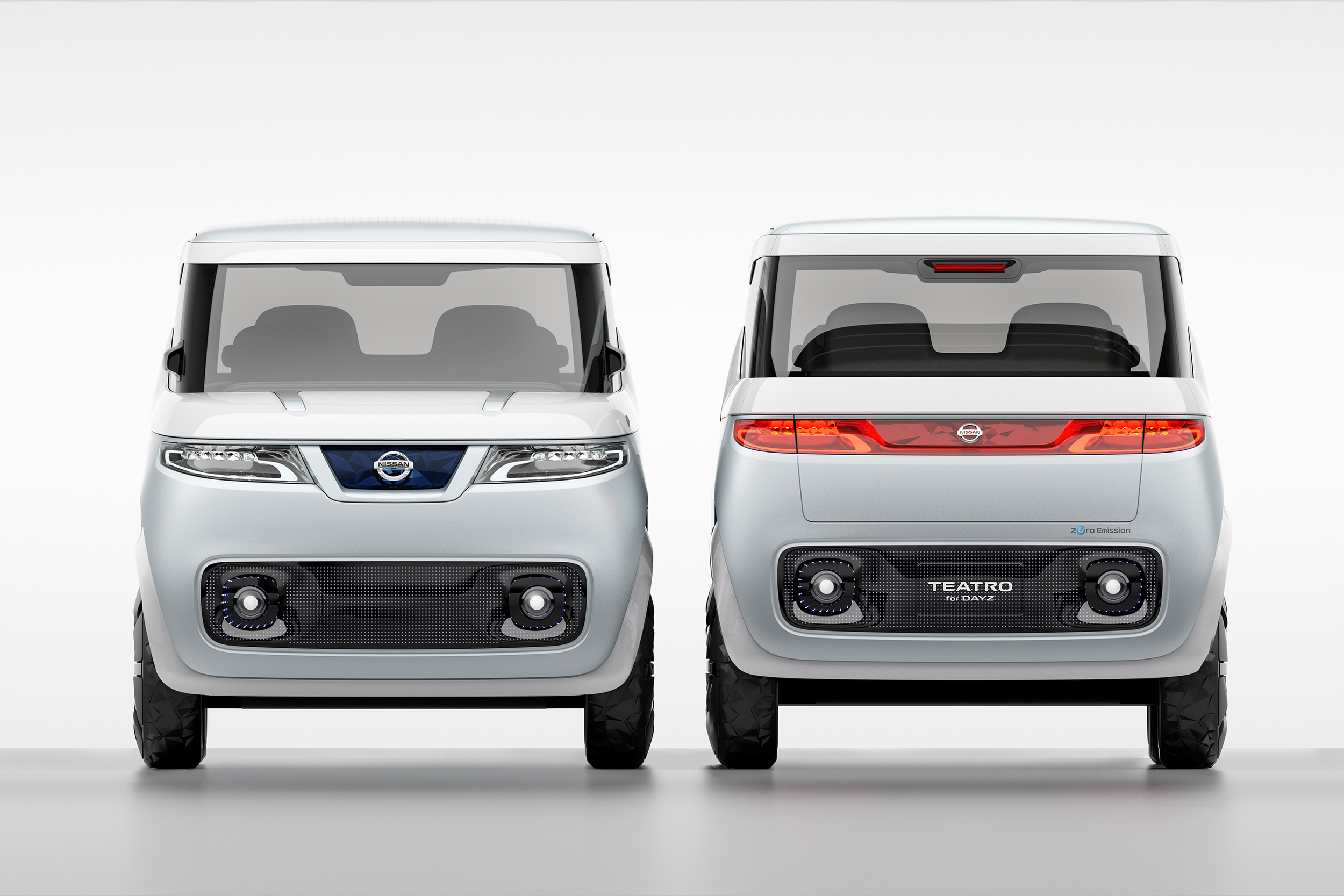
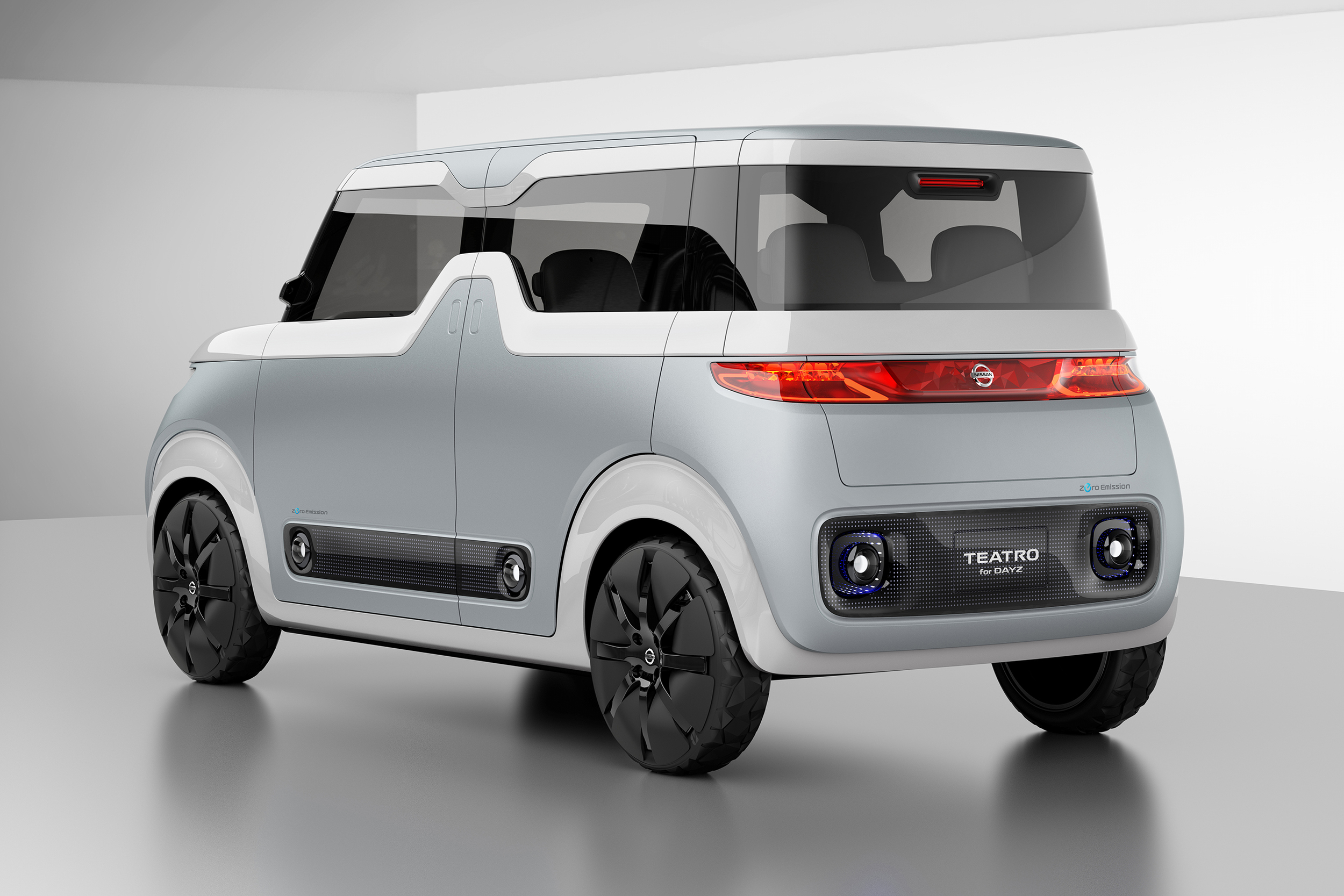
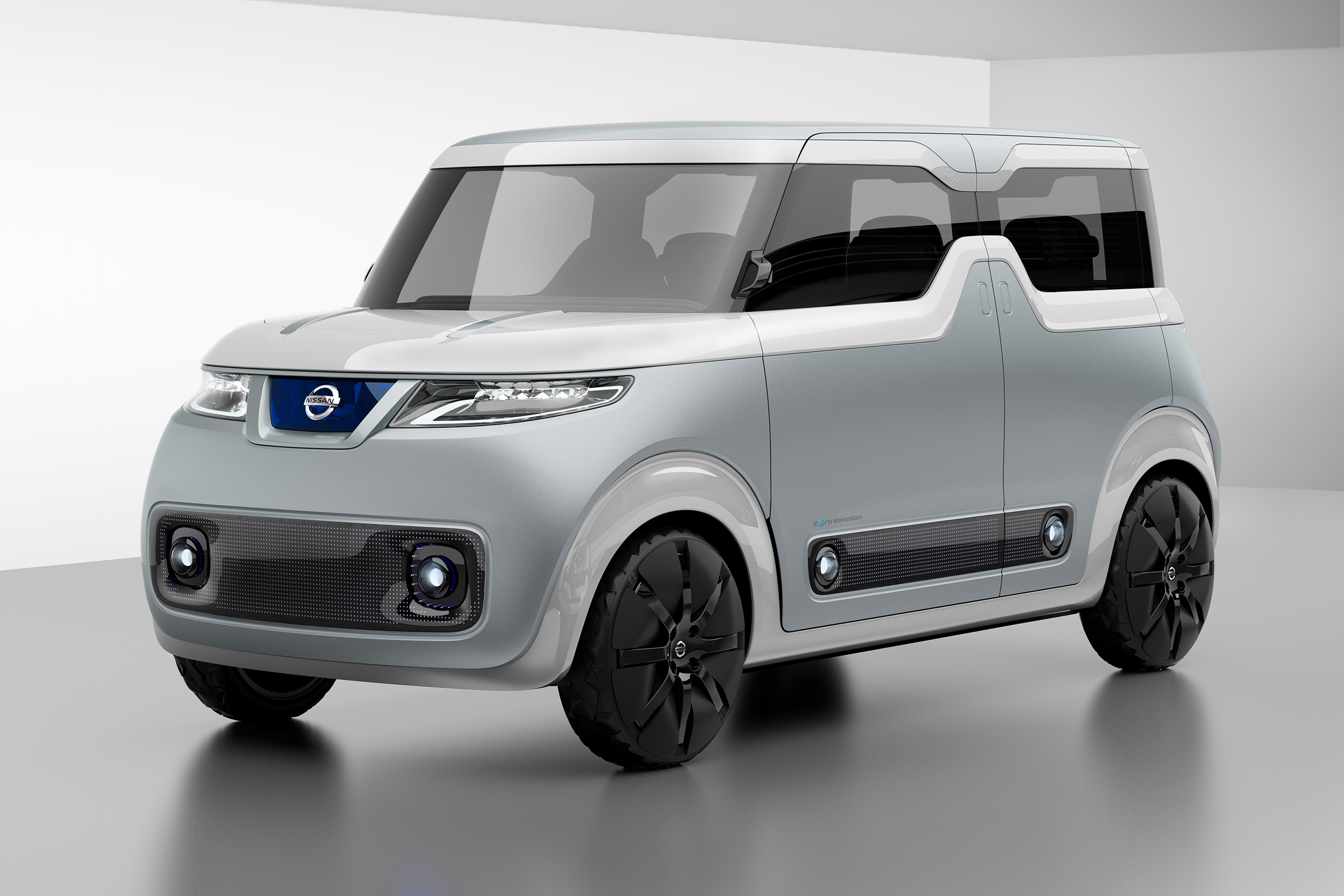
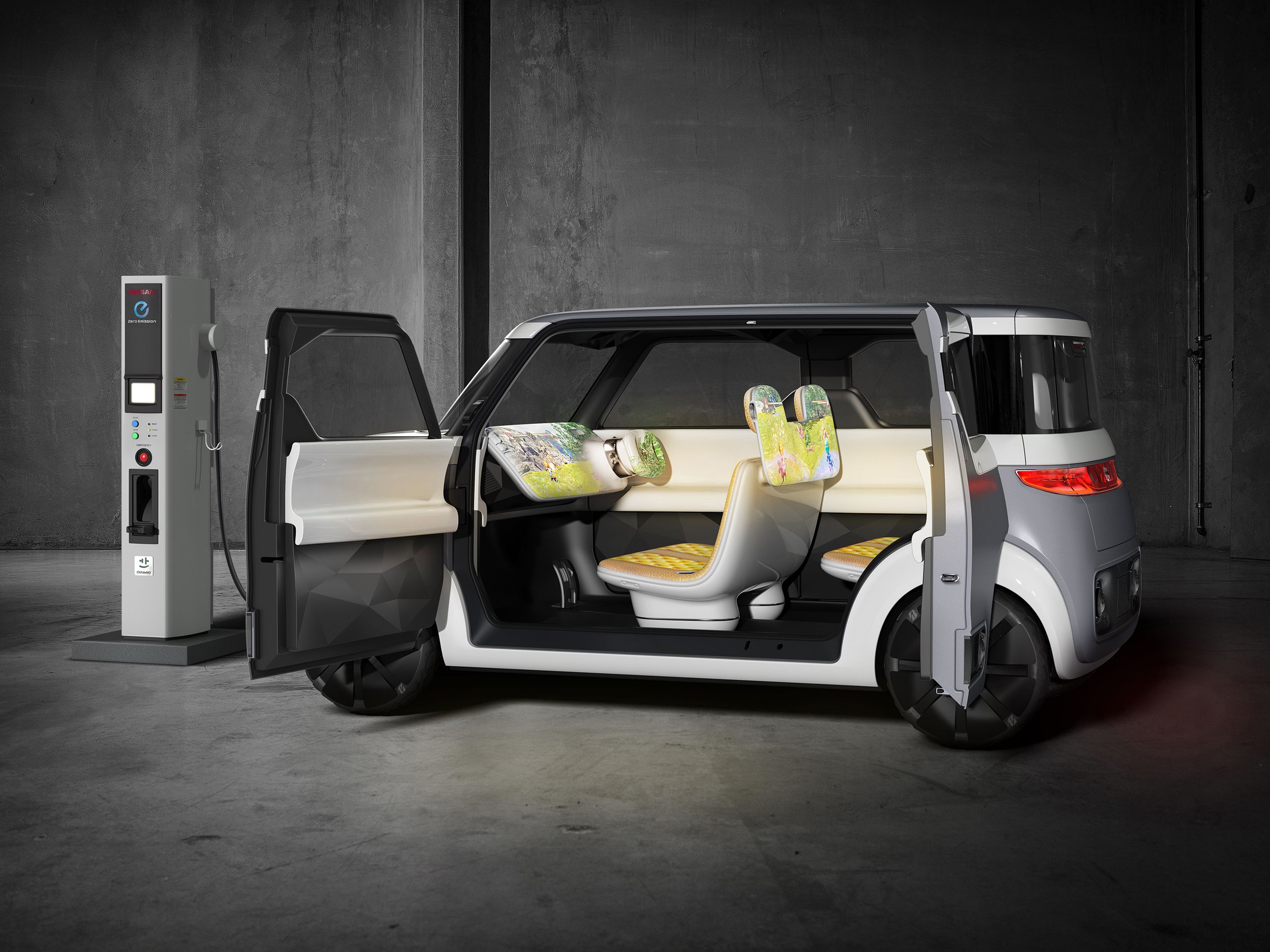
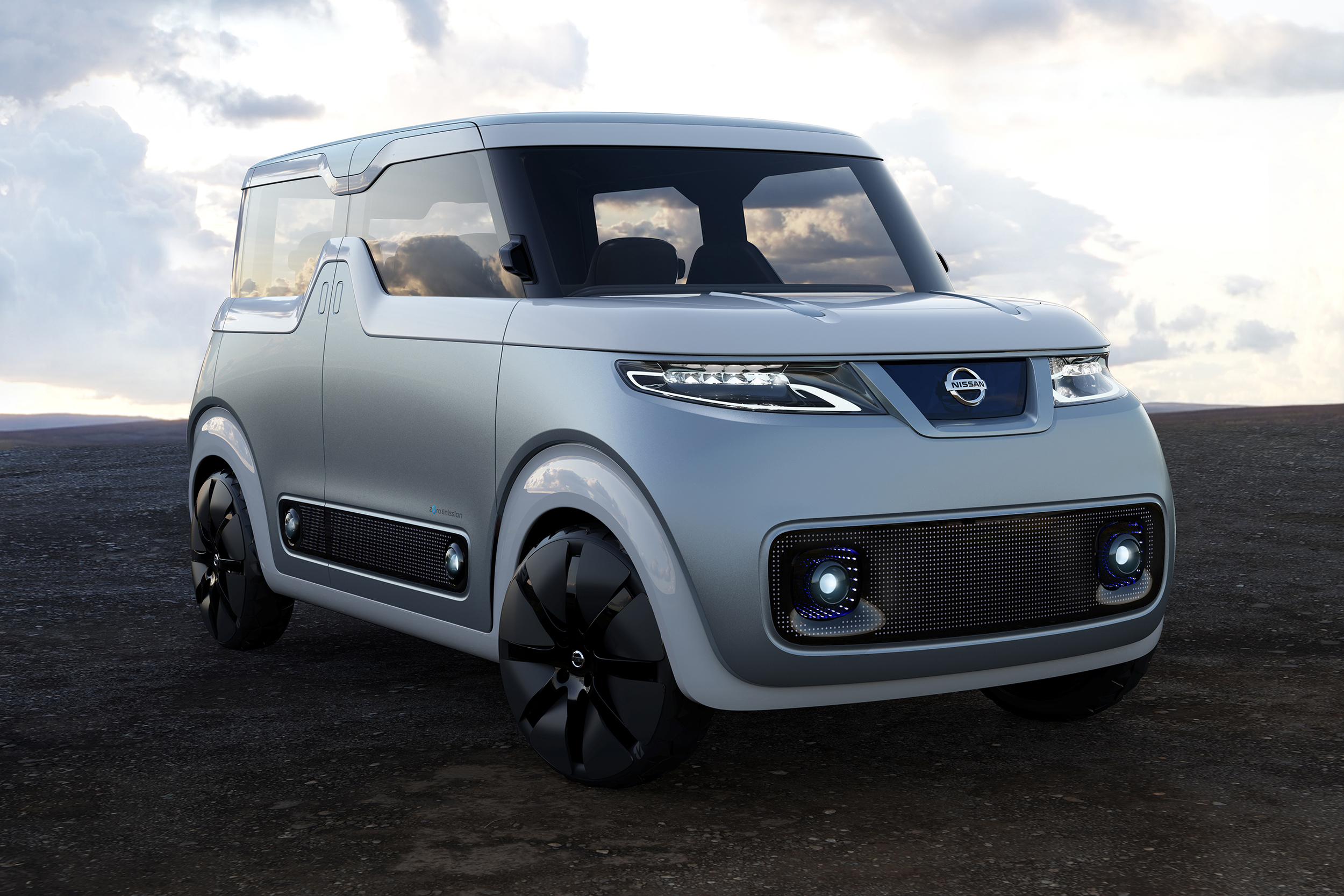
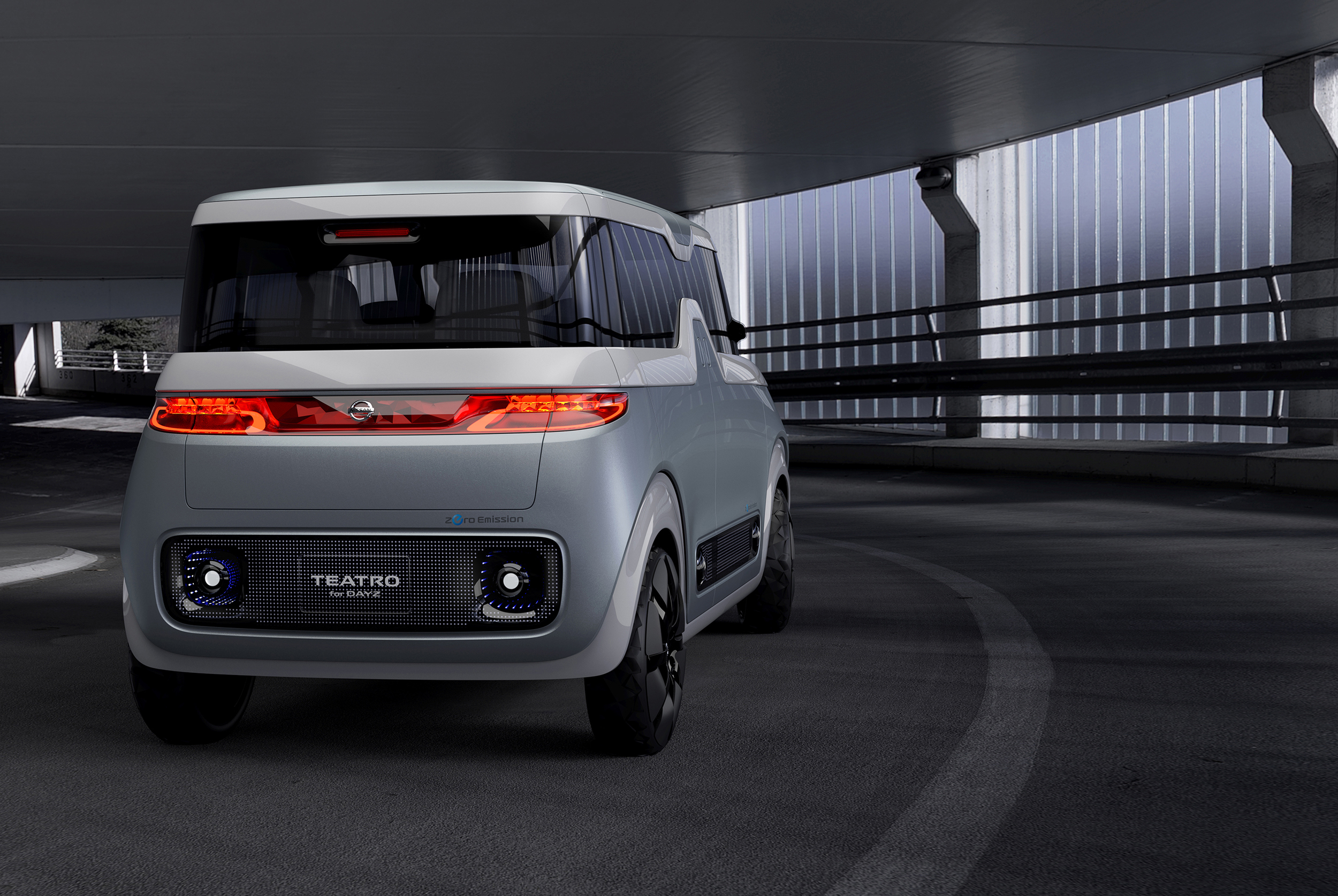
Nissan Teatro for Dayz set to debut in Tokyo

Nissan has previewed its 'Teatro for Dayz' ahead of a reveal at the 2015 Tokyo Motor Show.

The innovative concept signals a new direction in mobile technology according to Nissan. Designed especially for the 'digital native generation', this vision of near-future vehicles 'departs from convention and marks a shift in perception'.

Nissan describes the target group as 'share natives' due to the nature of sharing on social media. The Teatro for Dayz is a combination of mobile technologies unlike any previously imagined in a car. Nissan's research indicated that minicars will be the vehicle of choice for share natives. "In addition to being compact, minicars remind them of the handy mobile devices they carry in their pockets," says Product Planning General Manager Hidemi Sasaki. Electric Vehicle (EV) technology is a must for this generation. "Share natives are already accustomed to recharging their devices at home, so EVs fit their lifestyles far better than cars that require regular visits to a gas station." With a driving range ample for short commutes, the concept can serve as a giant mobile battery, which can be used anywhere to recharge mobile devices.

Sasaki says that Nissan has identified some common car interests among share natives. "First, they tend to look beyond the car's basic role of transportation. They want a car to be a versatile tool for creativity like a smartphone. This is different from customising a car. It is more like the ability to modify a car to meet their mood at that moment. Share natives will use cars in ways we would never imagine. So we thought from the perspective of designing a car that would serve as a canvas for their inspiration."

From concept to interior and exterior design, the Teatro for Dayz is described as a simple, clean canvas. When the car is in drive mode, meters, controls and maps appear on a pure white instrument panel. As information illuminates on the white instrument panel, the driver can freely adjust the size and position of the meters, gauges and car navigation information on the instrument screen. Unnecessary information can be hidden.

When parked, the concept transforms into an entirely new device. The whole interior, starting with the instrument panel, becomes a live display for a generation wired for connectivity. The interior's design can be changed to match the look to the season, as can the exterior. Externally it is fitted with LED screens that enable further self-expression, with any experience in or around the car able to be shared instantly via an onboard camera. The solid white interior suggests infinite possibilities for display, as technology evolves and share natives contribute ideas through feedback, the variety of ways the interior could serve as a 'digital native theatre' will expand, says Nissan.

The Tokyo Motor Show opens to the public on October 30 to November 8.

Electric, SUV, Hatchback, News

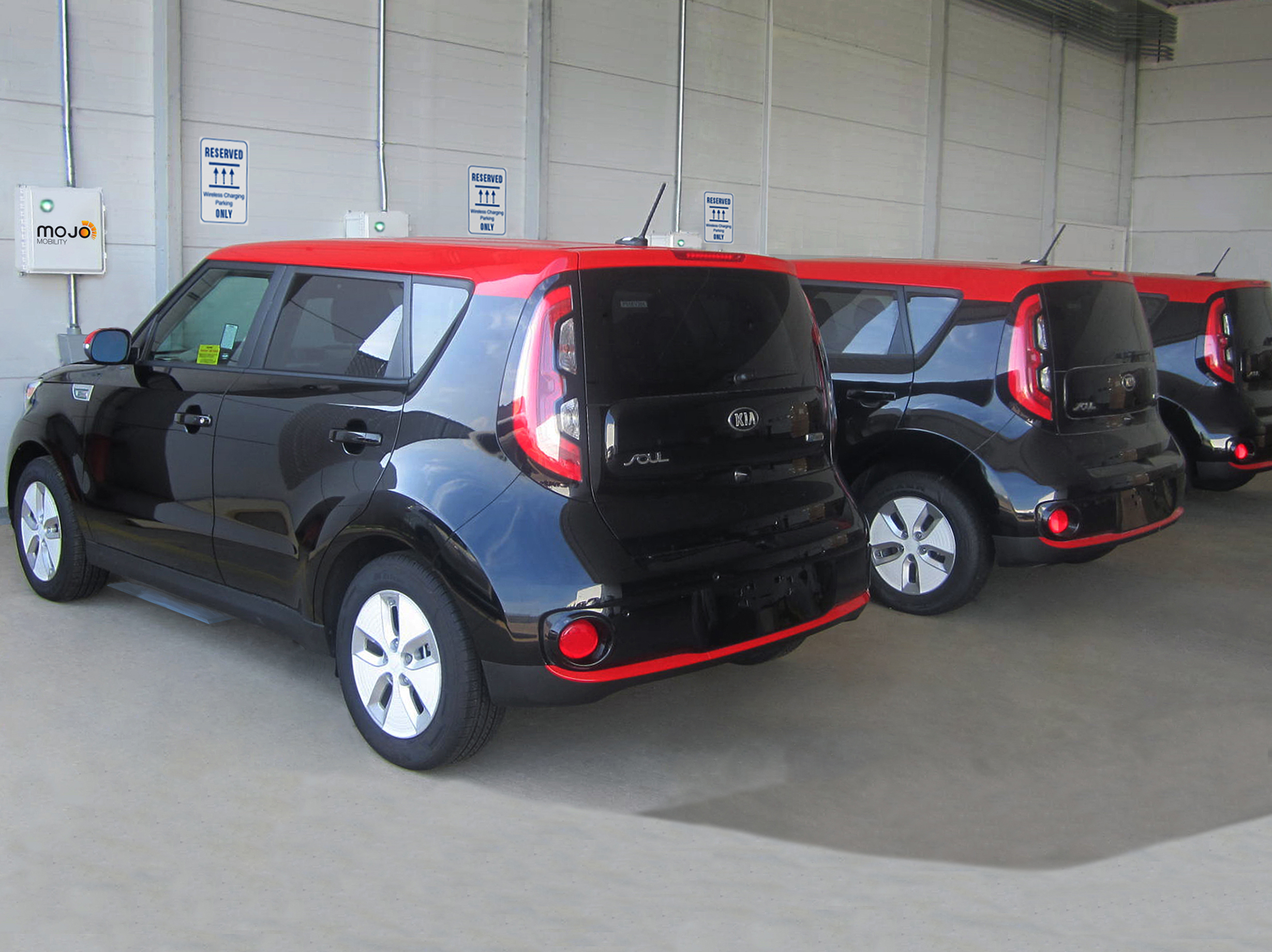
Kia Soul EV tests wireless charging

The Kia Soul electric vehicle is being used to test a new wireless system capable of transferring high power.

The wireless charging systems, which don't need precise alignment between the charger and the vehicle, are currently under development for electric vehicles in America. The test is being developed between HATCI and Mojo Mobility - a wireless power technology company, after being awarded a funding grant from the U.S Department of Energy (DOE).

The scheme has the potential to significantly enhance the convenience of electric vehicles - and so increase the appeal and acceptance among consumers - while possibly enabling smaller battery pack sizes and reduced vehicle weight.

"HATCI is honoured to be selected as a partner with the DOE" said Dr. Sung Hwan Cho, President, HATCI. "Innovative technologies such as this align well with one of our core goals, which is to create a vehicle experience that is intuitive and easy for the consumer."

Having already gone through several stages of development, this final phase will use five Soul EV's to test how wireless technology works in real-world performance, including durability, safety, and performance.

KMA and Mojo Mobility have not yet announced when the system will be available for purchase.

Electric, Hybrid, News

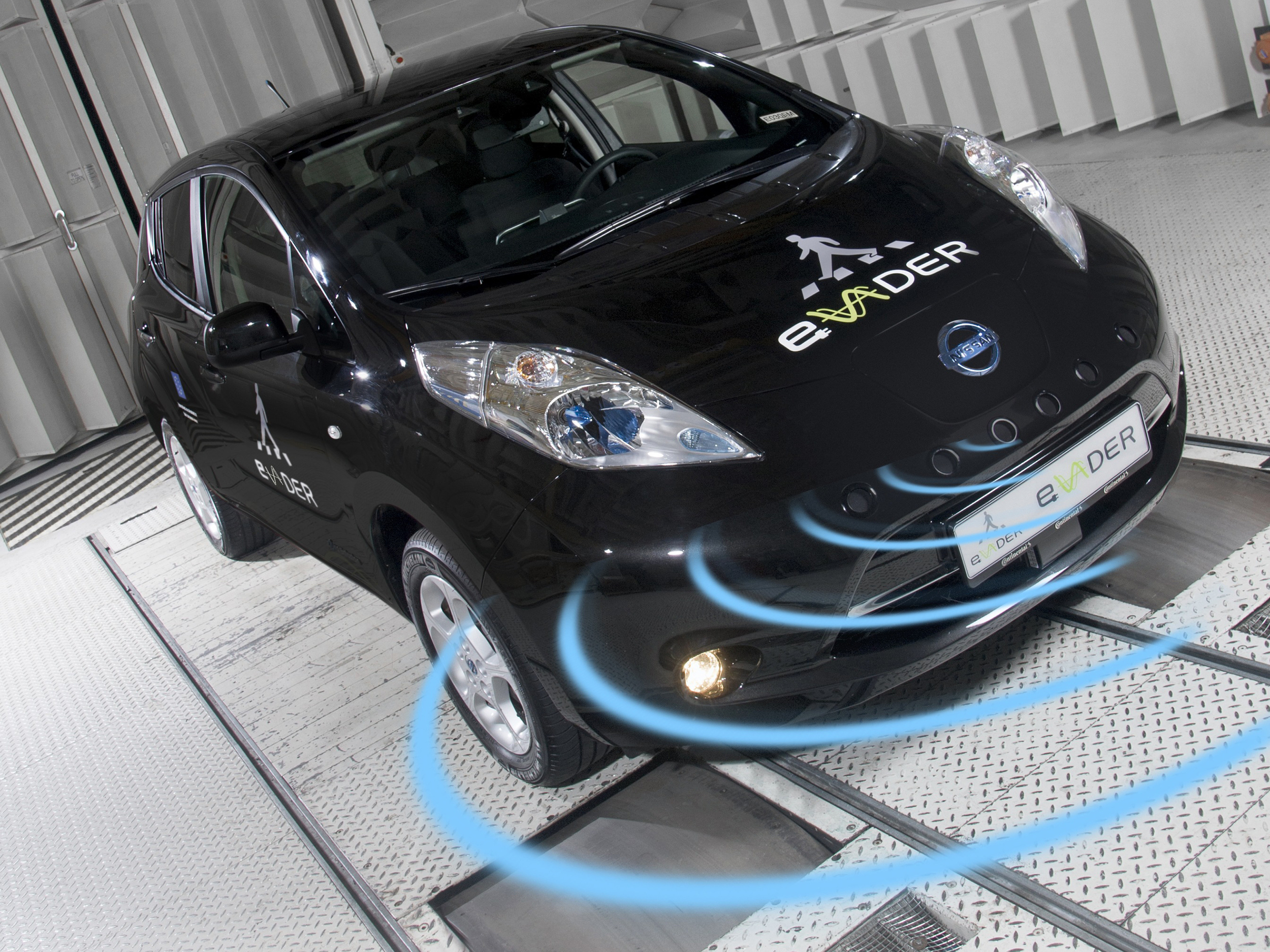
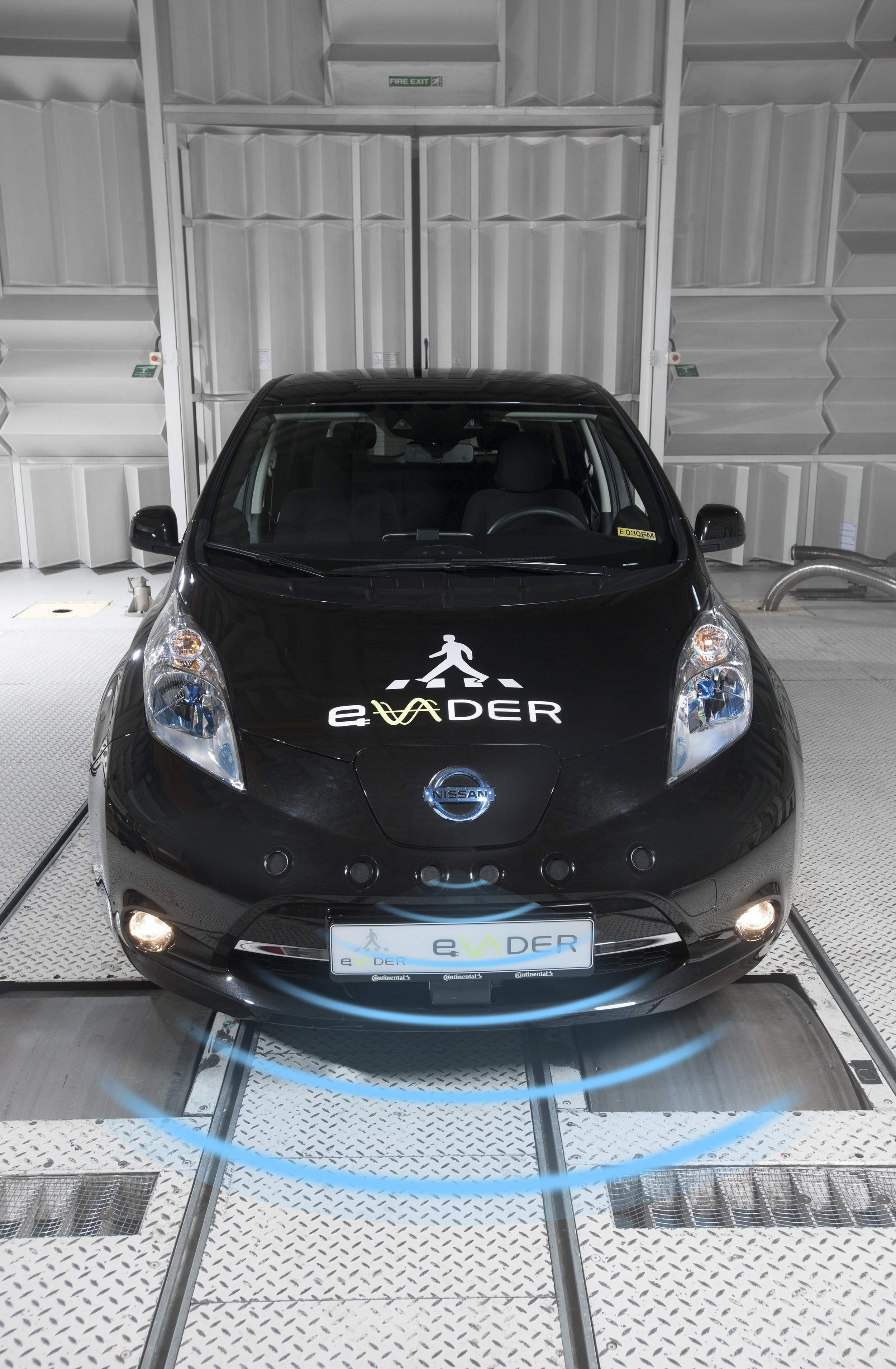
Nissan LEAF tests eVADER pedestrian recognition software

Nissan has taken a leading role in the European Union-funded project 'eVADER' - to create an audible pedestrian alert system for electric cars.

With vehicles driven in electric mode, either hybrid or pure electric vehicles considerably quieter than combustion engined cars, they constitute a safety hazard for pedestrians and bicyclists in traffic. The eVADER project was founded to tackle the problem, with the help of many partners alongside Nissan including Renault, the Peugeot Citroen group and Continental tires to name a few.

In a move to assist pedestrian recognition of electric vehicles (EVs), Nissan has collaborated in the creation of a potential next generation pedestrian alert technology which produces effective and targetable audible cues to alert vulnerable road users to the presence of a nearby EV, whilst having minimal impact on noise pollution levels.

Pedestrian alert technology is currently a hot topic, as growing sales of EVs have led to discussions over the pros and cons of quiet EVs. The low sound levels have been heralded as a strong benefit, as they could contribute to a drastic reduction in noise pollution.

In 2010 Nissan introduced its LEAF - the first mass-market, all-electric EV - which has Approaching Vehicle Sound for Pedestrians (VSP), fitted as standard equipment. As a leading partner in the eVADER project, Nissan drew on its EV expertise to integrate the range of technologies provided by other consortium members and Nissan into the demonstration vehicle, and worked to ensure that the sounds created were clearly audible, whilst having as little impact as possible on ambient noise levels.

The sound created not only had to be directionally beamed at targeted pedestrians, it also had to keep annoyance levels to a minimum. Siren-like noises were ruled out at an early stage, as they were found to be irritating, loud and, in some cases, emotionally upsetting to other road users.

The final version of the system features a camera built into the windscreen, which is programmed to recognise pedestrians, cyclists and other road users. On detection of a road user, six loudspeakers directionally beam sound at the target to alert them of the presence of the EV. The sound is up to five decibels lower than the sound of a conventional petrol or diesel engine vehicle. Nissan then built this system into a LEAF for real-life trials, and the vehicle was used to showcase the completed alert system at a concluding event in Barcelona in December 2014, where it was well-received by the visually-impaired community.

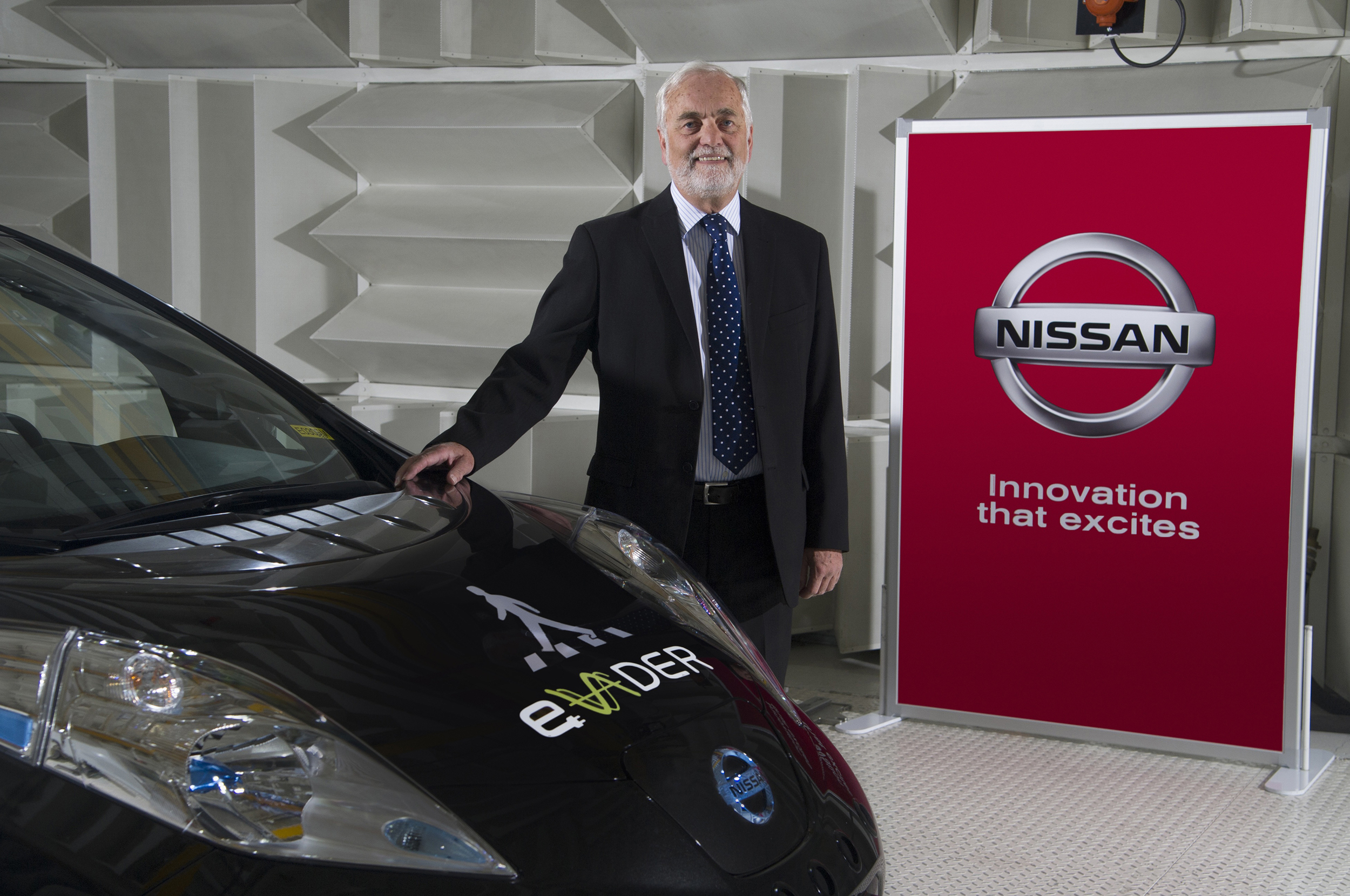
David Quinn, Nissan's e-VADER Project Leader said: "Pedestrian safety is of the utmost importance to Nissan, which is why we already have a pedestrian alert installed in our EVs as a preventative measure. As leaders in the EV market, we were keen to use our considerable experience to examine possible systems for future development in this field. Our objective has been to find an optimum balance between ensuring the cars are detectable, whilst retaining the reduction in noise pollution, which is one of the great benefits that our EVs offer."

The research and results collated from this project form reference material for future research into this area, and it is likely that it will be utilised to shape future EU legislation on EV pedestrian alert sounds.

Electric, SUV, News

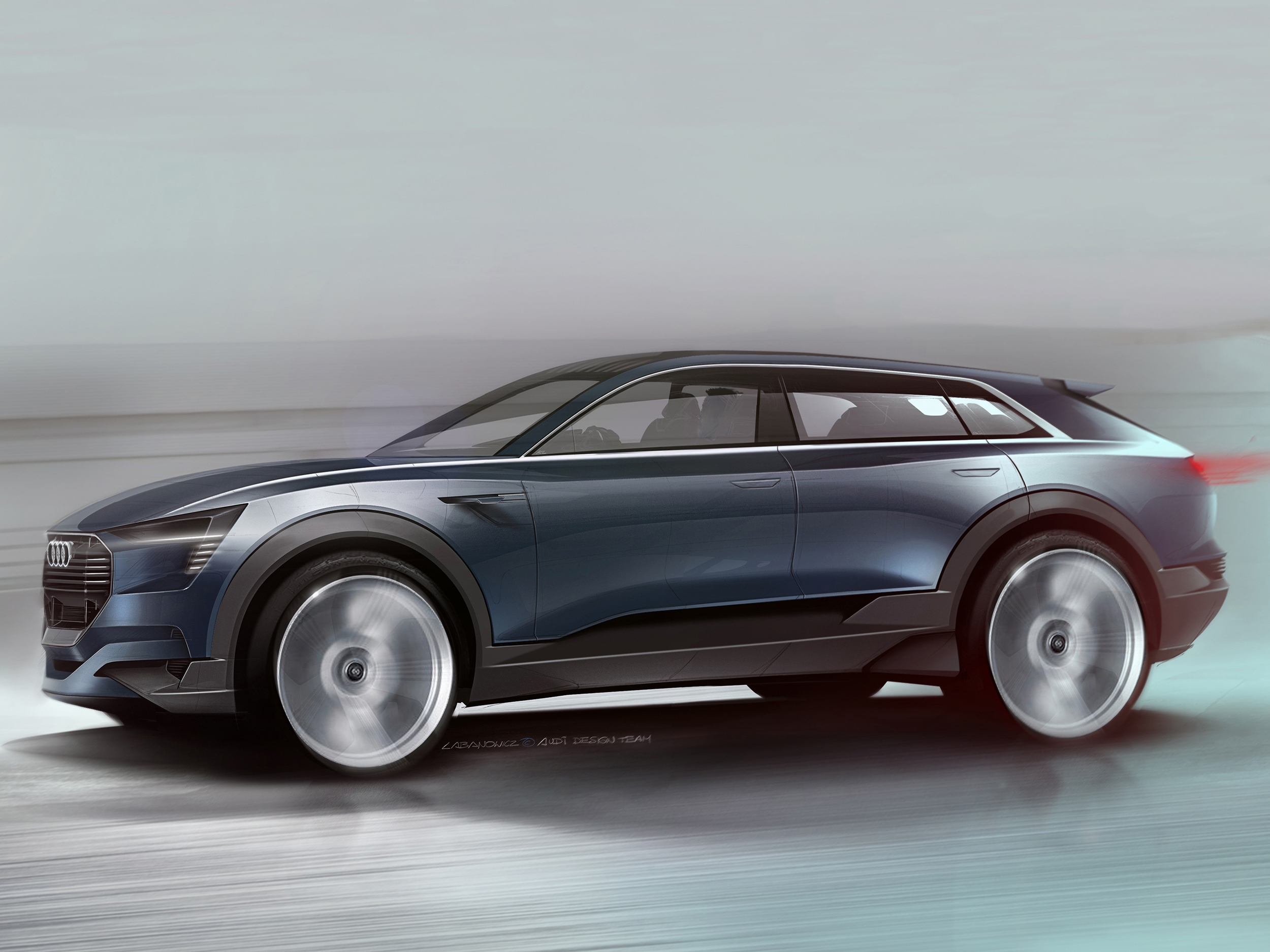
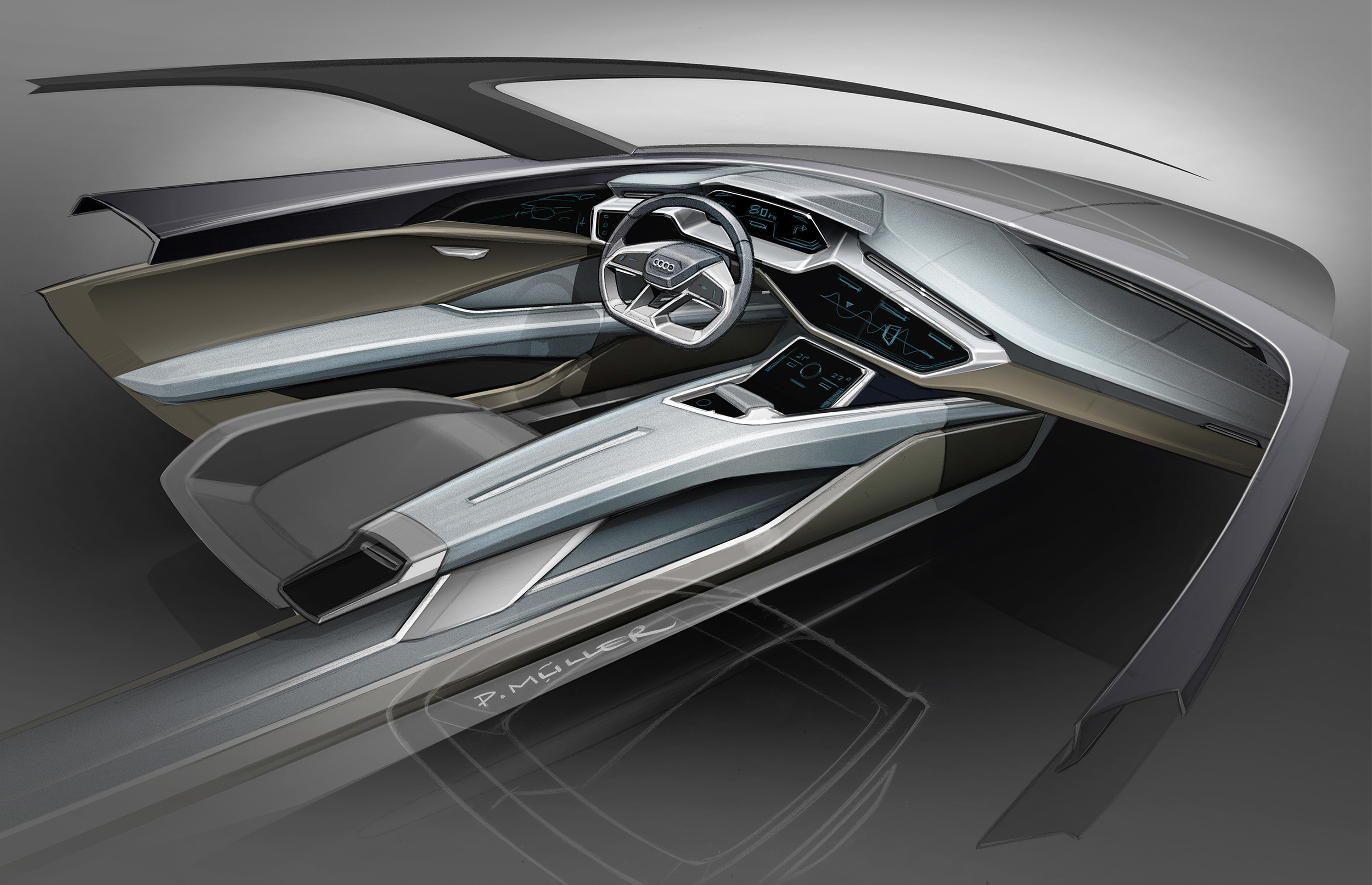
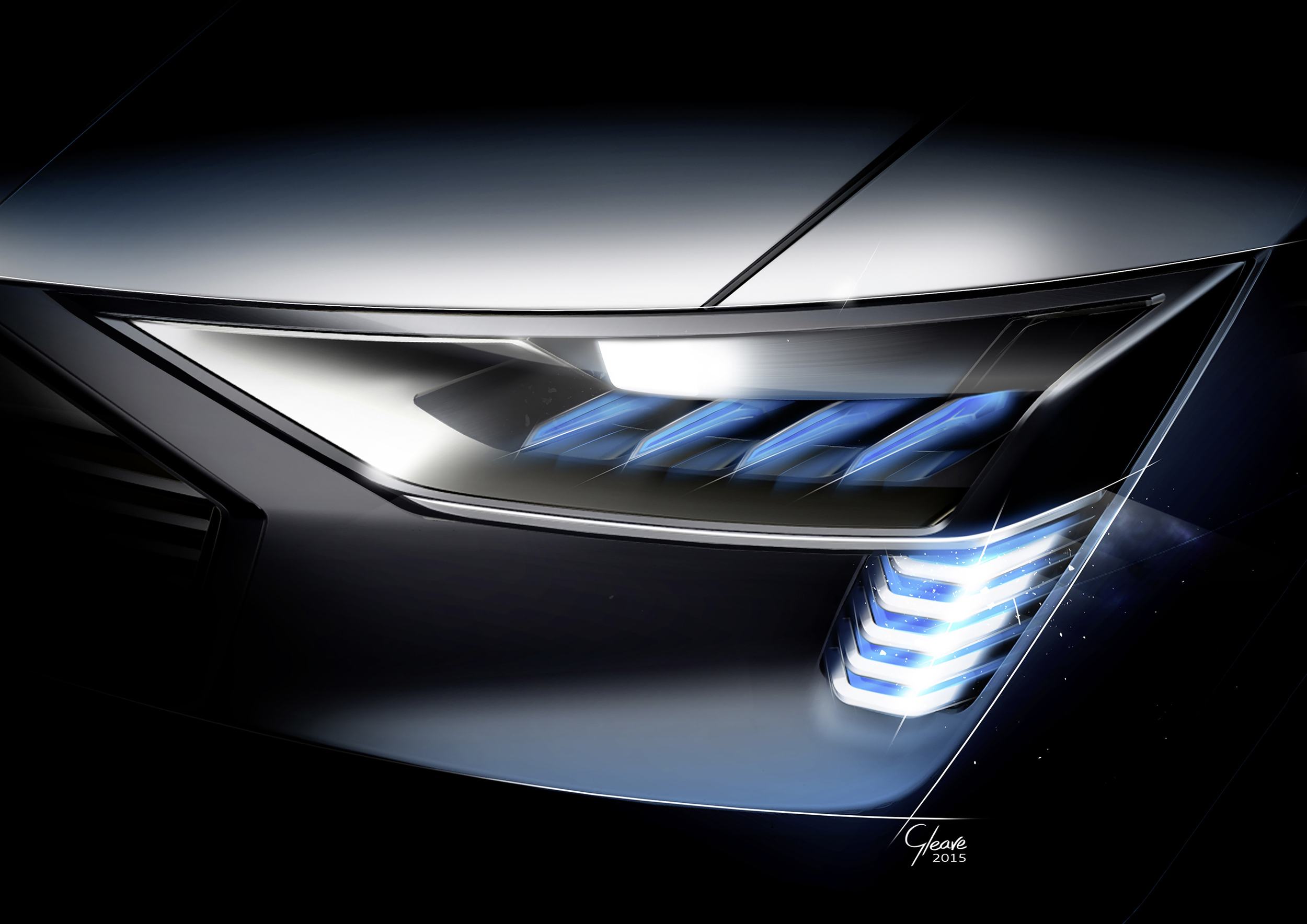
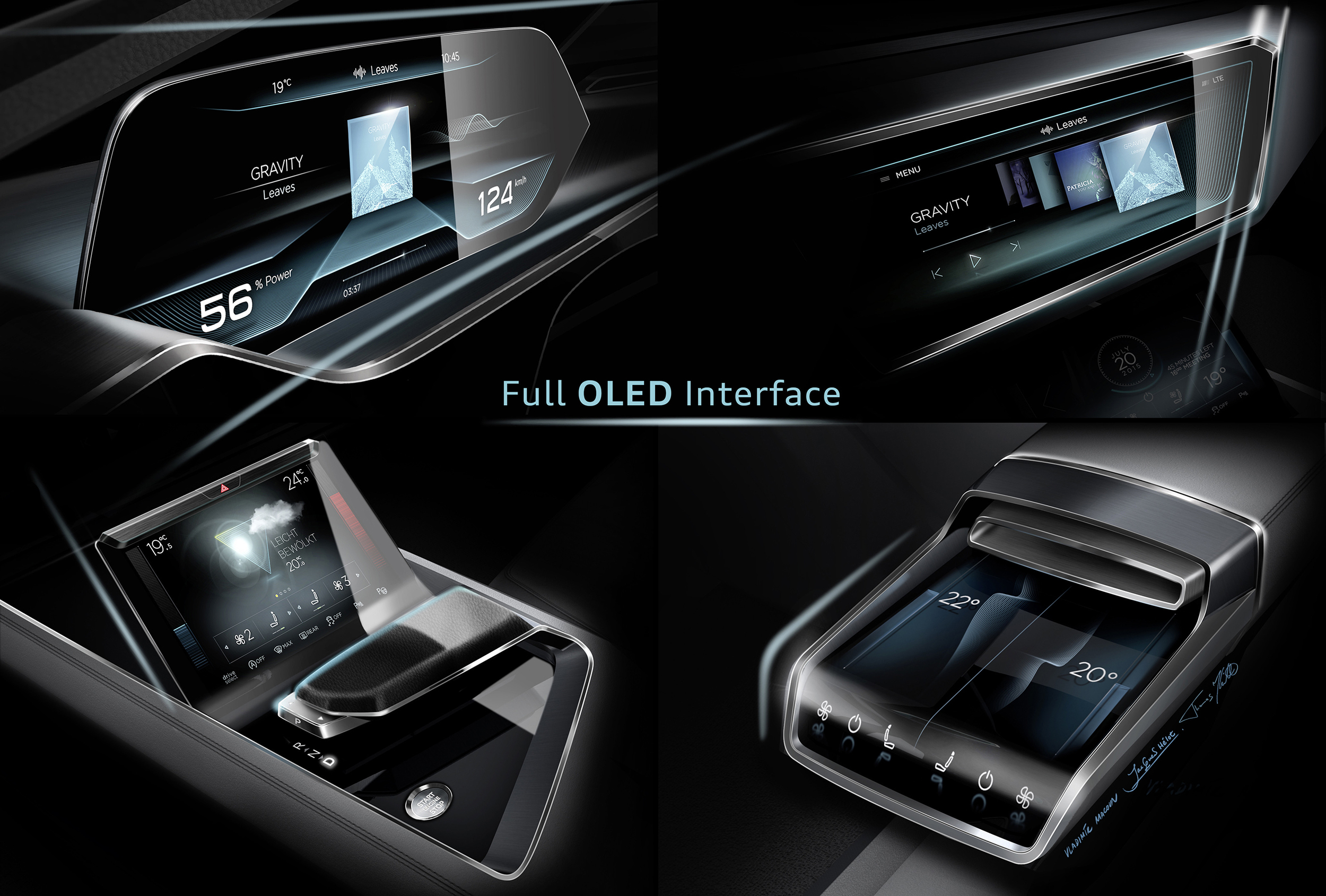
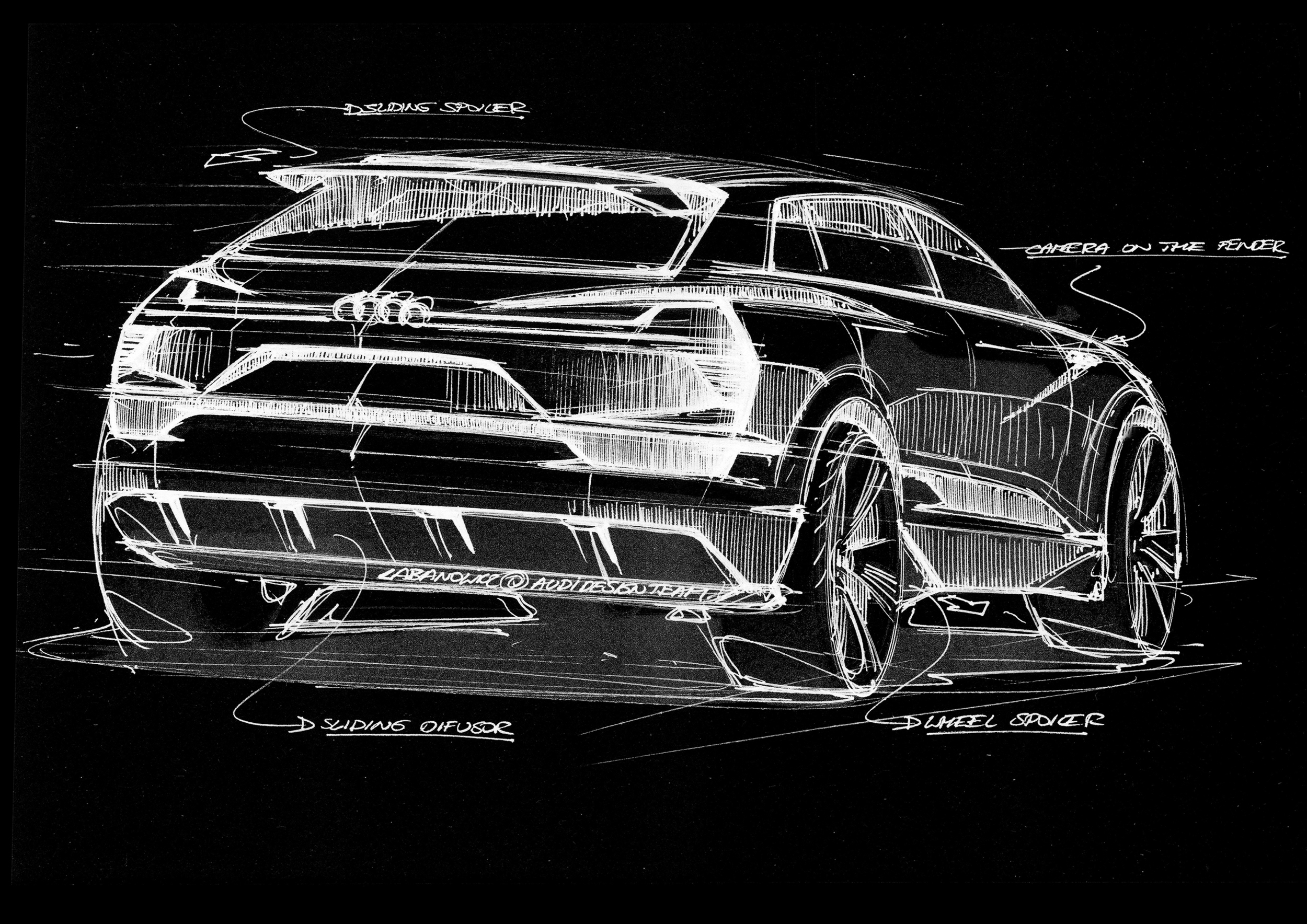
Audi e-tron quattro concept set for Frankfurt debut

Audi has confirmed a new, all-electric SUV will be revealed at the Frankfurt Motor Show.

With a potential range of more than 310 miles, it builds on the experience gained developing the forthcoming R8 e-tron, the brand's first large-series electric car, which enters production in 2018.

The new e-tron quattro concept is designed from the ground up as an electric car and follows Audi's 'Aerosthetics' concept - combining technical measures for reducing aerodynamic drag with creative design solutions. Movable aerodynamic elements at the front, on the sides and at the rear improve the air flow around the car. The aerodynamically optimised underbody is completely closed. With a cd value of 0.25, Audi says the concept sets a new record in the SUV segment, helping contribute to the long range of more than 310 miles.

The study is based on the second-generation modular longitudinal platform, which provides 'considerable scope' for the drive system and package. Its length is between that of the Audi Q5 and the Q7, with its SUV body and flat, Coupe-like cabin giving the concept a dynamic appearance, while a spacious interior offers room for four people.

The large lithium-ion battery is positioned between the axles and below the passenger compartment. This installation position provides for a low centre of gravity and a balanced axle load distribution, giving the car 'better driving dynamics and driving safety than other vehicles in the segment' according to the German brand. Three electric motors - one on the front axle and two on the rear - effectively create an 'electrified quattro', making the e-tron quattro concept both efficient and responsive.

Audi's first ever purely electric SUV is destined for series production following its Frankfurt debut in concept form. The Motor Show opens its doors on 17 September.

Hybrid, Electric

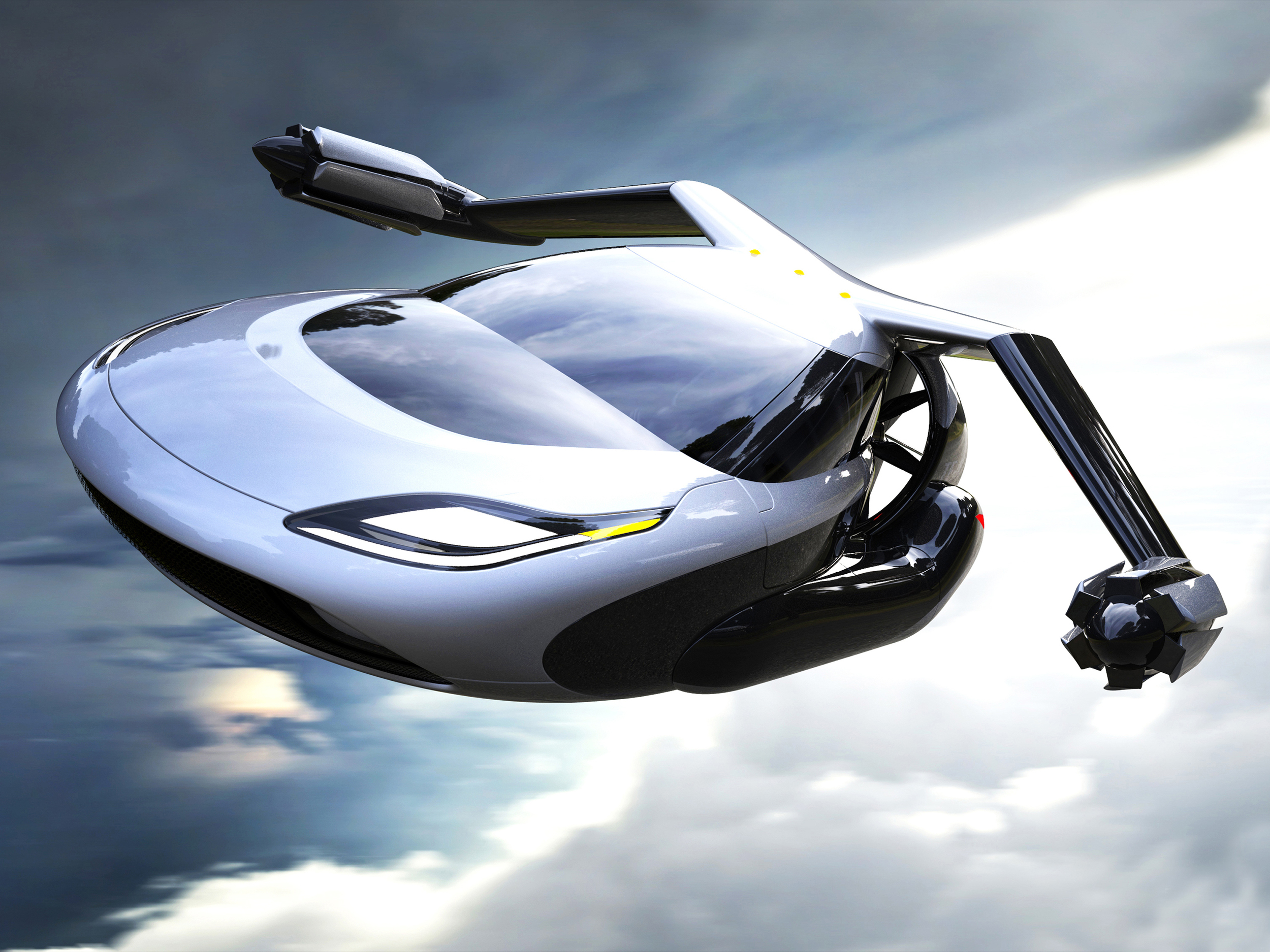
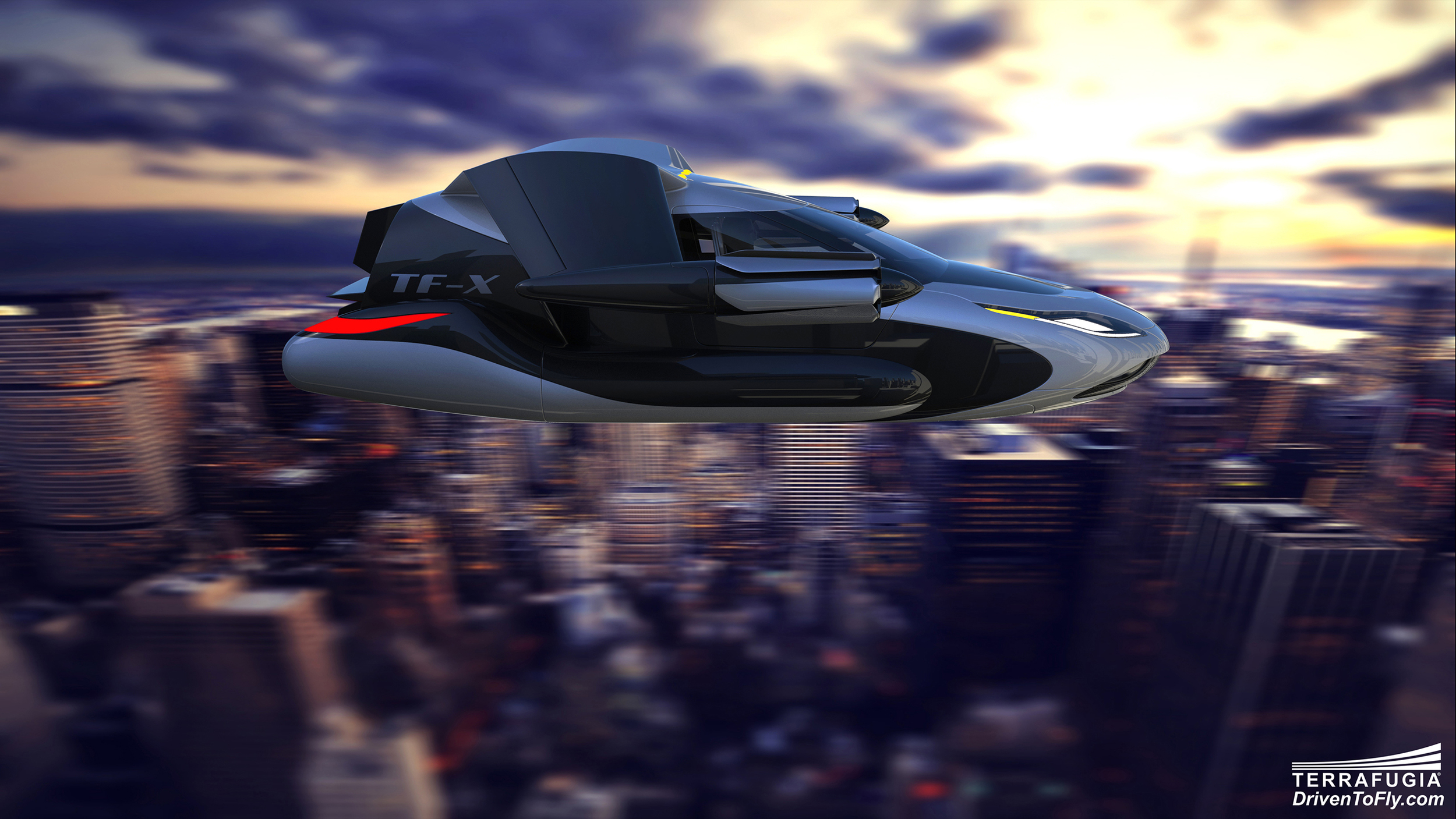
Terrafugia reveals new flying car

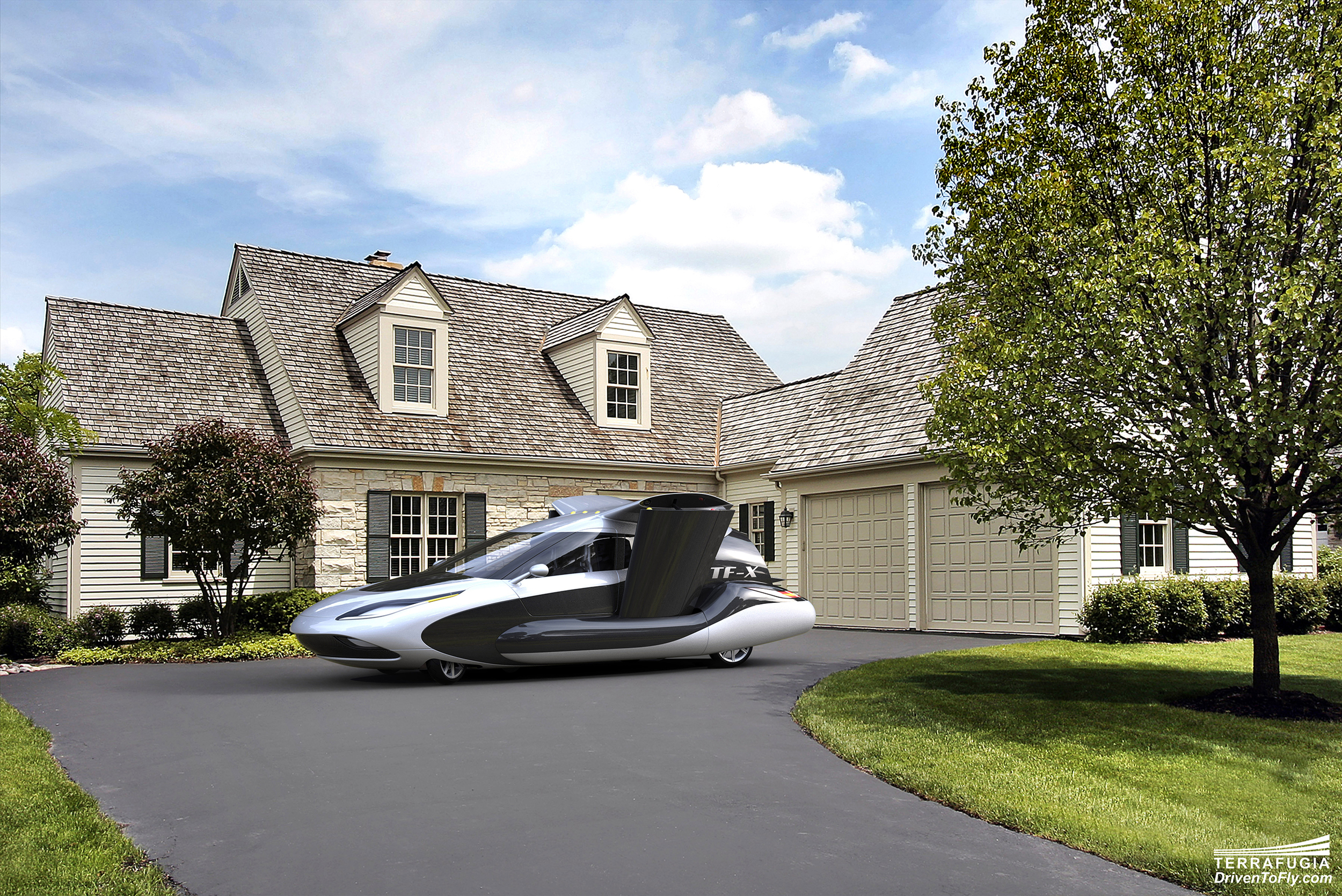
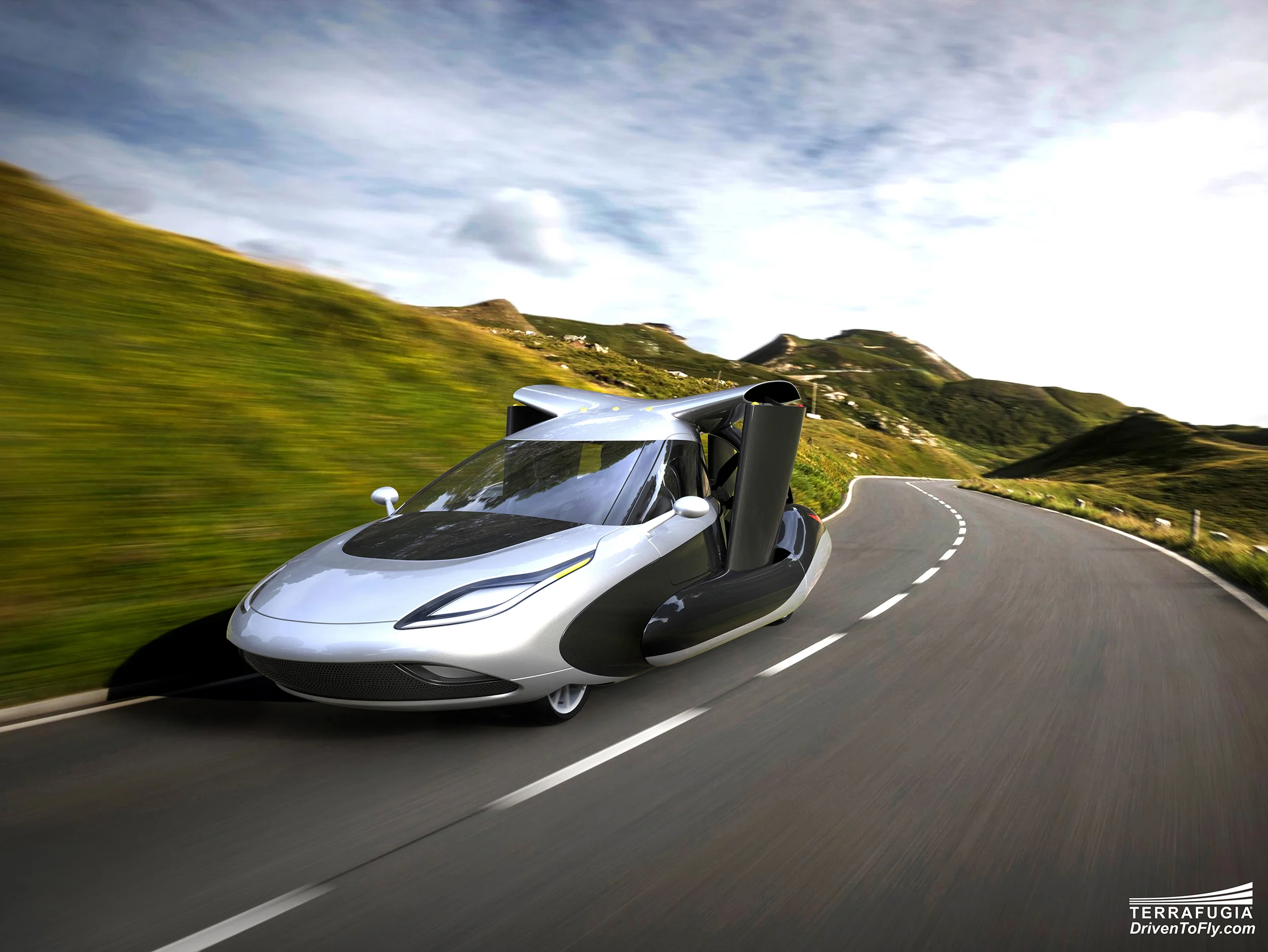
US-based manufacturer Terrafugia has unveiled plans for its latest flying car - the TF-X.

The company behind 2012s 'Transition' flying car has confirmed its plans for a four-seat, vertical takeoff and landing (VTOL) hybrid electric aircraft. The TF-X will be able to recharge its batteries either from its engine or by plugging in to electric car charging stations. Carrying four people in car-like comfort the TF-X is designed to fit in a single car garage and is able to takeoff vertically from a level clearing of at least 100ft in diameter, and will have a non-stop flight range of at least 500 miles.

The company claims that operating a TF-X vehicle 'should be statistically safer than driving a modern automobile' as the flying car will be capable of automatically avoiding other air traffic, bad weather, restricted and tower-controlled airspace.

Terrafugia says learning how to safely operate the car should take an average driver no more than five hours, and that the owner will get significant freedom in flight. Controlled in a manner similar to steering a car, it can fly in either "manual" or "automatic" modes between approved landing zones or airports.

The flying car will have a backup full-vehicle parachute system which can be activated in an emergency if the operator believes the TF-X to be incapable of auto-landing. In an emergency, the TF-X can be landed in non-approved landing zones and will automatically notify authorities of the situation.

The first computer generated images reflect Terrafugia's updated 'Outer Mold Line' (OML) design for the TF-X, developed in collaboration with Ben Schweighart and Transportation/Automotive Designer Vedran Martinek. In addition, a one-tenth scale wind tunnel test model of the TF-X has been successfully developed based on the new OML, and will be tested at the MIT Wright Brothers wind tunnel, the same tunnel that was used to test models of Terrafugia's Transition. The wind tunnel test model will be used to measure drag, lift and thrust forces while simulating hovering flight, transitioning to forward flight and full forward flight.

Terrafugia claims the TF-X will be priced as low as possible - allowing the company to grow support and a customer base, with development of TF-X expected to last 8-12 years. Final pricing will be set much closer to delivery.

Electric, Hatchback, News

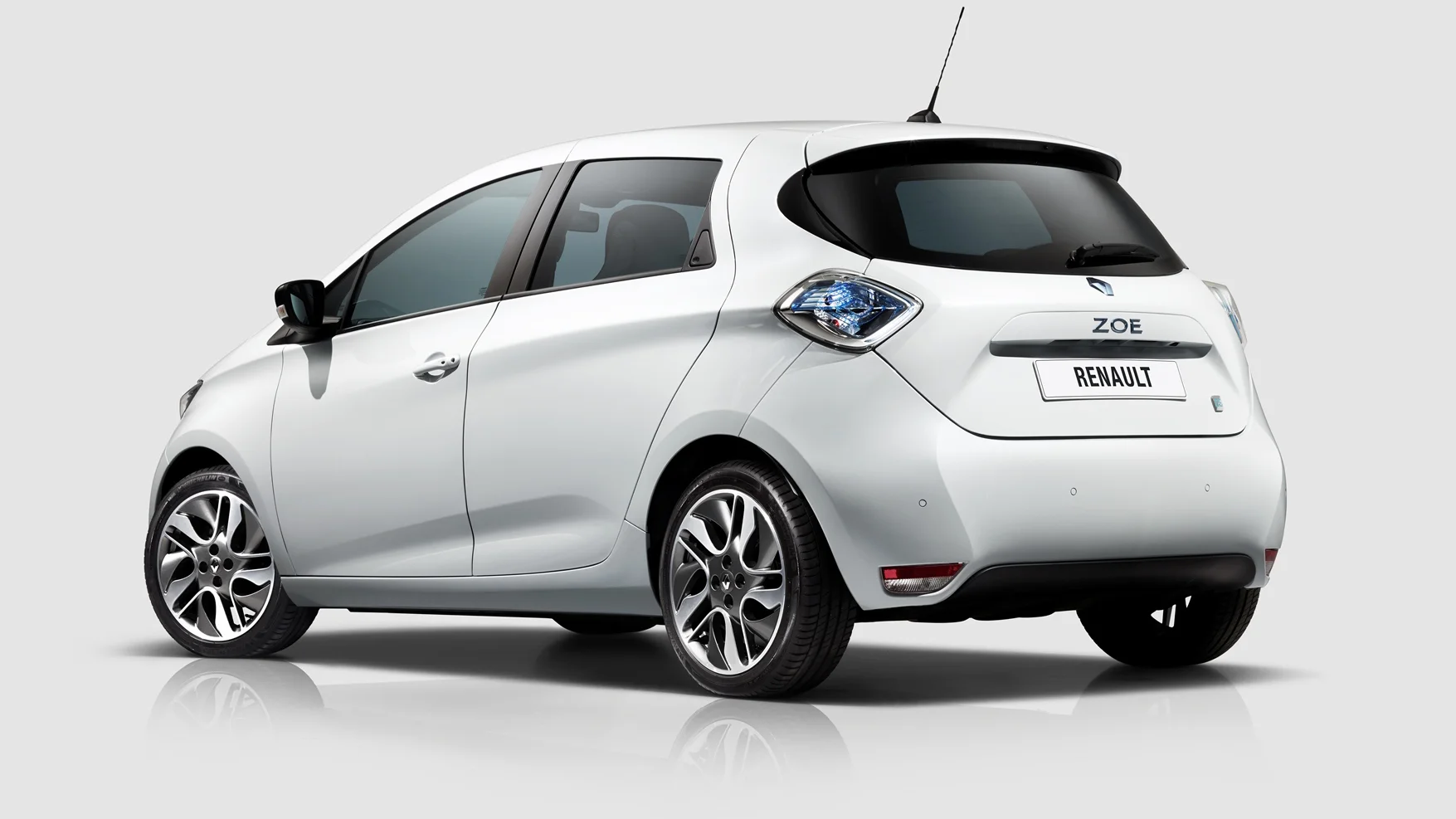
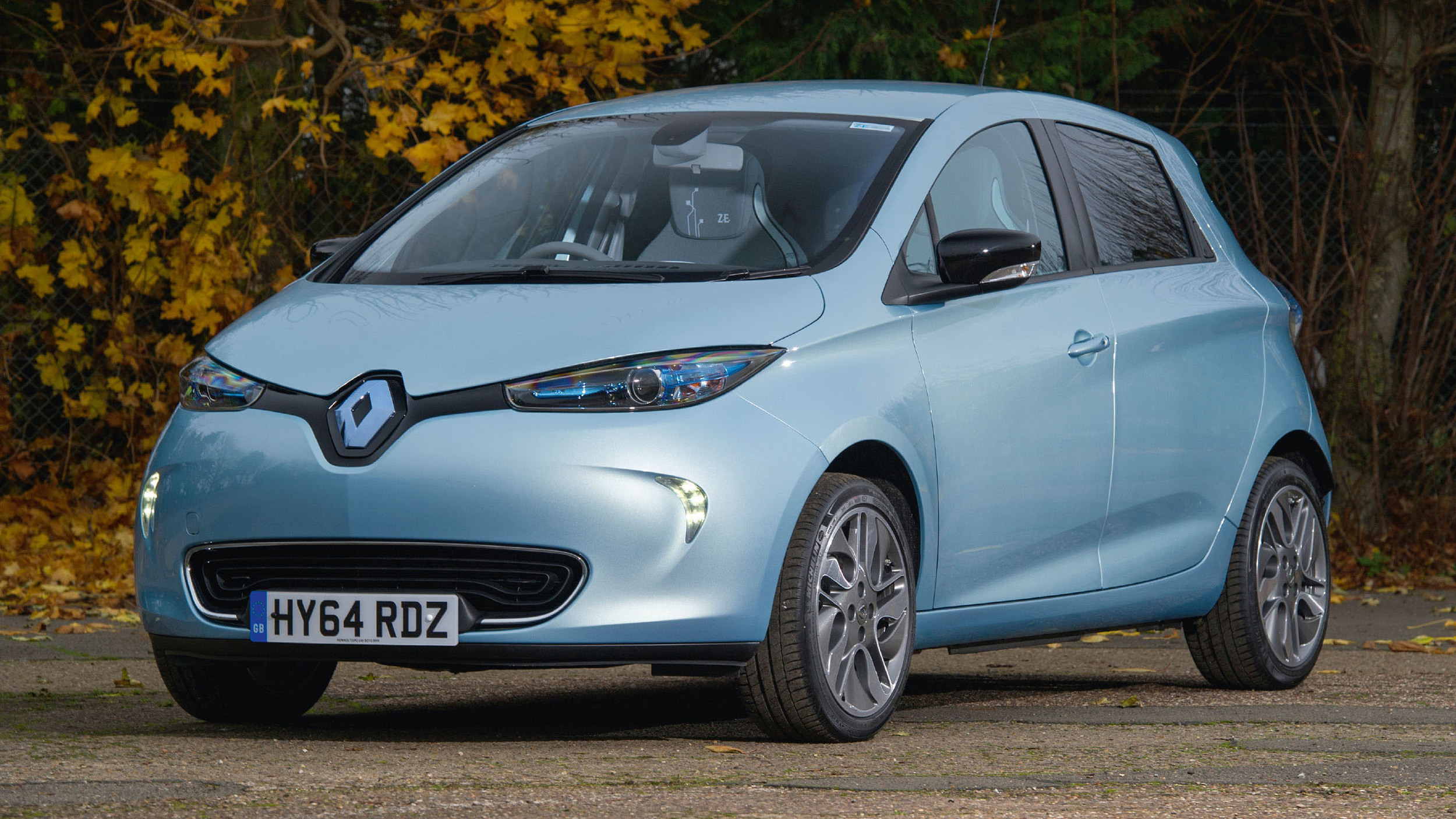
Renault ZOE now includes free domestic charging-box

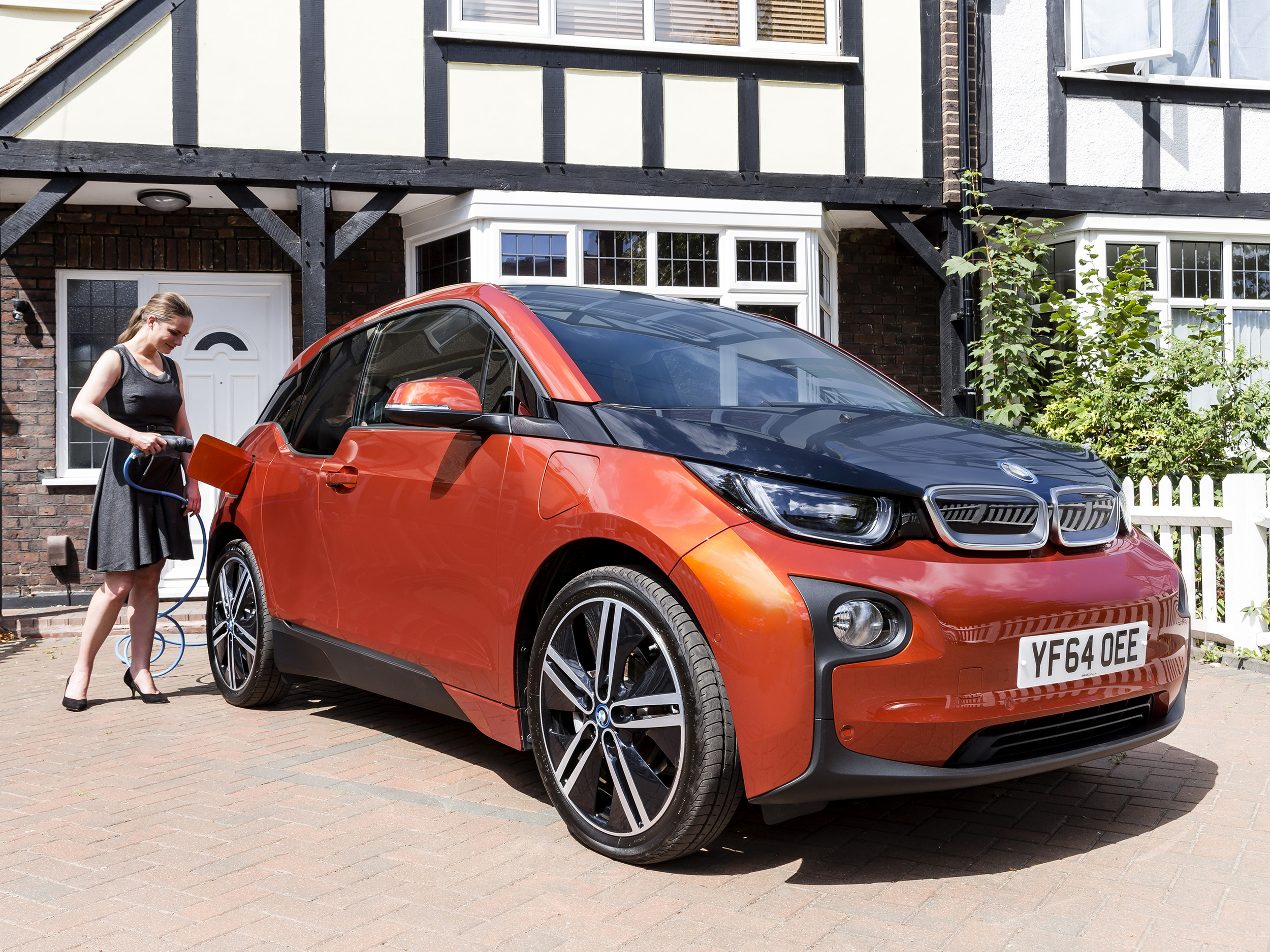
Customers buying a new Renault ZOE will receive a 7kW (30A) wall-box charger fully installed at their home for free.

The free wall-box is part of a partnership between Renault and the British telematics company Chargemaster. Commenting on the partnership, David Martell, Chargemaster CEO, said: "We are delighted to be Renault's official charging partner in the UK. As government figures show, plug-in car sales are increasing as more and more motorists choose to reduce their emissions and their running costs."

The wall-box allows a full charge from zero to 100 per cent full in three to four hours, and is weatherproof so can be installed indoors or outside, with a choice of tethered or socketed cables. The wall-box provides sufficient range for a ZOE to travel up to 149 miles on the official NEDC cycle - comfortably more than most electric vehicle owners' daily mileage. The charger is protected by key controlled access and is covered by a four-year warranty - matching the vehicle manufacturer cover.

Once installed, owners are eligible to apply for a POLAR Network Card which grants access to UK's largest public charging infrastructure with over 3,000 charging points. The wall-box offer is available to retail customers who have access to off-street parking and an electricity supply.

Ben Fletcher, Electric Vehicle Product Manager, Renault UK commented: "We're delighted to be continuing our unique wall-box included offer, which allows us to ensure ZOE customers have the simplest and most convenient electric vehicle ownership experience. Chargemaster offer market leading technology and is dedicated to delivering great customer service so they're the perfect partner to help us deliver the offer."

Prices for the Renault ZOE start at £13,445 OTR after the Government's Plug-in Car Grant.

Electric, News

Petrol stations could become extinct

British motorists could no longer have to rely on the conventional petrol station, with more than 90 per cent of electric vehicles being charged at home.

That's according to new analysis from plug-in vehicle campaign 'Go Ultra Low' who also claim that total charging volumes have almost tripled since 2014 - a 163 per cent increase - according to new usage data from infrastructure provider Chargemaster.

Coupled with bumper uptake of plug-in vehicles - more than 14,500 were registered in the first half of 2015 - the new findings point to the potential for motorists to lessen their reliance on petrol stations by opting for hassle-free electric-car ownership.

Hetal Shah, Head of Go Ultra Low suggests that motorists should consider updating their approach to car ownership: "The reasoning is simple - why should motorists have to go out of their way, regularly spending time at petrol stations, when it is easy to 'refuel' from the comfort of their own home, simply by plugging in an electric car? EV-sceptics sometimes question the usability of the UK's roadside charging infrastructure, but this new data indicates that it is an important, but not critical, facility for most electric vehicle owners."

Government subsidies of up to £700 are available for the installation of fast, efficient home-chargepoints with EV drivers also able to cut tax and fuel costs by around £800 per year versus the average car on the road, with driving costing from around 2p a mile compared to around 10-12p per mile for a typical petrol or diesel car. The savings continue to stack up as plug-in vehicles also need less maintenance and can be parked for free in many places.

Go Ultra Low also says, with the average commute in the UK less than 10 miles, the majority of plug-in car and van drivers are able to charge entirely at home or work, only occasionally using public chargepoints as a back-up or additional top-up for longer journeys.

As well as only commuting short distances, more than a third of UK motorists never travel more than 80 miles in a single trip, comfortably within the 100-mile range of most pure electric vehicles. For those who regularly need to travel further or don't have a driveway for home-charging, some plug-in hybrids can travel around 700 miles without needing to refuel.

Motorists driving beyond their car's range can make use of more than 7,500 public chargepoints in 3,000 locations nationwide. This back-up infrastructure is set to grow further with government planning to complete the installation of 500 rapid chargers in key locations, such as motorway service stations, by the end of 2015. In total, £32 million of infrastructure support is due to be implemented between now and 2020, while £8 million has been set aside for public chargepoints. Crucially, this funding also makes allowance for motorists' primary charging locations, with £15 million available for the Electric Vehicle Homecharge Scheme.

Go Ultra Low is a campaign to help motorists understand the benefits, cost savings and capabilities of the variety of new ultra low emission vehicles on the market. The collaborative campaign is the first of its kind, bringing together a consortium of leading car manufacturers: Audi, BMW, Mitsubishi, Nissan, Renault, Toyota, and Volkswagen alongside the Government and Society of Motor Manufacturers and Traders.

City Car, Electric, News

New trim and longer-range motors for Electric Renaults

Renault has updated the trim levels of two of its three electric vehicles on sale in the UK, and added new longer-range electric motors.

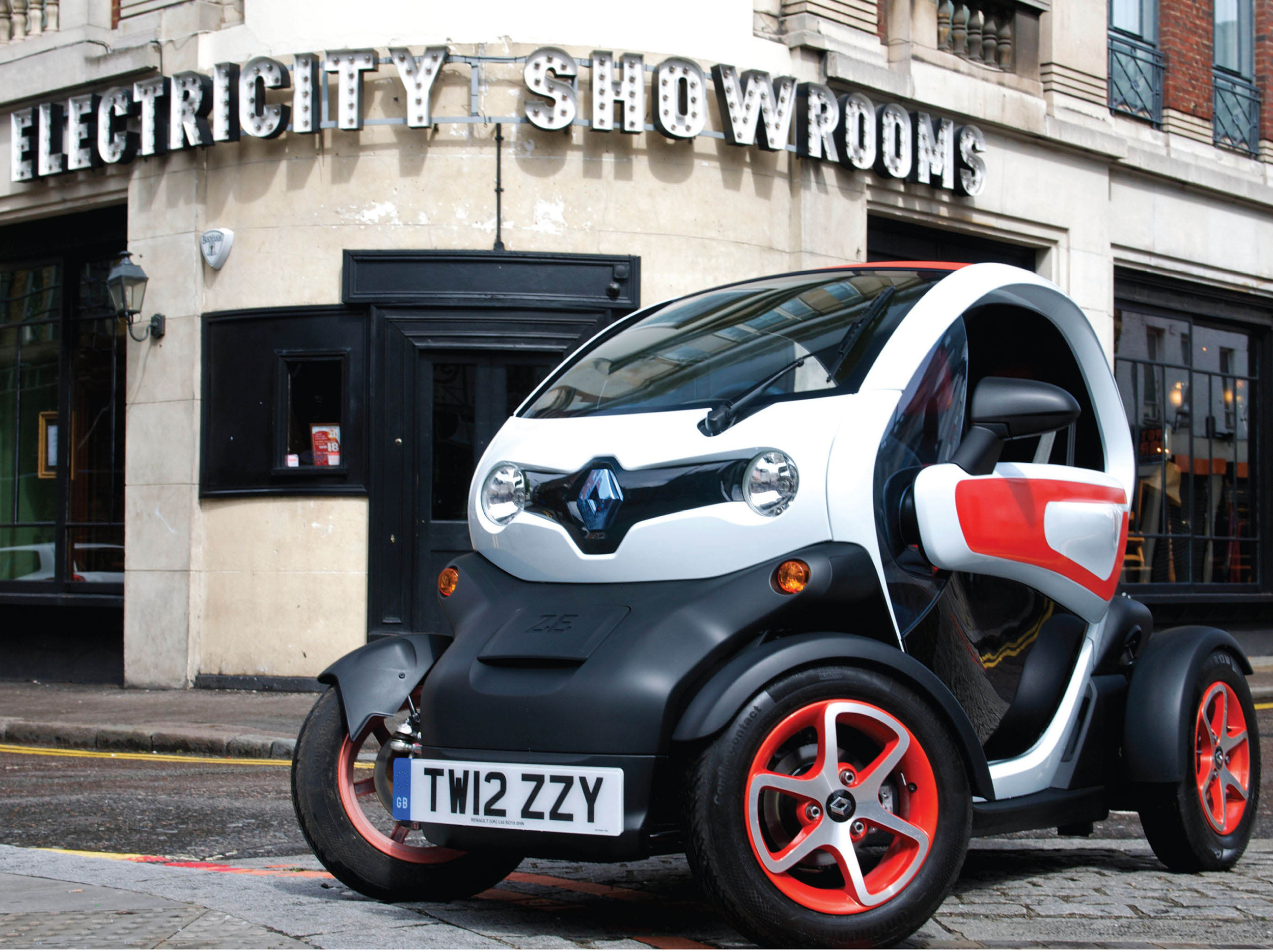
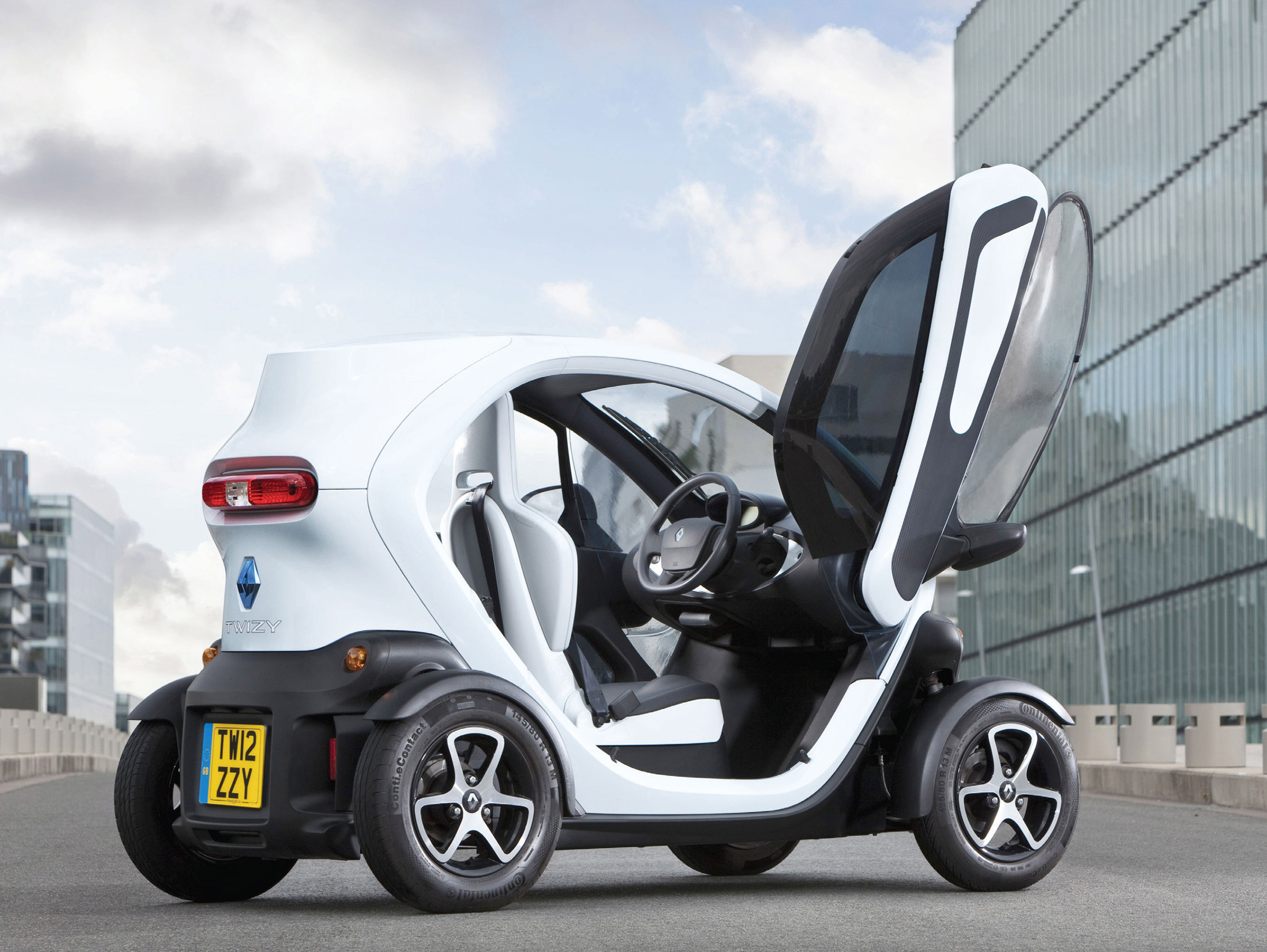
The ZOE supermini and urban Twizy have been refreshed to bring them into line with the company's combustion-engined vehicles and create a more uniform grading structure across all the brand's models.

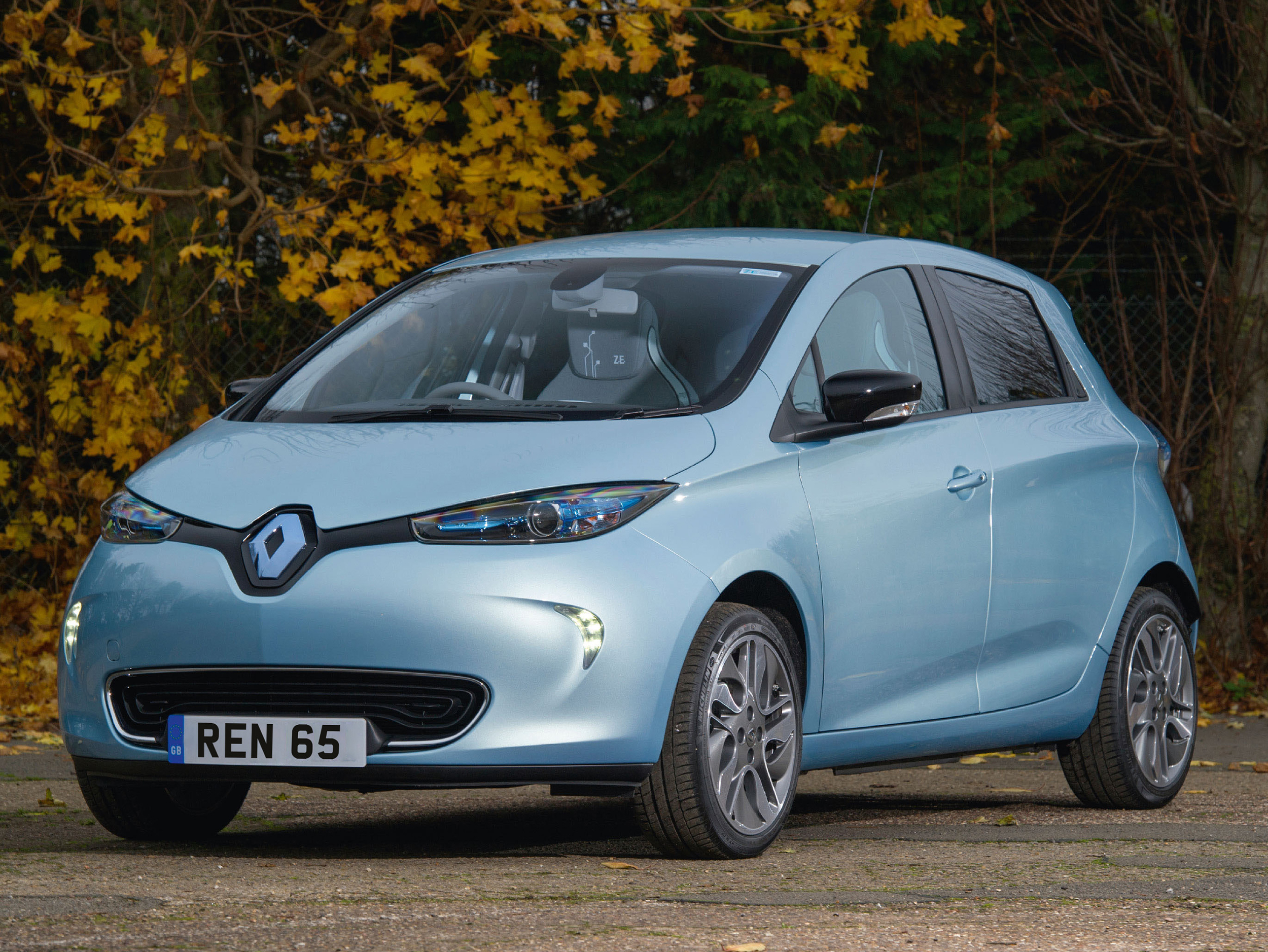
The changes to the ZOE line-up have been timed to coincide with the introduction of a new, in-house-developed, longer-range electric motor. The new line up, with previous models in brackets, consists of Expression Nav (Expression), Dynamique Nav (Dynamique Intens) and Dynamique Nav Rapid Charge (Dynamique Intens). Expression Nav and Dynamique Nav feature the new motor, known as the R240, while Dynamique Nav Rapid Charge retains the original power unit. All three grades of ZOE are available to buy as either battery hire or full purchase 'ZOE i' versions.

The new R240 motor extends the operating range by almost 15 per cent to 149 miles in the New European Driving Cycle. It gives the ZOE a real-world range of 71 to 106 miles, depending on driving style, the use of electrical features like air conditioning, the season and where the car is being driven.

It also features integrated rather than stacked modules, with reduced gaps and no external power cables so that it is more compact. It also has a simplified air-cooling system and a three-in-one junction box incorporating the Chameleon charger and power electronics to form a single unit called the Power Electronic Controller. In the R240 motor this is the only part which is water-cooled.

The result is a 10 per cent reduction in size with no loss of performance, and with reduced energy consumption and faster charge times. This makes it especially suitable for use in smaller cars.

Both motors develop a maximum output of 65kW (88hp) and near-instantaneous maximum torque of 220Nm available in less than one-hundredth of a second. They deliver identical driving performance, with 0-30mph attainable in around four seconds and 0-50mph in 8.6 seconds.

The decision to offer two motors comes about because Renault says it has identified distinct types of use among its EV customers. Many have regular driving patterns, and will therefore appreciate the increased range and reduced charging requirements with the R240 motor. But others are less predictable in the way they use their car. For them, ultimate range is usually not a handicap - but they need the ability to rapid-charge to 80 per cent of battery capacity in the shortest possible time on occasions.

For the Twizy model, 'Expression' replaces the former Urban version and 'Dynamique' takes the place of Technic in the line-up while the Cargo remains unchanged. There have been minor changes to colours, trims and wheels.

The Renault ZOE is priced from £13,445 after the Government's Plug-in Car Grant while the Twizy starts at £6,895 OTR for the Expression.

Electric, Hybrid, News, Saloon, Estate Car

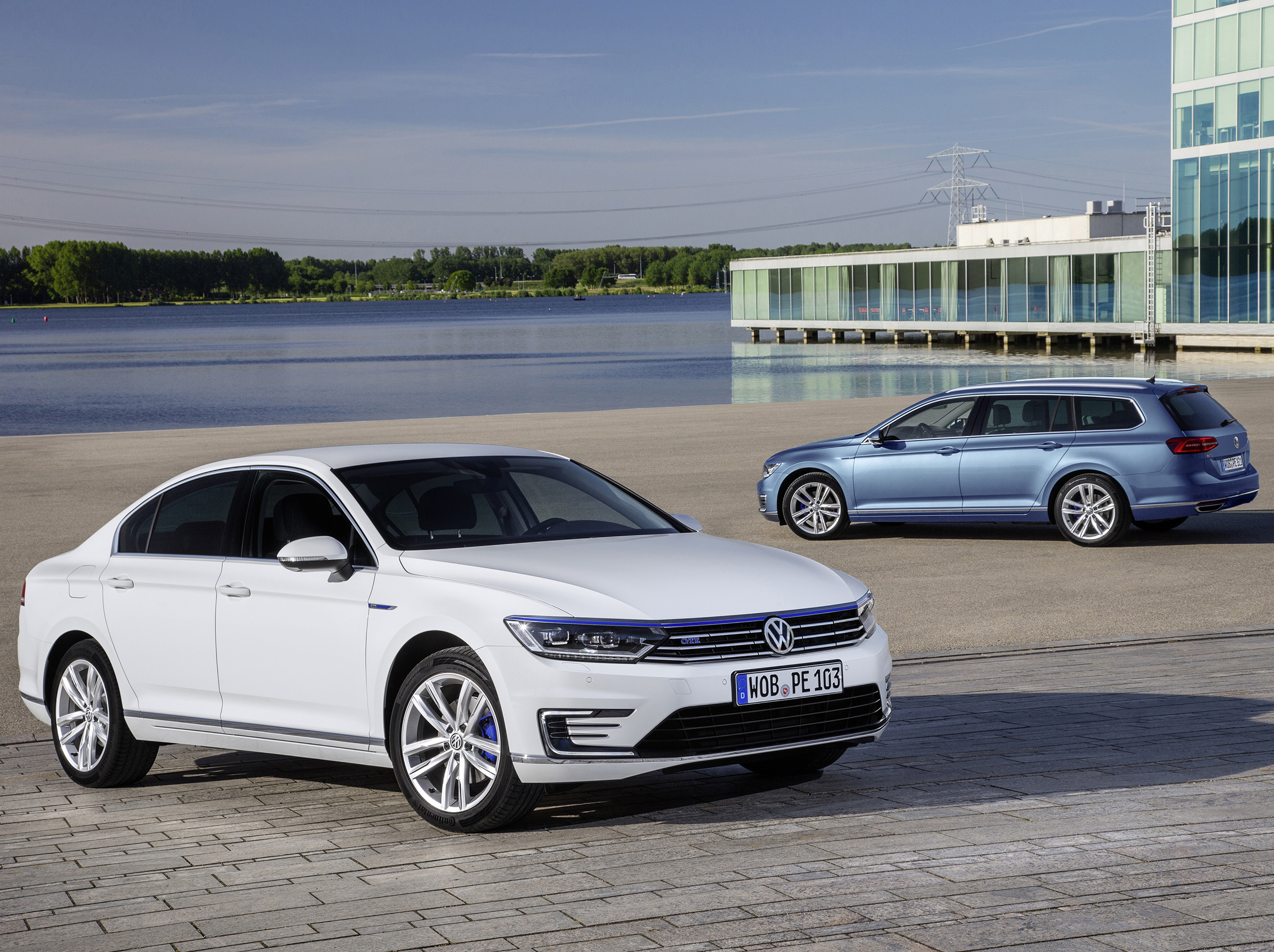
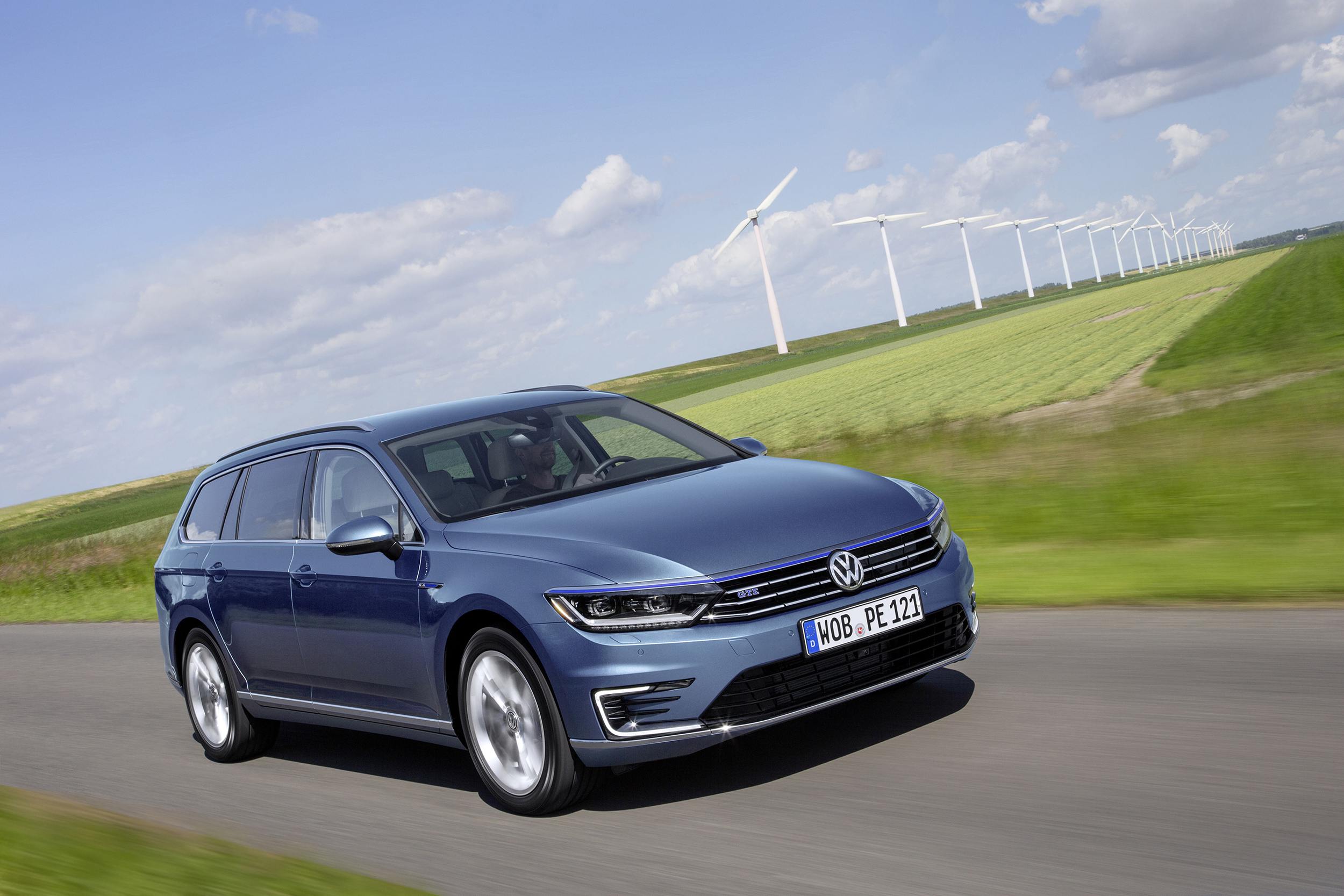
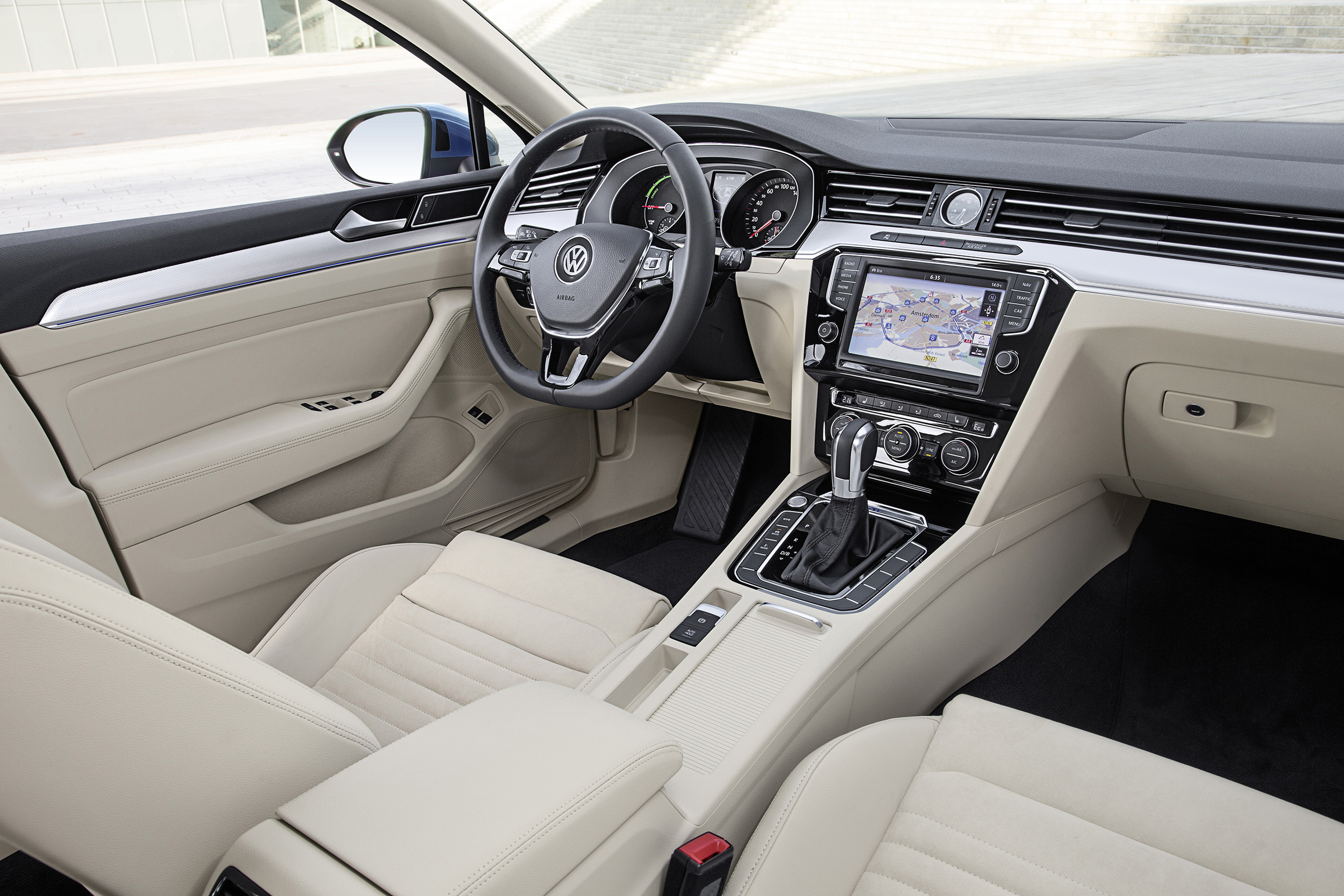
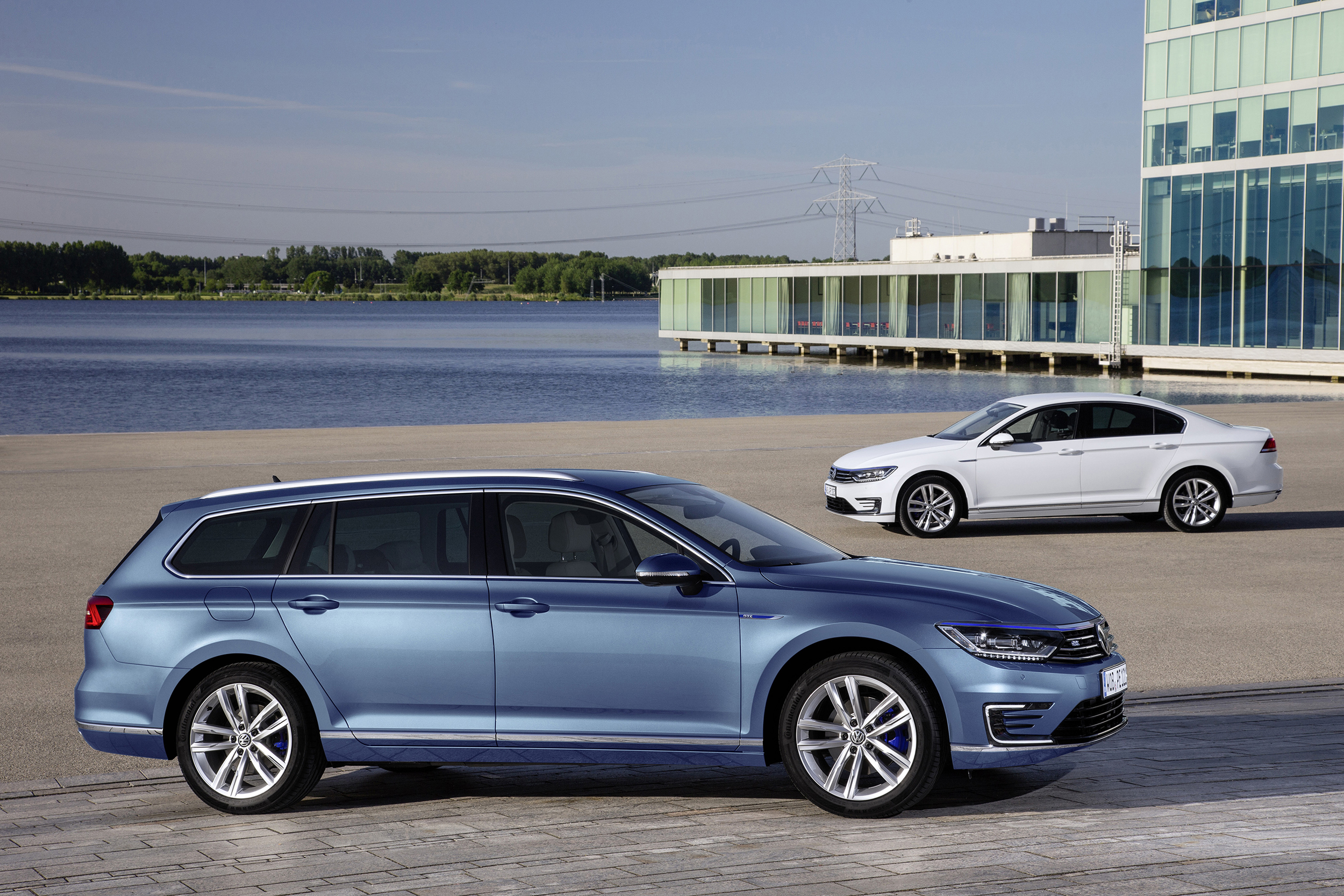
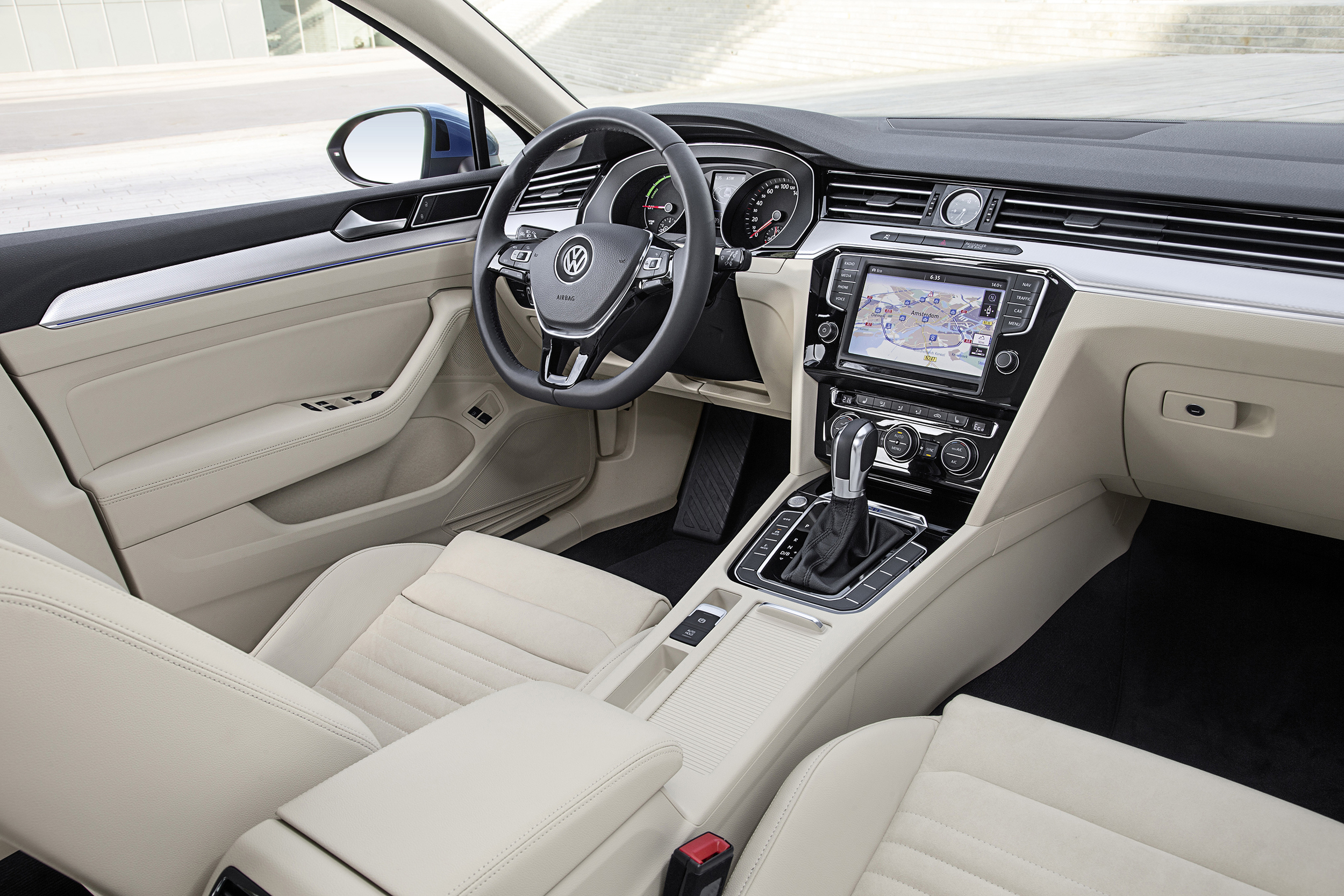
Volkswagen reveals new Passat GTE plug-in hybrid

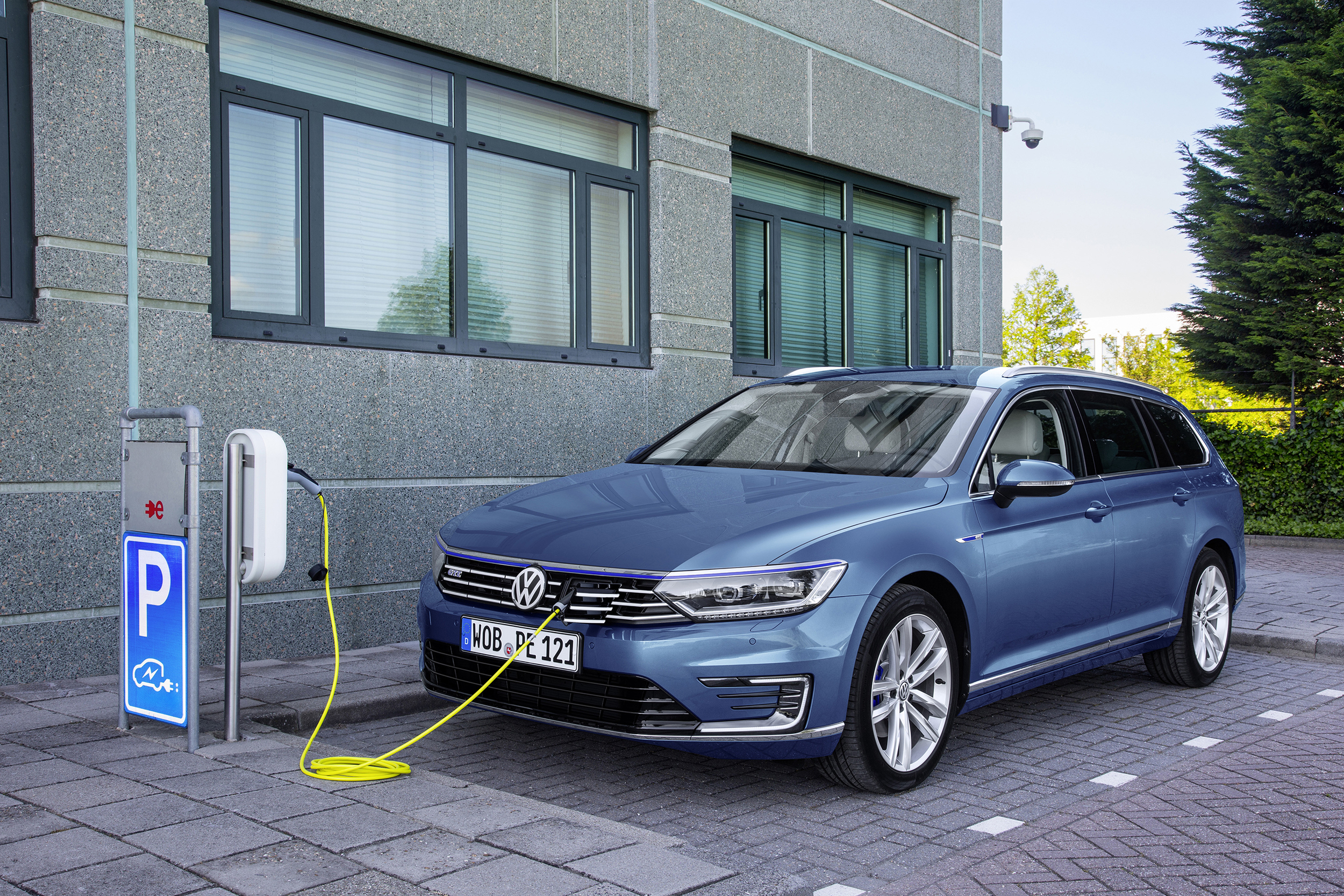
Volkswagen has launched the new Passat GTE plug-in hybrid.

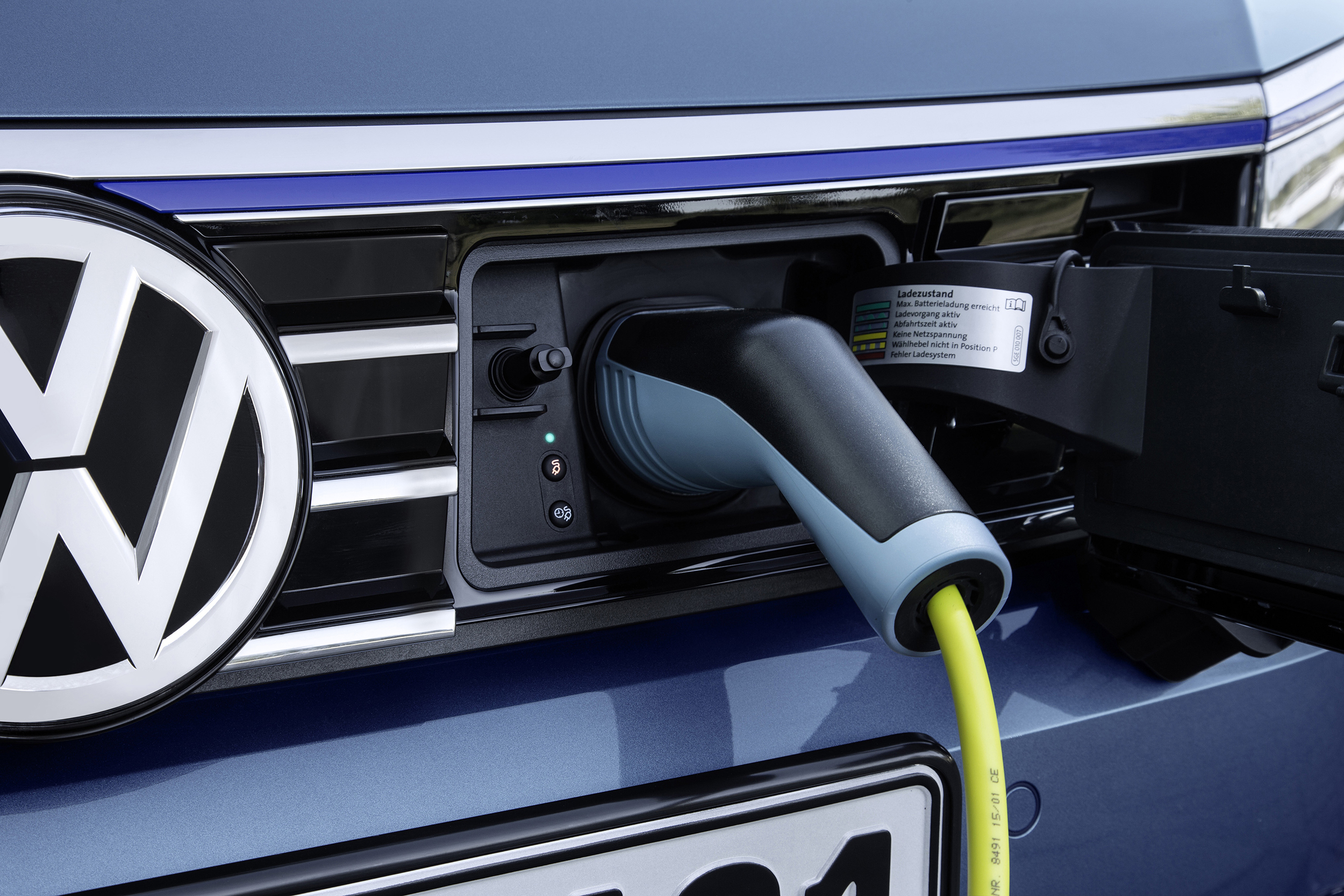
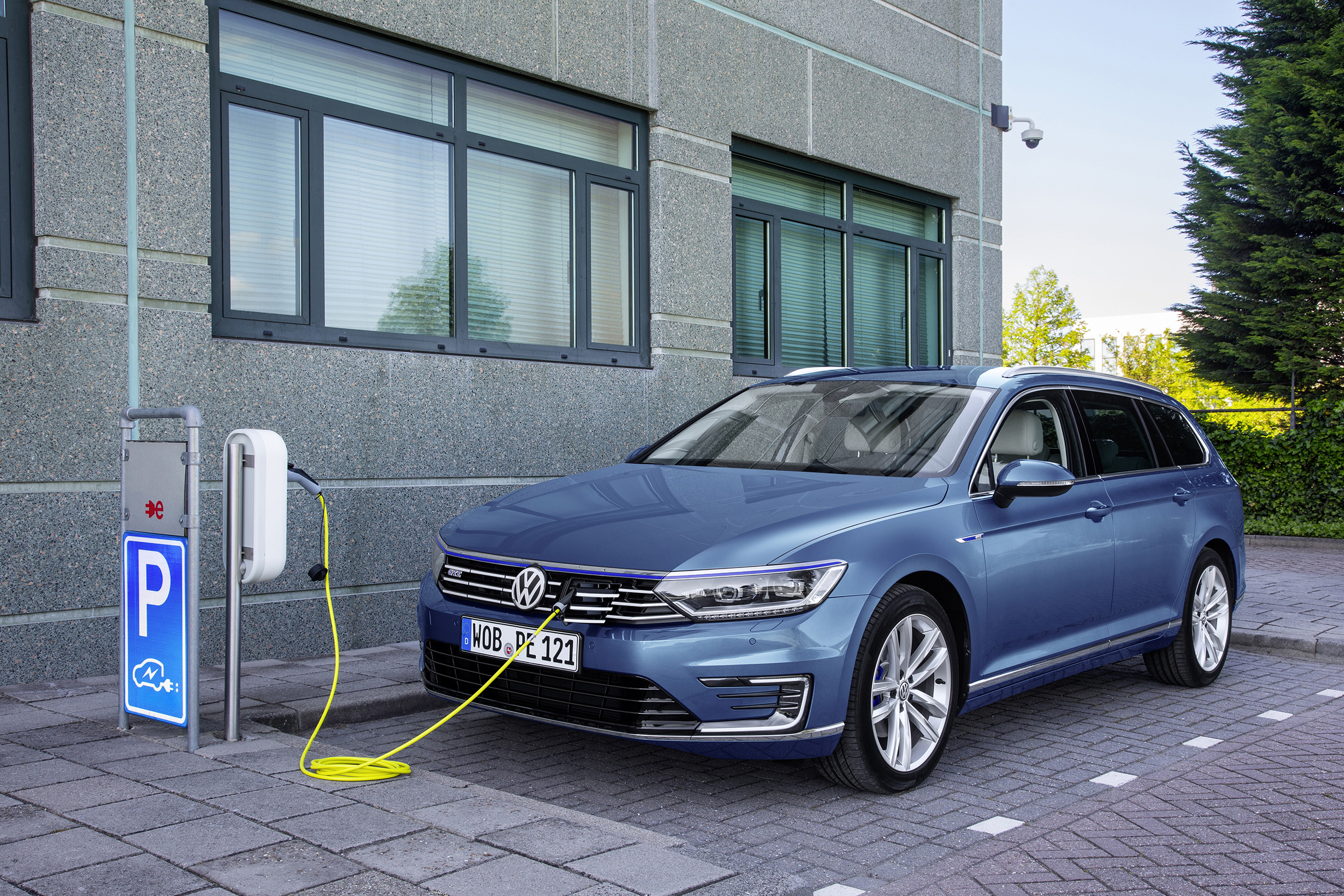
Following the Golf GTE, the new hybrid Passat is available in Saloon and Estate variants. Adding zero-emission to a long-distance touring car, VW describes the Passat GTE as a car with 'superb system output of 160 kW / 218 PS' as well as frugal NEDC fuel consumption of 147mpg and 12.2 kWh/100 km (Estate: 12.4 kWh). The Passat GTE also features an all-electric range of up to 31 miles.

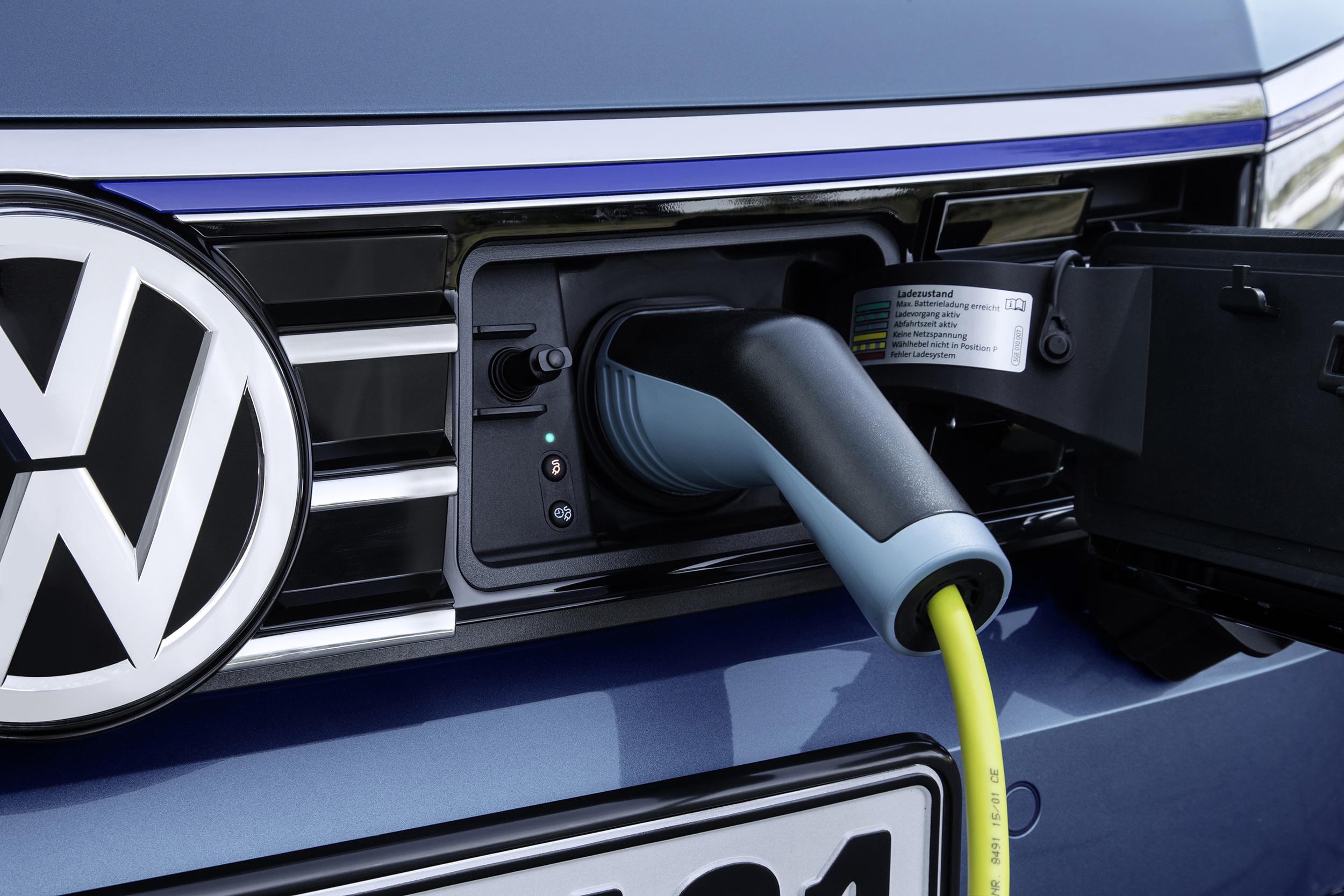
Under normal operating conditions the new Passat GTE begins its journey in all-electric and thus emission-free mode. This E-Mode can also be activated at the push of a button, for example towards the end of a journey as you enter a city. In cities like London, drivers are therefore exempt from the usual congestion charge.
Volkswagen says the Passat GTE is an independent trim line. The high-tech model's 'extensive standard features' include LED headlights (for main and dipped beam), Driver Alert System, Automatic Post-Collision Braking, the Front Assist ambient traffic monitoring system including City Emergency Braking function, a rain sensor, ParkPilot for front and rear, chrome trim on the side windows and comfort seats (in the front).

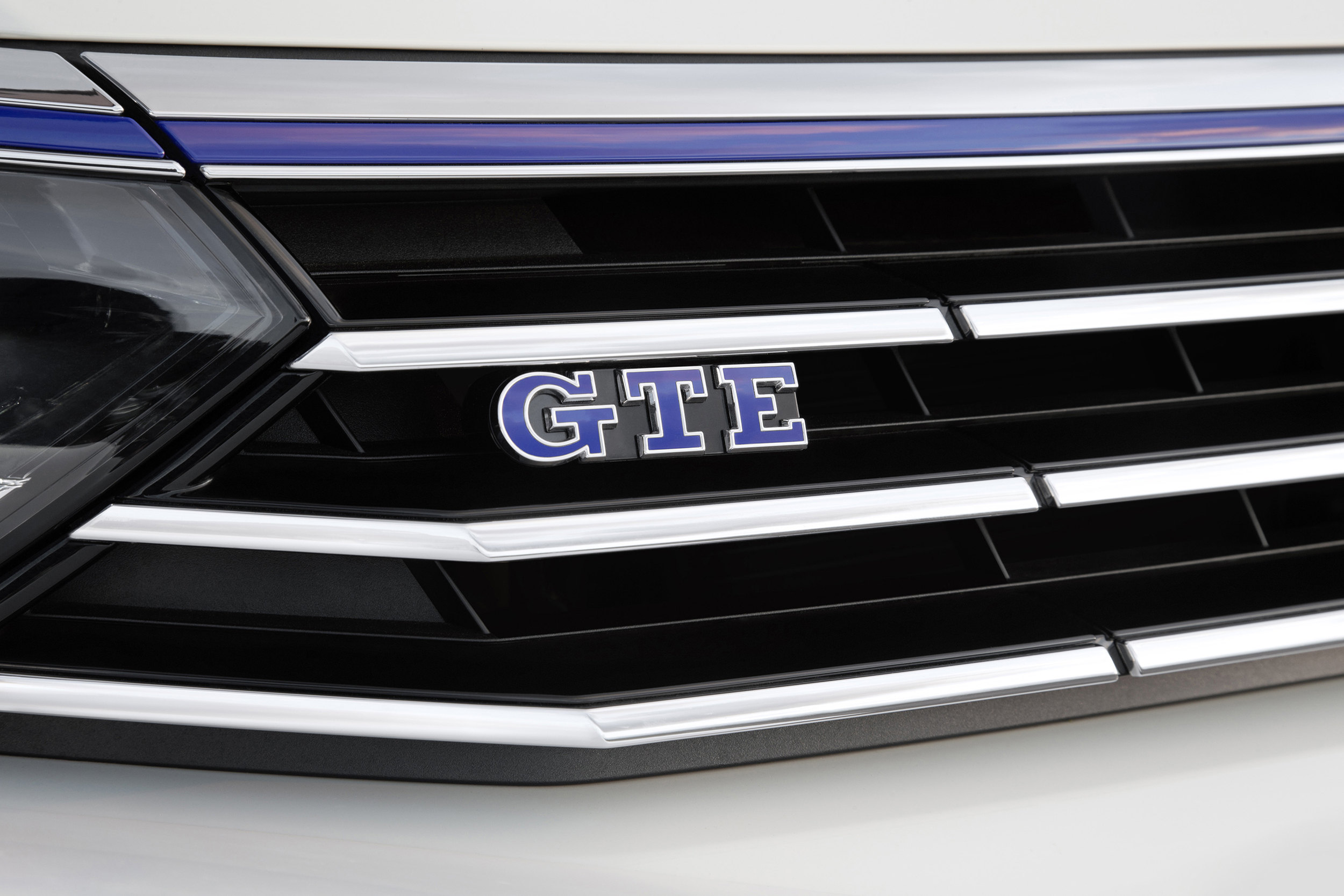
In addition, there are elements of individualisation that have been conceived solely for the Passat GTE. These include at the front a specific chrome radiator grille unit with an integrated blue stripe (the colour of Volkswagen electric motoring) a completely redesigned bumper with a C-shaped LED daytime running light signature and 17-inch Montpellier alloy wheels.

On the inside, the interior has also been 'conceptually aligned to the new drive system'. The Media infotainment system features a dedicated menu matrix to the functions and displays specific to the plug-in hybrid's drive system while standard details such as the blue ambient lighting, the multi-function leather steering wheel with blue decorative stitching, a GTE-specific gear knob with blue stitching and the seats, likewise with a matching blue basic structure.

The Passat GTE and Passat GTE Estate will arrive on the European market this autumn, prices have yet to be announced.

Crossover, Electric, SUV, News

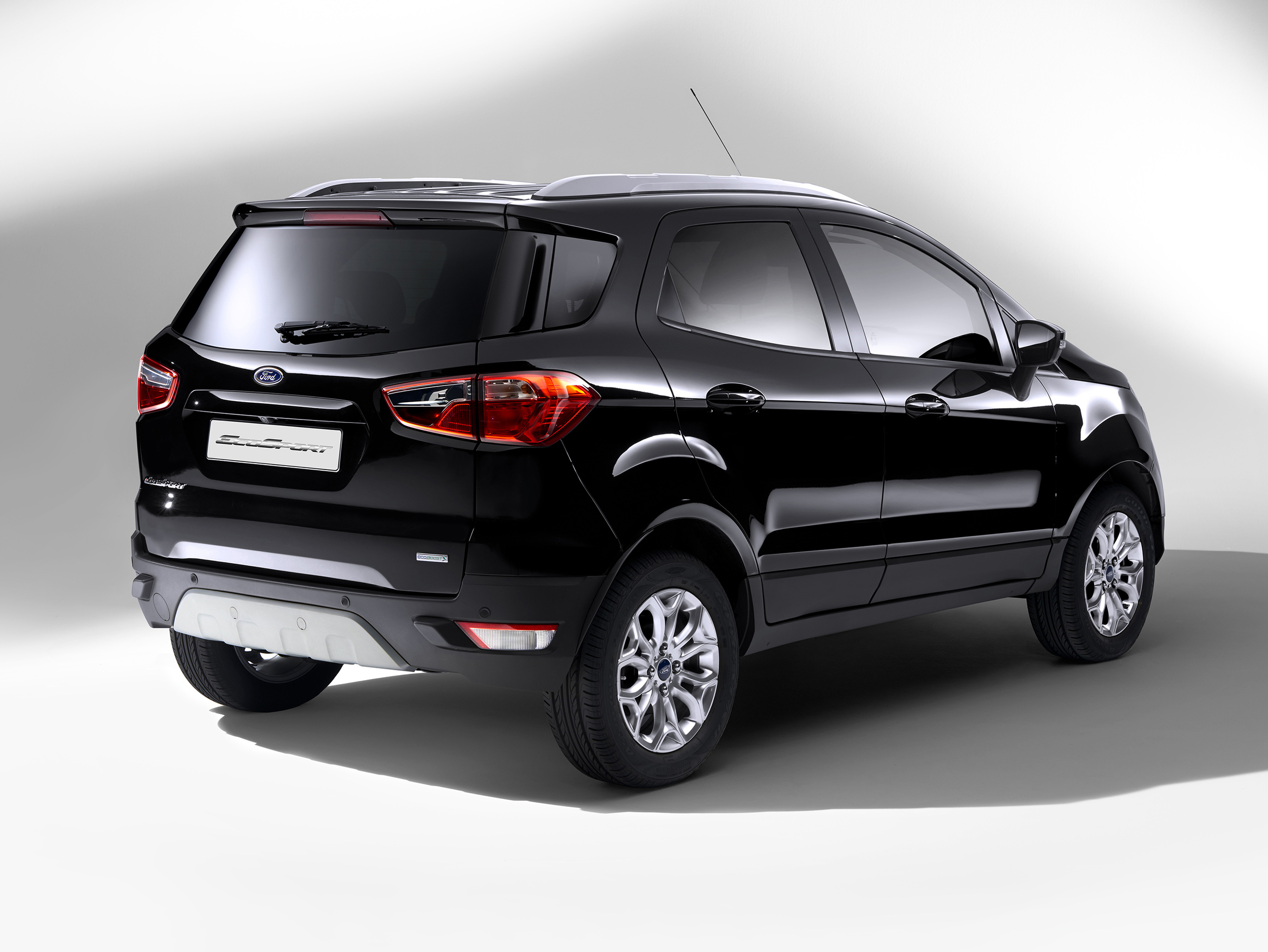
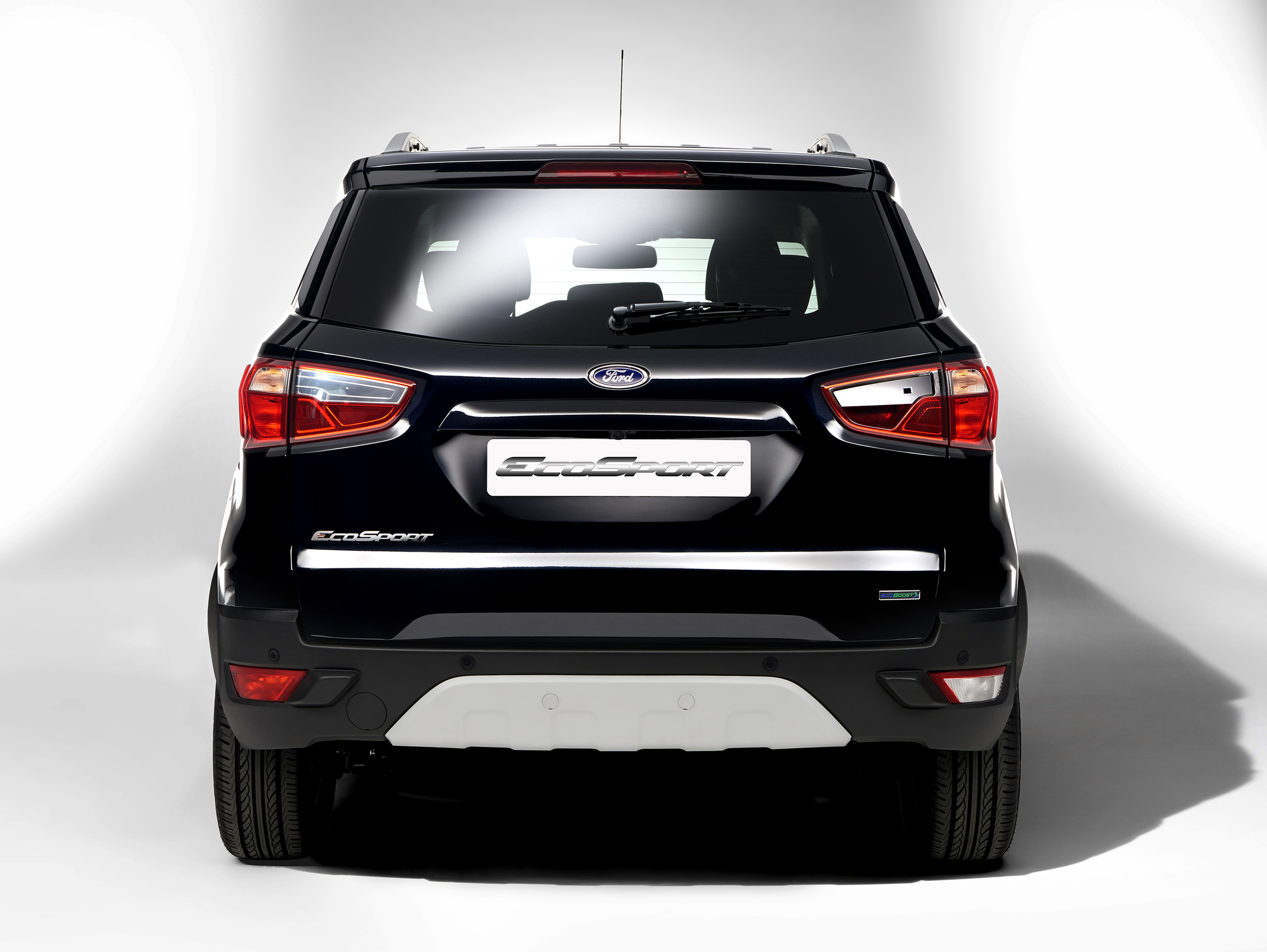
Ford EcoSport gets new upgrades

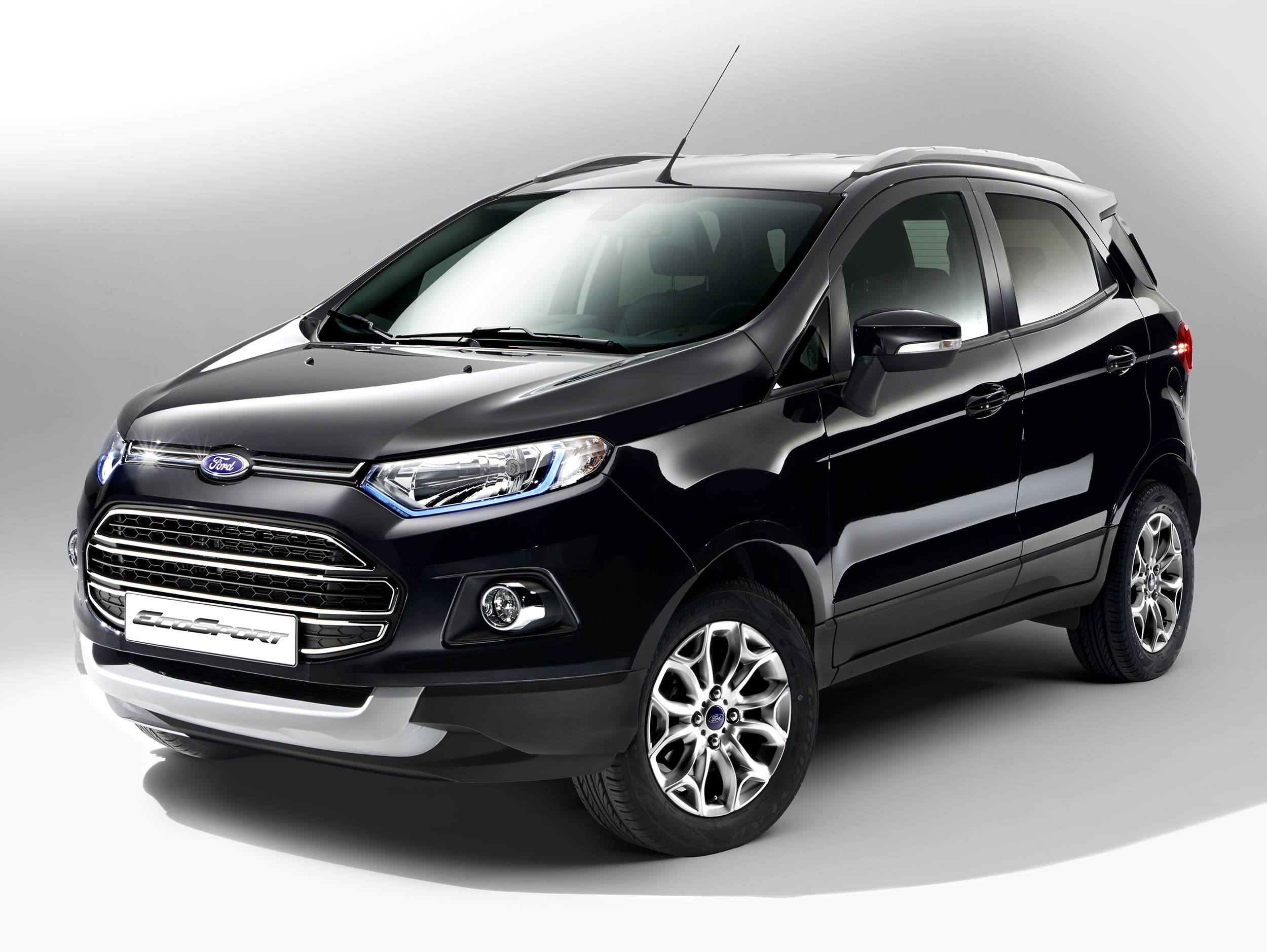
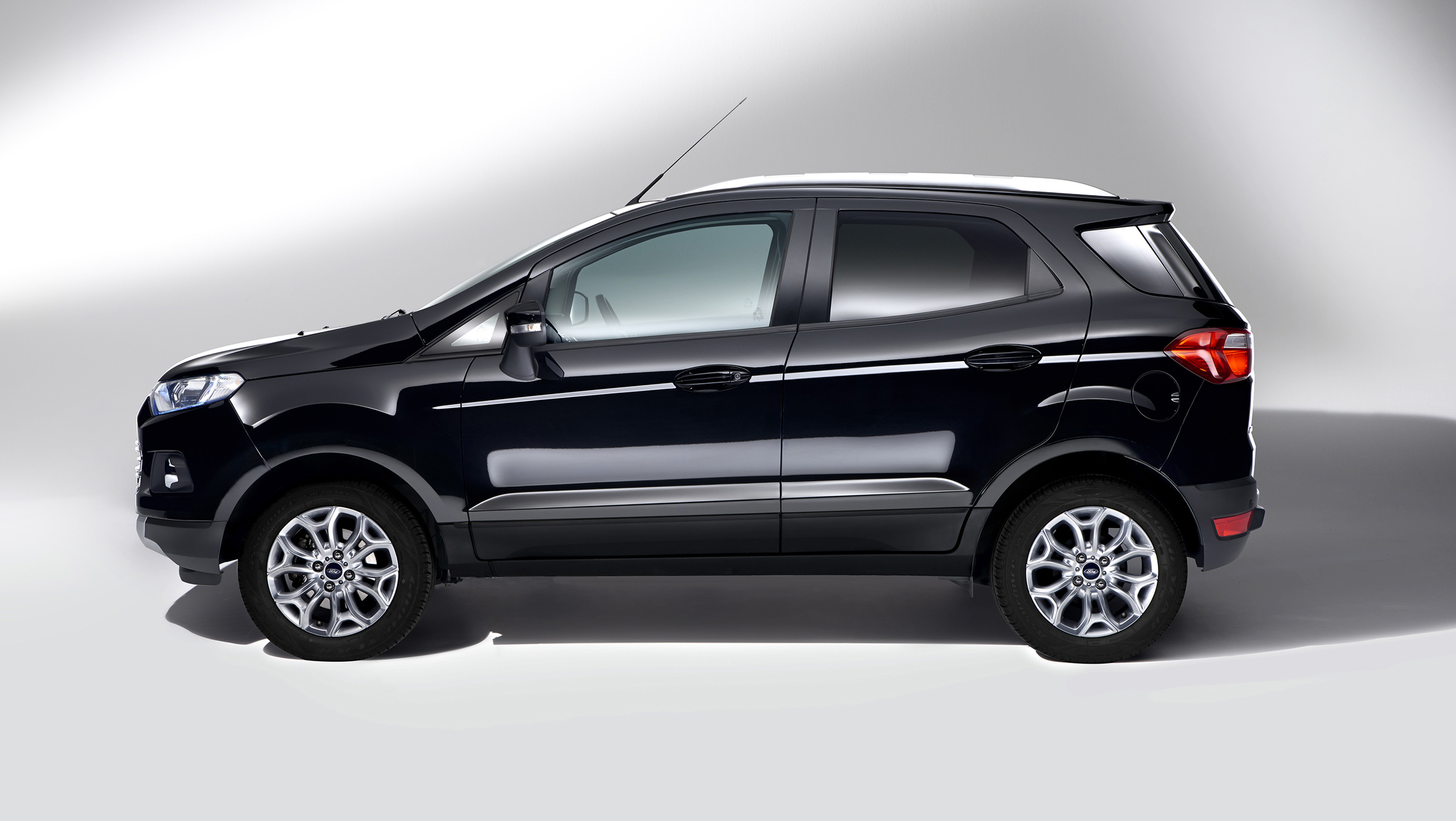
The Ford EcoSport has received new styling upgrades, improved driving dynamics and new equipment for 2015.

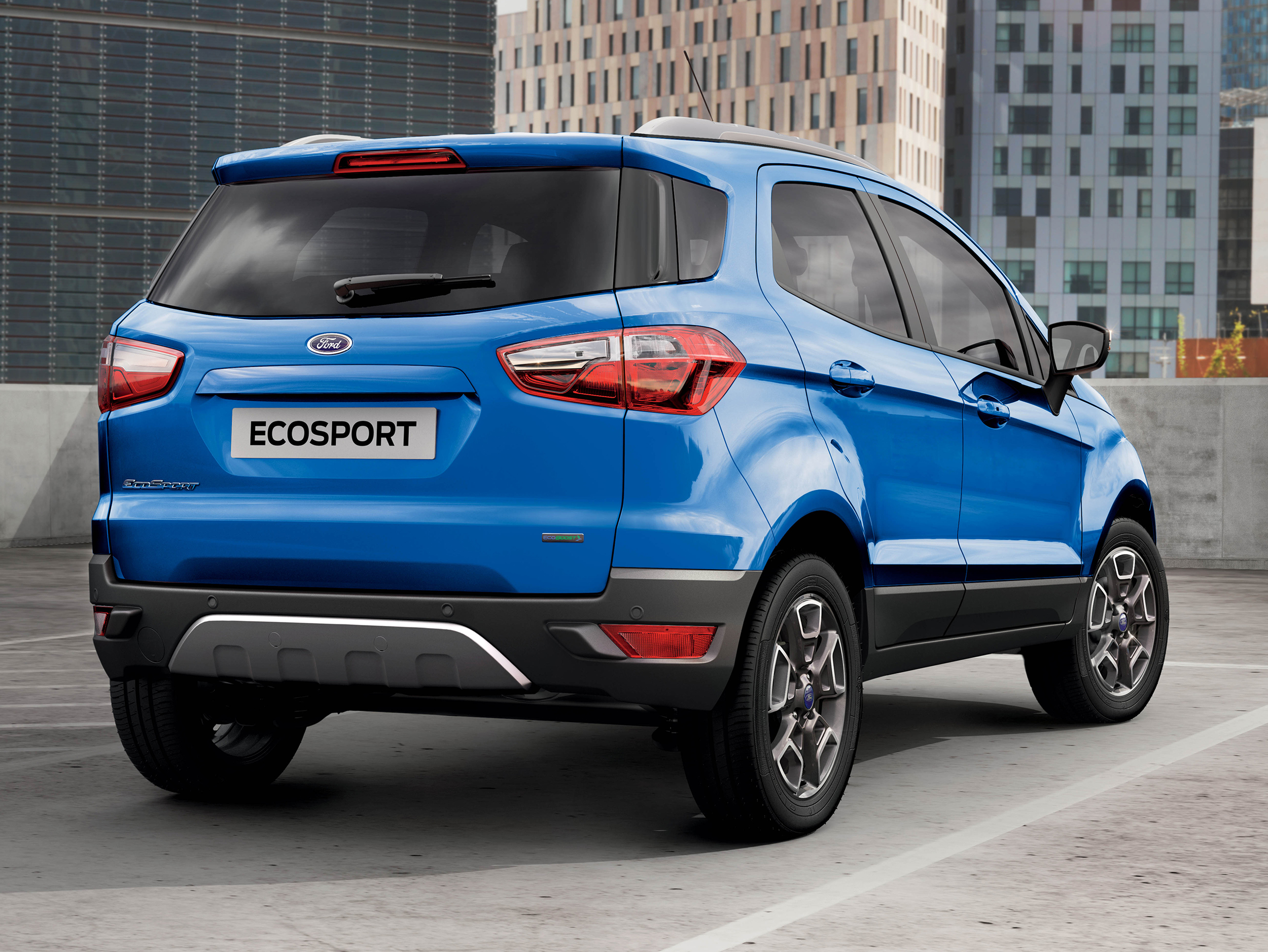
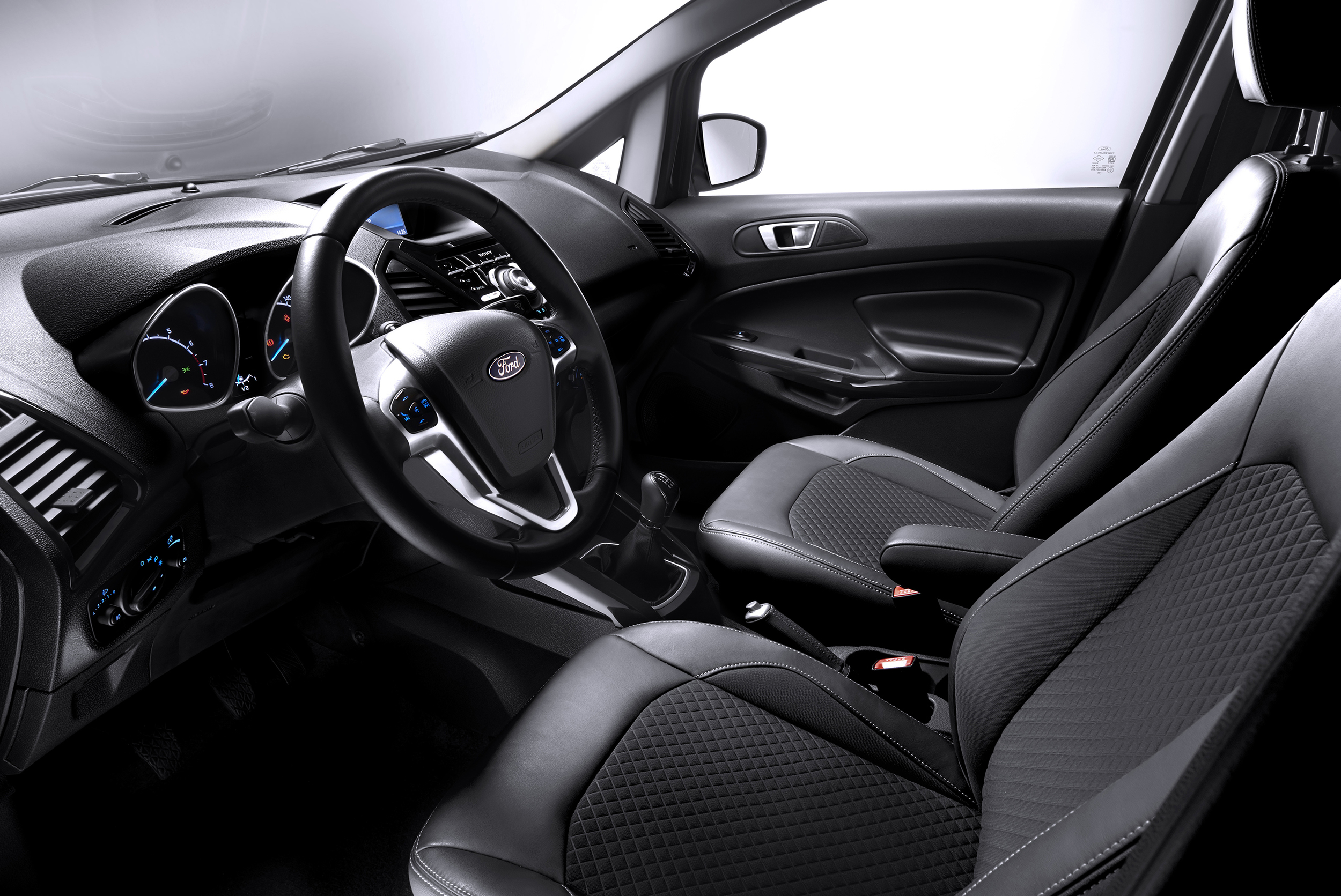
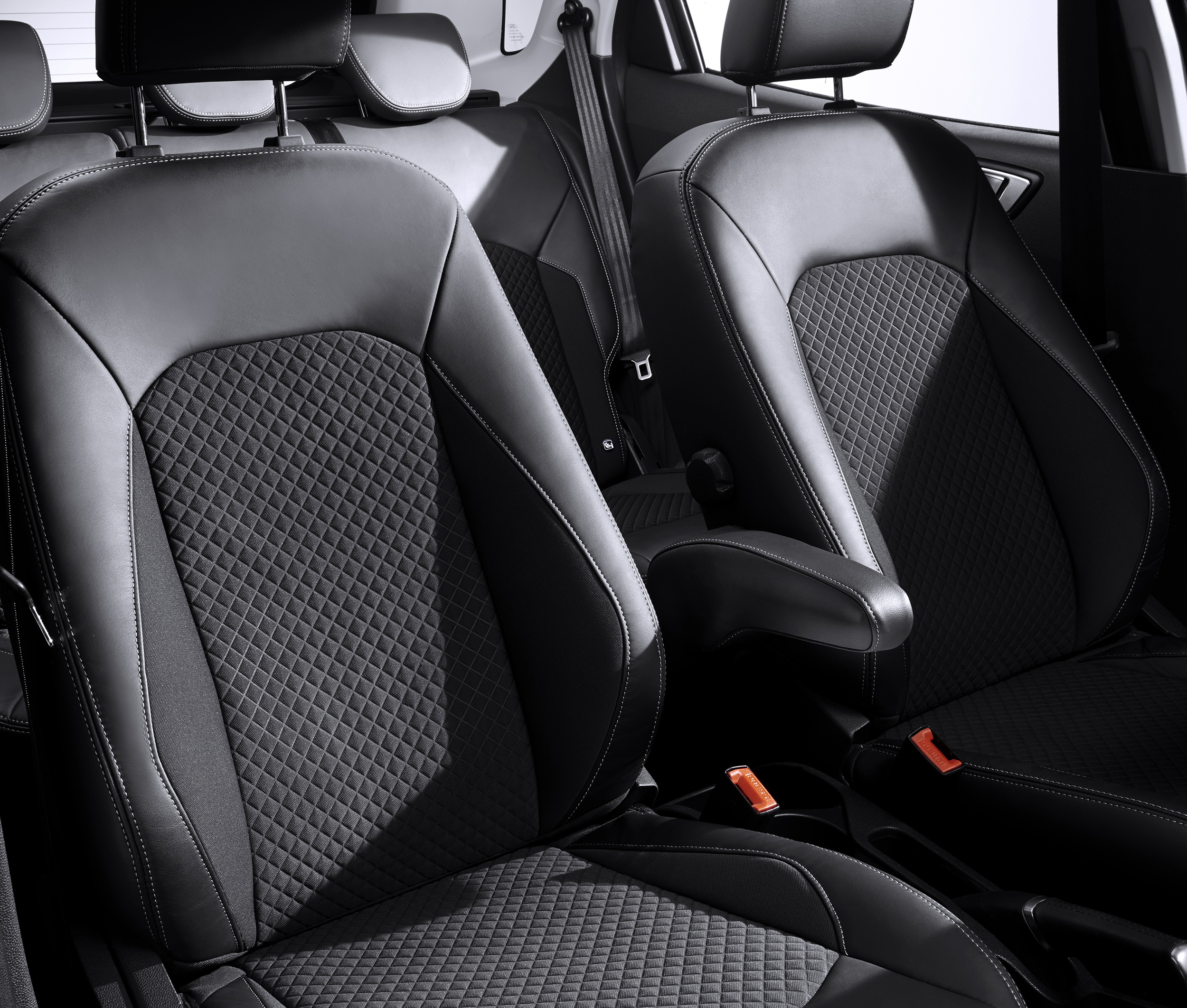
Customers can now specify the compact SUV without the rear-mounted spare wheel, while interior improvements include standard partial leather seats for Titanium models and additional chrome detailing. Driving dynamics have been improved with revisions to the springs, dampers, rear torsion beam, Electronic Stability Programme, and Electronic Power Assisted Steering settings.

Convenience and comfort are also enhanced with a Winter Pack - featuring heated windscreen, heated mirrors and heated front seats. Models specified without the rear-mounted spare wheel feature a tyre mobility kit as standard, while the rear swing-gate design for those vehicles also has been revised to allow easier access to the bootspace with partial opening.

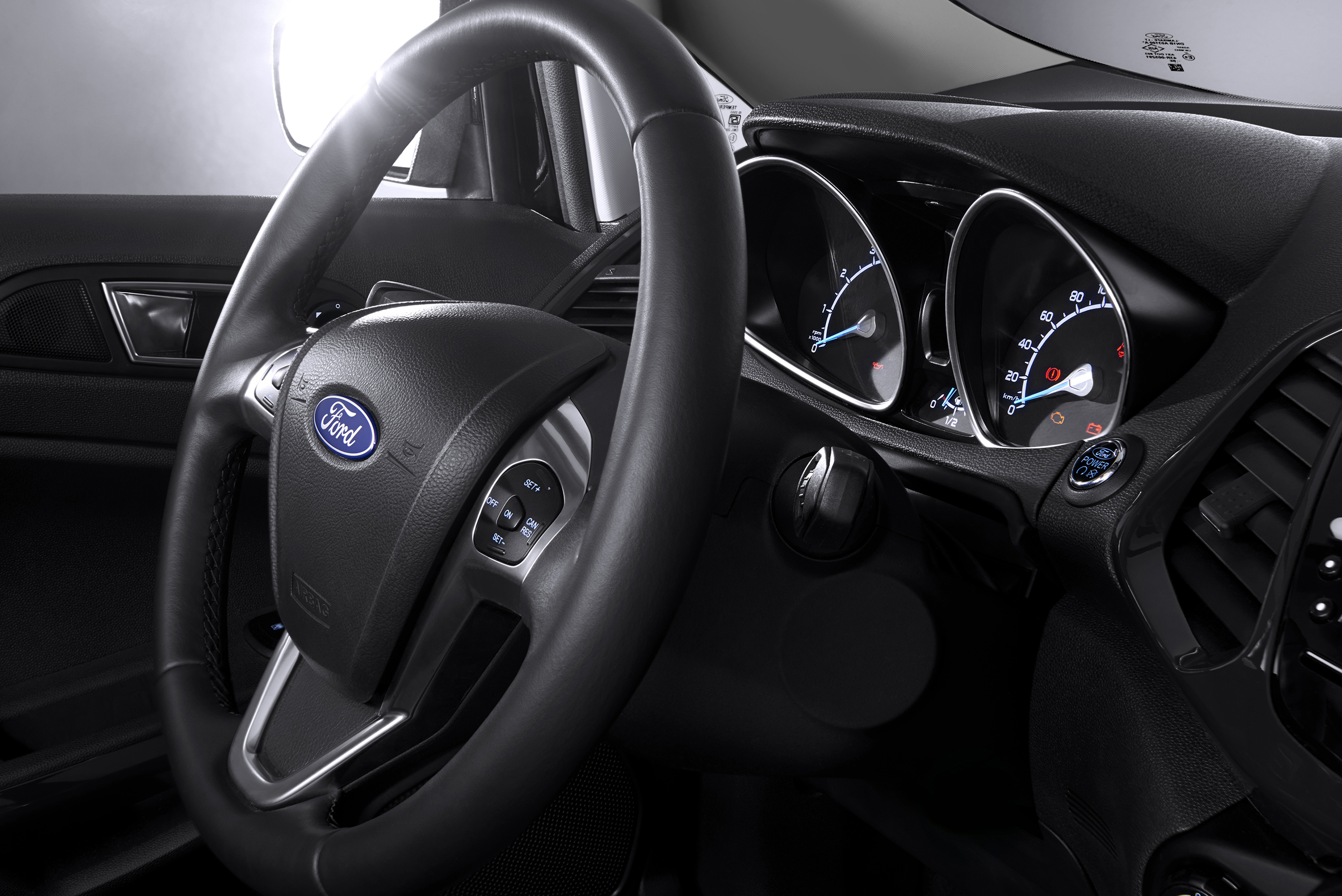
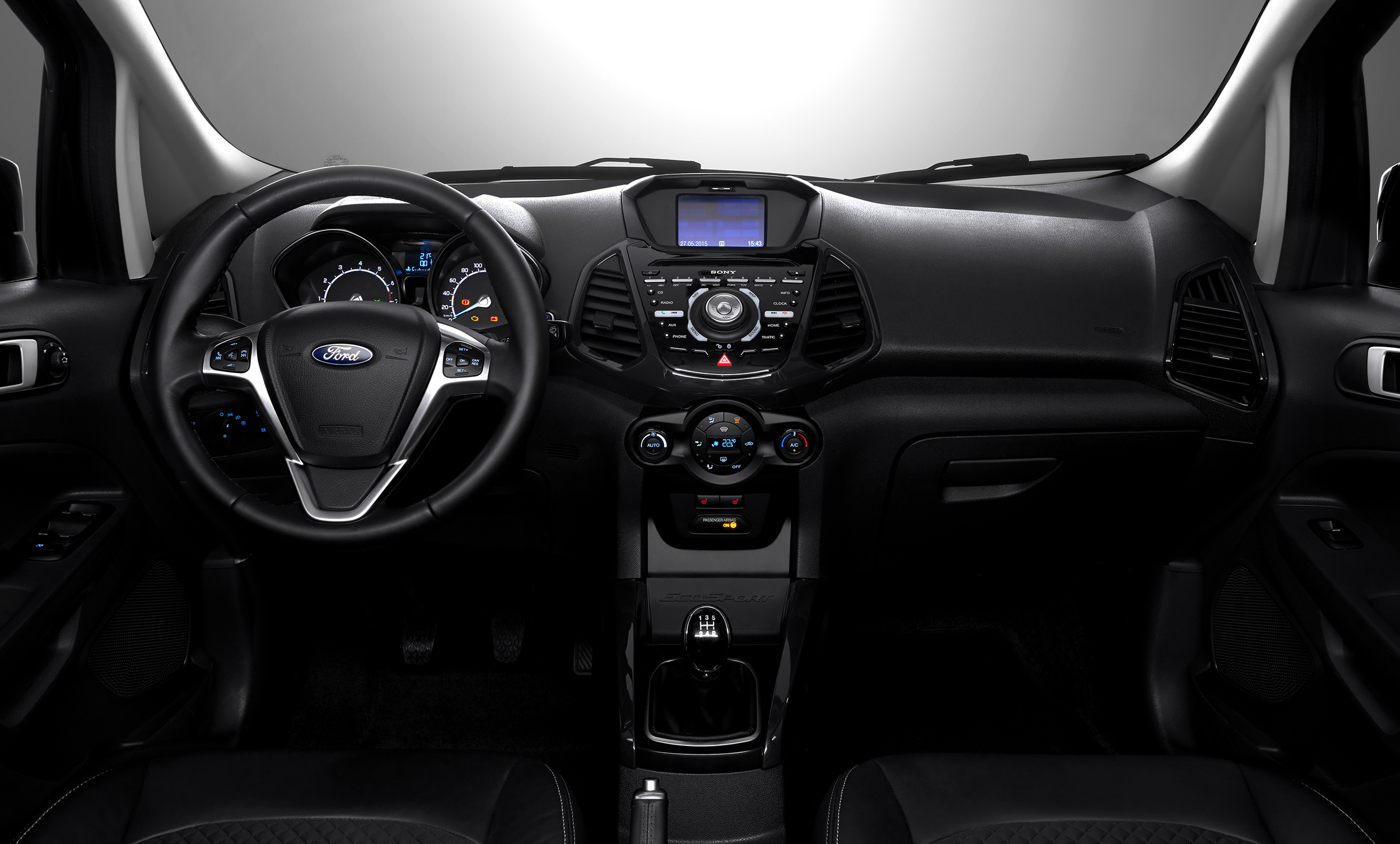
Inside, privacy glass is available for all EcoSport trim levels, while the Winter Pack also adds rear seat ventilation at floor level to improve comfort for rear passengers in cold weather. The restyled interior has a charcoal black lower instrument panel, centre console and door boards. The instrument cluster now features a light dimming function and chrome-surround rings to match the electric window switches.

Refinement has been enhanced with thicker sound deadening materials in the doors and dashboard, as well as tighter seals around the pedals. Engine and gearbox matching has been revised to offer more low speed torque and better drivability.

'Significant' improvements to the EcoSport's driving dynamics follow development work at the Ford Lommel Proving Ground, where 50 miles of test tracks include replicas of European road surfaces. This resulted in a stiffer rear torsion beam being added, offering 'greater control of body roll', and revised spring and shock absorber rates improve damping.

A 10mm reduction in ride height lowers the car's centre of gravity for improved handling, and Electronic Stability Control and power steering systems also have been specifically tuned for European roads.

The 1.5-litre TDCi also now offers 95PS, a 5PS improvement, and delivers 64.2mpg and 115g/km CO2. The 125PS 1.0-litre EcoBoost delivers 52.3mpg and 125g/km CO2, while the 1.5-litre Ti-VCT engine delivers 44.8mpg and 149g/km CO2. All engines now meet Euro Stage 6 emissions standards.

Further technology that will be available later this year for EcoSport, for the first time including satellite navigation and Rear View Camera to help drivers manoeuvre the vehicle when in reverse.

Prices for the revamped Ford EcoSport start from £14,245 OTR and is available to order now, for an October delivery.

Electric, Hatchback, News

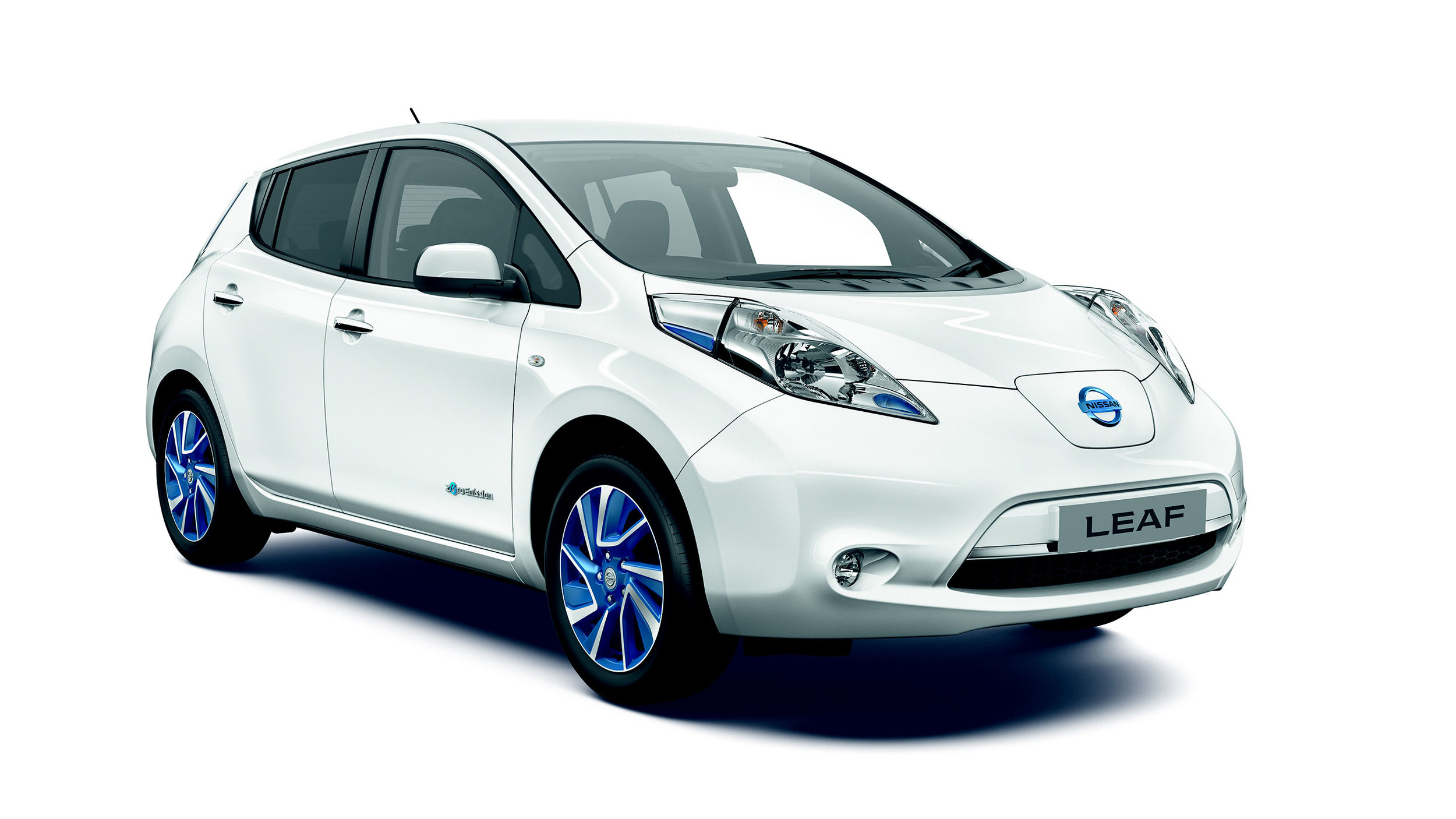
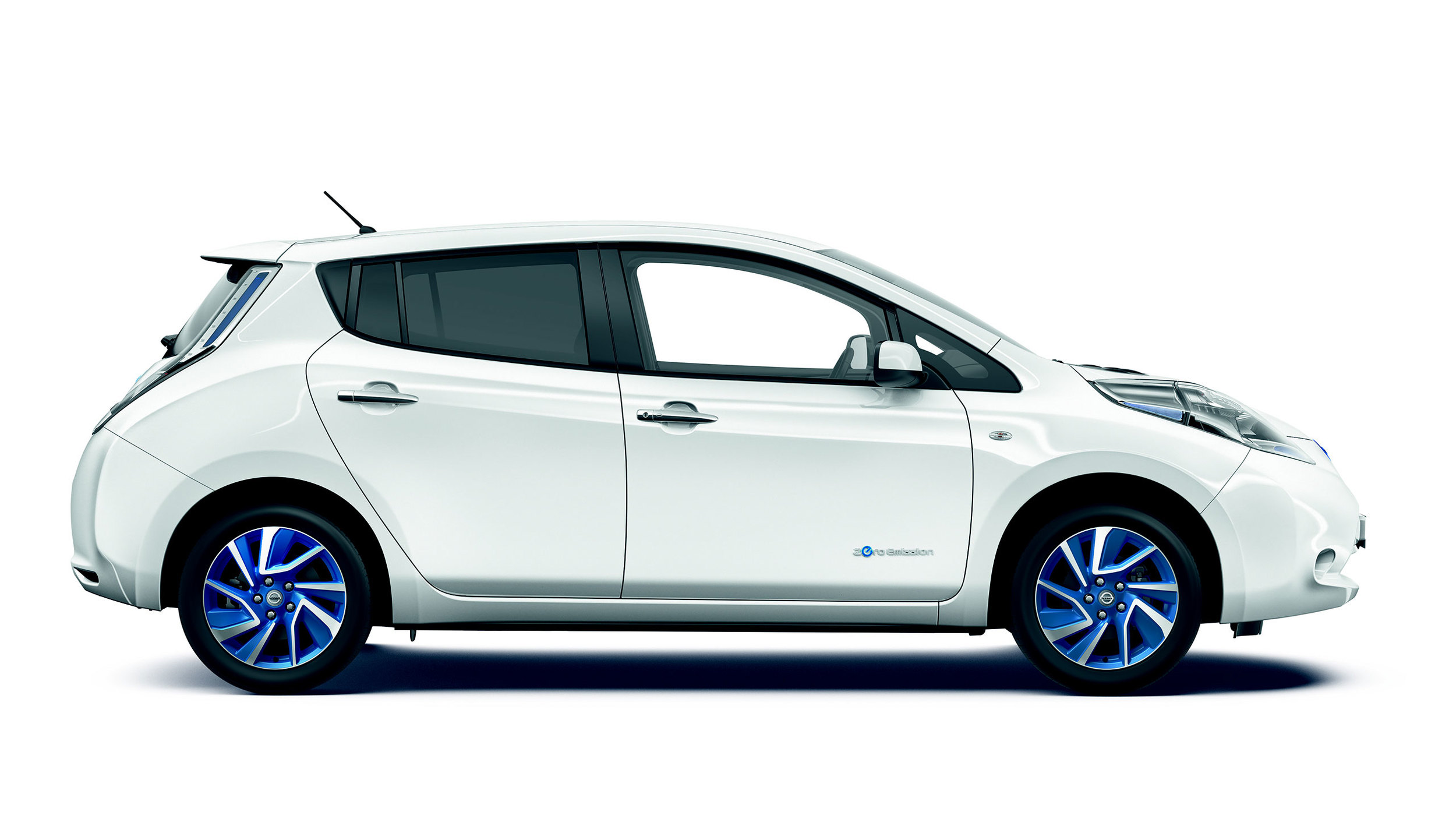
Nissan adds Acenta+ to LEAF range

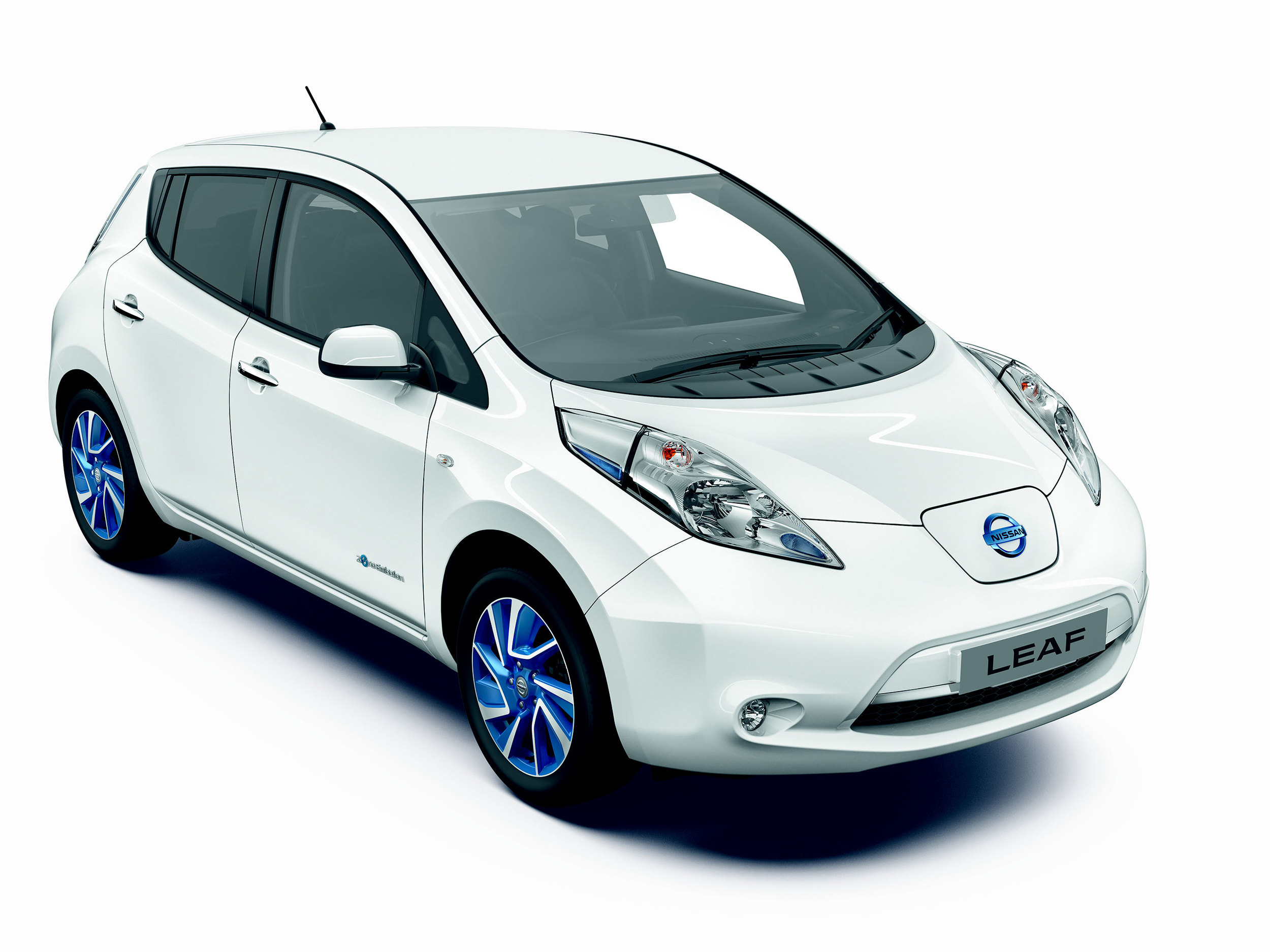
Nissan has added a new Acenta+ model to its all-electric LEAF line-up.

With the LEAF range expanding to four trim grades, the new model slots in between the Acenta and range-topping Tekna and features a 'significant specification boost' over the standard model. The new model is equipped with a 6.6kW on-board charger as standard - which was previously available only as an option - as well as a Mode-3 32amp (EVSE) cable. The 6.6kW charger enables a 0-100 per cent charge in just four hours. Acenta+ models also include new 17-inch Autech wheels which are finished with distinctive blue accents on the offset spokes.

Commenting on the addition of the new Acenta+ to the UK LEAF range, James Wright, Managing Director, Nissan Motor GB said: "We're delighted to add a new member to the LEAF family in the UK. More than 9,500 LEAFs have already been sold here and Nissan is the undisputed leader in the EV market. This new model delivers exceptional value and showcases the LEAF's incredible technology and engineering."

On sale from today, prices for the Nissan LEAF Acenta+ with the additional equipment start at £29,740 (£1,150 more than the standard Acenta). With the Government's Plug-in Car Grant applied, the price falls to £24,740.