Motorshow

Concept Car, Electric, Motorshow, News, Sports Car

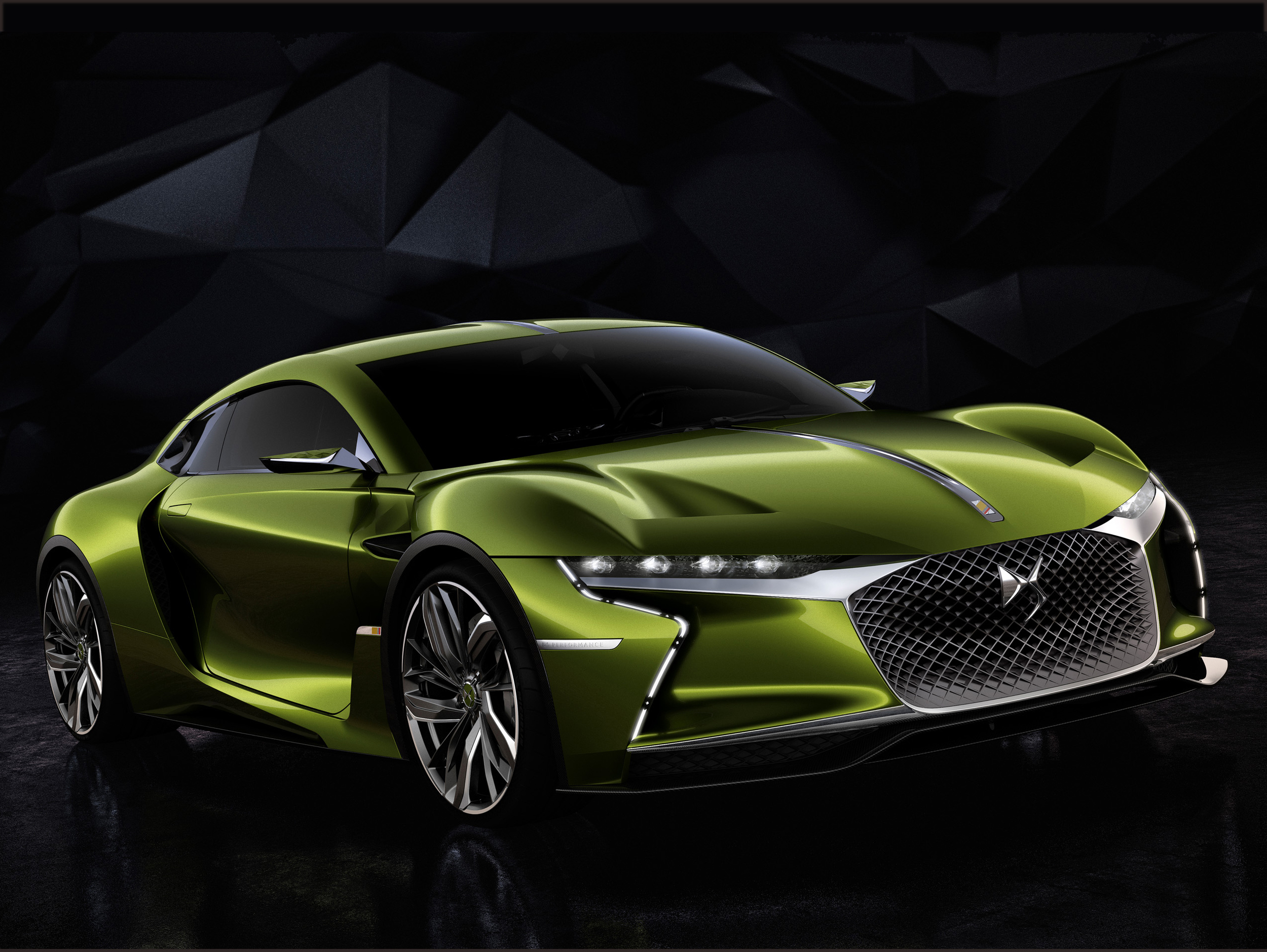
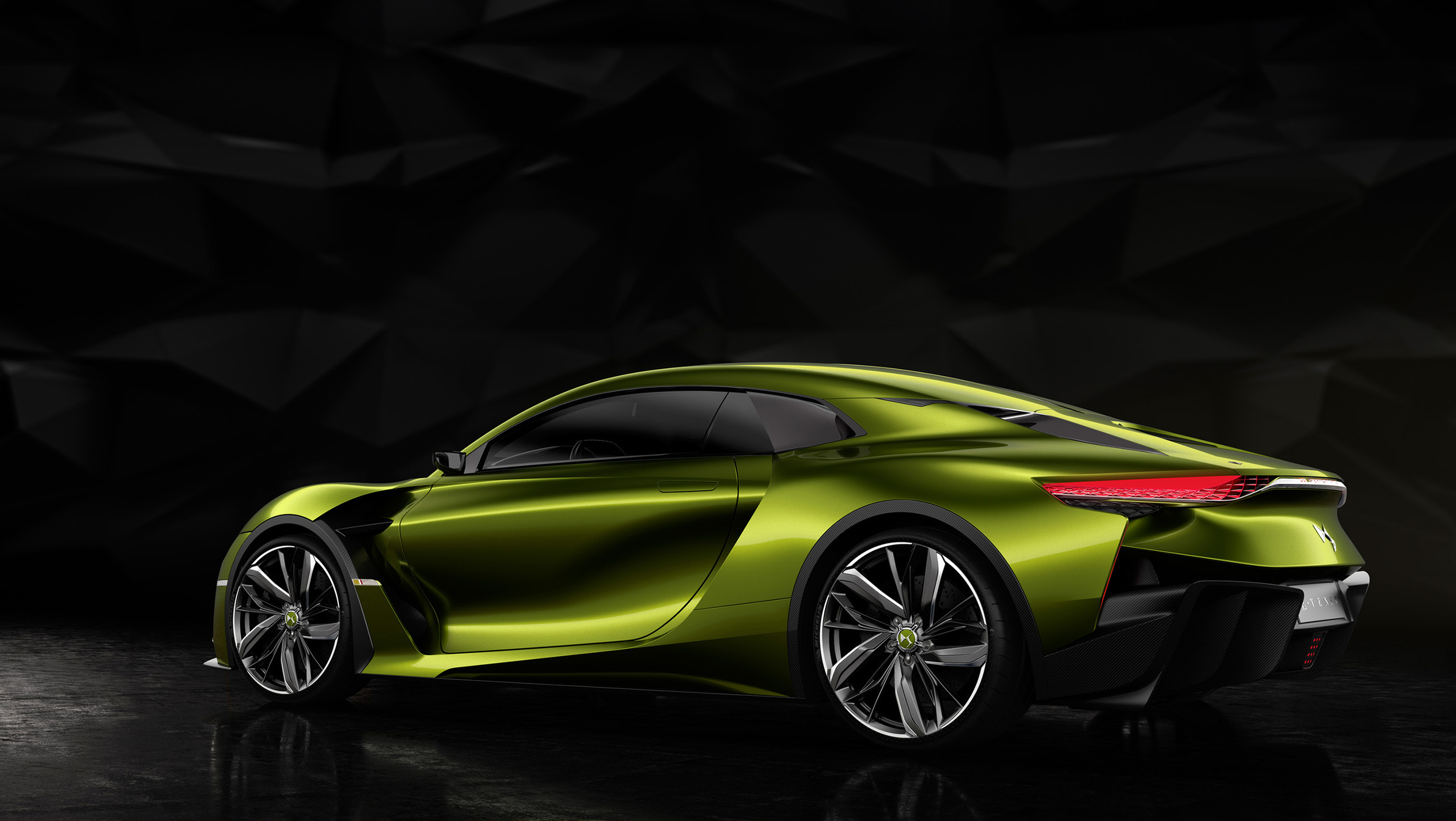
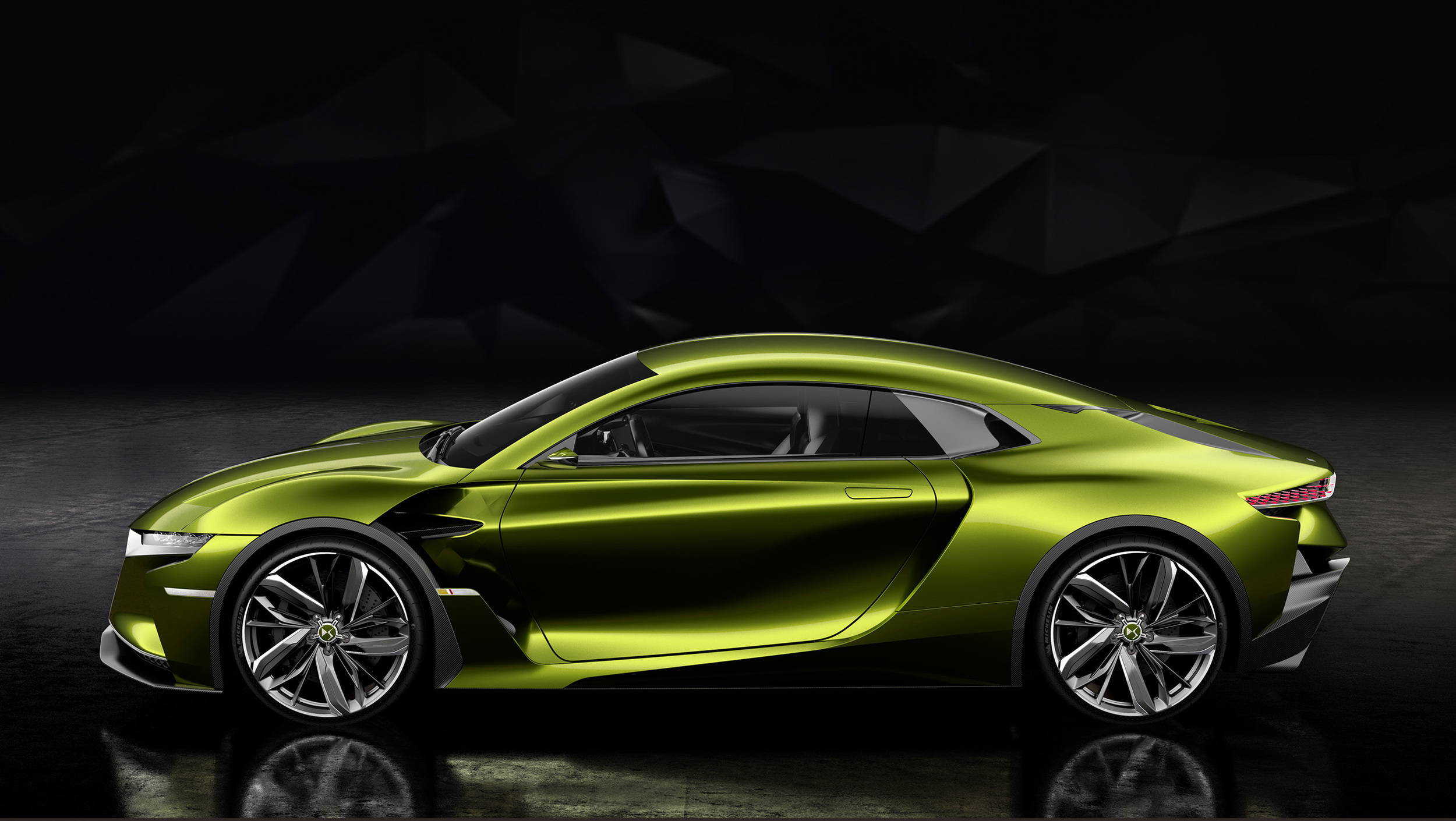
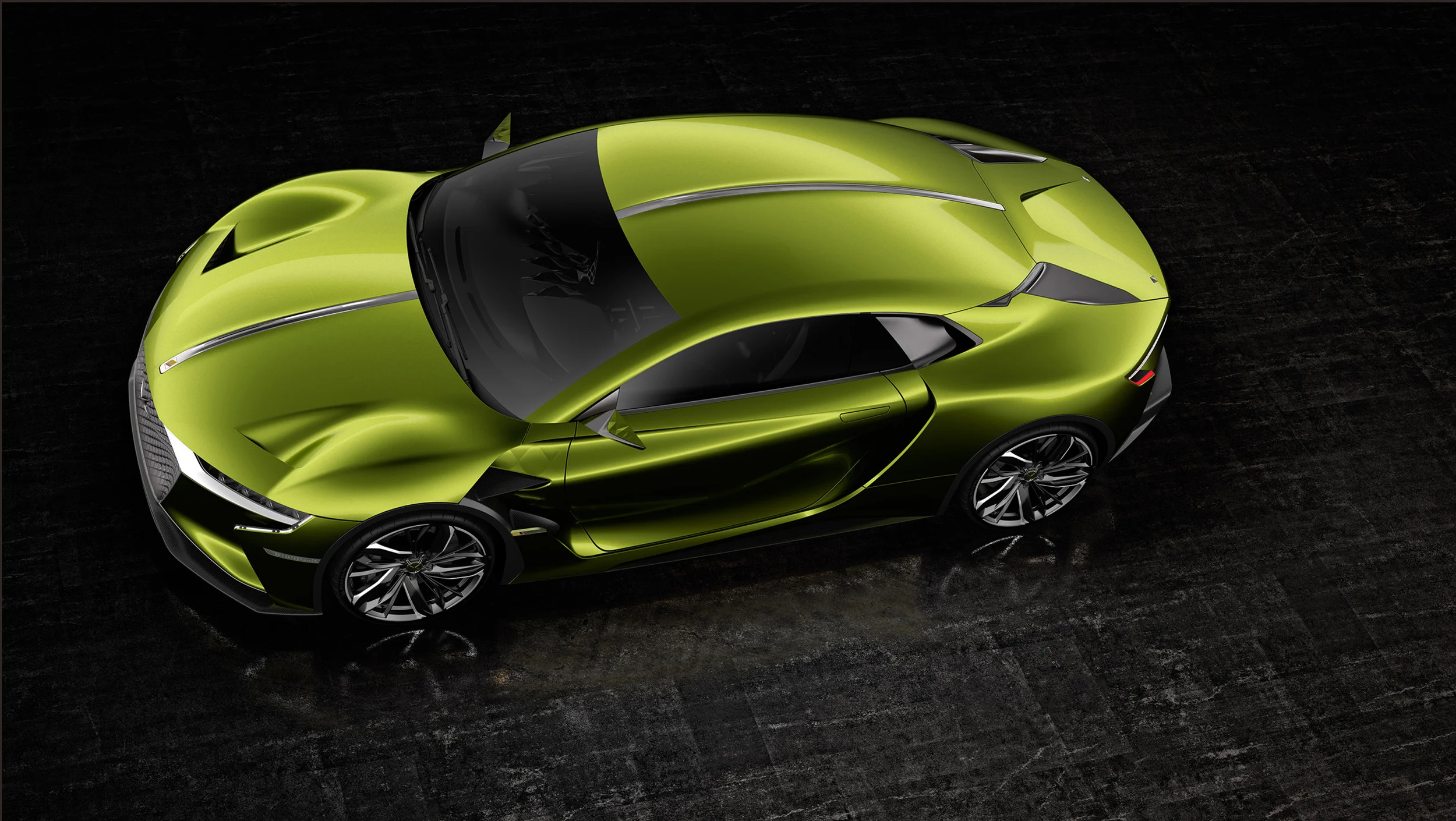
DS E-TENSE set for Geneva debut

DS Automobiles is set to pull the covers off a unique Supercar at the 2016 Geneva Motor Show next week.

The French brand will unveil the DS E-TENSE electric-powered sports car, which features a ‘striking appearance’ as well as hi-tech capability and ‘exceptional’ performance.

The all-electric concept silently produces 402hp with zero emissions. Measuring 4.72m long and 1.29m high, DS says its ambition is to create a high-performance electric GT car that brings together ‘state-of-the-art technology and avant-garde design’.

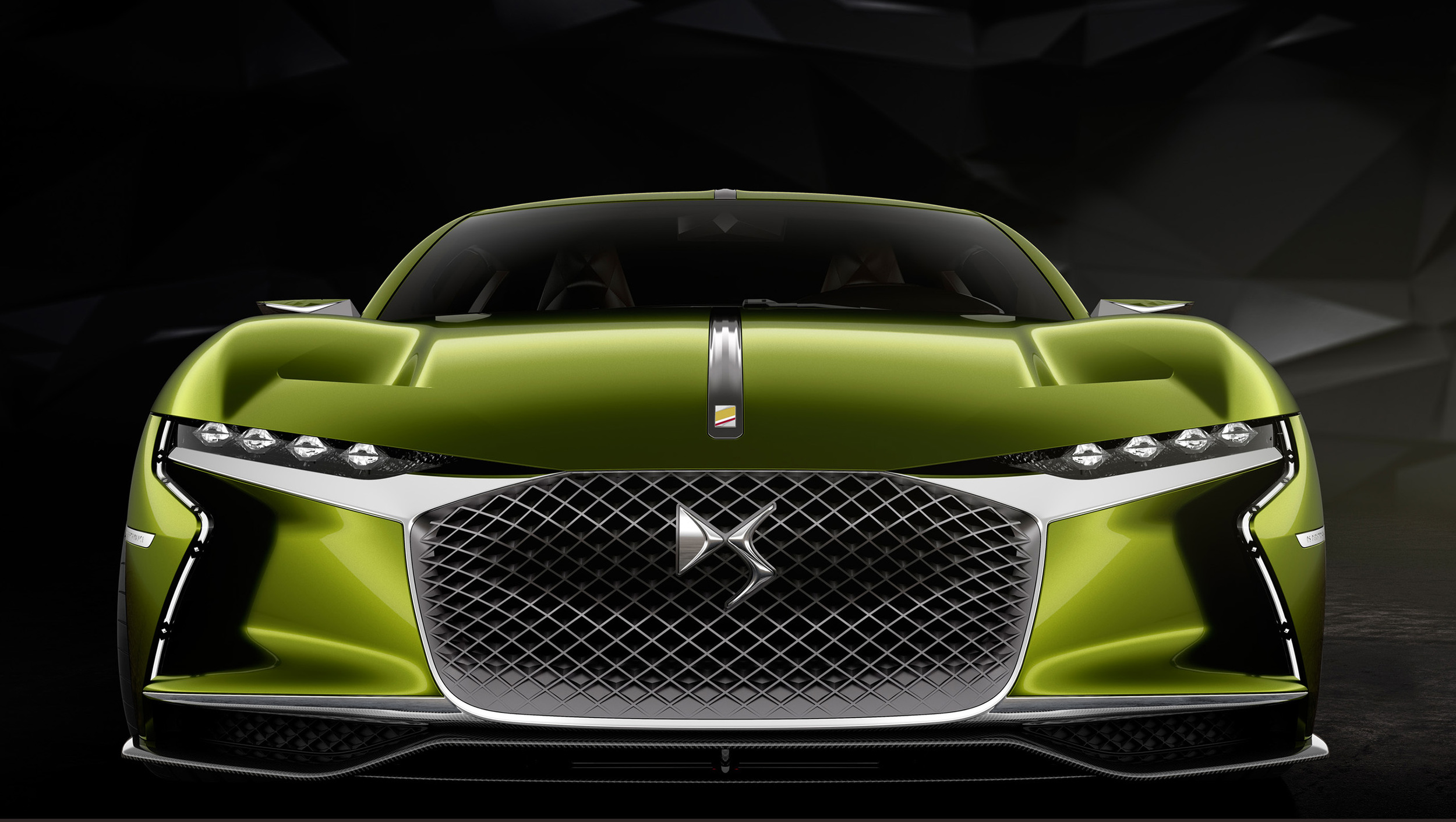
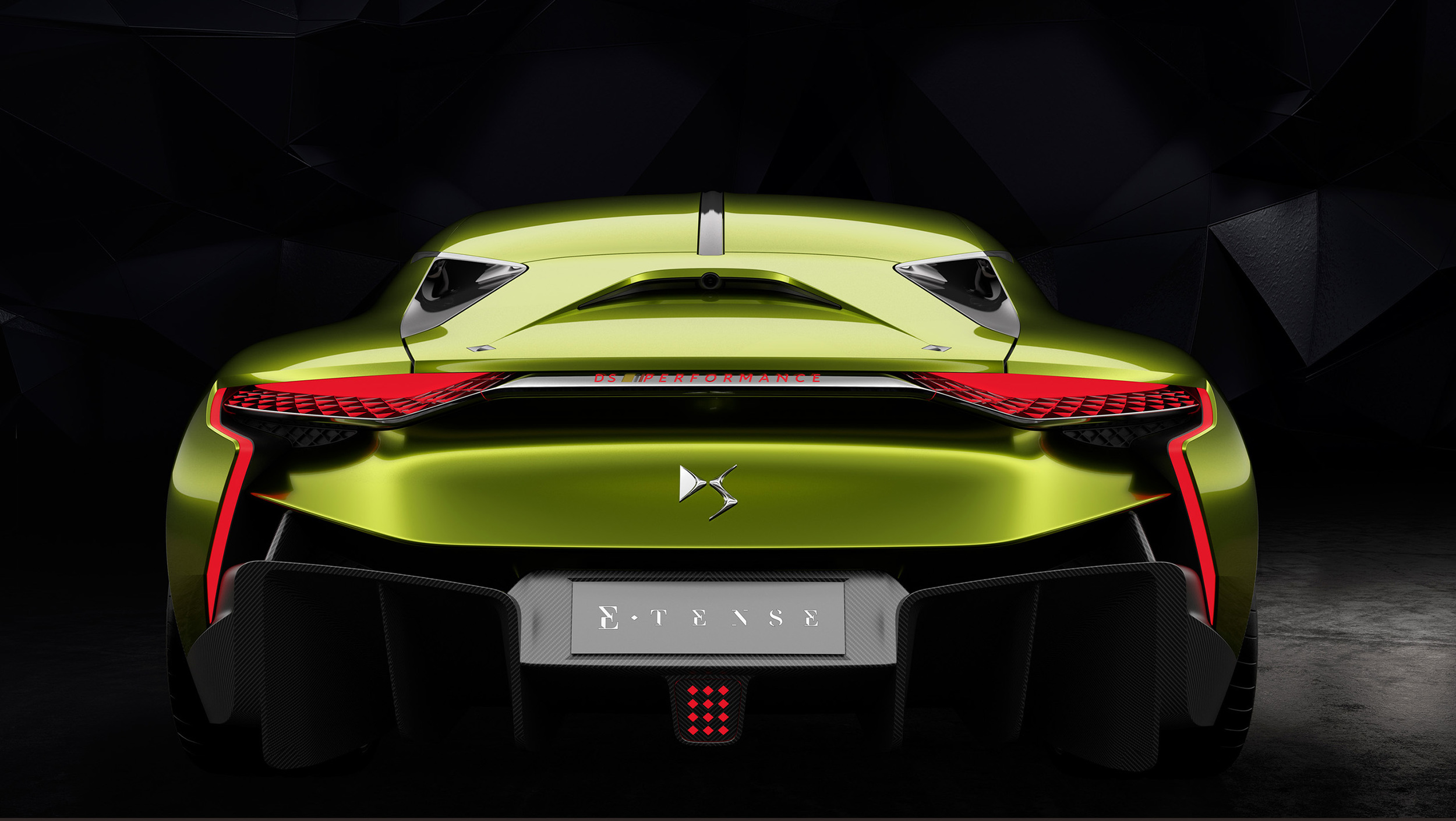
The new car's styling merges flowing lines with a silhouette of a grand tourer coupe - emphasised by a central chrome-plated spine and an exclusive metallic green ‘ametrine’ body colour. Removing the rear windscreen at the back allowed the design team freedom to mould the contours further and make use of digital rear-view technology.

The DS LED Vision headlamps are described as jewel-like in design. The daytime running lights – designed to look like beaded stitches, are a ‘nod to the world of high fashion’ says the French company. At the rear, the indicators integrated into the roof are inspired by the original DS from 1955.

On the inside DS says upholsterers took 800 hours to design, test and produce the interior, with a particular emphasis on the watchstrap style design on the seats and dashboard. Other features include the 'cold steel' used for the dashboard, creating a futuristic look, and the strongly marked tulip-shape of the steering wheel.

As a Formula E World Championship competitor, DS Automobiles has equipped its latest creation with a 100 per cent electric 402hp engine that produces 516Nm of torque, delivering propulsion that is clean, silent, but above all efficient and powerful offering 193 miles mixed cycle range (or 224 miles urban cycle).

The two-seater monocoque chassis is manufactured from carbon fibre and equipped with independent superimposed double wishbone suspension. As the batteries are located beneath the floor, the centre of gravity is low. Meanwhile, the streamlined silhouette, the carbon fibre diffuser and the flat underbody all contribute to its aerodynamic performance.

The Geneva Motor Show opens its doors on 3 March.
Concept Car, Coupe, News, Sports Car, Motorshow

Vauxhall teases new GT Concept

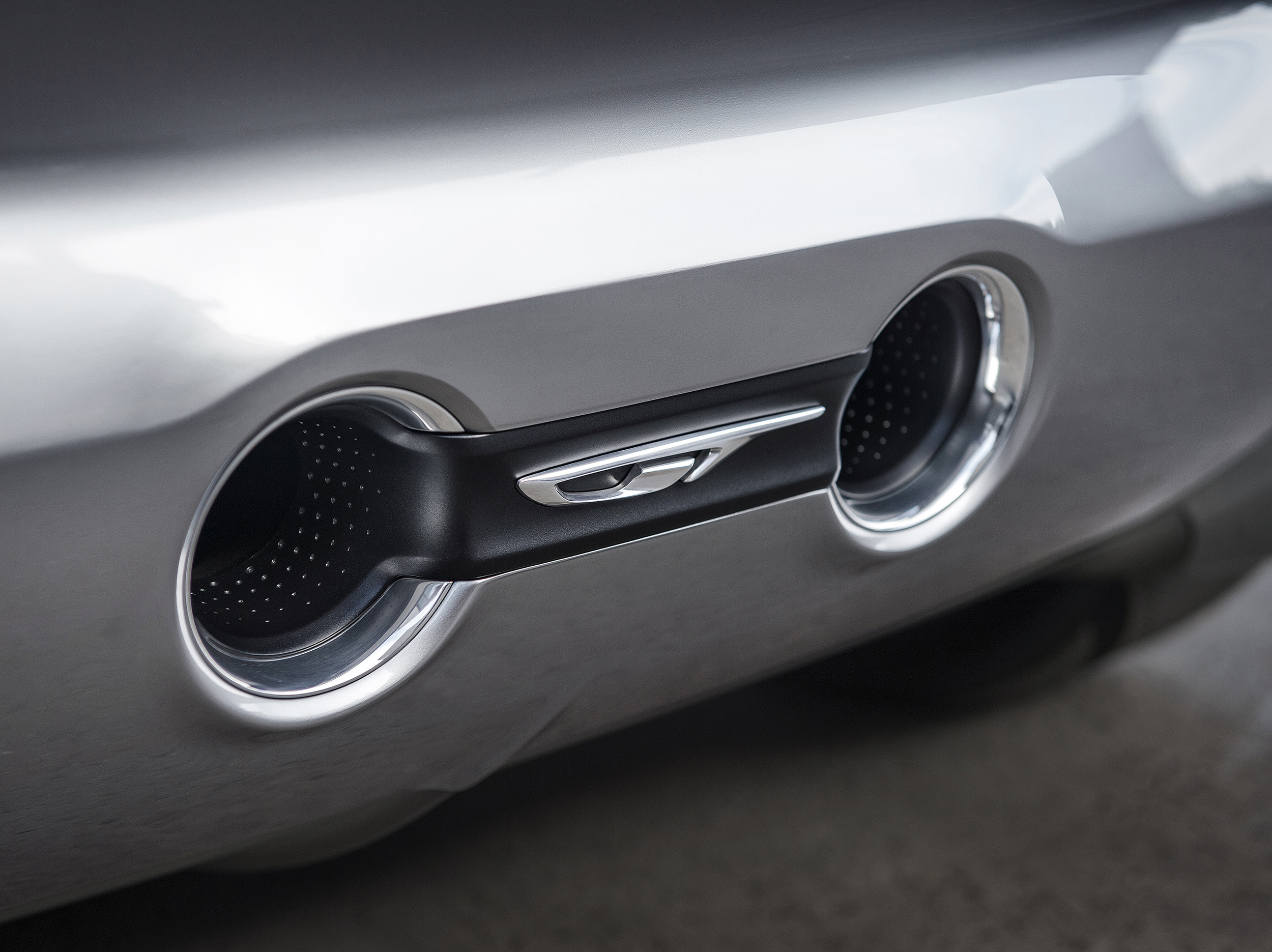
Vauxhall has revealed a teaser image of its new GT Concept car.

Set to be unveiled at the Geneva Motor Show, the company has released a two short films that reveal a little more of the car’s design. In the video, Dr. Karl-Thomas Neumann, CEO of Vauxhall and Opel, opens a door to show the front of the 'purebred' GT Concept, with the words: ‘Don’t miss what happens next.’

Accompanying the film is an image of the GT Concept’s central double exhaust, and while Vauxhall says the car’s design is ‘in no way retro’, this feature was a highlight of concept cars from both Vauxhall and sister brand Opel in the mid-1960s. Vauxhall presented the XVR at the Geneva Show in 1966, and Opel the Experimental GT at Frankfurt the year before. According to Vauxhall, both were ‘ultra-modern, minimalistic and uncompromising, with a sculptural shape – a philosophy which also defines the design of the new GT Concept’.

As for the GT Concept’s red tyre, seen briefly in this latest film, it pays homage in an avant-garde way to the Motoclub 500, a futuristic Opel motorcycle from 1928 wore red rubber.

The Geneva Motor Show runs from 3rd to 13th March 2016.

Motorshow, News, Sports Car, Supercars

New VLF Force 1 Super Car revealed in Detroit

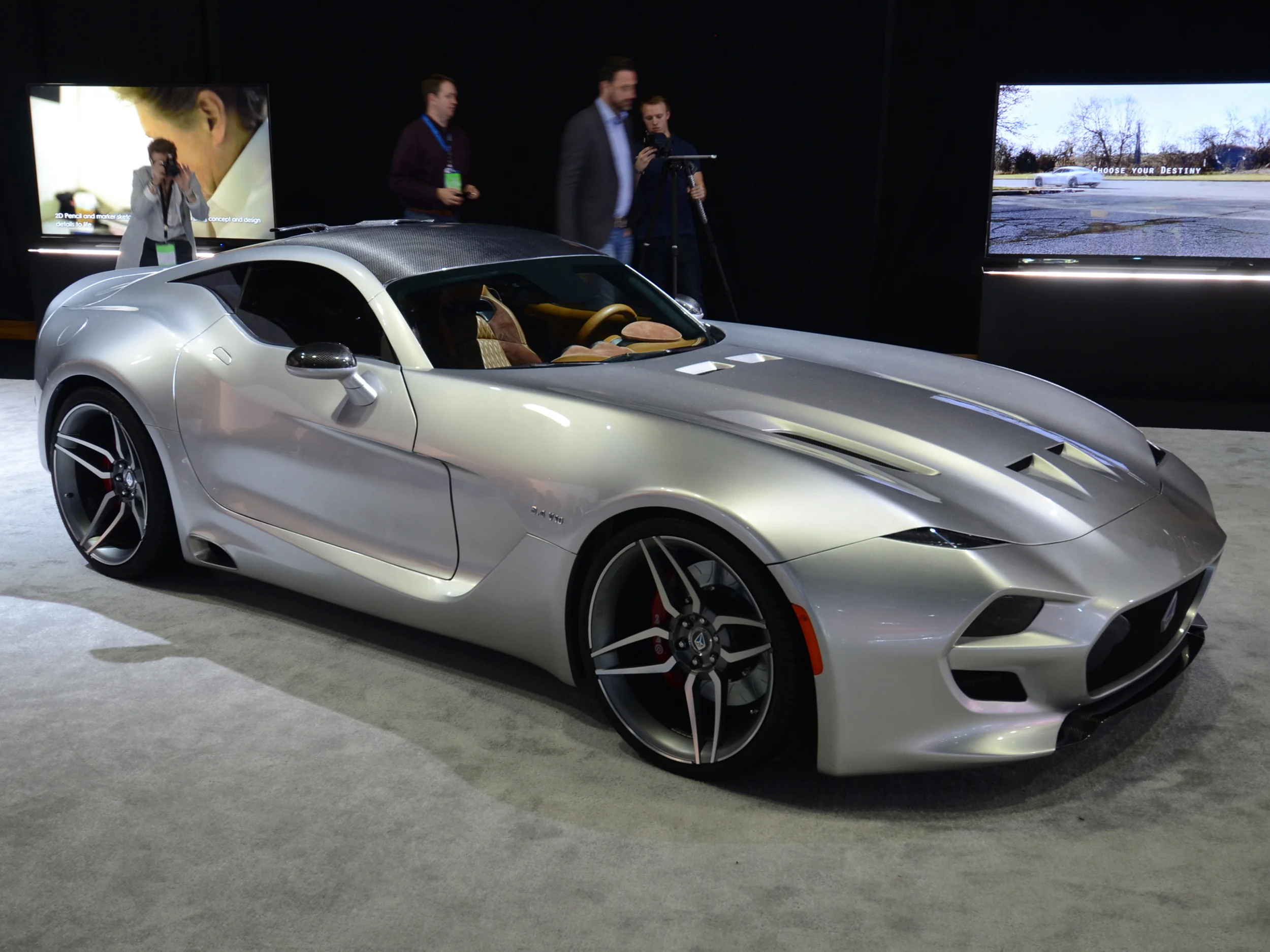
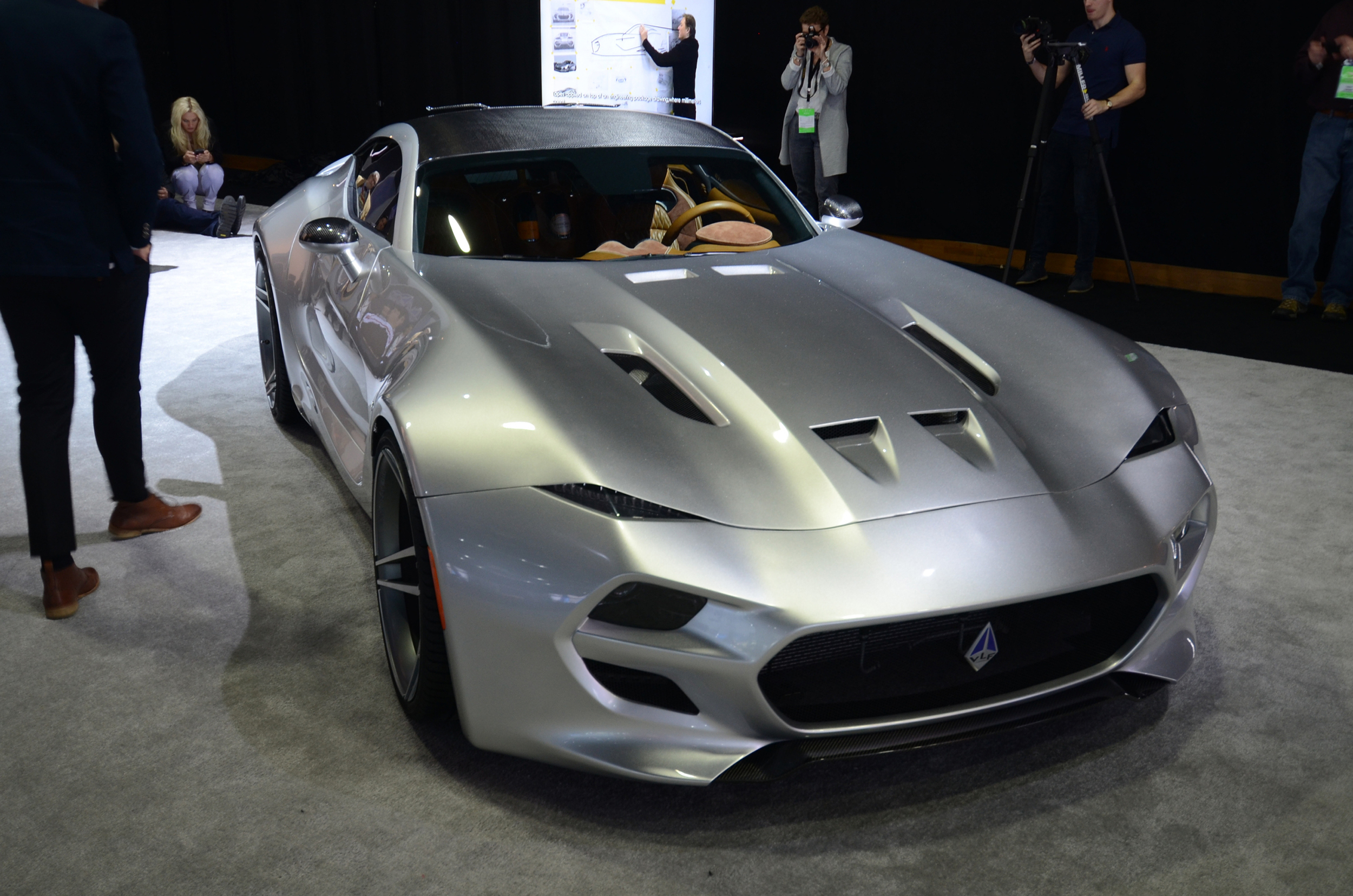
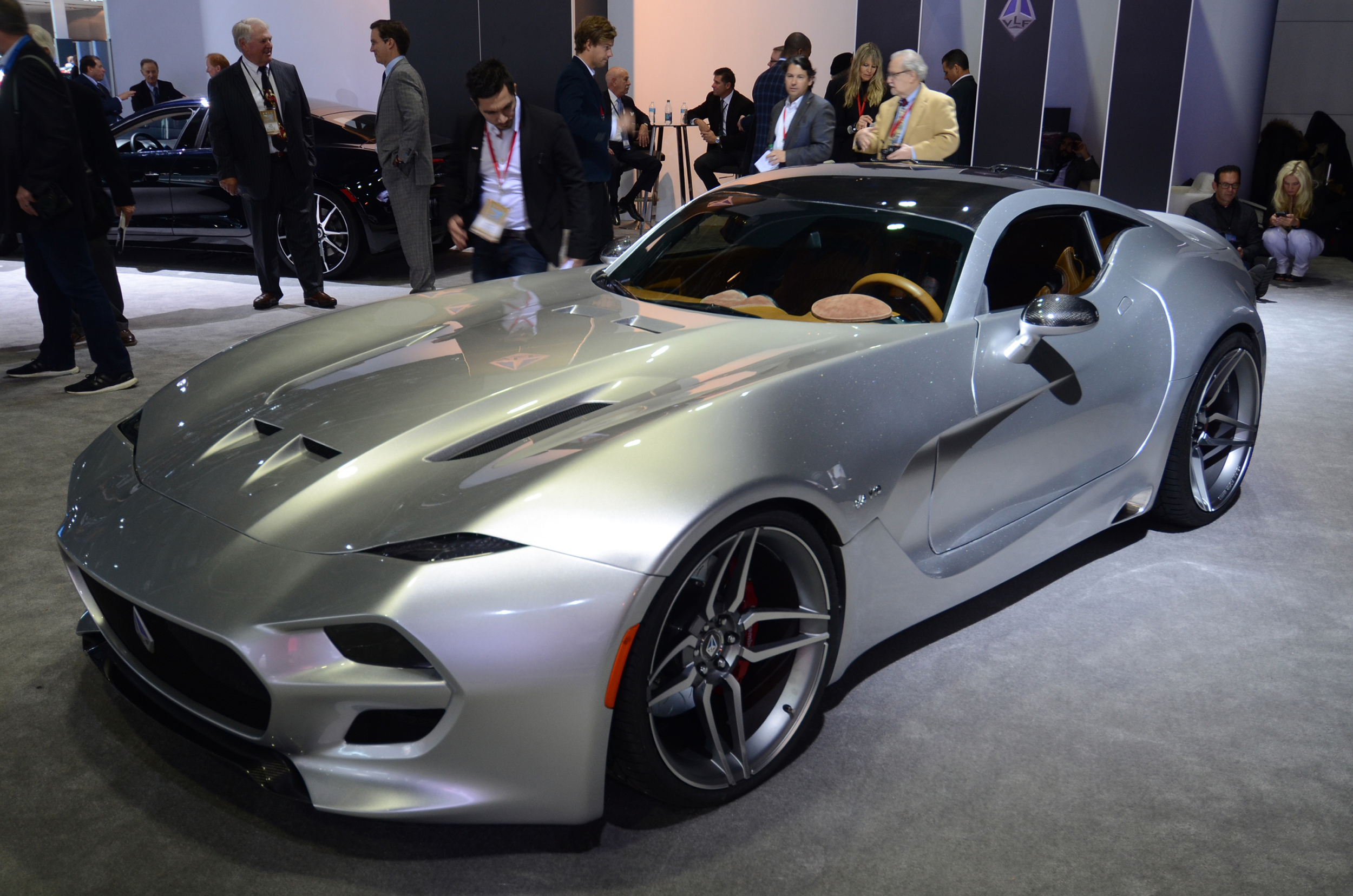
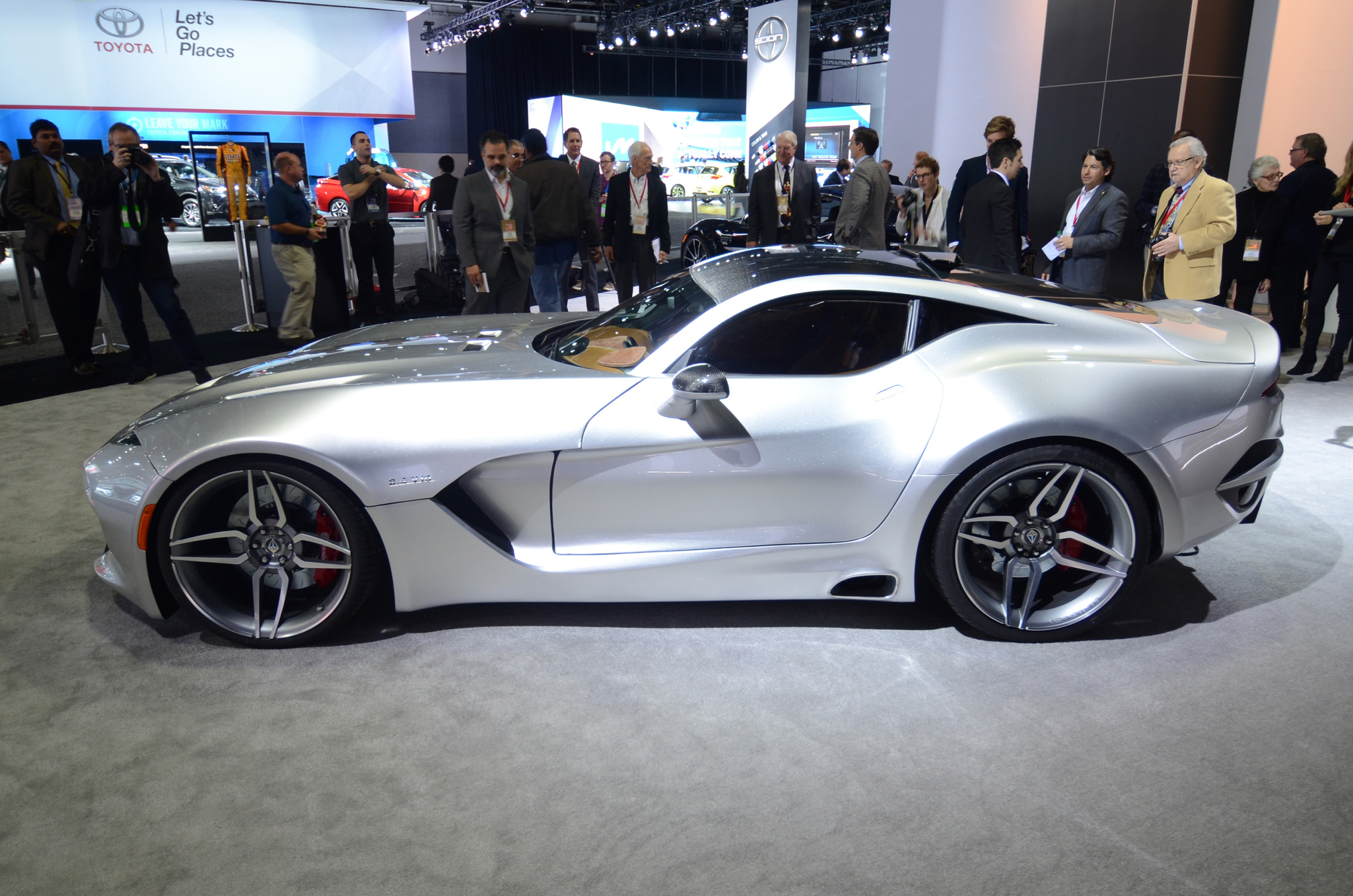
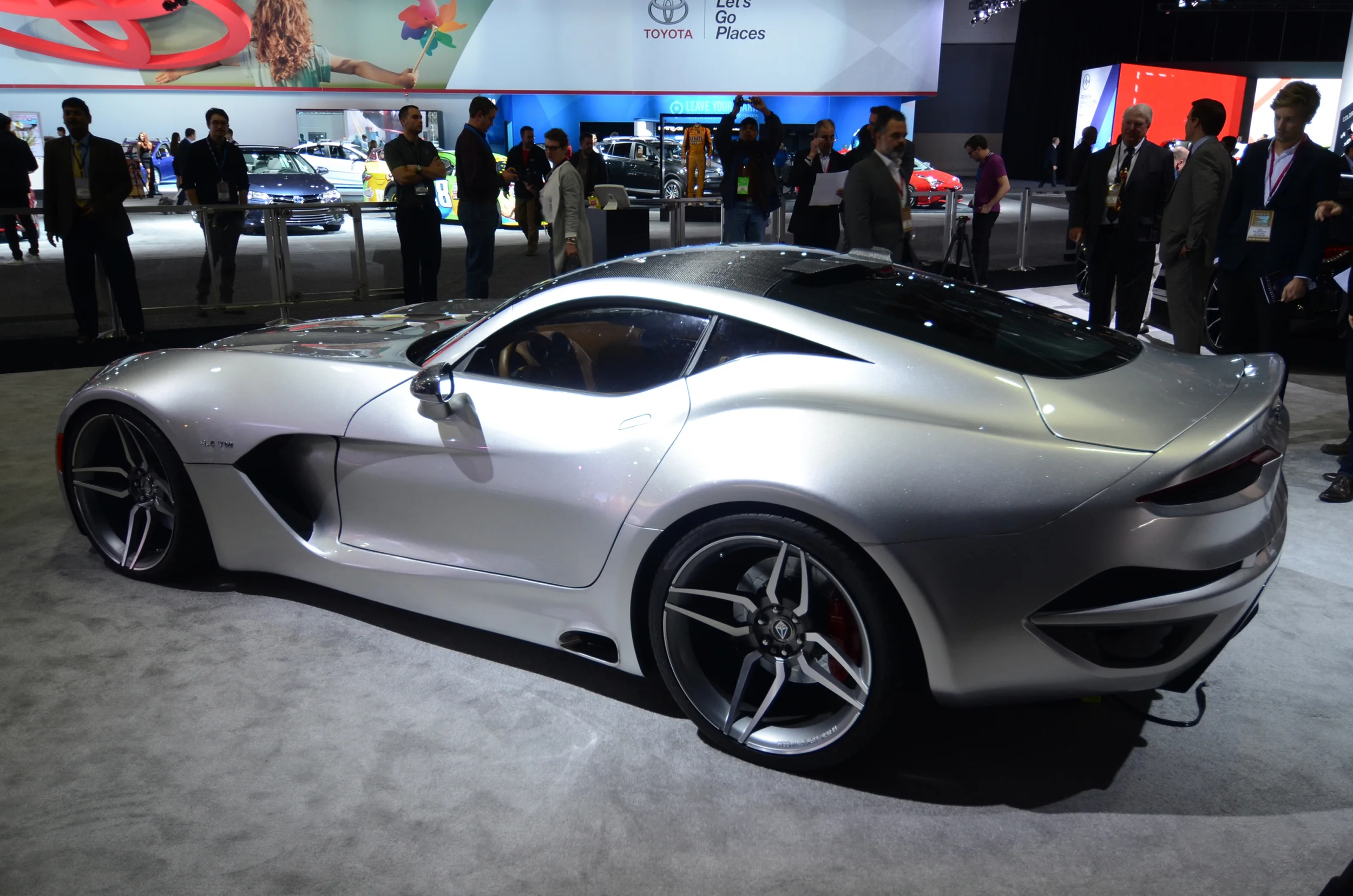
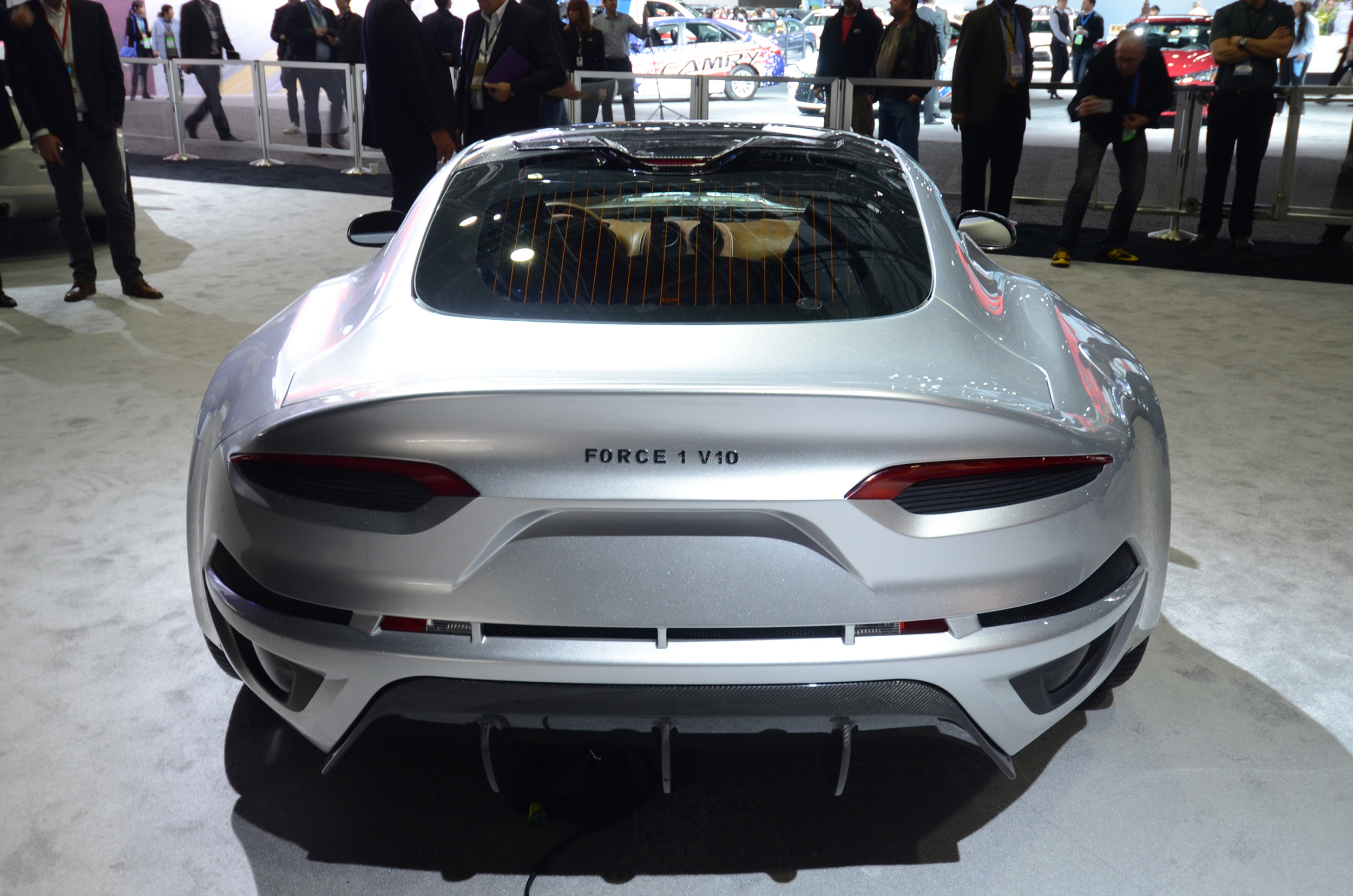
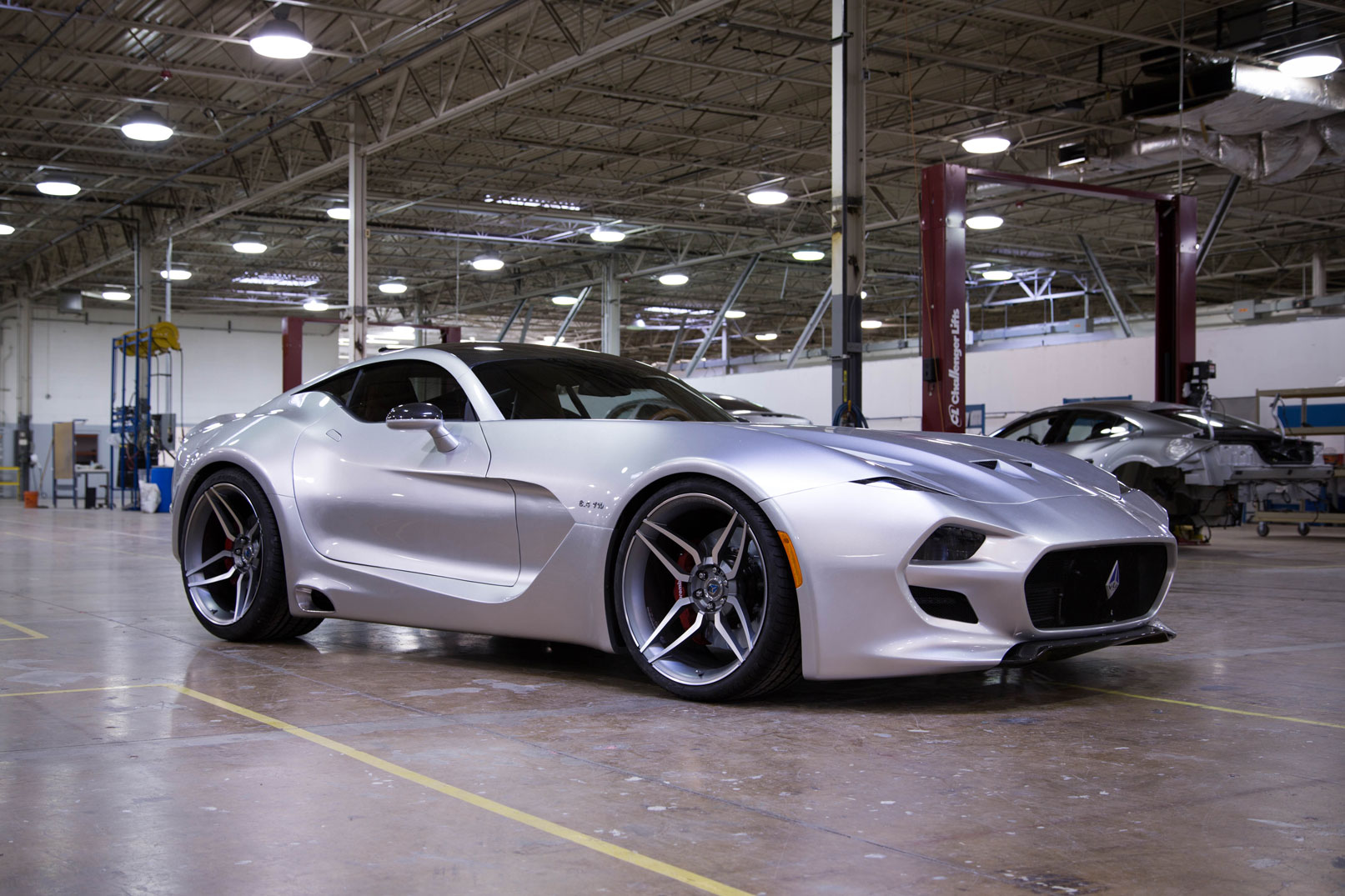
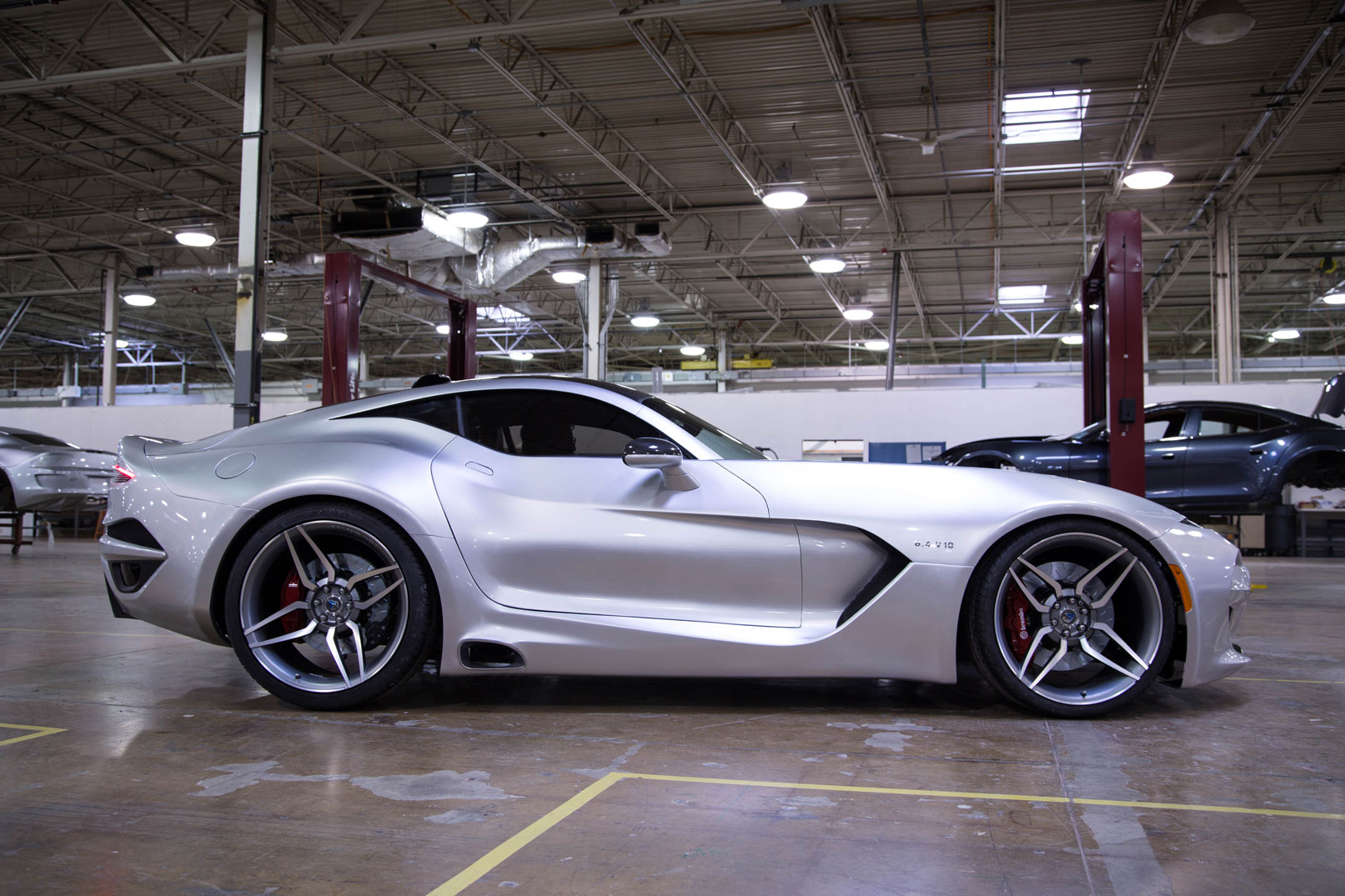
VLF Automotive has pulled the covers off its new all carbon fibre-bodied sports car, the Force 1.

The American made two-seater is described as a high-performance, low-production sports car, manufactured in Auburn Hills, Michigan by the newly launched VLF Automotive - of which former Aston Martin designer Henrik Fisker is a partner and design chief.

VLF, established in 2015, is named after the founding members - former General Motors Vice Chairman Bob Lutz, manufacturer Gilbert Villarreal and entrepreneur and designer Henrik Fisker. The company has announced the production of 2 models in 2016 - the Destino V8 and Force 1 V10.

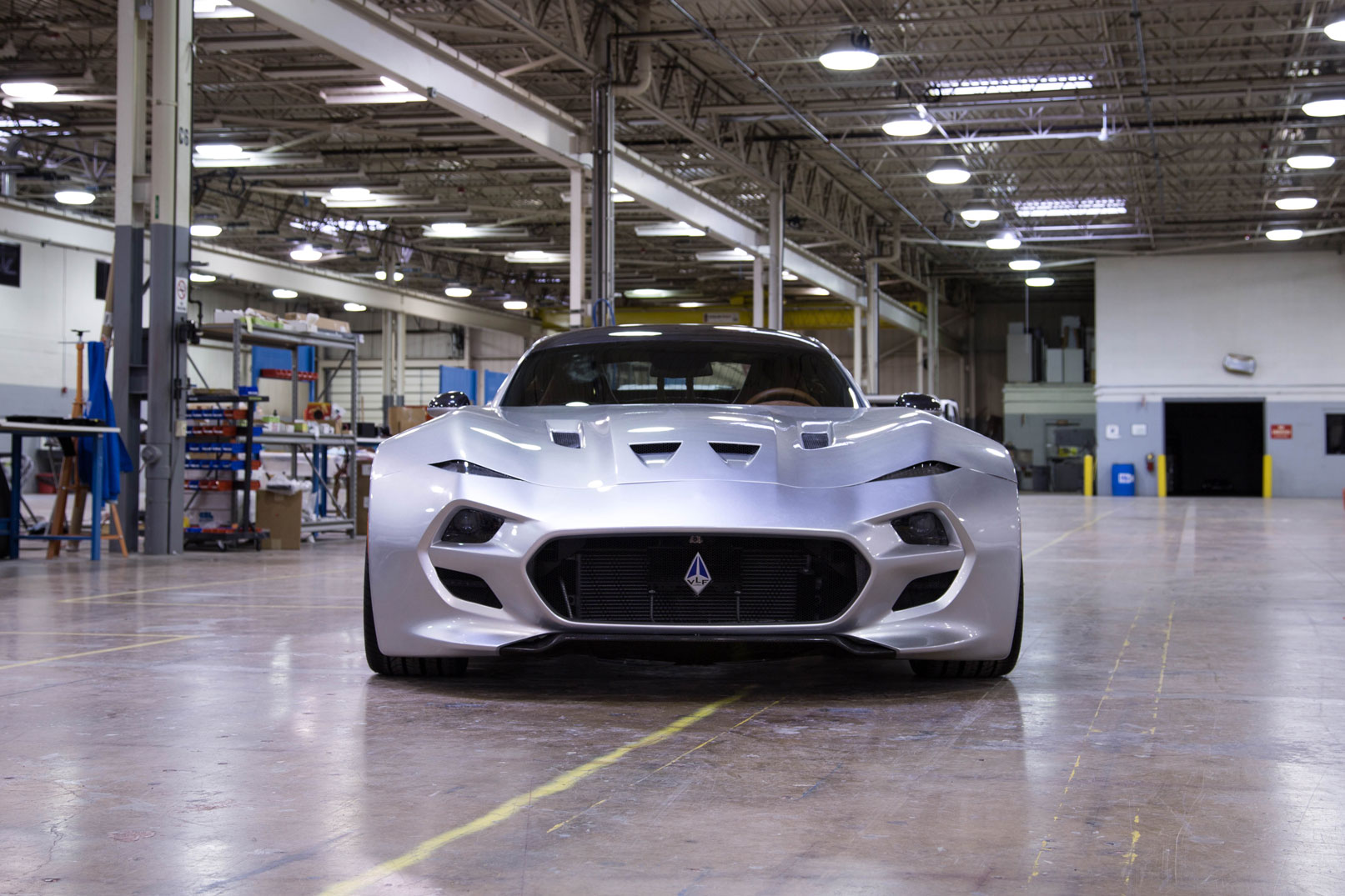
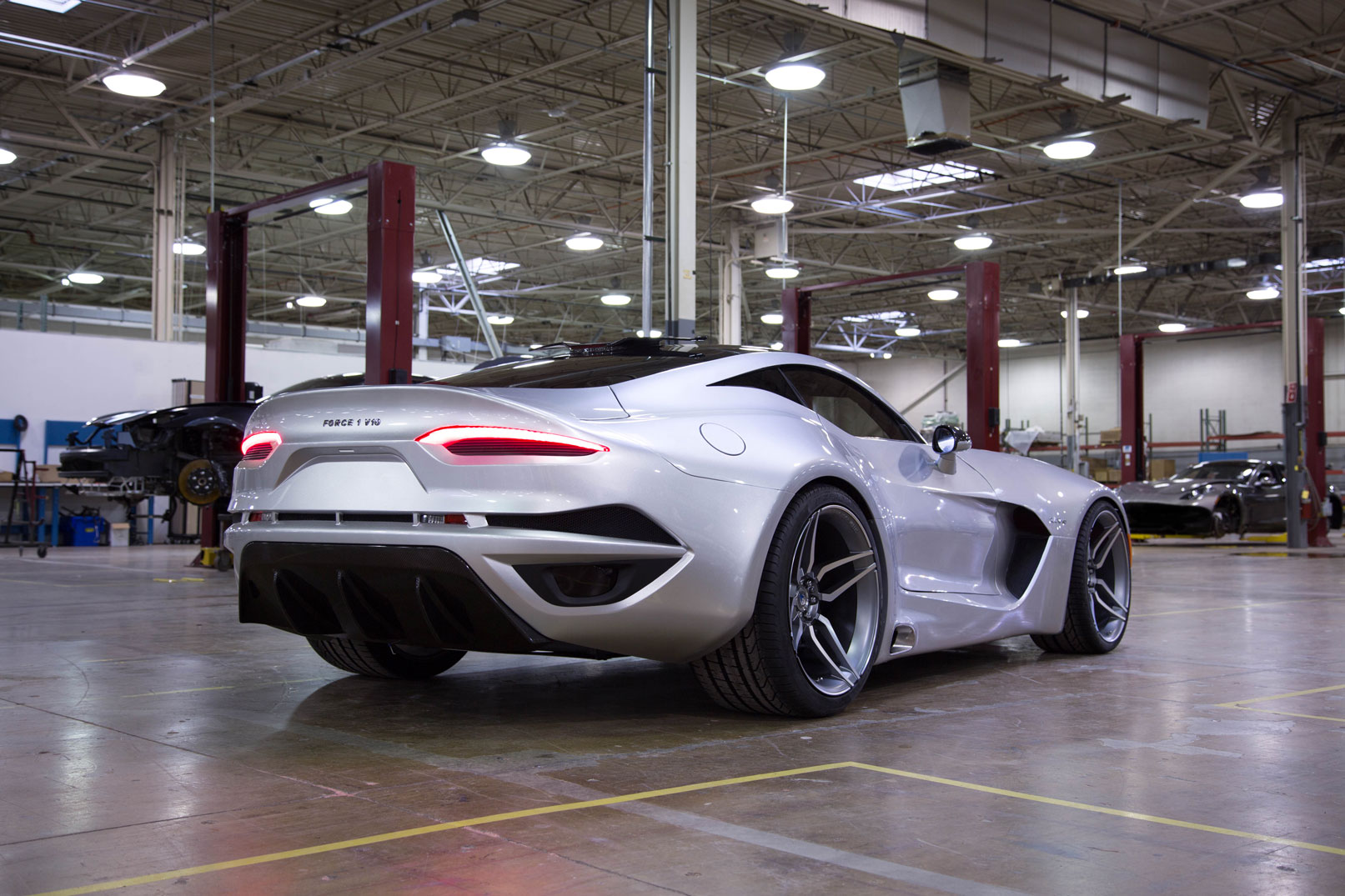
The exterior design of the Force 1 has 'classic American sports car proportions' with a long bonnet, short front overhang, long tail and pushed out wheels. “In the case of Force 1, there is an extremely pushed back green house,” Fisker explained. “The sculpture on Force 1 is like a family succession to the Destino, dramatic and powerful, relative flat surfaces on the high end of the body side, with lines full of tension, emerging onto a rounder lower section, where Force 1 has a large functional outlet." The car has one of the most powerful naturally aspirated road engines in the world, according to VLF, delivering ‘the best performance in its price class’. The 745hp, 8.4-litre V10 engine enables a 0-60mph time of 3.0 seconds flat.

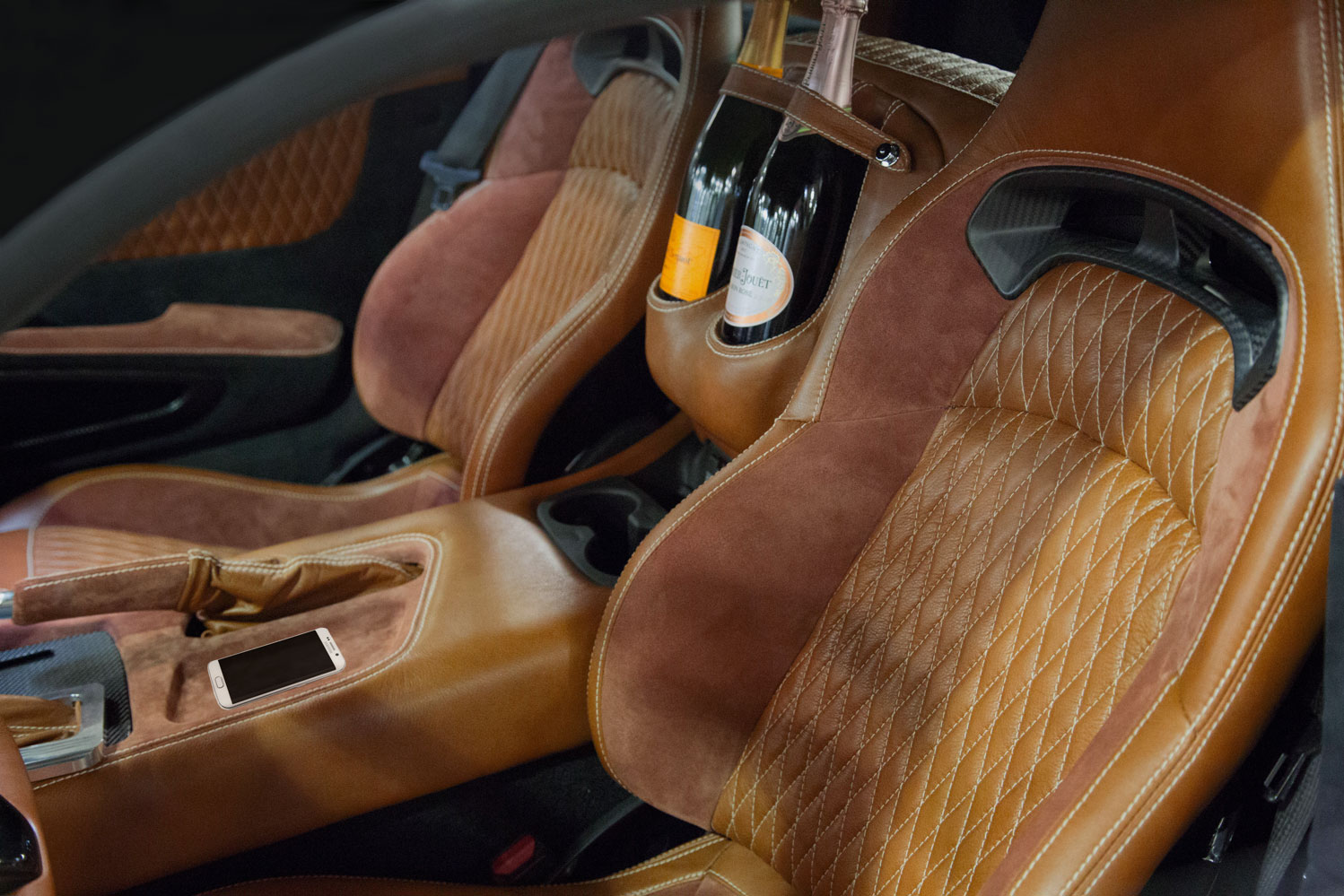
The Force 1 incorporates downforce elements such as the deep front spoiler and aggressive rear diffuser in pure visible carbon fibre. At the top of the rear glass sits a unique rear wing spoiler also housing the in car Wi-Fi and third brake light. Both the front and rear signature Henrik Fisker wheels feature a concave section design to improve strength of the wheel and requiring less mass. The 21-inch wheels with wide high-performance Pirelli tires sits in ‘lean, sculptured, pronounced wheel arches’. The front features an aggressive grille housing the VLF logo in the centre and two ultra-slim lights sitting above the grille. The interior is described as luxurious, with hand stitched ultra-soft leather, Alcantara, suede with several other unique features, such as a champagne holder.

Production commences at the end of April 2016 in Auburn Hills and first customer deliveries begin in the third quarter of 2016, with the base price starting at $268,500 (£187,992). The Force 1 V10 will be produced in limited numbers with an initial production of only 50 units.

VLF is expected to have seven dedicated dealers with full service capability, throughout North America, and several international dealers appointed in 2016.

4x4, Family Car, Motorshow, News, SUV

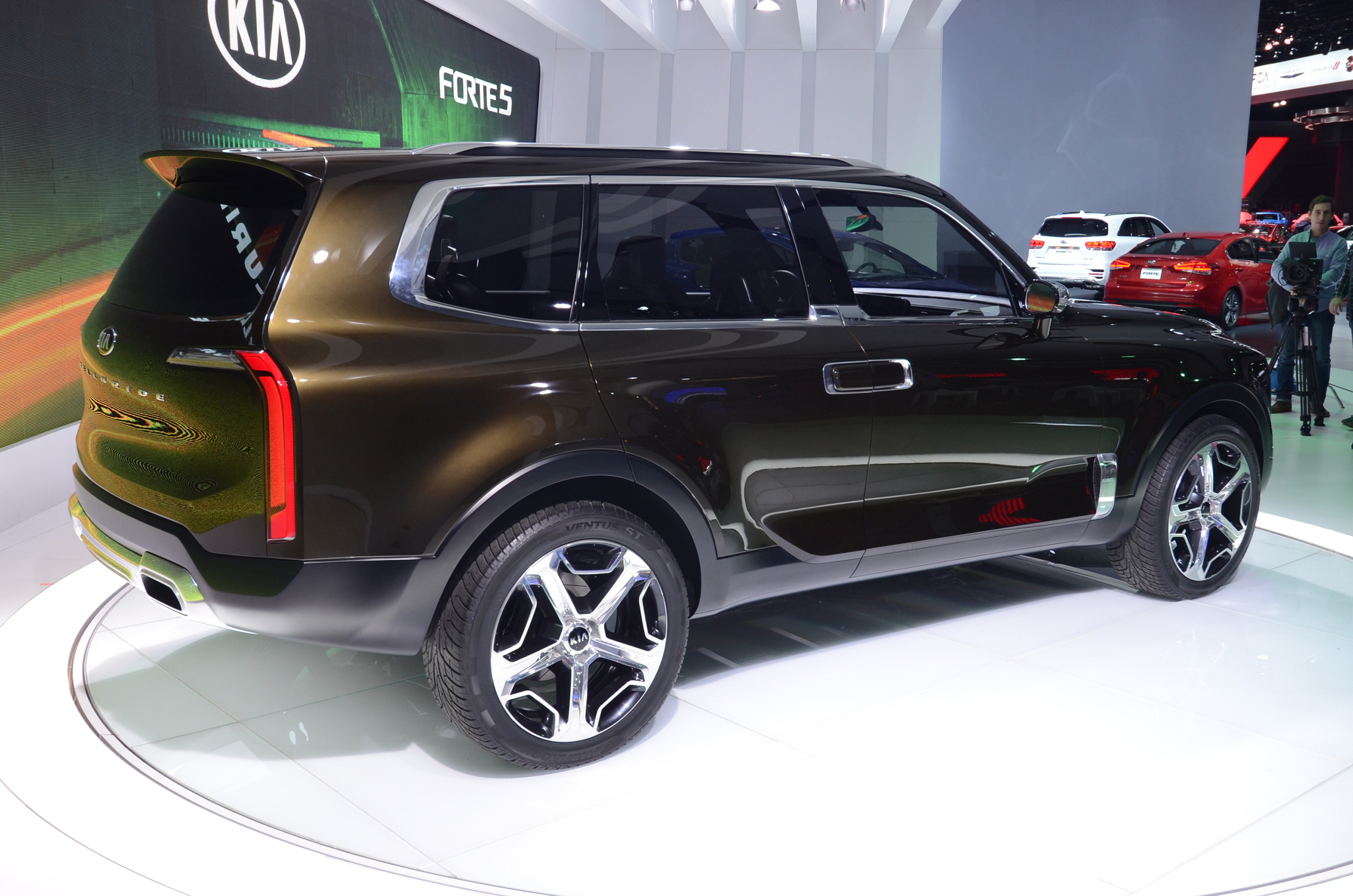
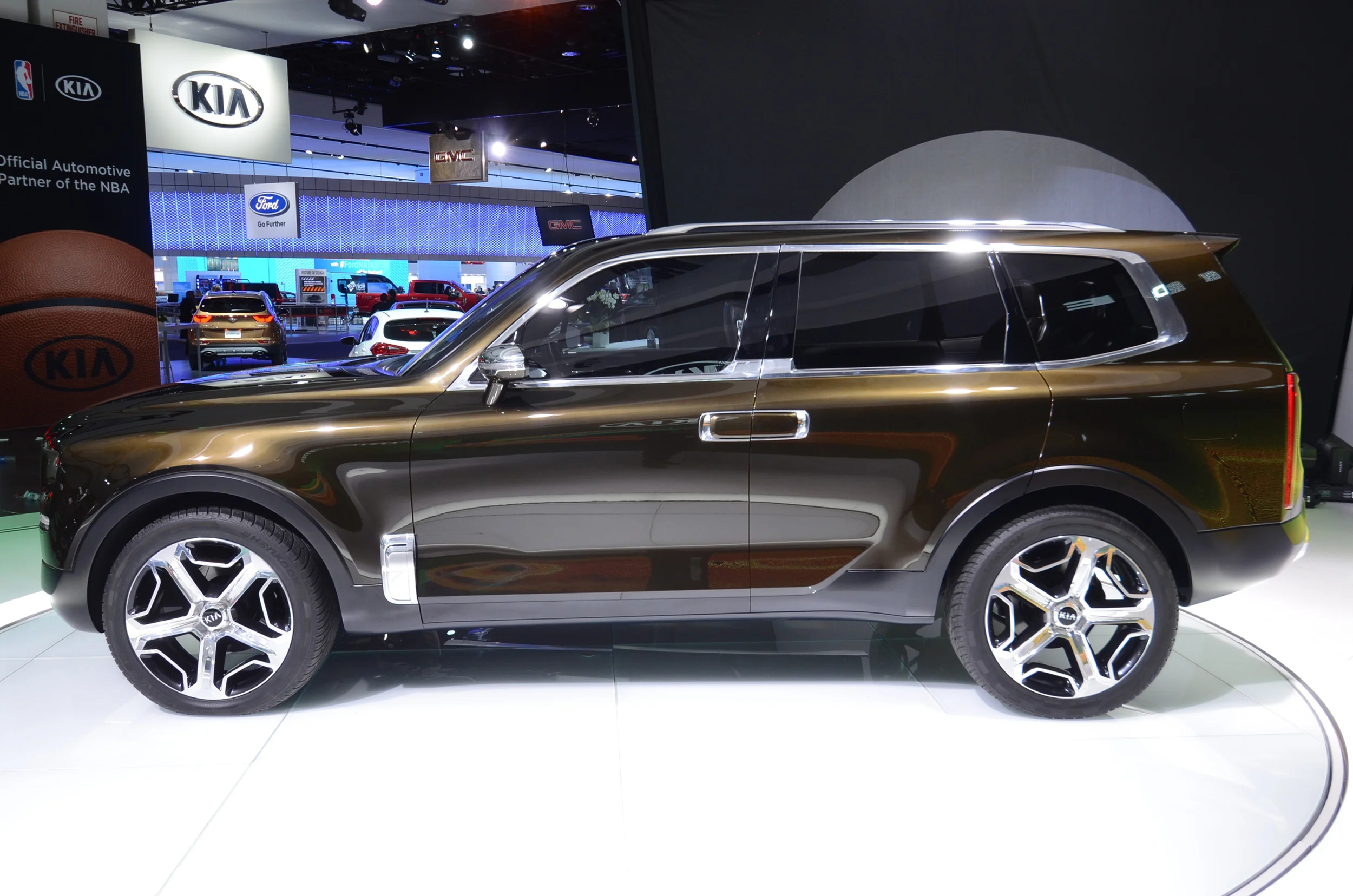
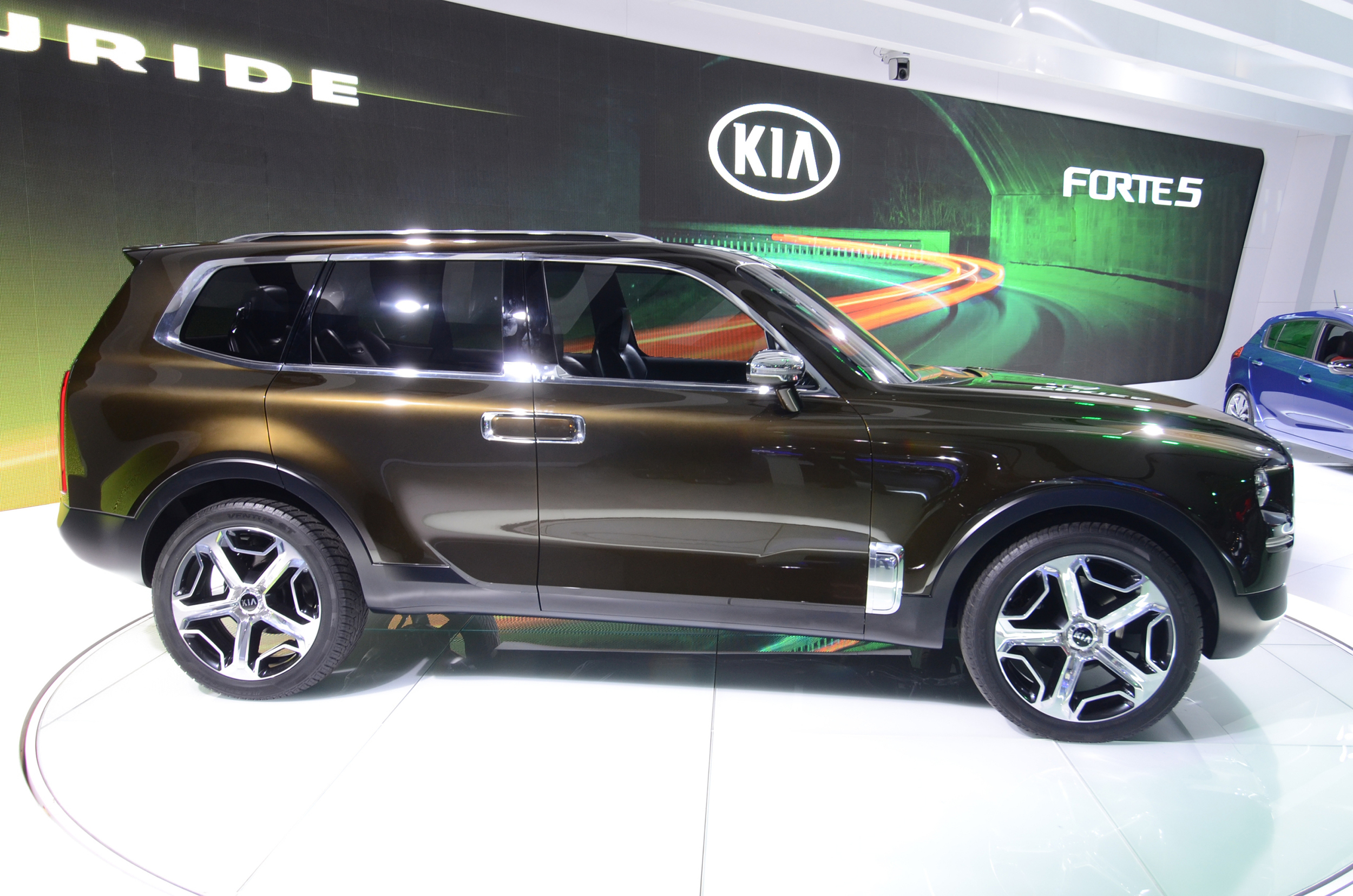
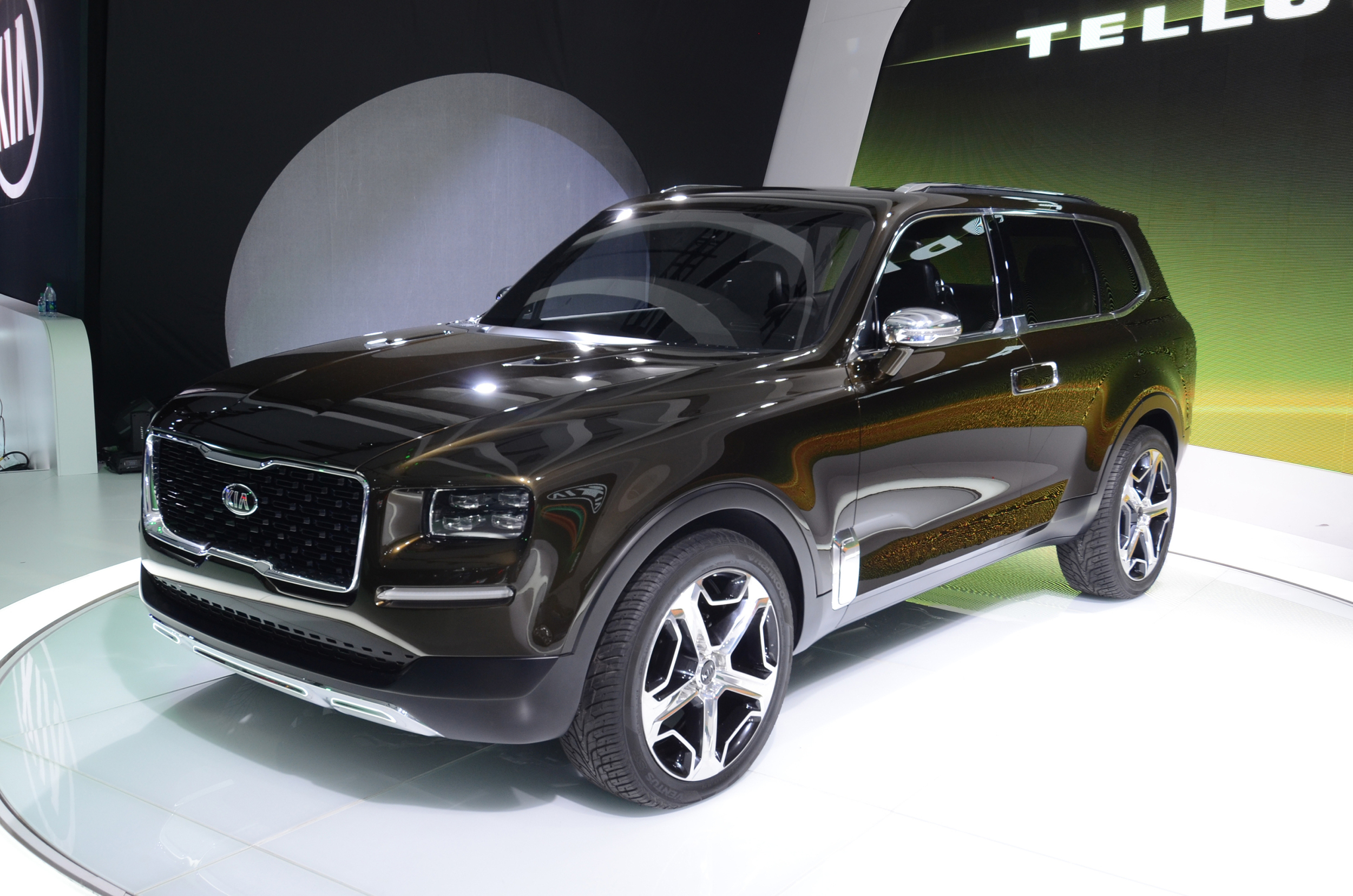
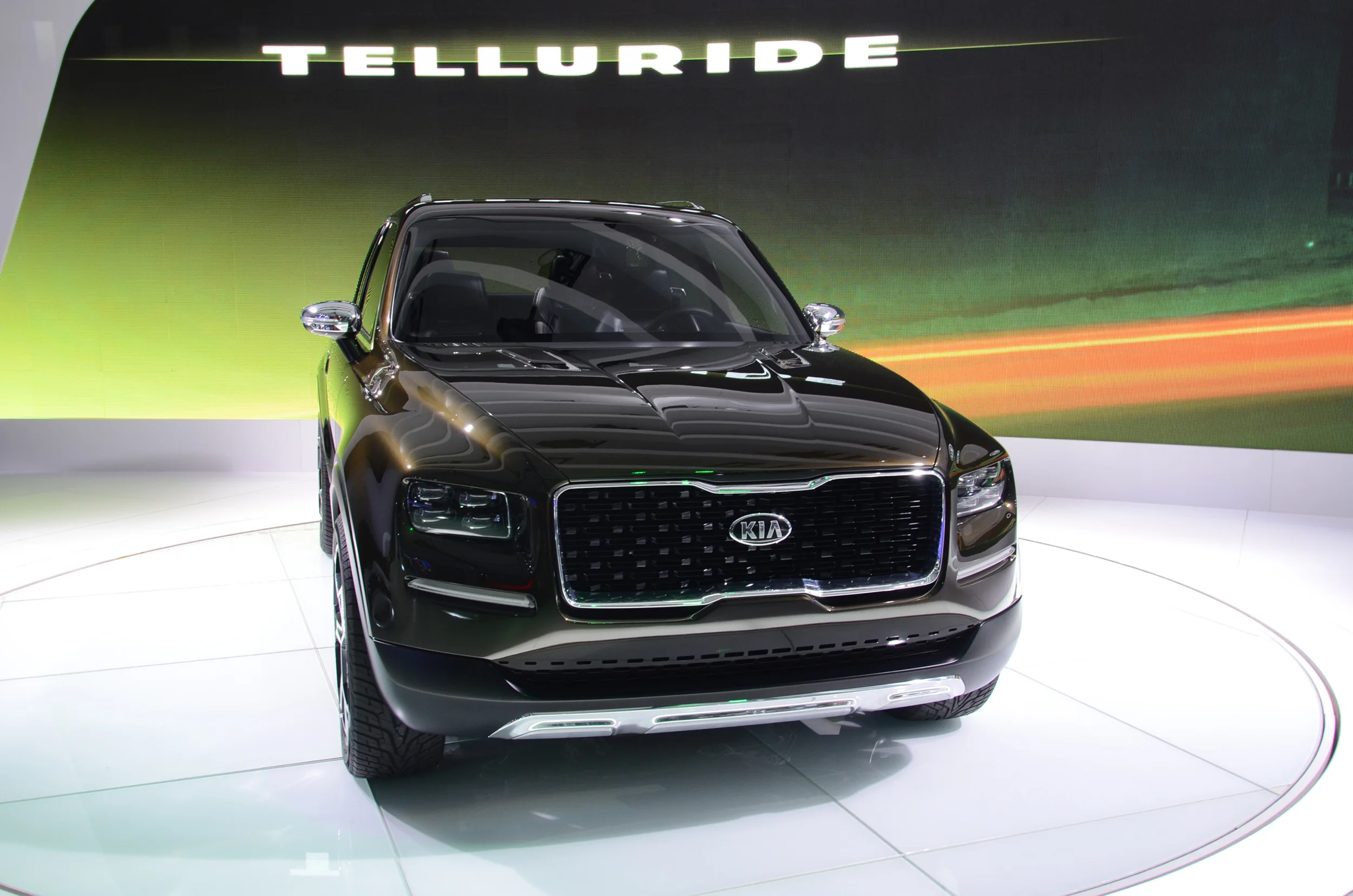
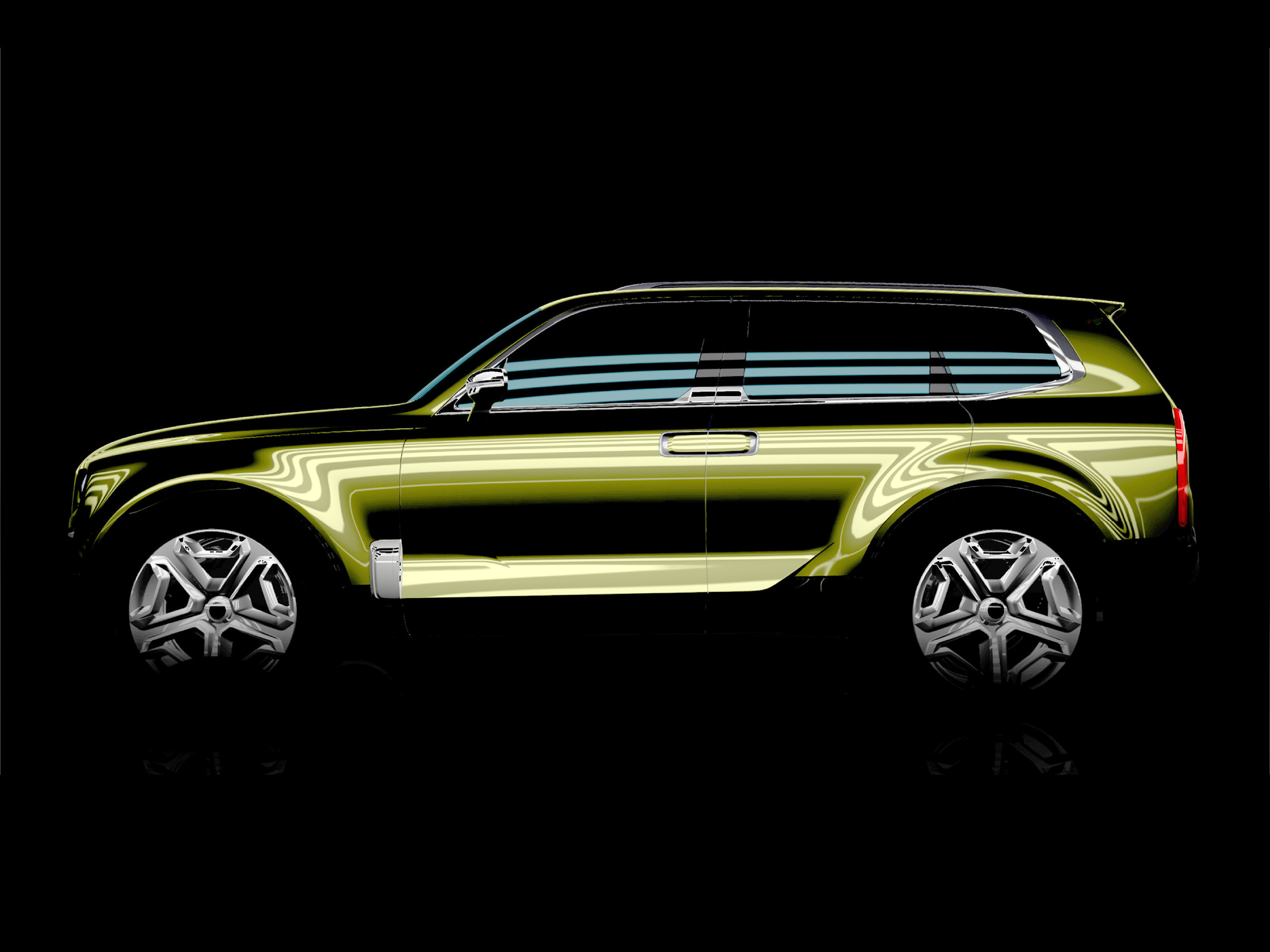
Kia reveals Telluride in Detroit

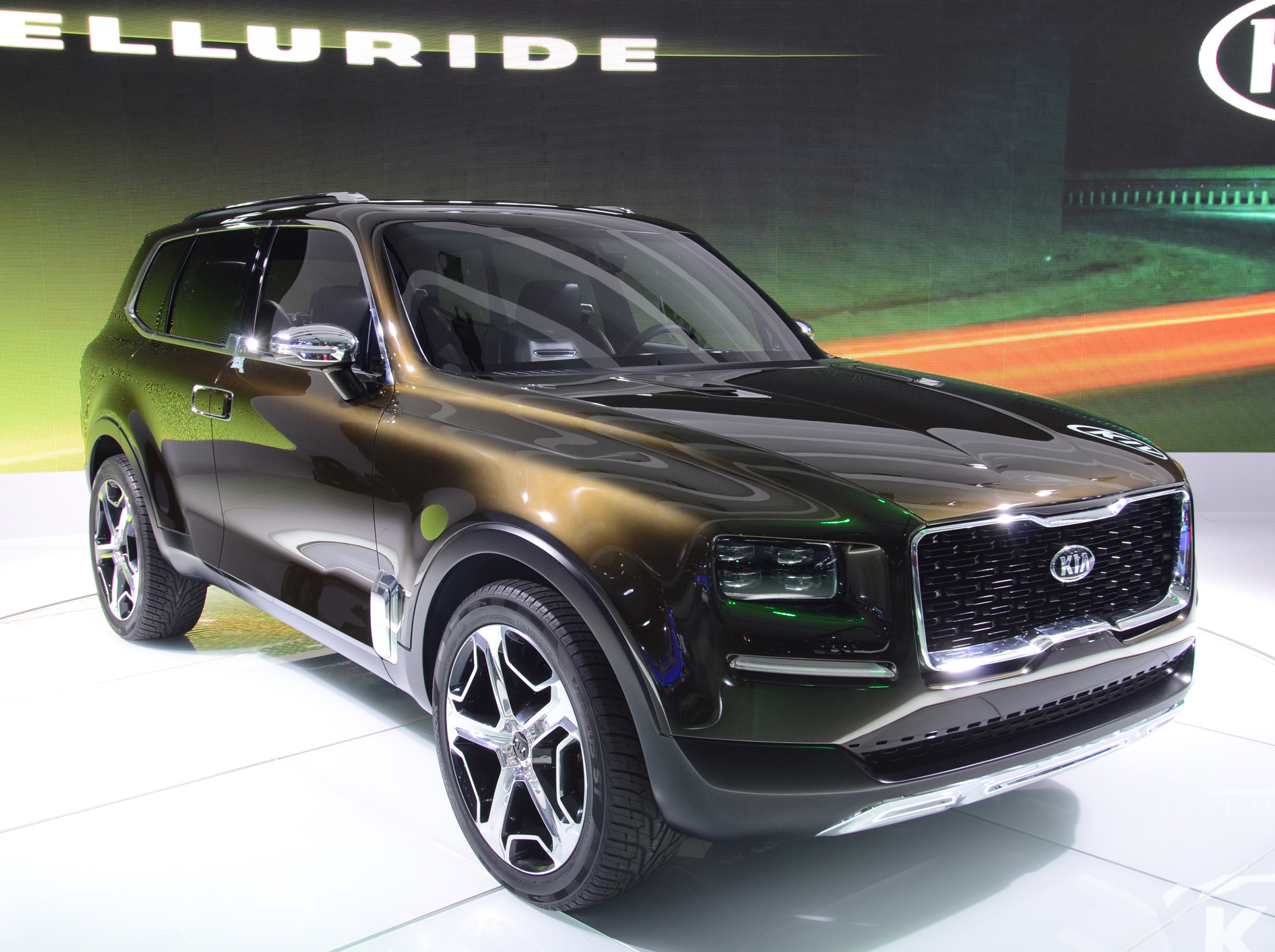
Kia has pulled the covers off its new Telluride SUV.

Revealed at the North American International Auto Show (NAIAS) the concept is a three-row, seven-passenger, luxury hybrid SUV featuring an upright shape, muscular stance, and state-of-the-art technology to care for its occupants. Based on an existing platform, the concept shows the brand’s interest in ‘potentially offering a premium SUV positioned above the current Sorento’.

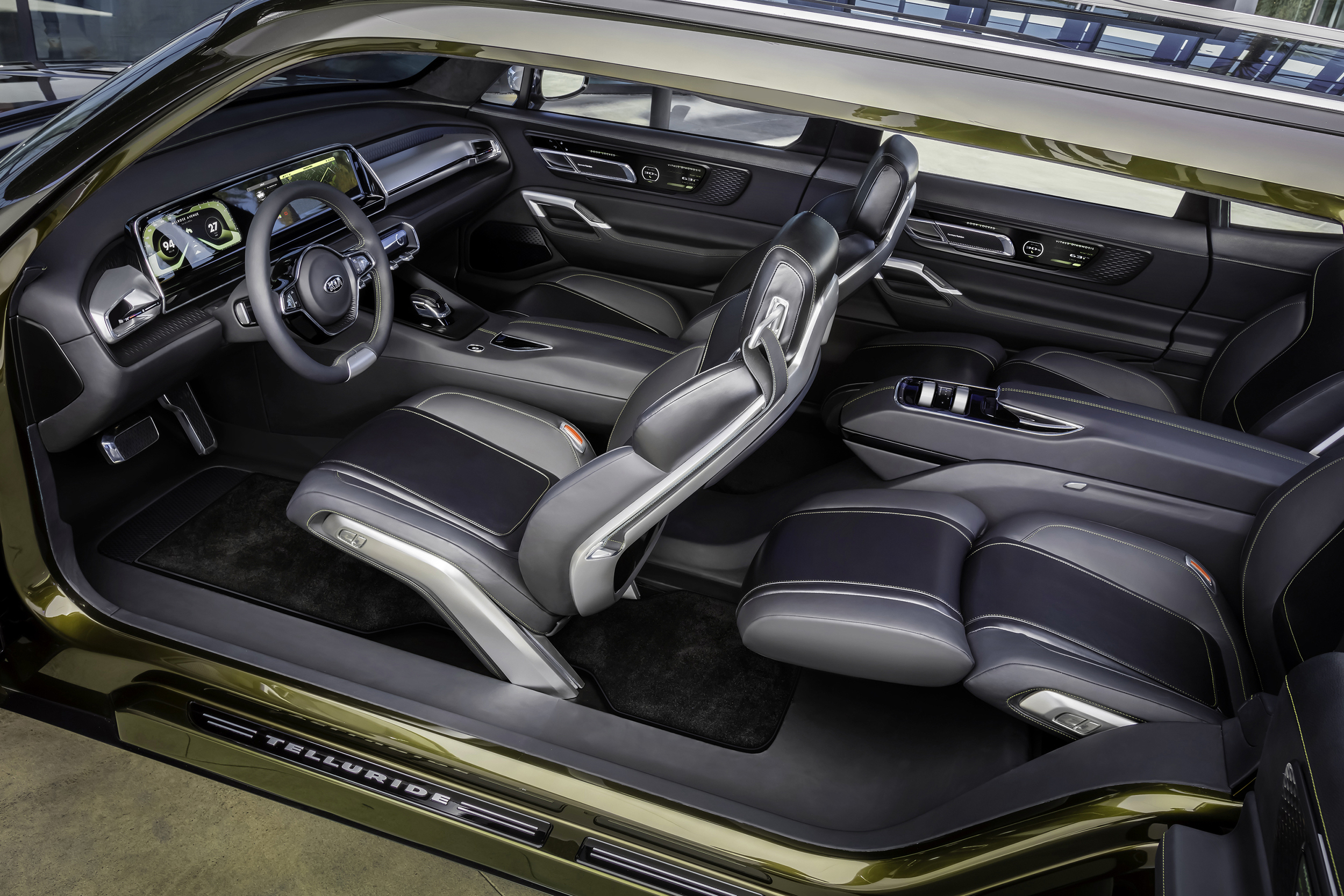
The Telluride’s front doors and rear-hinged back doors swing open 90 degrees in opposing directions revealing four black-leather ‘captain’s seats’ that appear to float within the spacious cabin, in front of a folded third-row bench. The large cabin allows the middle seats to recline nearly flat and include large fold-away footrests for added comfort.

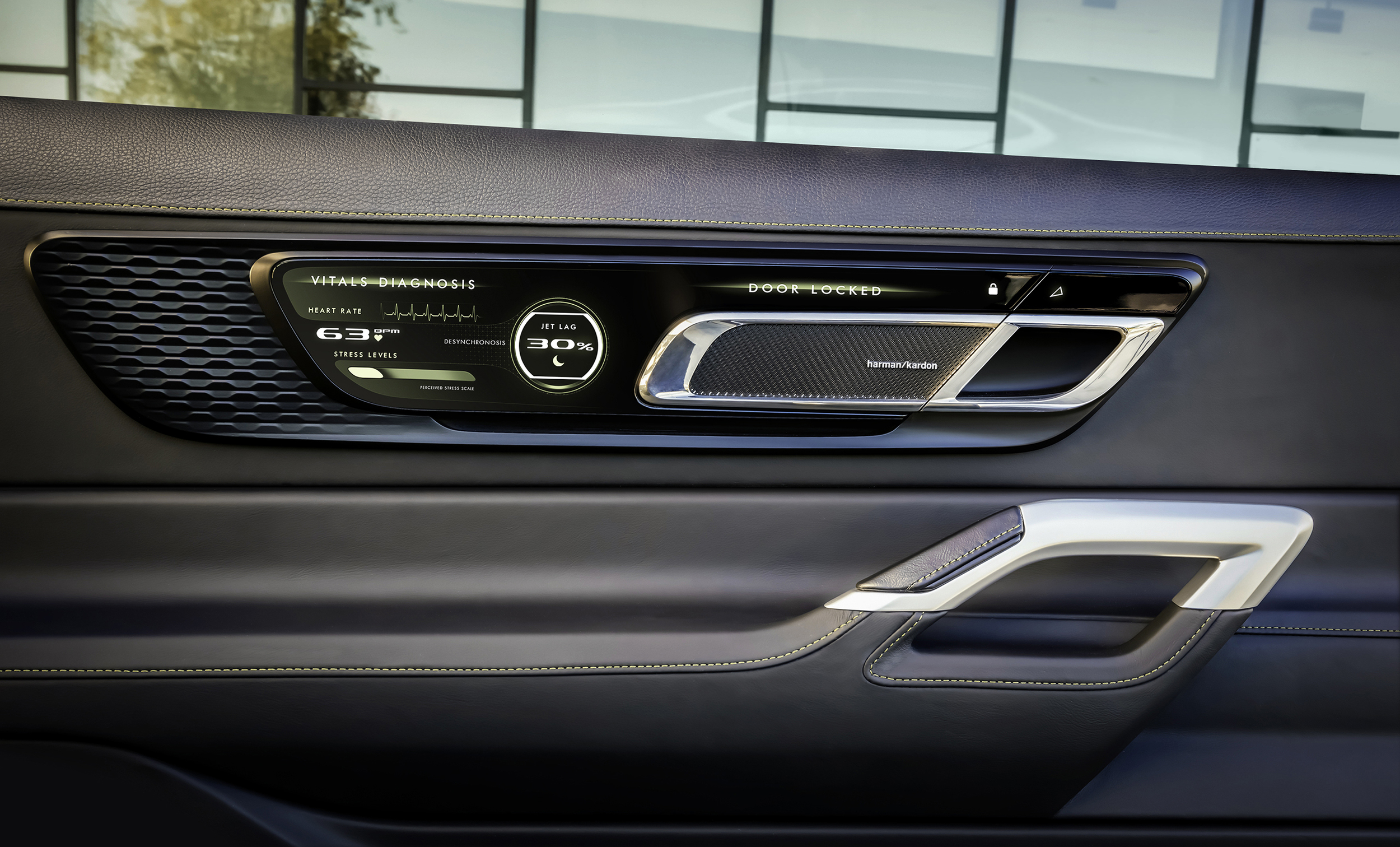
All four seats include a series of diamond-cut openings in the seatback, each embedded with Smart Sensors to capture a passenger’s vital health information. Once obtained, these vitals are displayed on the interior door panel screens, which then systematically synchronise with a Light Emitted Rejuvenation (LER) system. The LER system utilises a massive, wing-shaped LED panel mounted beneath the oversized sunroof that displays a pattern of therapeutic light to treat desynchronosis (jetlag) and improve the passengers’ energy levels.

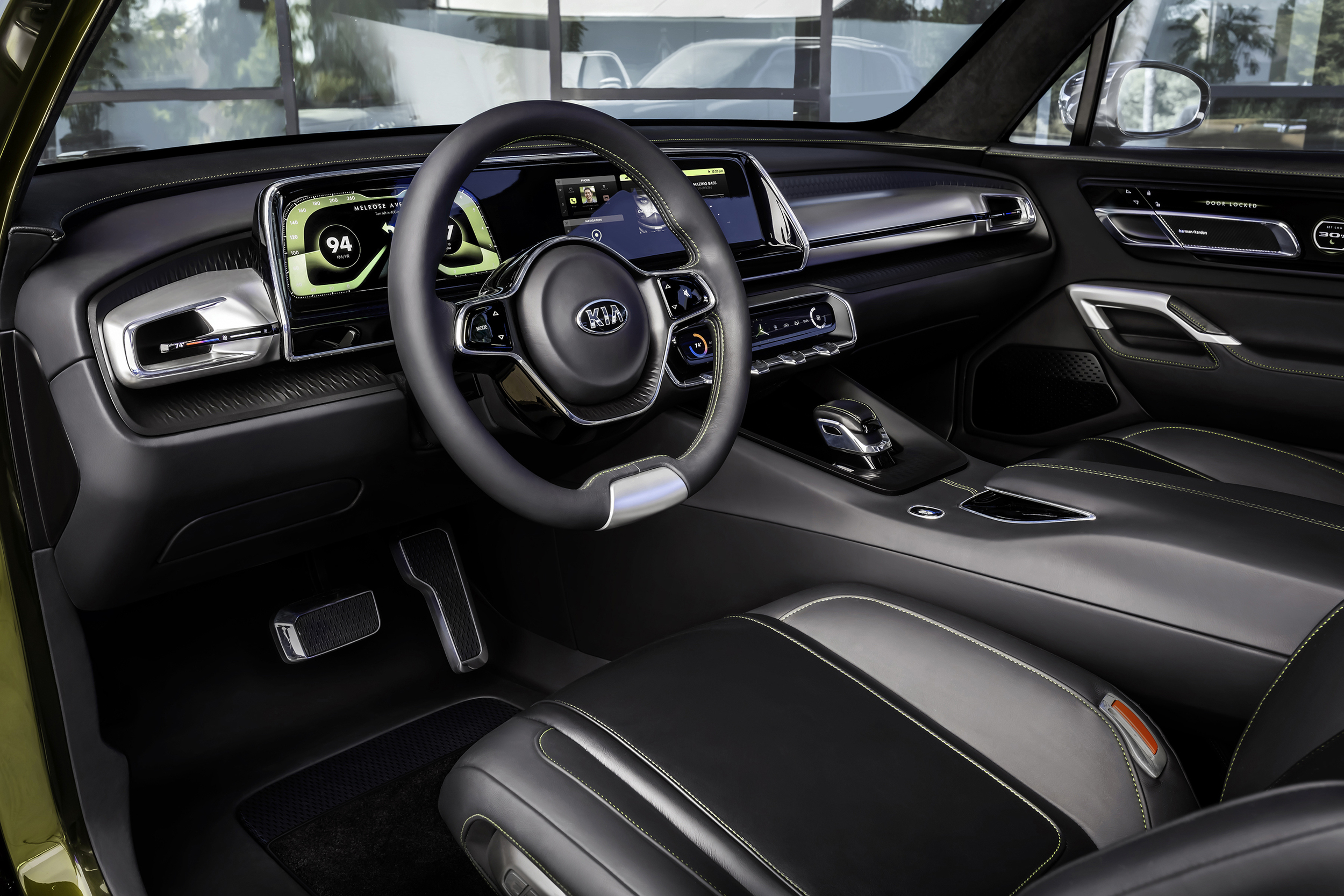
Another new technology introduced in concept is Swipe Command – a thin, touch-sensitive, interactive band mounted to the second row centre console – which allows rear-seat passengers to quickly scroll and select desired media by simply swiping their hand. The selected media is then played either through the seven-speaker premium Harman Kardon audio system, or via a set of portable Harman Kardon headphones that wirelessly charge when stowed in the console. Up front, a compartment in the centre stack allows for wireless mobile phone charging, and Kia’s first use of 3D-printed components add a distinct, modern design element to the dashboard, door panels, and steering wheel.

The Telluride’s ‘modern and muscular’ appearance is accentuated by flared wheel arches stretching around huge 22-inch five-spoke wheels. A front fascia incorporates a much larger version of Kia’s tiger nose grille, as well as quad-LED headlamps, pronounced horizontal LED indicator lights, and a polished-metal skid plate below the bumper.

The concept is powered by an ‘extremely efficient’ PHEV powertrain, activated by a finger-print push-button start. Utilising a 3.5-litre petrol direct injected (GDI) V6 engine and powerful electric motor, the SUV’s transverse-mounted powertrain combines to produce 400 horsepower (270 horsepower from V6 and 130 horsepower from the electric motor) while achieving more than 30mpg on the motorway. Power is sent to all four wheels via an advanced all-wheel drive system.

While there are currently no plans to bring the Telluride to production, Kia says it has a history of delivering production vehicles that bear strong resemblance to a preceding concept.

Coupe, Motorshow, News, Saloon

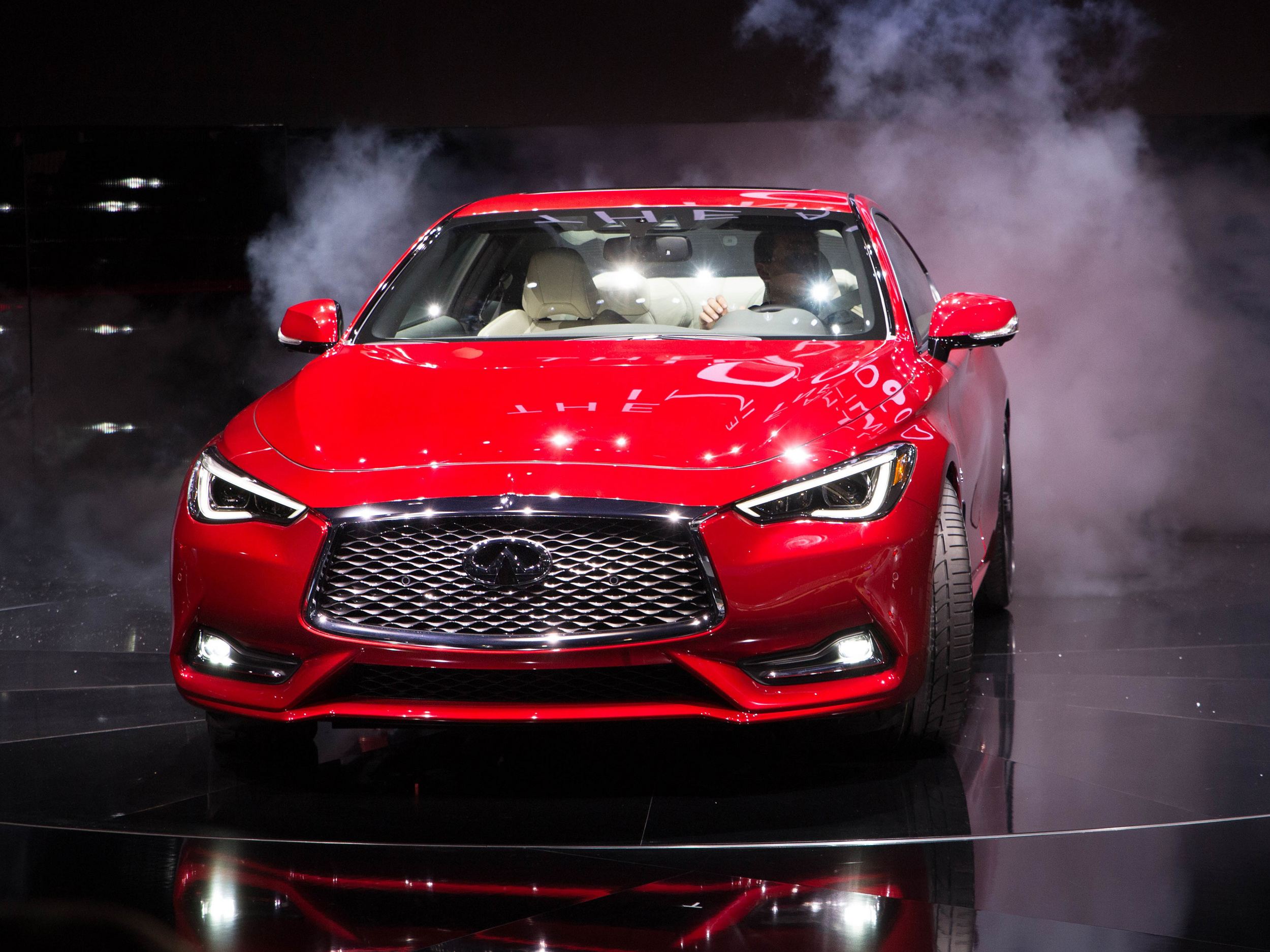
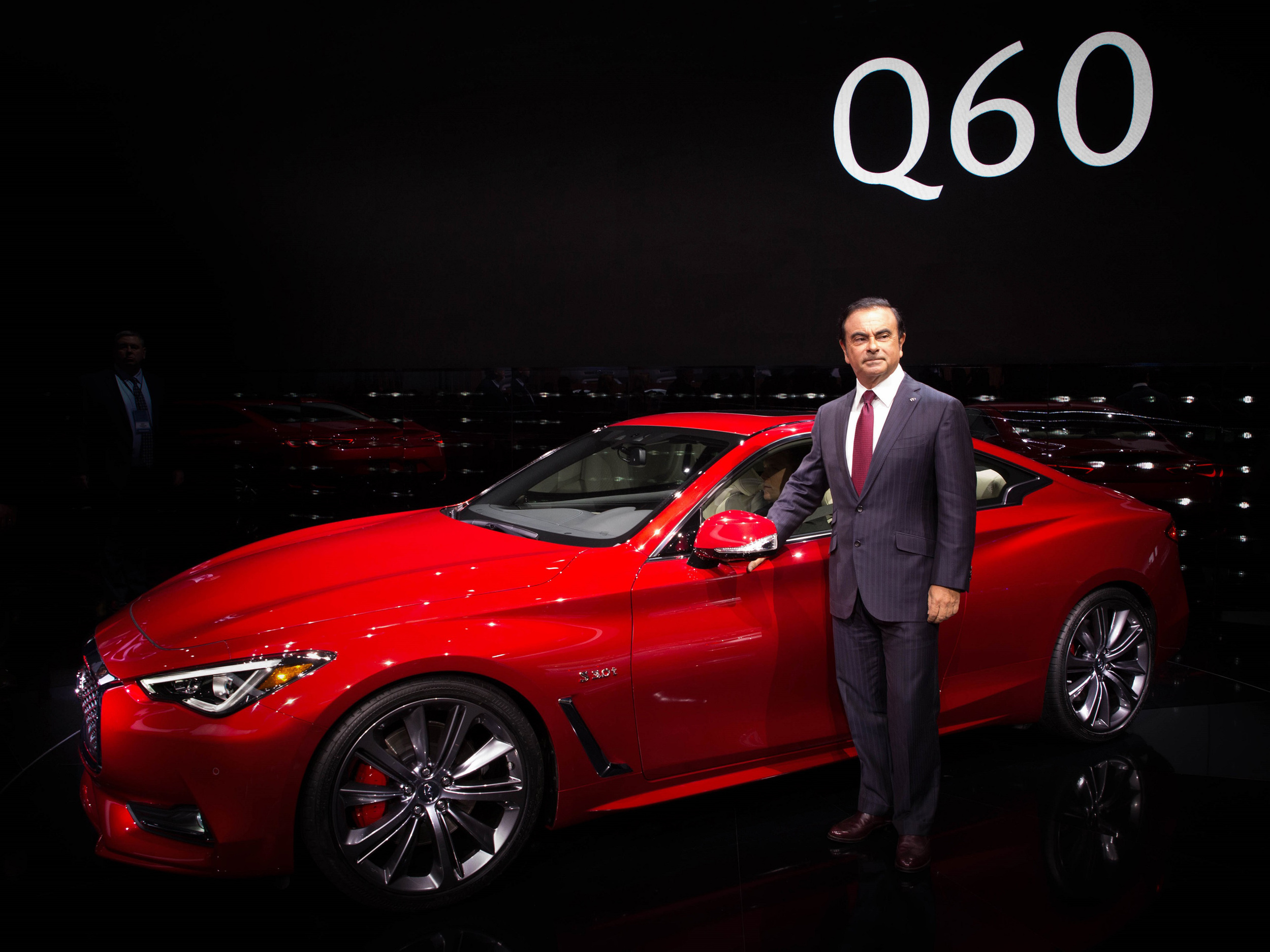
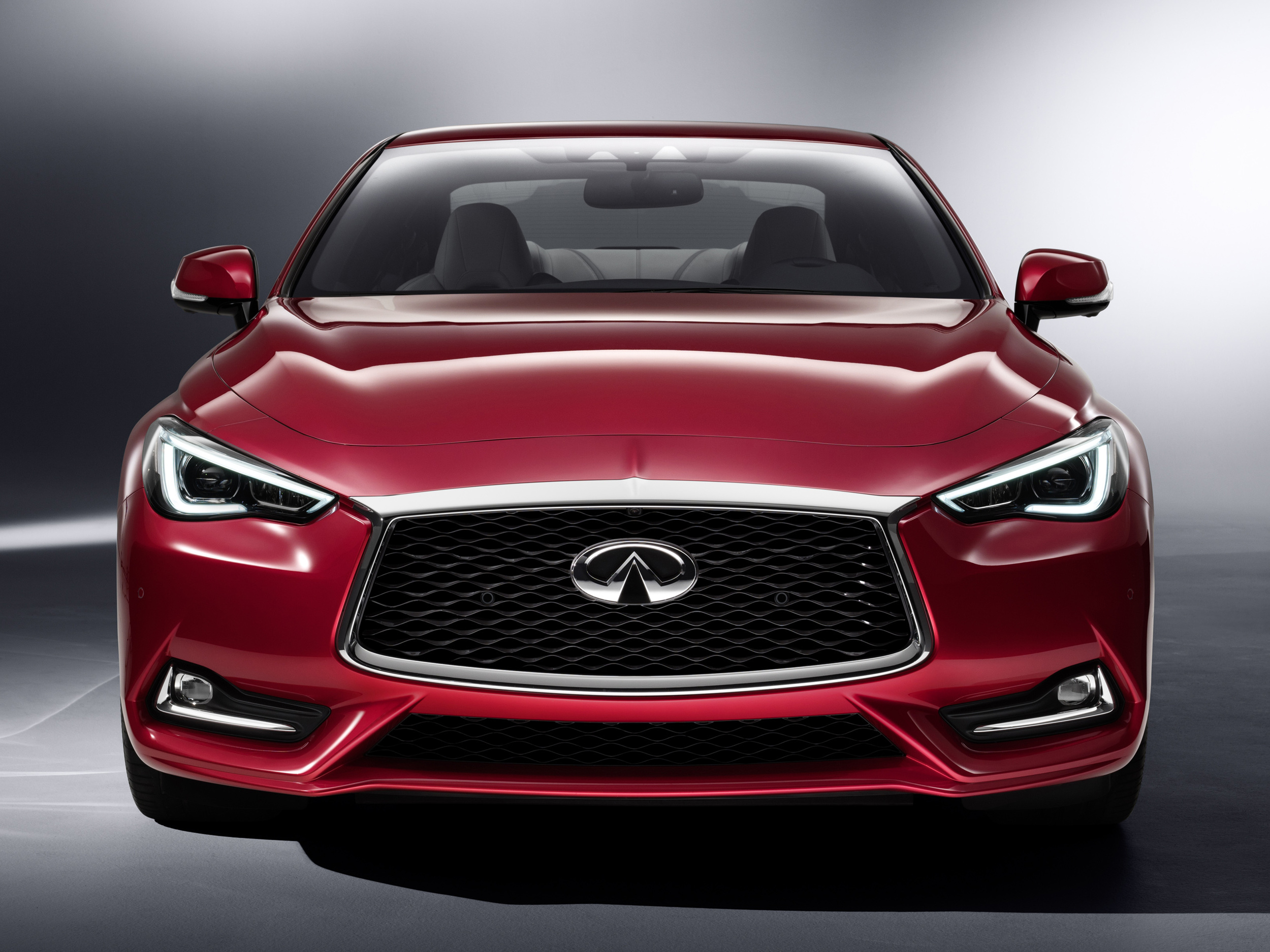
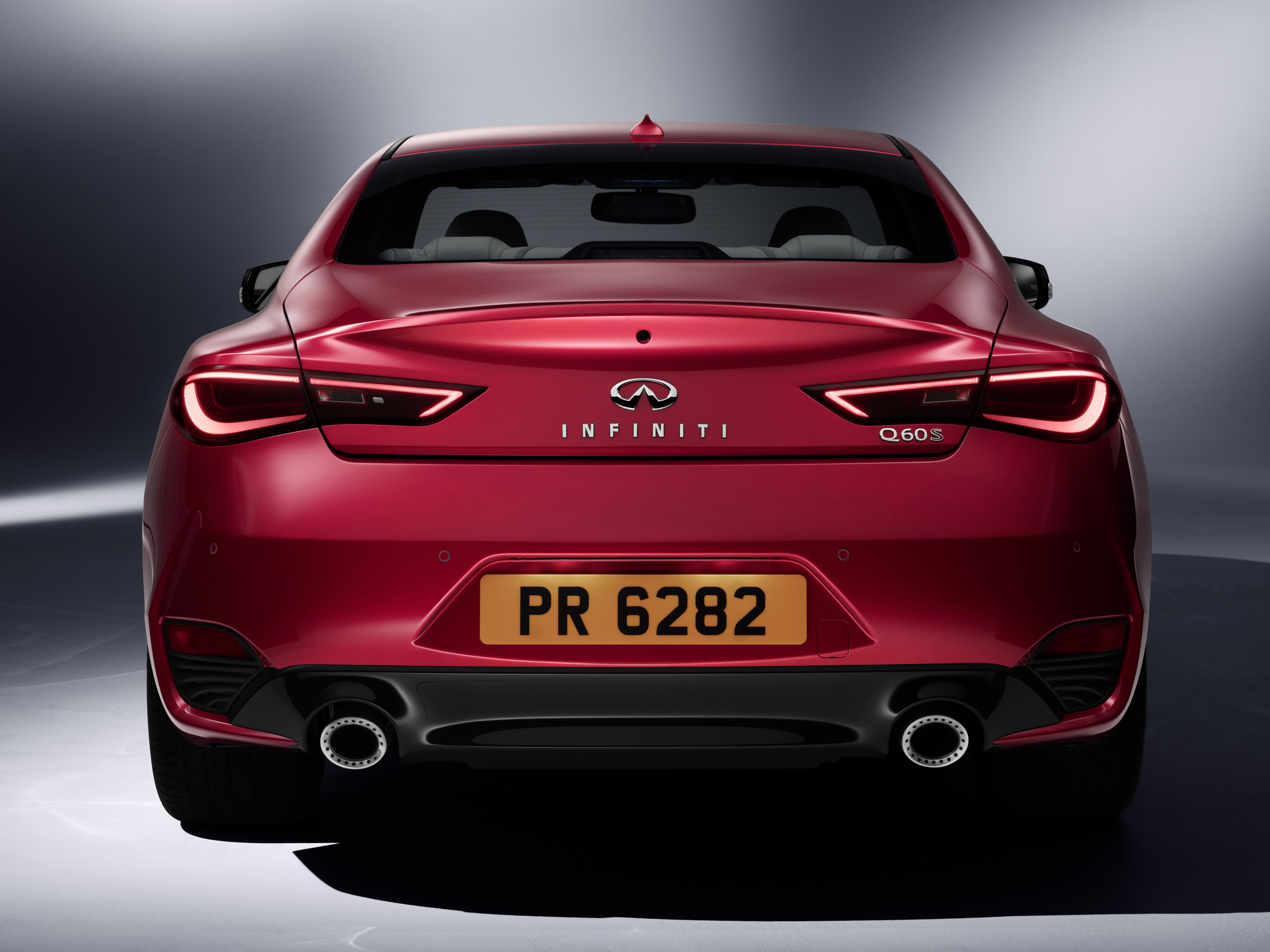
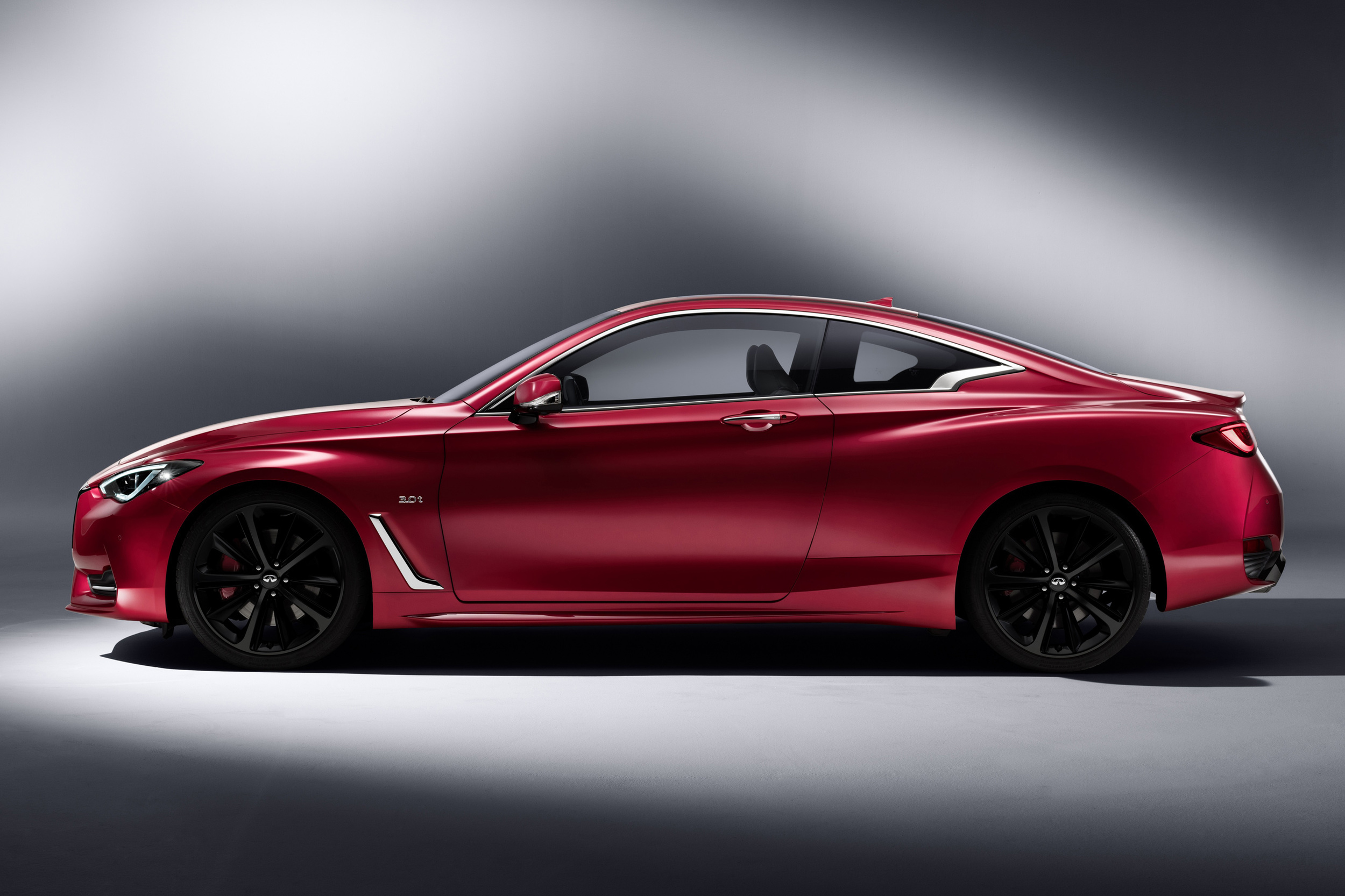
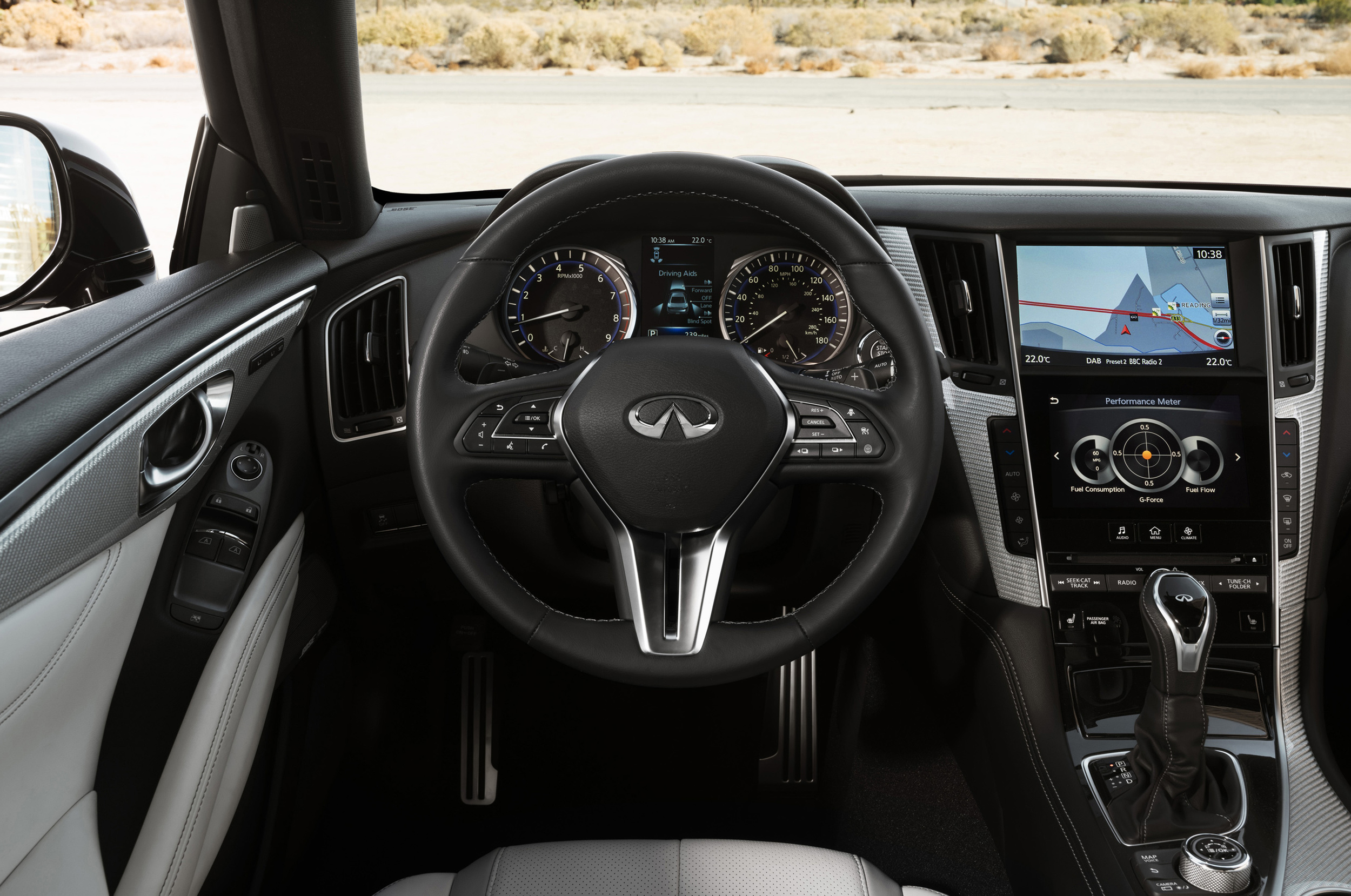
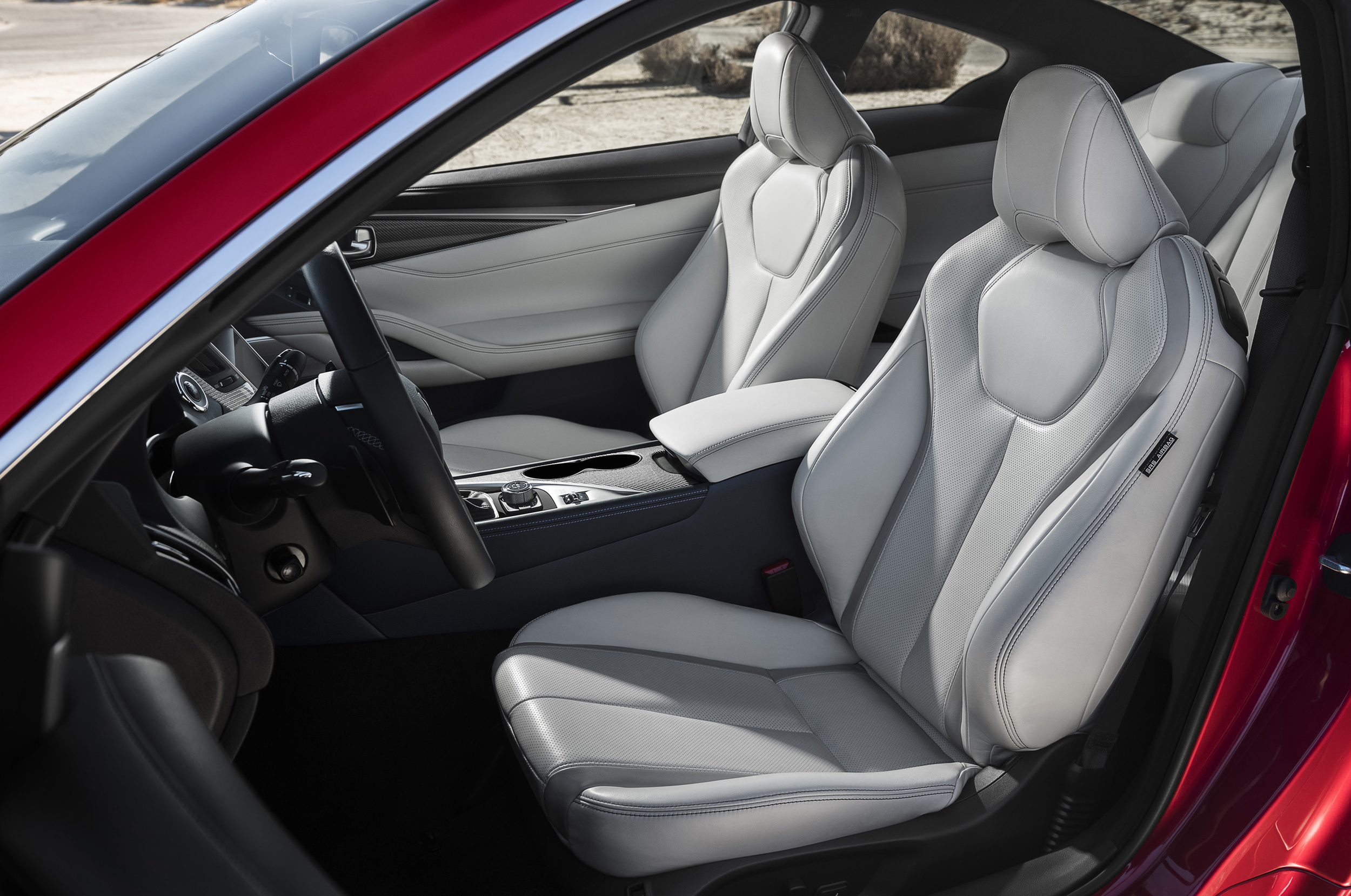
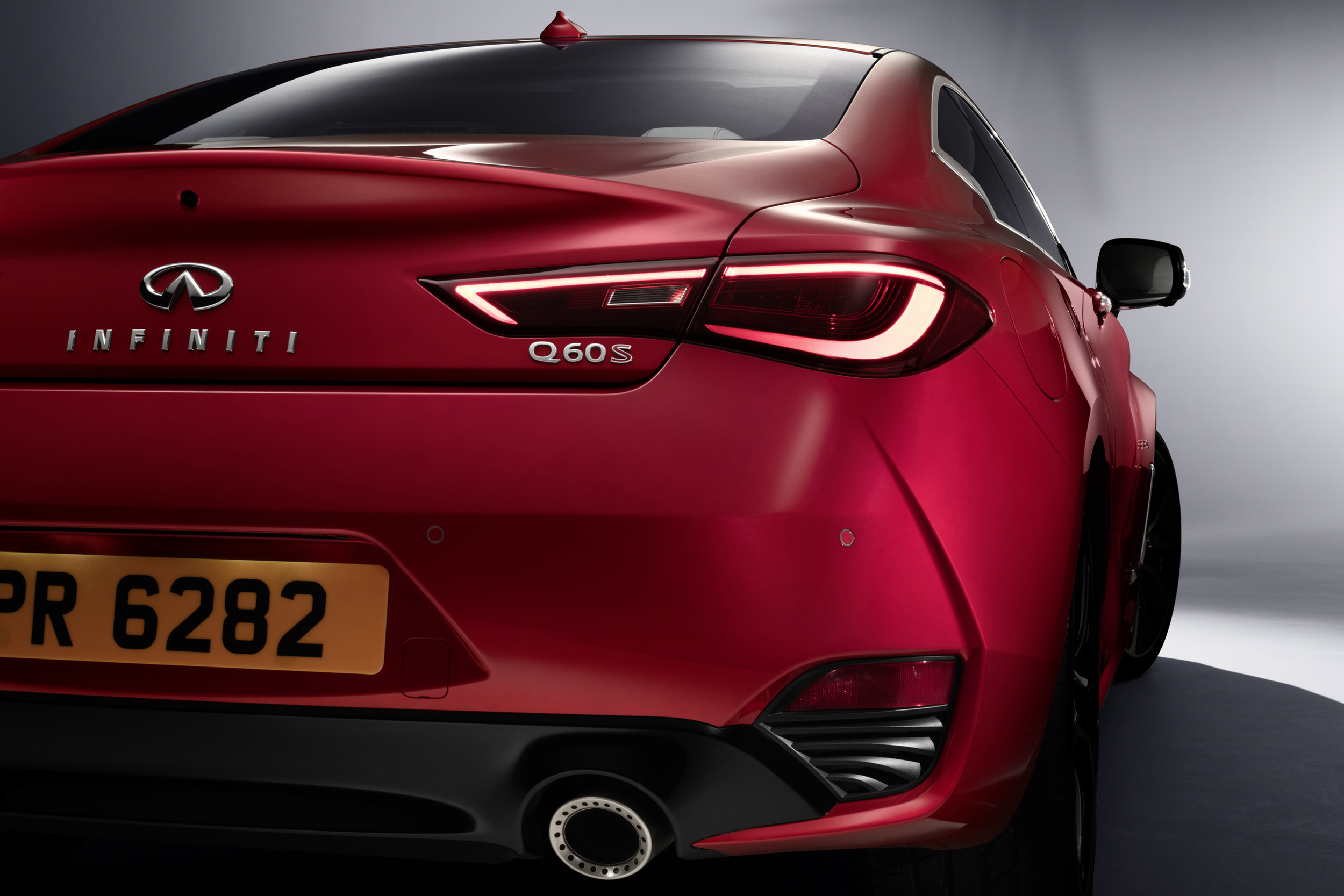
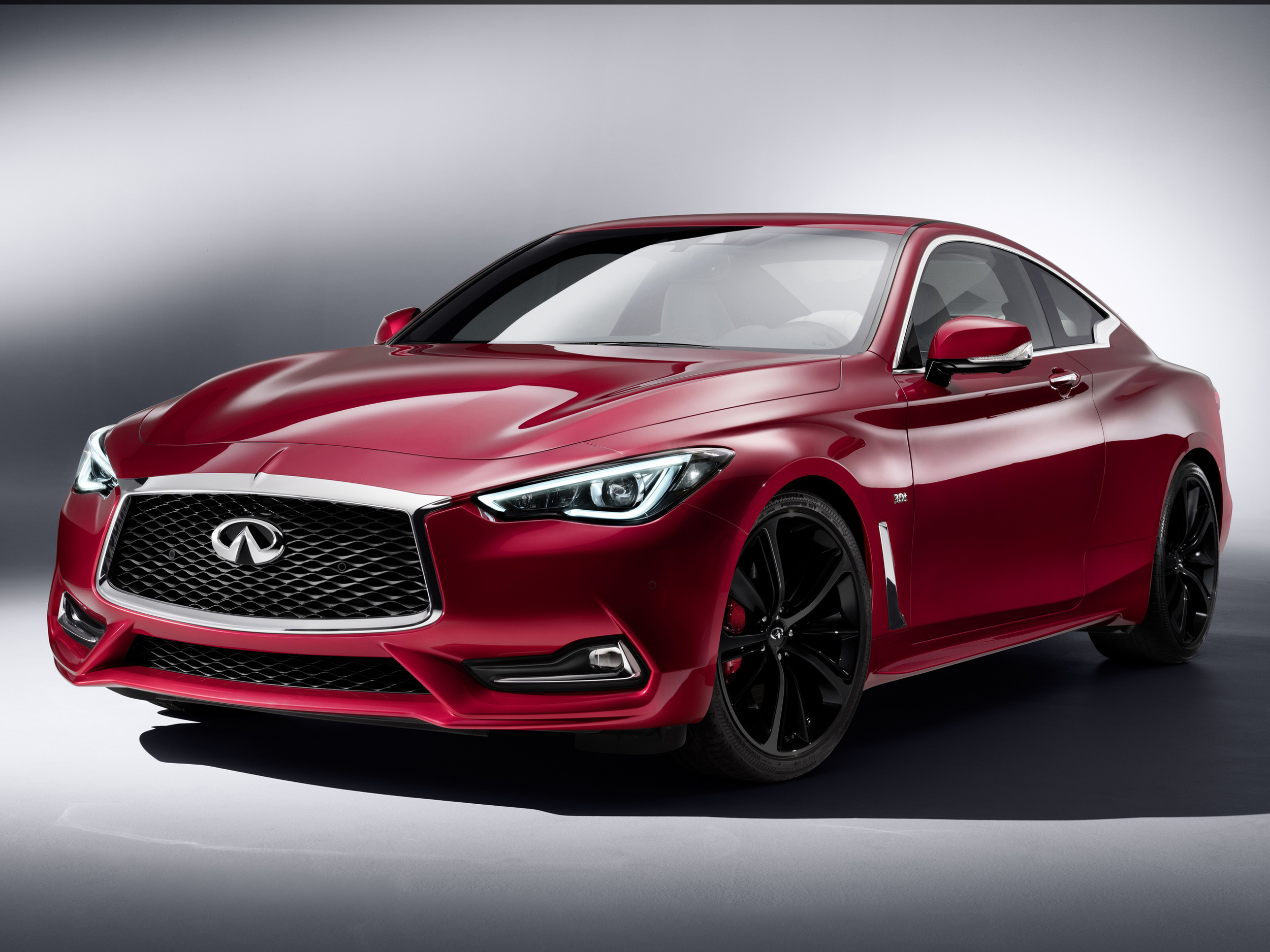
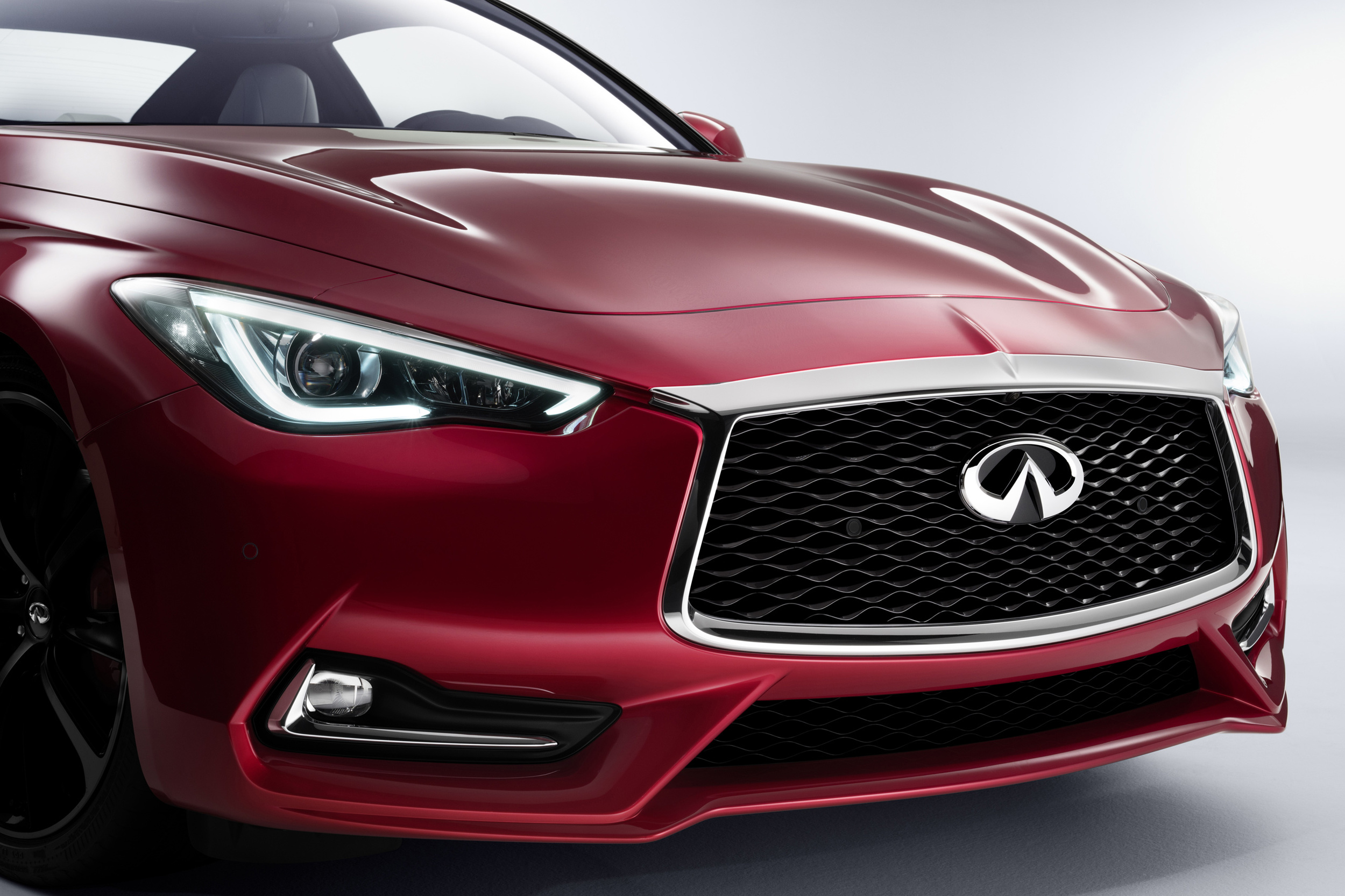
Infiniti Q60 coupe debuts in Detroit

The Infiniti Q60 sports coupe has made its world premiere at the 2016 North American International Auto Show (NAIAS) in Detroit.

Lower and wider than its predecessors, the Q60 features dynamic enhancements including an all-new lightweight 3.0-litre V6 twin-turbo engine, new adaptive steering and digital suspension system.

The high performance engine from the new ‘VR’ powertrain family is born out of the brand’s extensive in-house experience of six-cylinder powertrains. The new ‘VR30’ engine develops 400hp with one of the best power-to-efficiency ratios in the premium sports coupe class, says Infiniti. The powertrain is mated to a rear-biased intelligent All Wheel Drive (AWD) system that offers enhanced stability and road holding in low grip conditions.

A rear wheel drive version is also available, powered by a four-cylinder 2.0-litre gasoline engine, turbo-charged to produce 208hp.

The Q60 features Infiniti’s new Dynamic Digital Suspension, which has been designed to offer best-in-class handling responses and agility, and enhanced ride comfort – thanks, in part, to a dedicated new set of dampers.

In addition, Infiniti says that its second-generation Direct Adaptive Steering offers high levels of steering feel and feedback, while the Drive Mode Selector gives drivers the option to personalise and tailor the steering’s precise levels of response and feel to suit their own preferences. 

“The Infiniti Q60 conveys a powerful elegance through its daring design, and has the performance credentials to match – thanks to next-generation ride and handling technologies and up to 400 horsepower. The Q60 will affirm Infiniti’s leadership in the premium sports coupe class.” said Roland Krueger, President of Infiniti.

The Q60 sports coupe will go on sale in selected markets in the second half of 2016.

4x4, Motorshow, Concept Car, SUV

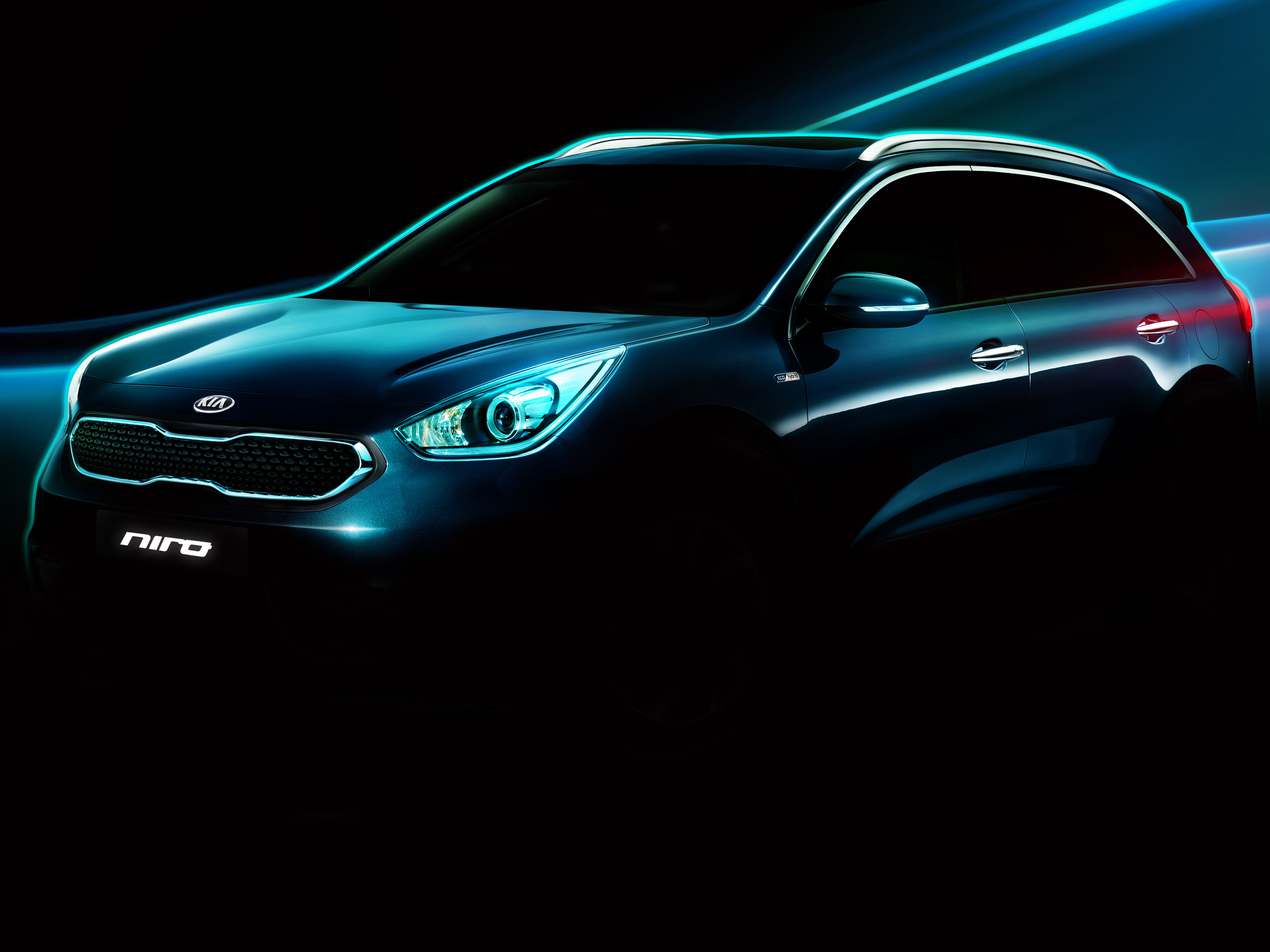
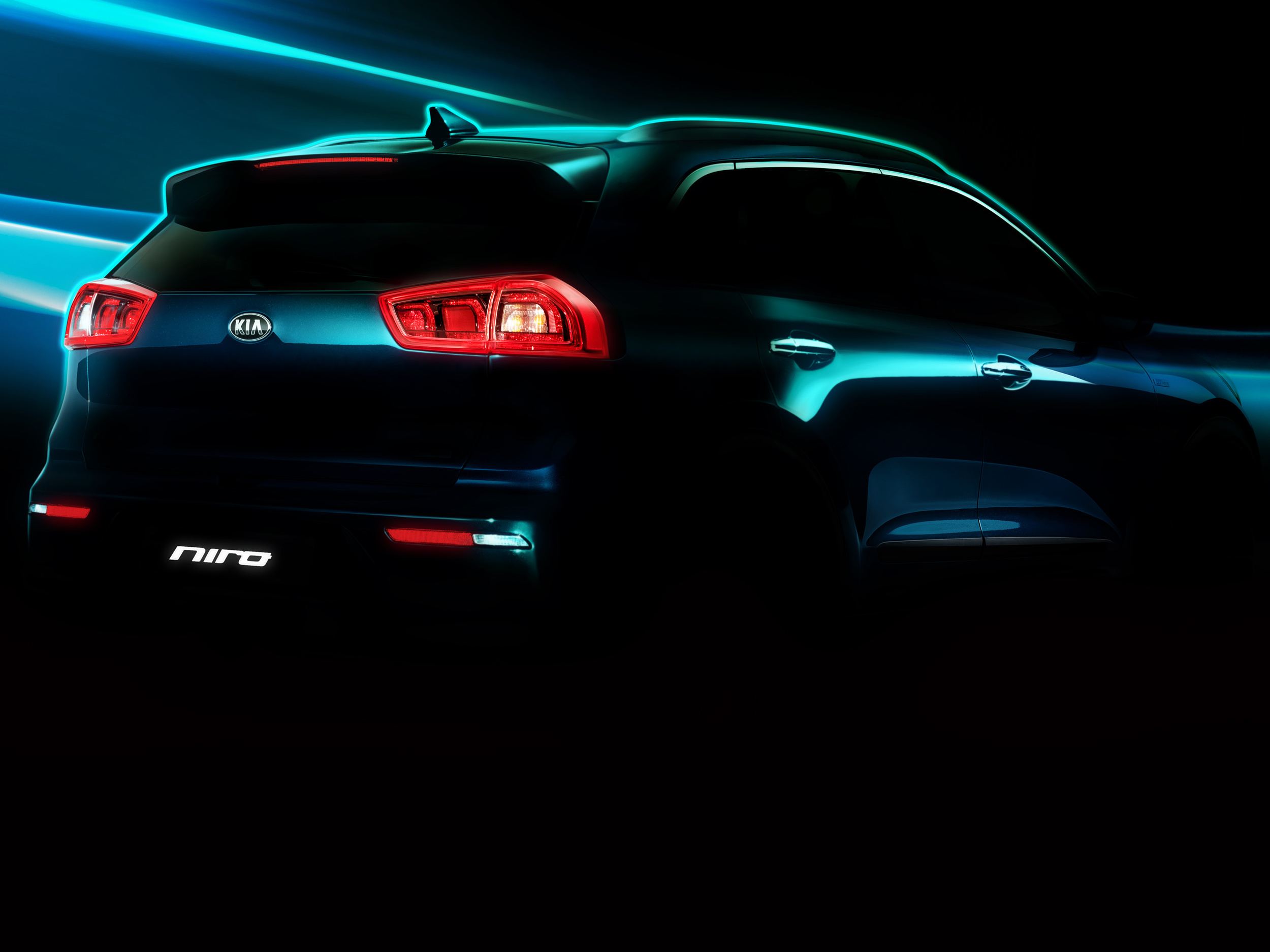
Kia teases first images of Niro Hybrid

Kia has unveiled the first official images of the Niro – an all-new Hybrid Utility Vehicle (HUV) ahead of its world premiere next month.

The styling of the Niro was led by Kia’s design centres in California, USA and Namyang, Korea and incorporates the practicality of a compact SUV, with a sleek, aerodynamic body.

The teaser image reveals raised haunches and high-mounted LED taillights at the rear, with a relatively high shoulder line and shallow glasshouse creating a sporty profile.

The all-new Niro is the first model to be based on Kia’s new dedicated eco-car platform, and the HUV is expected to achieve a sub-90 g/km CO2 emissions rating (combined, based on the New European Driving Cycle) thanks to its all-new downsized gasoline-electric hybrid powertrain. 
The Niro HUV will be unveiled to the world for the first time at the 2016 Chicago Auto Show in February.

Concept Car, 4x4, Electric, Motorshow, News, SUV

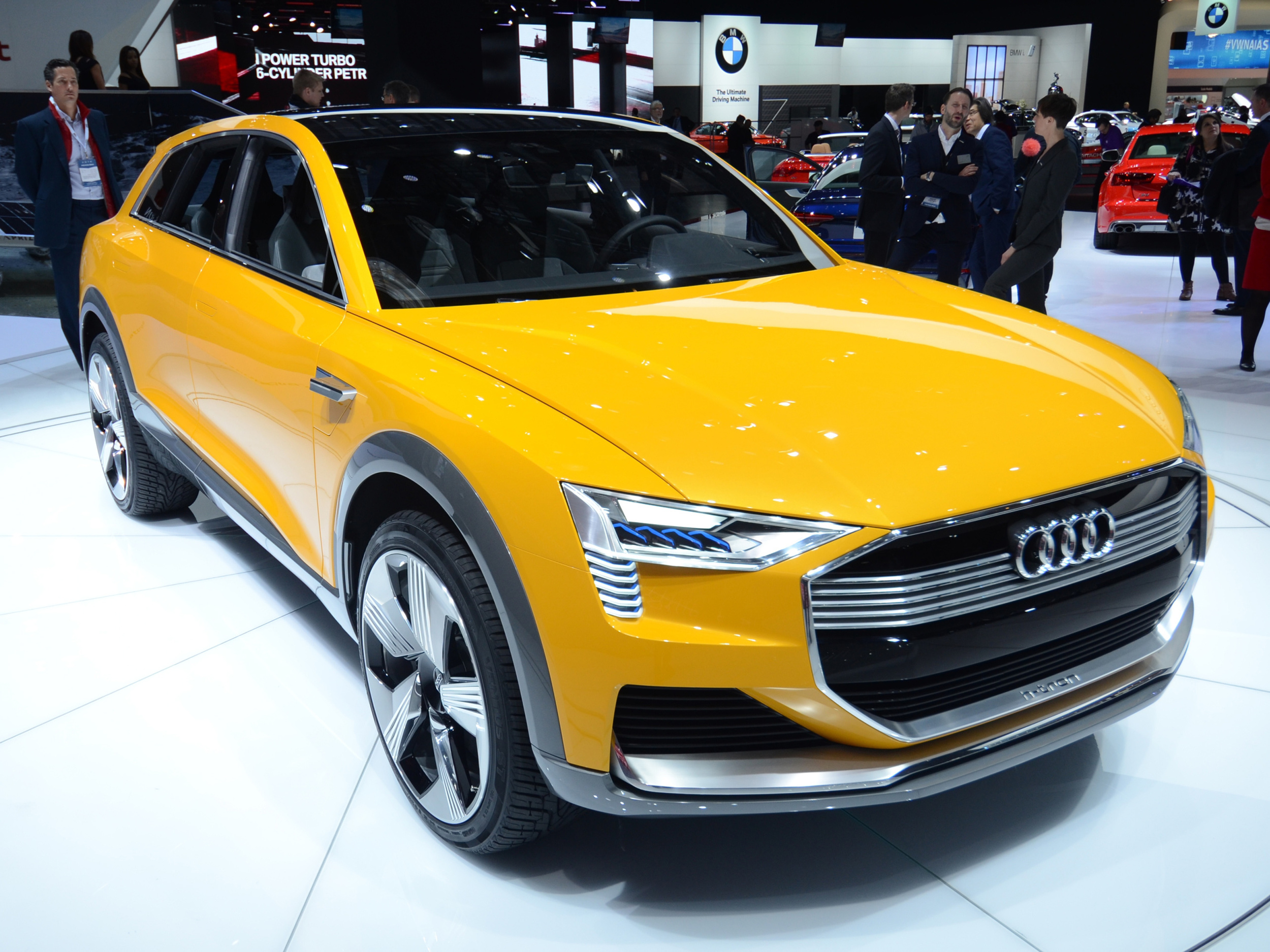
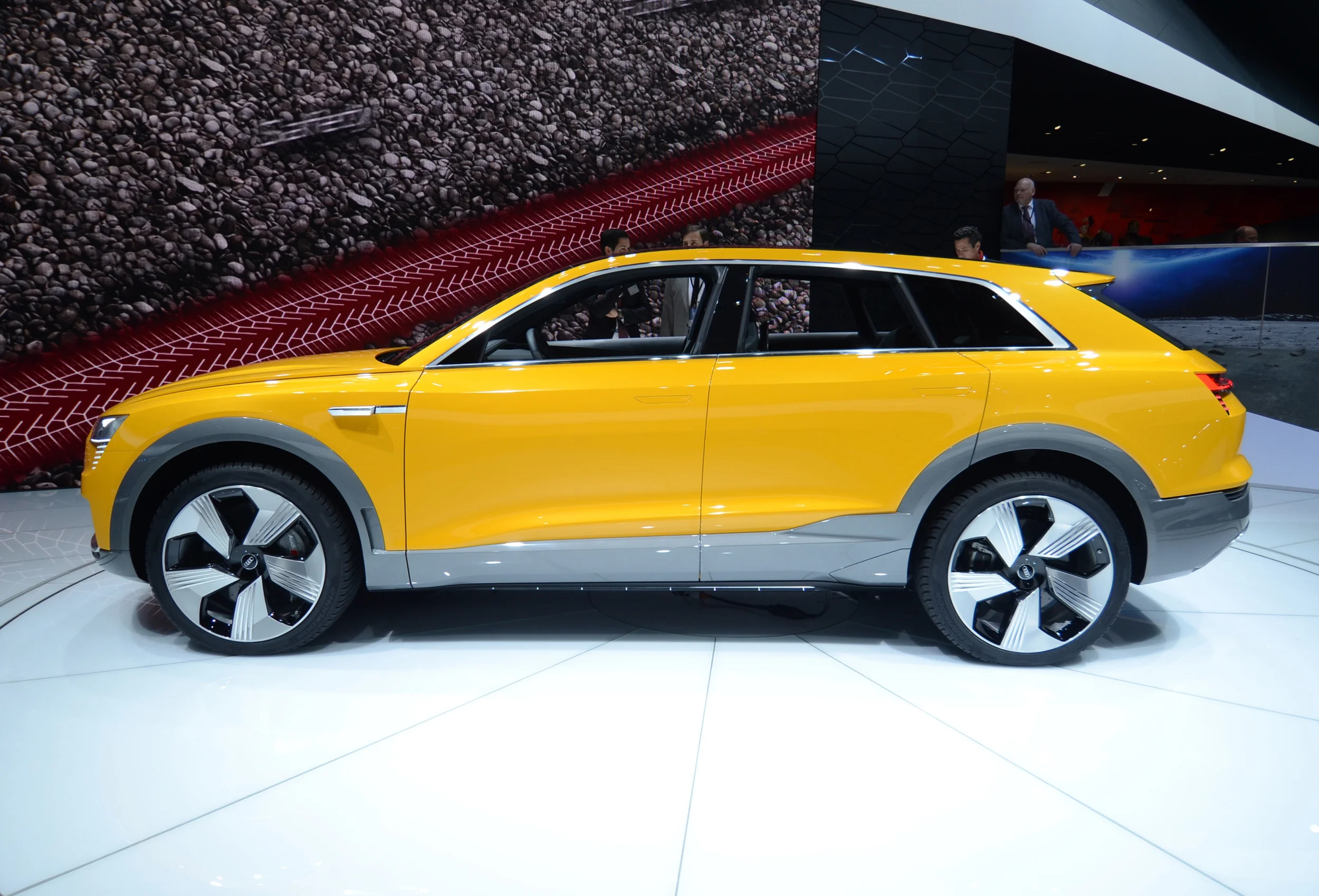
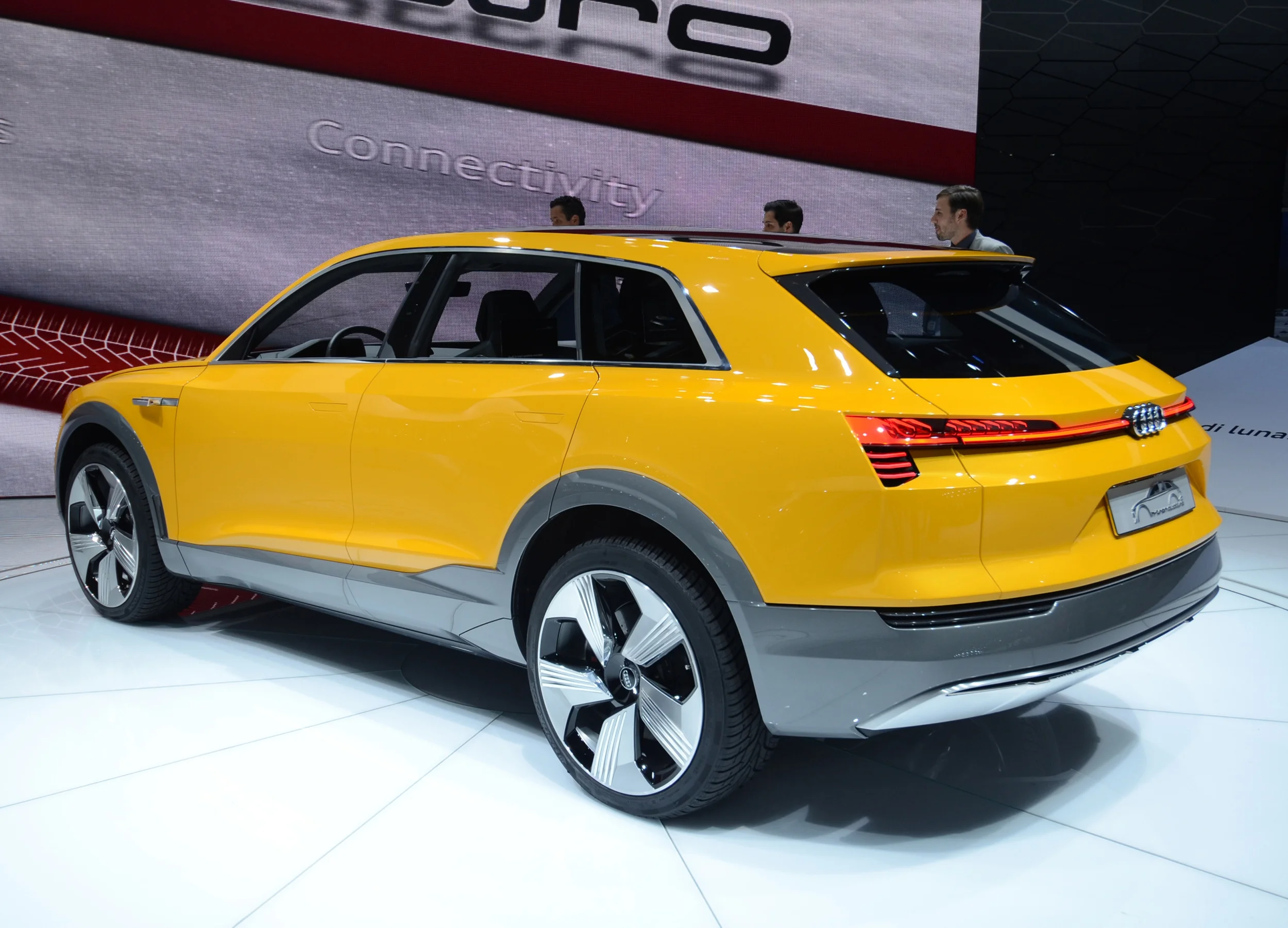
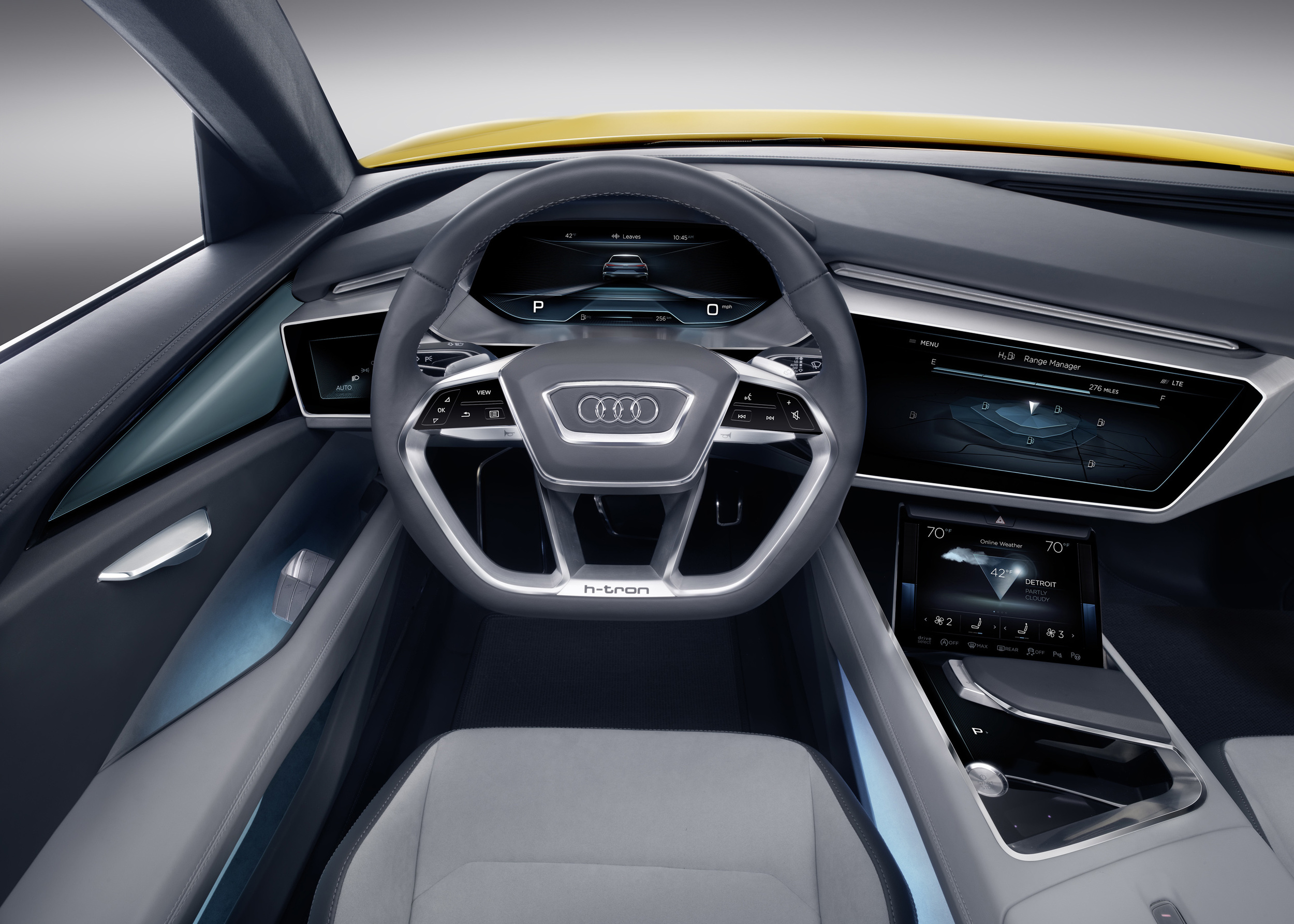
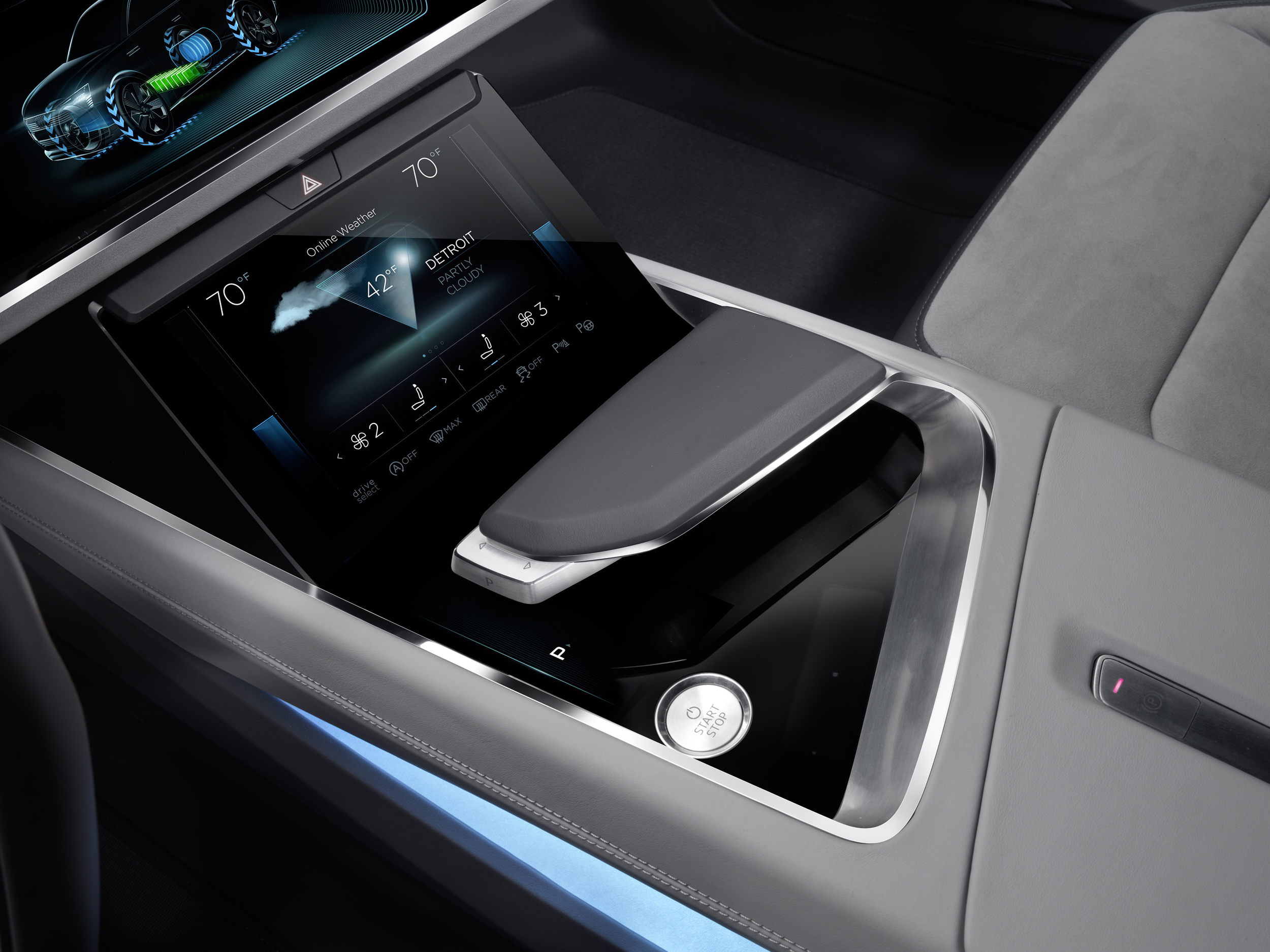
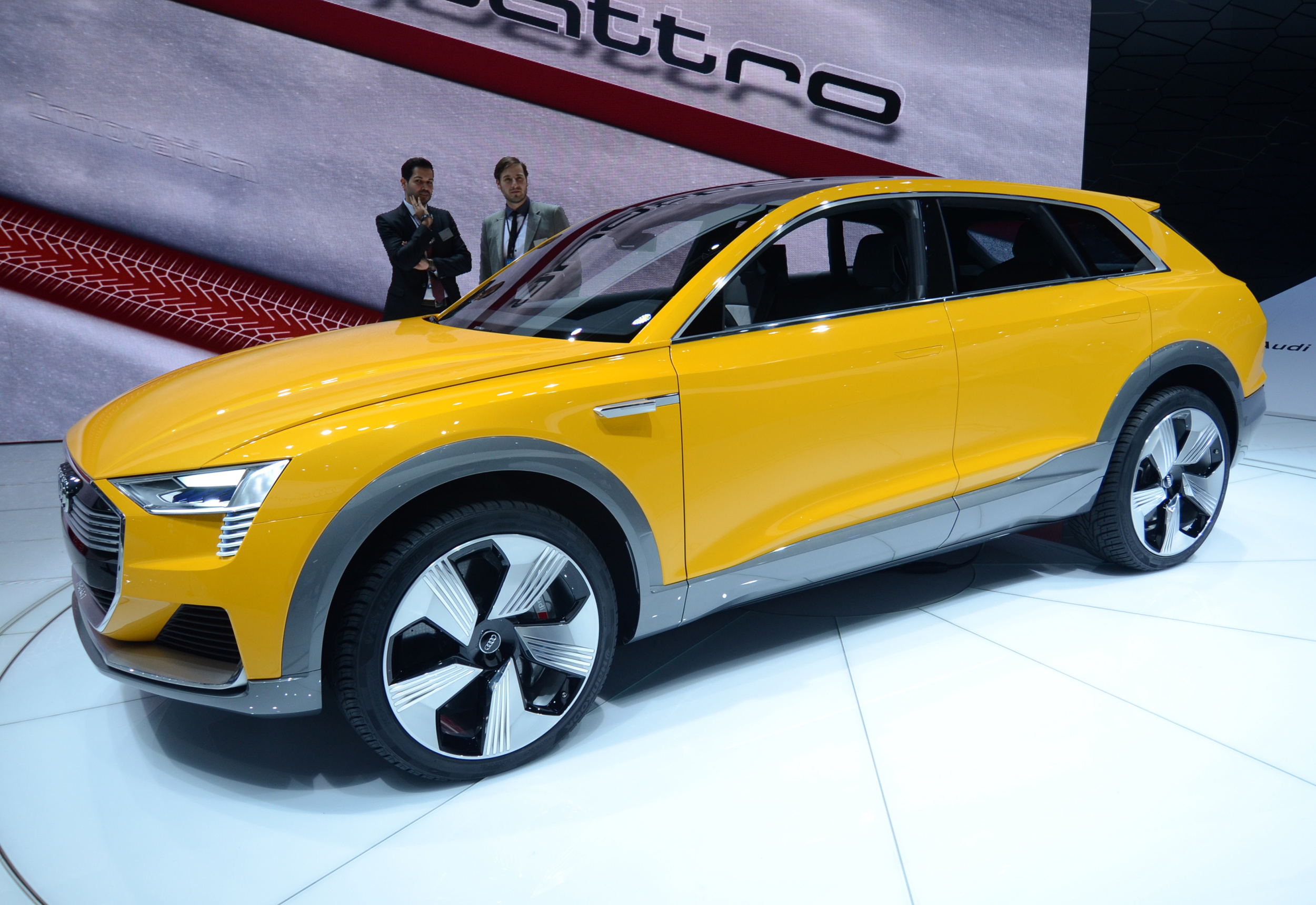
Audi unveils h-tron quattro concept in Detroit

Audi has pulled the covers off the h-tron quattro concept car at the NAIAS in Detroit 

Described as the next step towards the long-term Audi goal of CO2-neutral mobility, the SUV concept is powered by a fuel cell with an output of up to 110 kW backed up by a further on-demand power boost of 100 kW from a lightweight lithium-ion battery. 

Total system torque of 550 Nm equates to acceleration from 0-62 mph in under seven seconds and a 124 mph top speed.

It can be fully refuelled with hydrogen in around four minutes, and is then ready to drive for up to 372 miles (600 km).  An extra energy boost comes from the fitment of the world’s largest in-car solar roof, offering up to 320 watts output or additional range of up to 620 miles (1,000km) per year

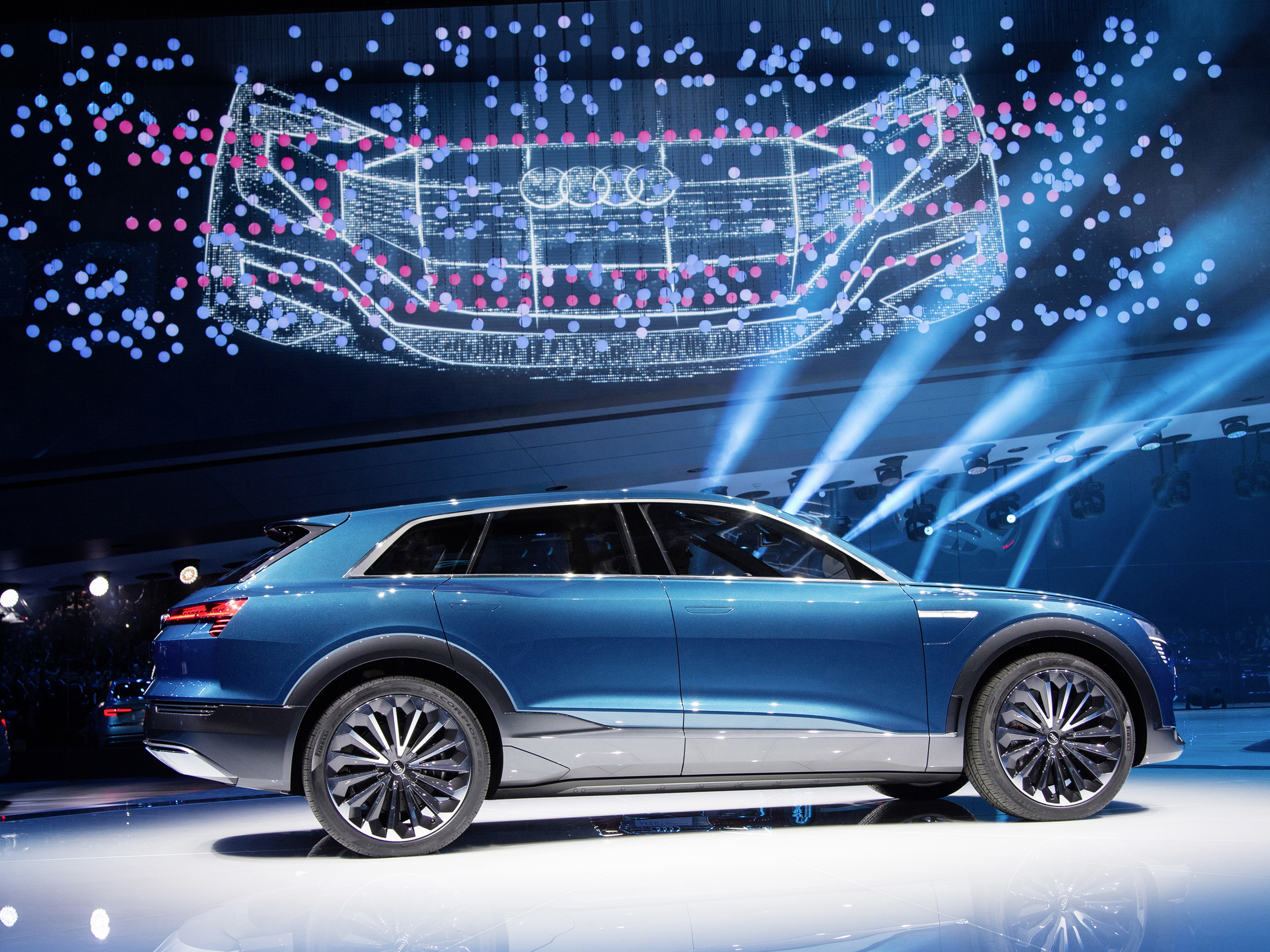
The h‑tron quattro concept is closely related to the fully electric e‑tron quattro concept SUV which made its debut  at the 2015 Frankfurt Motor Show. Both cars are based on the second-generation modular longitudinal platform (MLB evo), sharing a virtually identical floor assembly despite their different technology.

The h‑tron quattro concept presents the fifth generation of fuel cell technology from Audi and Volkswagen, using lighter materials to reduce weight and improve performance, responsiveness, service life and efficiency. 

With an efficiency rating in excess of 60 percent, Audi claims that the fuel cell now surpasses any combustion engine. The “stack”, comprising 330 individual cells, is housed in the forward structure.

The three hydrogen tanks are located beneath the passenger or luggage compartment. At a pressure of 700 bar, they store enough hydrogen for a range of up to 372 miles (600 km).  

Every tank is made up of several layers – the inner tank from gas-tight polyamide is wrapped in carbon fibre reinforced polymer (CFRP) and glass fibre reinforced polymer (GFRP). Like a car with a combustion engine, refueling takes about four minutes.
Offering seating for four adults and 500 liitres of luggage space, the five-door Audi h‑tron quattro concept is 4.88 metres long and 1.93 metres wide but its relatively low height of 1.54 metres contributes to a drag coefficient of 0.27. Aerodynamic elements down the flanks, on the underbody and at the rear improve airflow around the car at higher speeds, while cameras take the place of exterior mirrors, to improve efficiency still further. 

The h-tron’s headlights and tail lights utilise a combination of high-resolution Matrix laser technology and flat OLED (organic light emitting diode) elements which radiate a blue light to the sides and upwards. 

The concept also comes equipped with all the Audi’s piloted driving technologies – radar sensors, a new kind of video camera, ultrasonic sensors and a laser scanner. 

Audi says it will be taking this technology into production for the first time ever in 2017, with the next generation of its A8 Saloon. 

Concept Car, Motorshow, News, SUV, 4x4

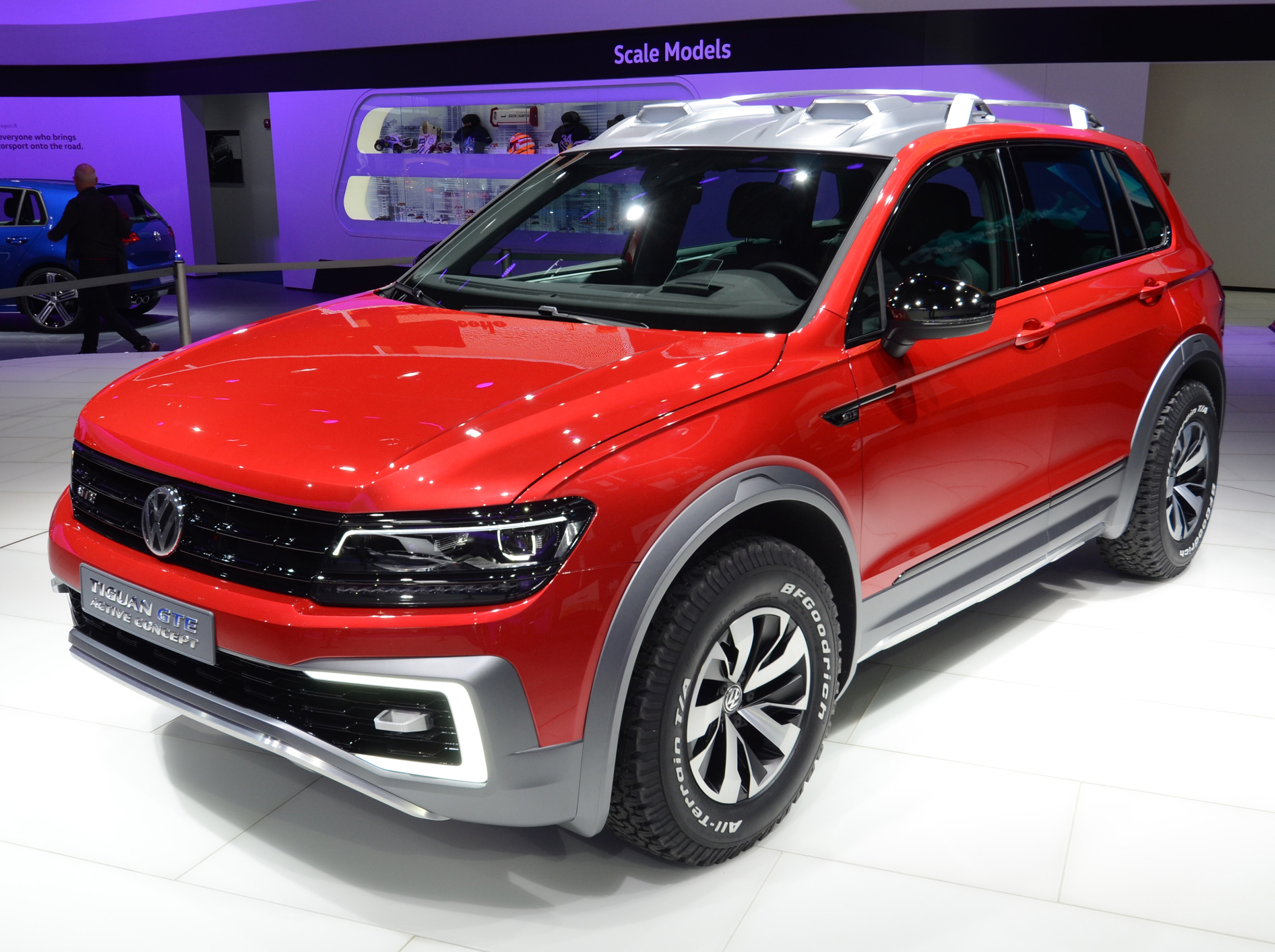
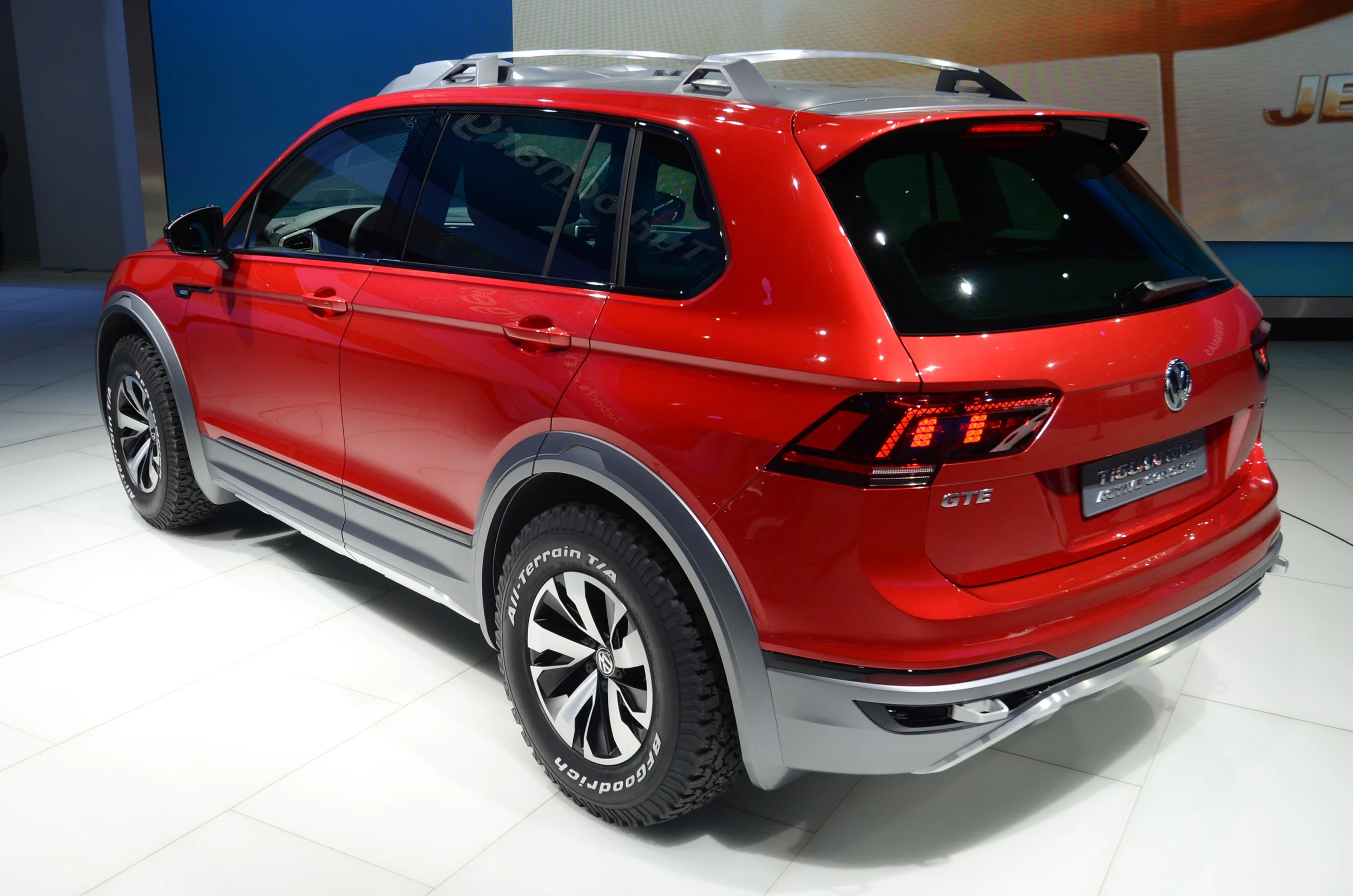
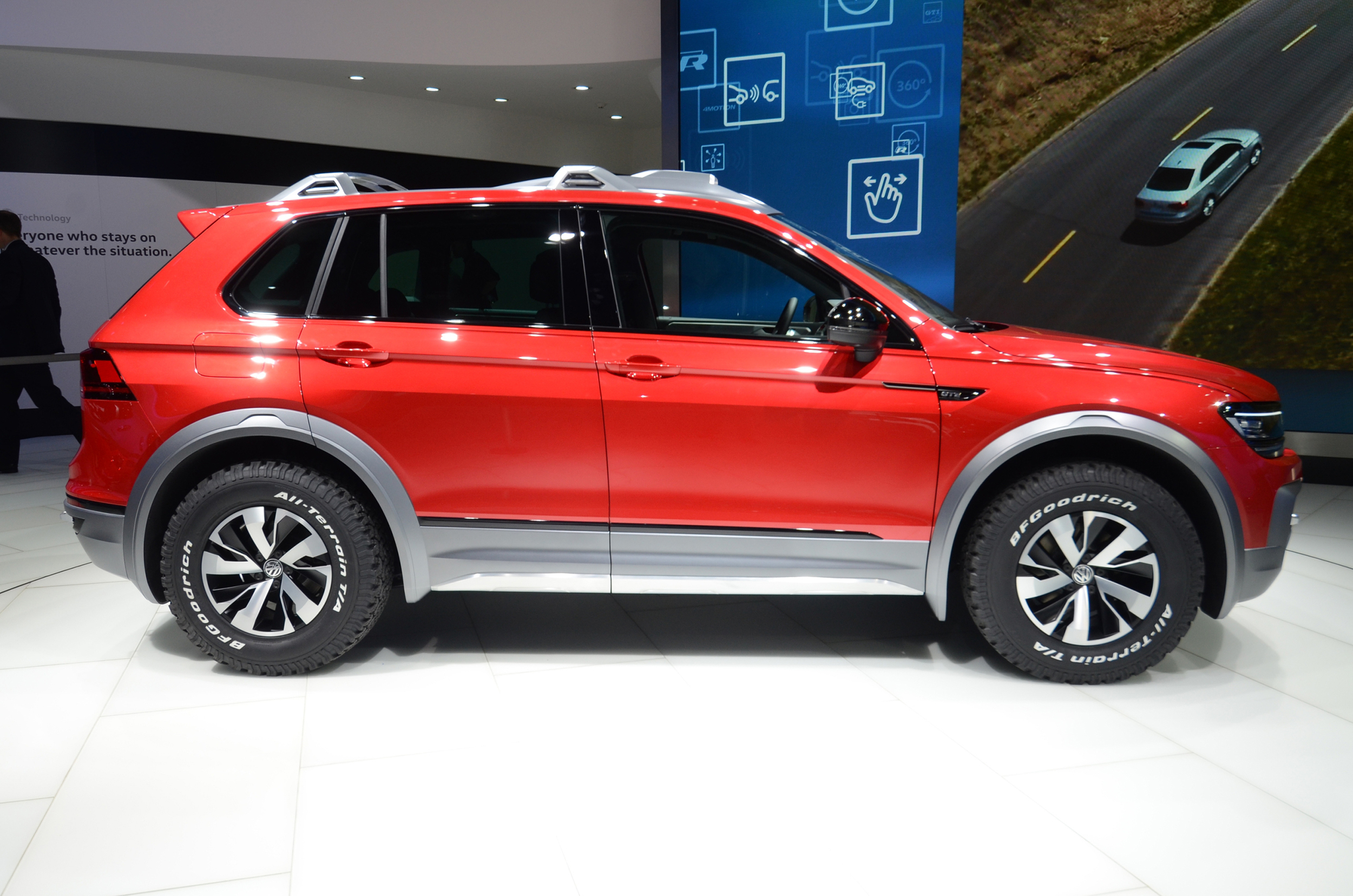
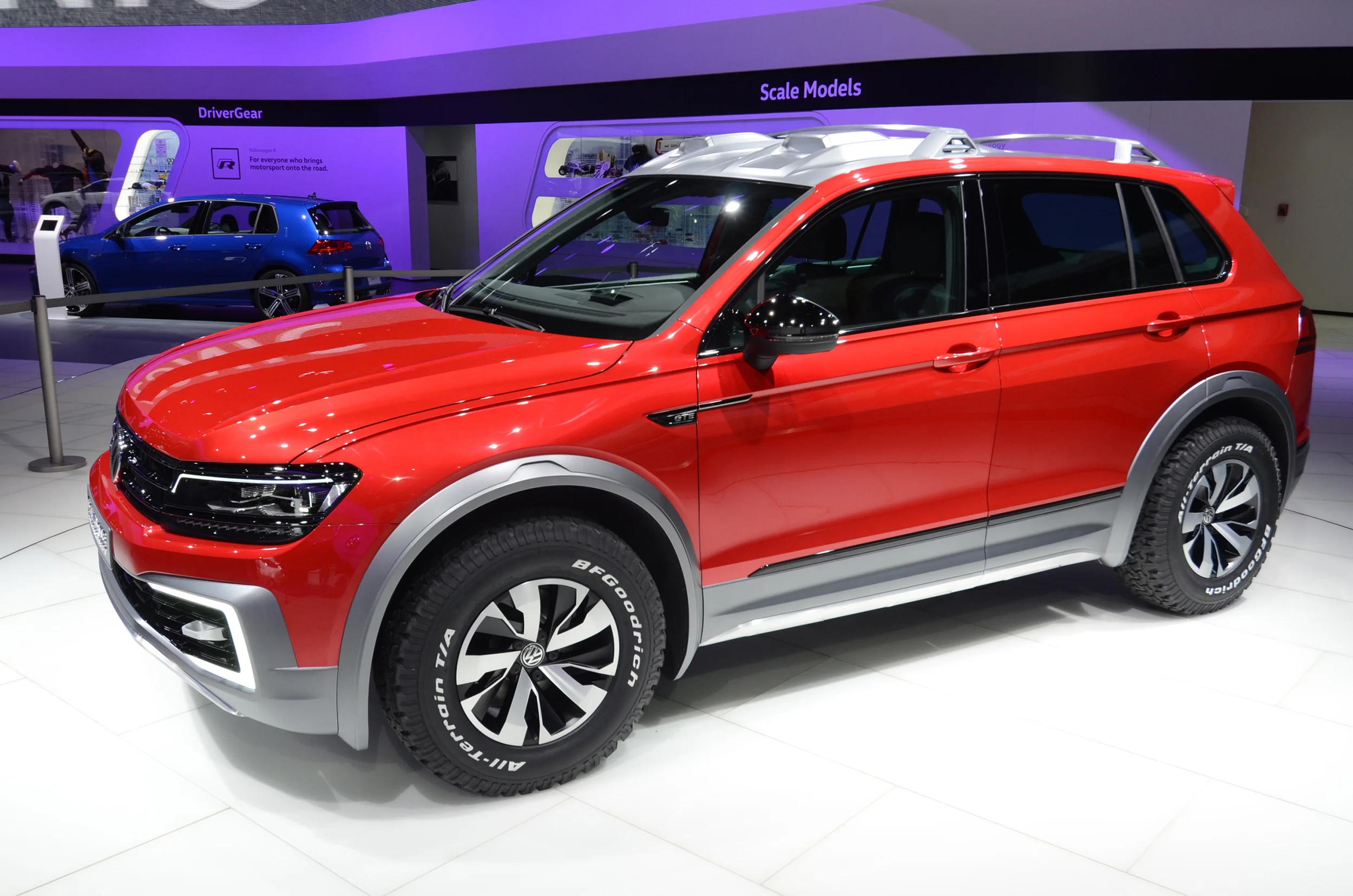
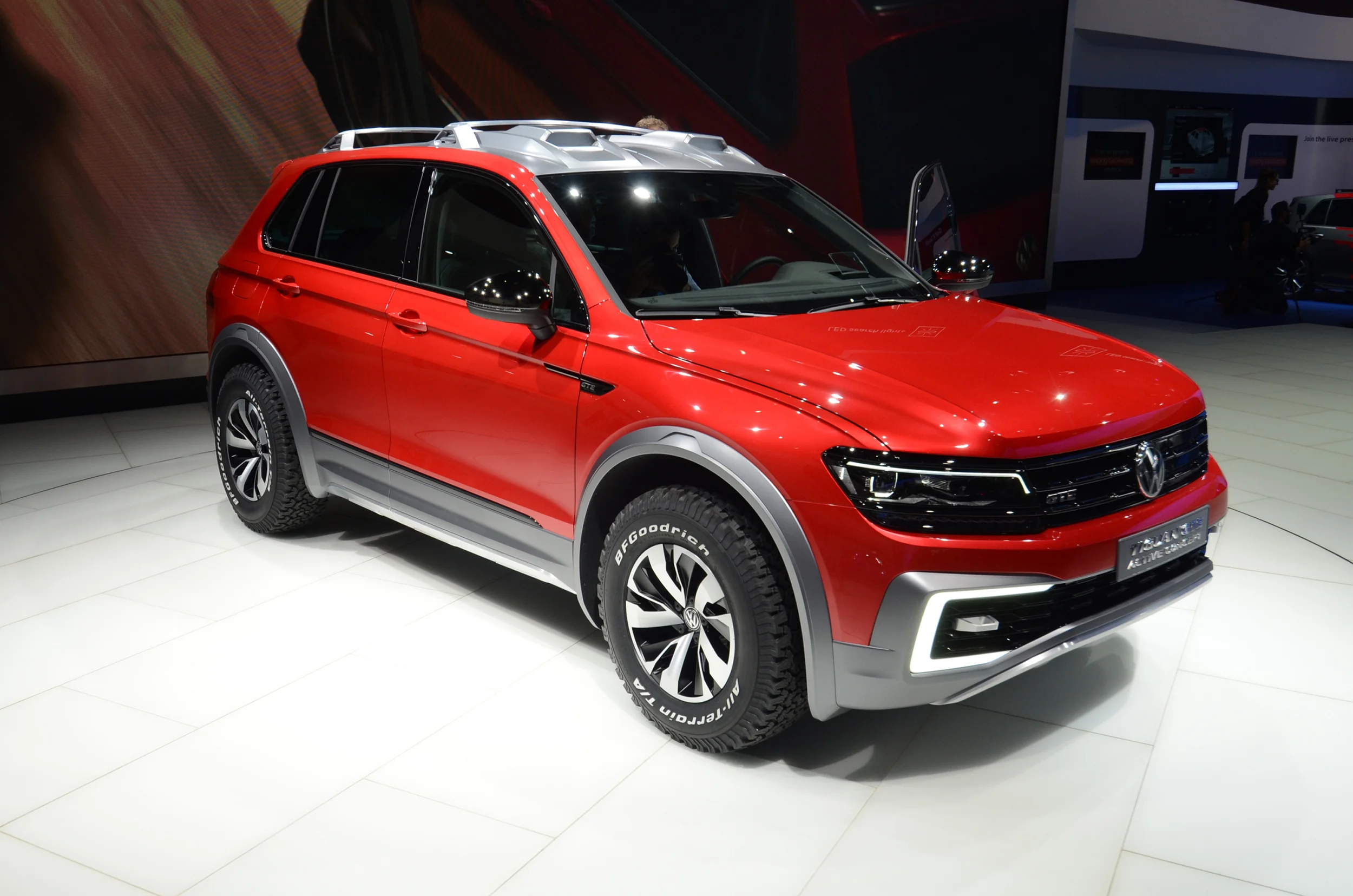
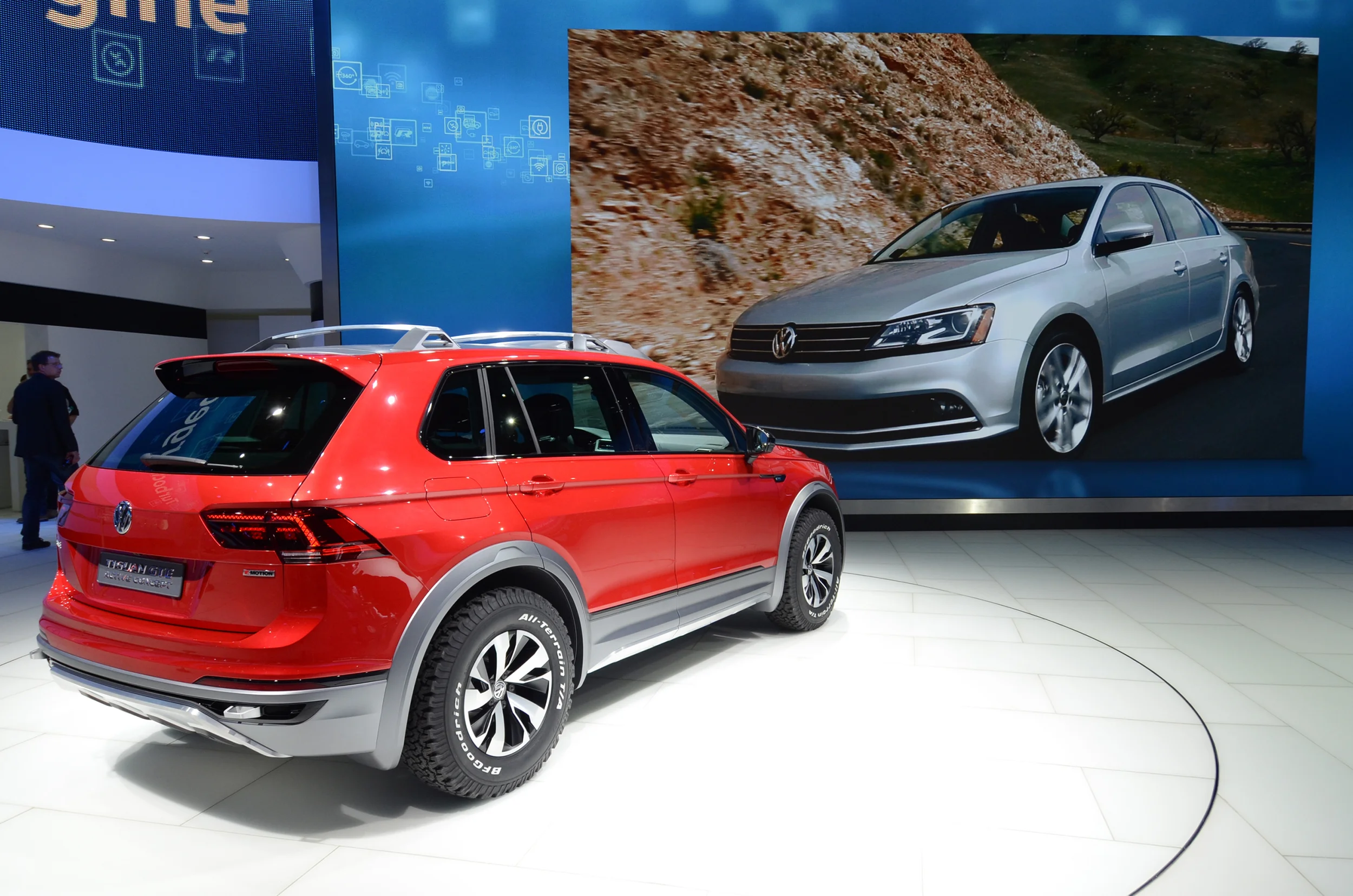
Volkswagen reveals Tiguan GTE Active Concept

Volkswagen has pulled the covers off its new Tiguan GTE Active Concept at the North American International Auto Show (NAIAS) in Detroit.

Based on the redeveloped second generation of the Tiguan, the concept is described as a ‘progressive plug-in hybrid’ with maximum off-road power, the concept car combines ‘maximum efficiency’ with a powerful all-wheel drive system for a high level of off-road performance.

Powered by a petrol engine (TSI, 110 kW) and two electric motors (40 and 85 kW), all four wheels of the permanent all-wheel drive can be powered all- electrically with the TSI used to add more power. With up to 20 miles of zero emissions travel all-electrically, a fuel economy figure of 75mpg and a range of 580 miles in total is possible.


VW says the independent off-road design elements of the body are ‘technically feasible’ as options for production cars, with the concept debuting in Detroit featuring significantly more ground clearance and larger approach and departure angles. 

The interior includes a new infotainment system with 9.2- inch display and gesture control, while many different driving programs can be accessed via the new 4MOTION Active Control off-road switch.

The Detroit Auto Show runs from January 11 - 24.

Coupe, Motorshow, News

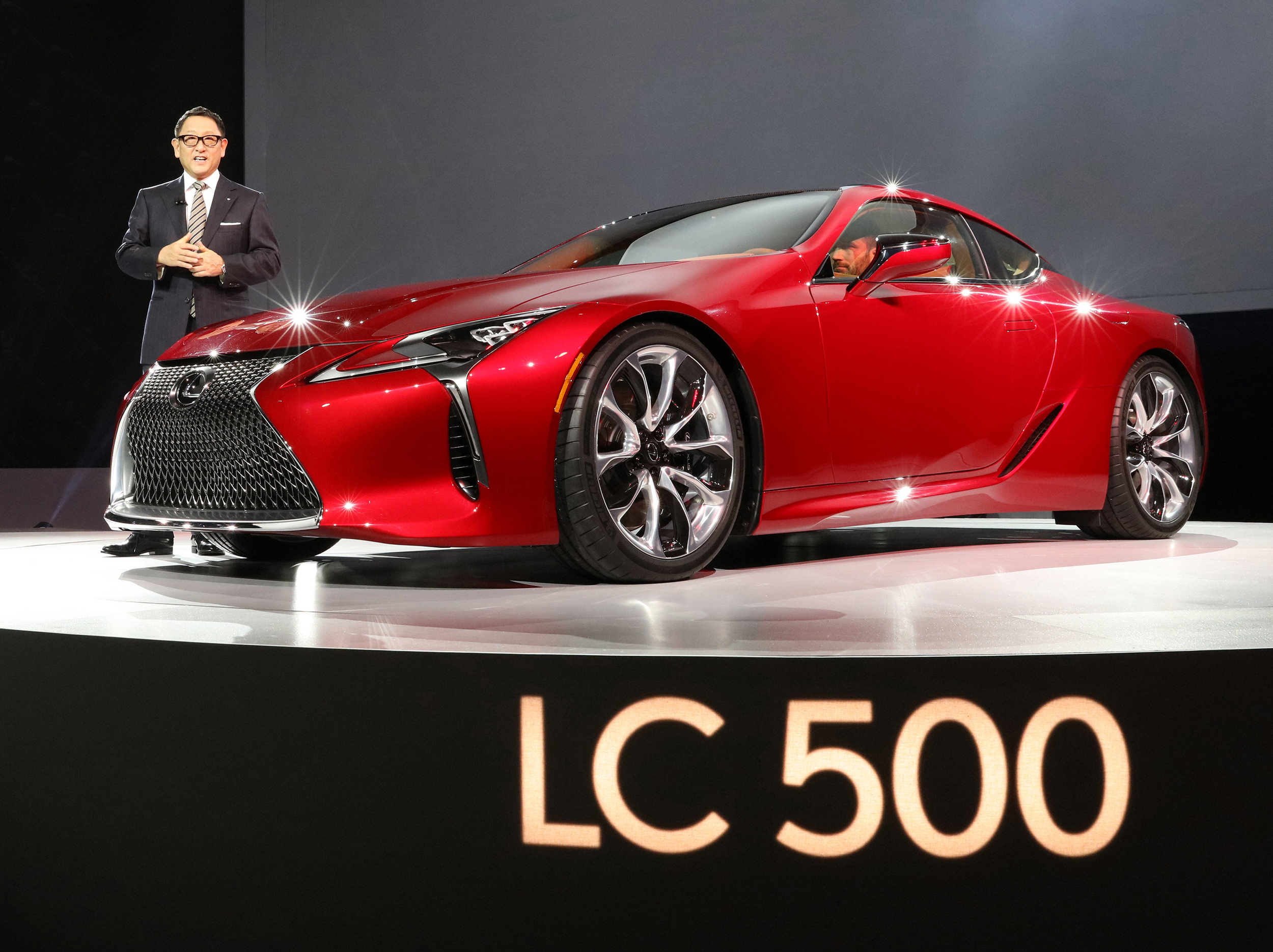
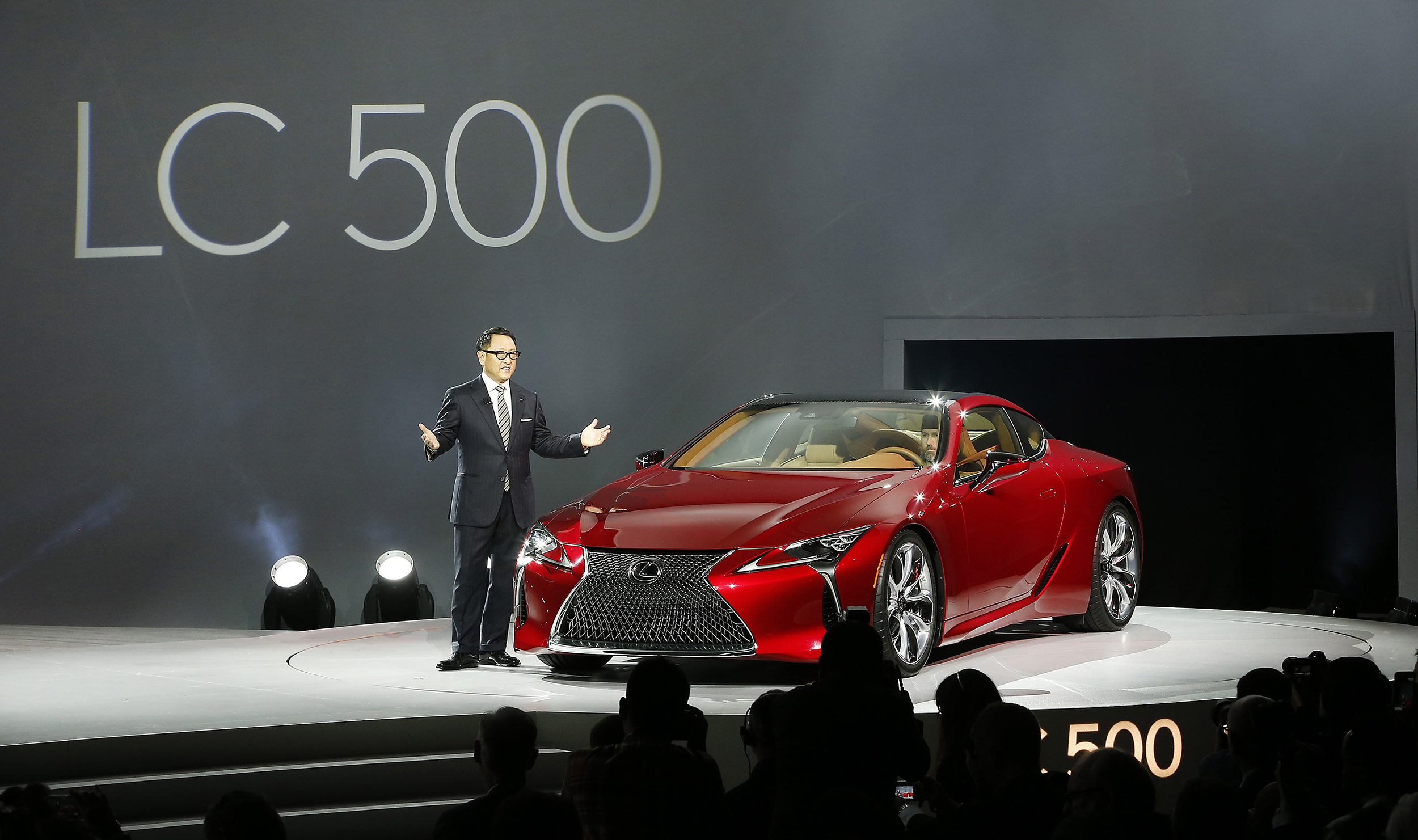
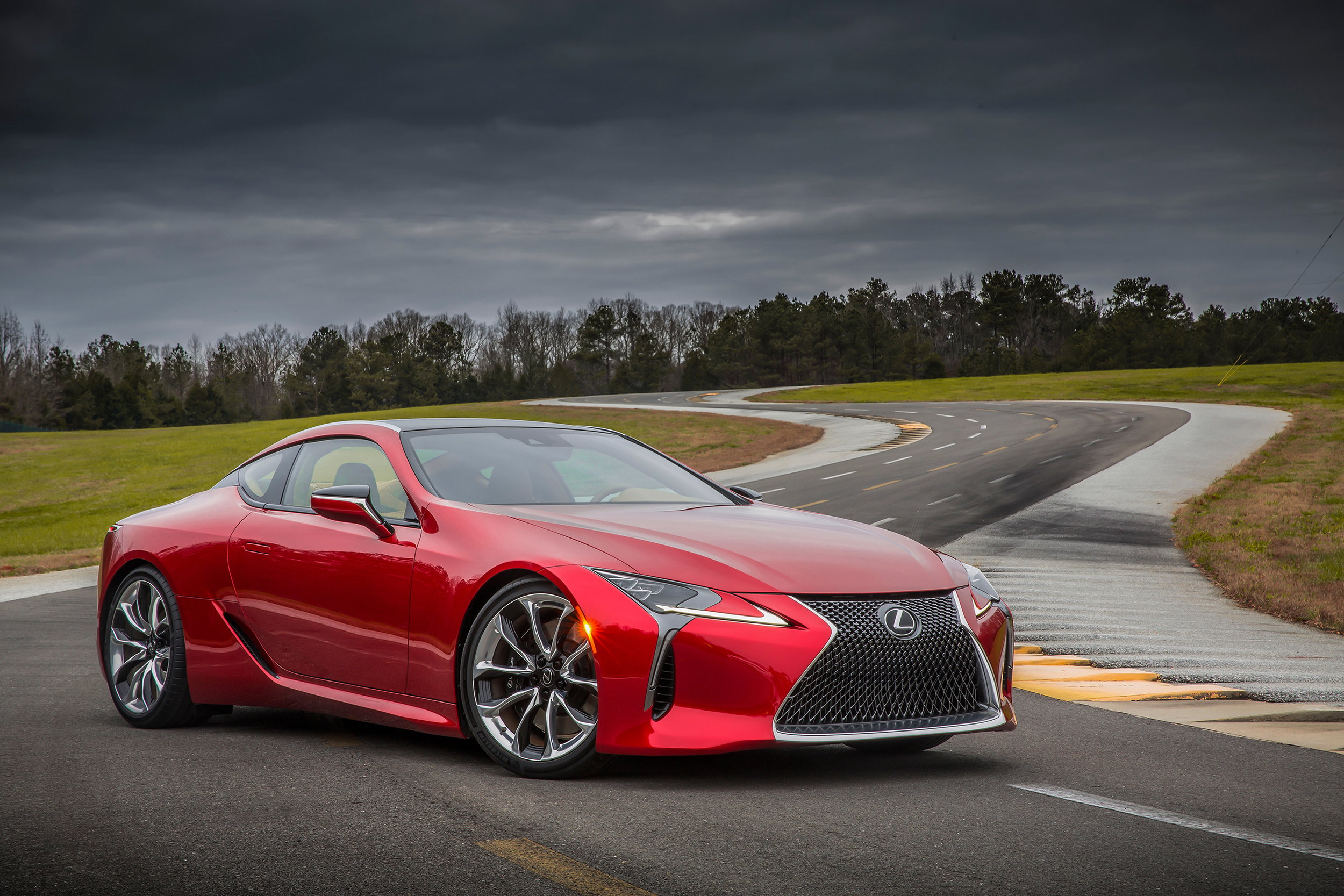
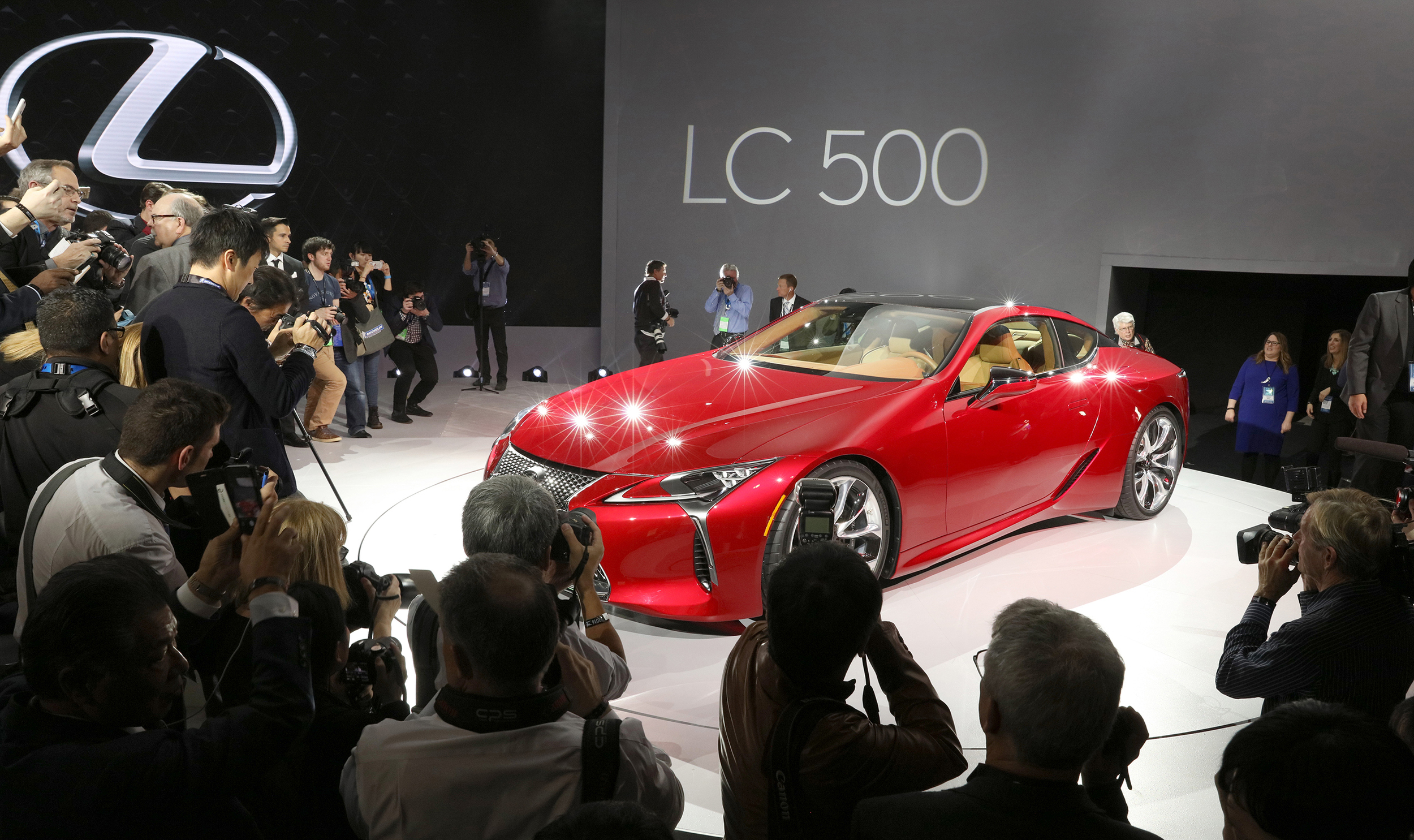
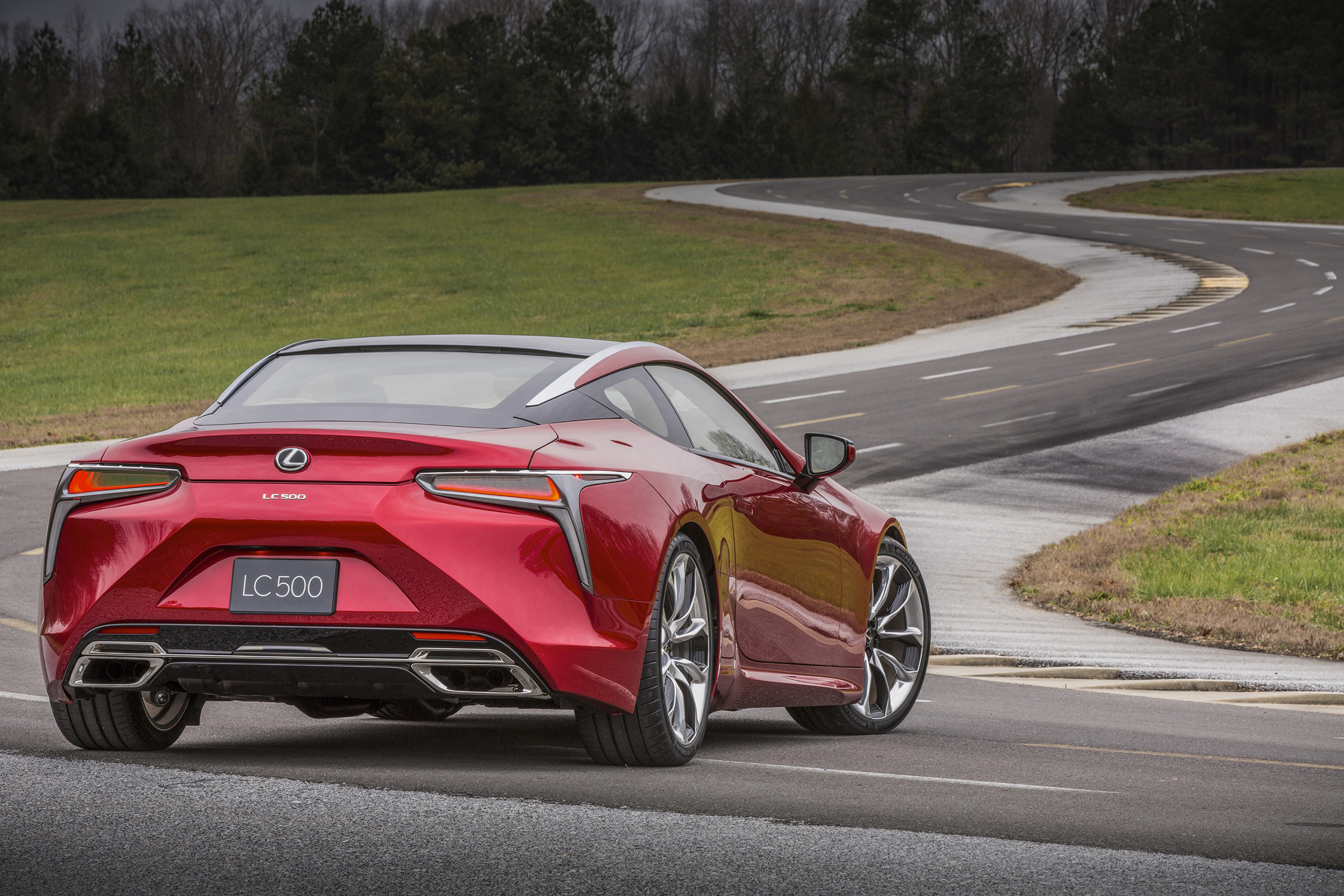
Lexus unveils all-new LC 500 in Detroit

Lexus has revealed its all-new LC 500 coupe at the Detroit Auto Show.

The luxury 2+2 follows a ‘direct, inspirational bloodline’ from the LF-LC Concept that broke cover at the same event four years ago. The production model shares many of the concept car’s key design elements, proportions and visual dynamism. It features an ‘athletic’, aerodynamic shape with a flowing, carbon fibre roof option (a glass roof is standard). At the front a ‘powerful interpretation’ of Lexus’s signature spindle grille, with a chrome border on three sides and a new 3D mesh design is flanked by L-shaped daytime running lights, sitting below new triple-LED headlamp units. At the rear, slim, multi-layered lamps with a lighting effect presents a sequential L motif. A rear diffuser and optional rear spoiler help manage airflow when driving at high speed. The wheels are 20-inch machined cast aluminium or optional 21-inch forged aluminium - The Detroit show car is fitted with Michelin Sport tyres: 245/40RF21 at the front and 275/35RF21 at the rear.


Power delivery to the rear wheels is handled by a new, high-revving 5.0-litre V8 borrowed from the RC F and GS F. This naturally aspirated, all-aluminium unit was selected for its ‘smooth, linear throttle response and stirring engine note’. The output target is 467hp with 527Nm of torque. Sound control valves in the exhaust system are activated during start-up, creating a robust growl when the engine comes to life. Under acceleration, a sound generator enhances the engine’s ‘raucous note into an aural thunder’. Target 0-60mph time is ‘less than 4.5 seconds’.

Power is directed to the rear wheels using a new 10-speed automatic transmission – the first of its kind to be featured in luxury car says Lexus – with shift times that rival a dual-clutch transmission. The unit is smaller and lighter than some current eight-speed transmissions. The transmission is matched to a new electric control system with software that helps anticipate the driver’s inputs by monitoring acceleration, braking and lateral G-forces.

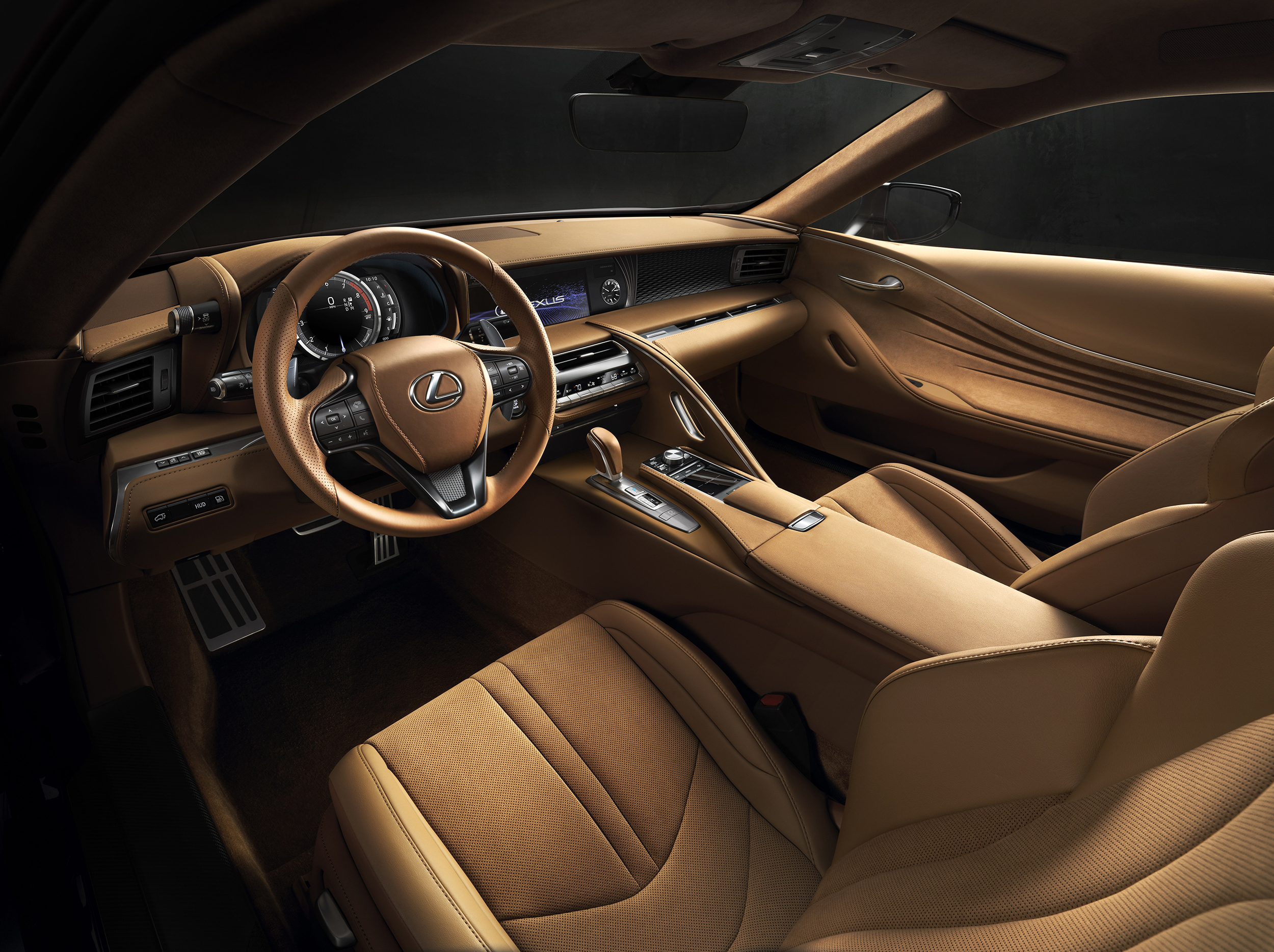
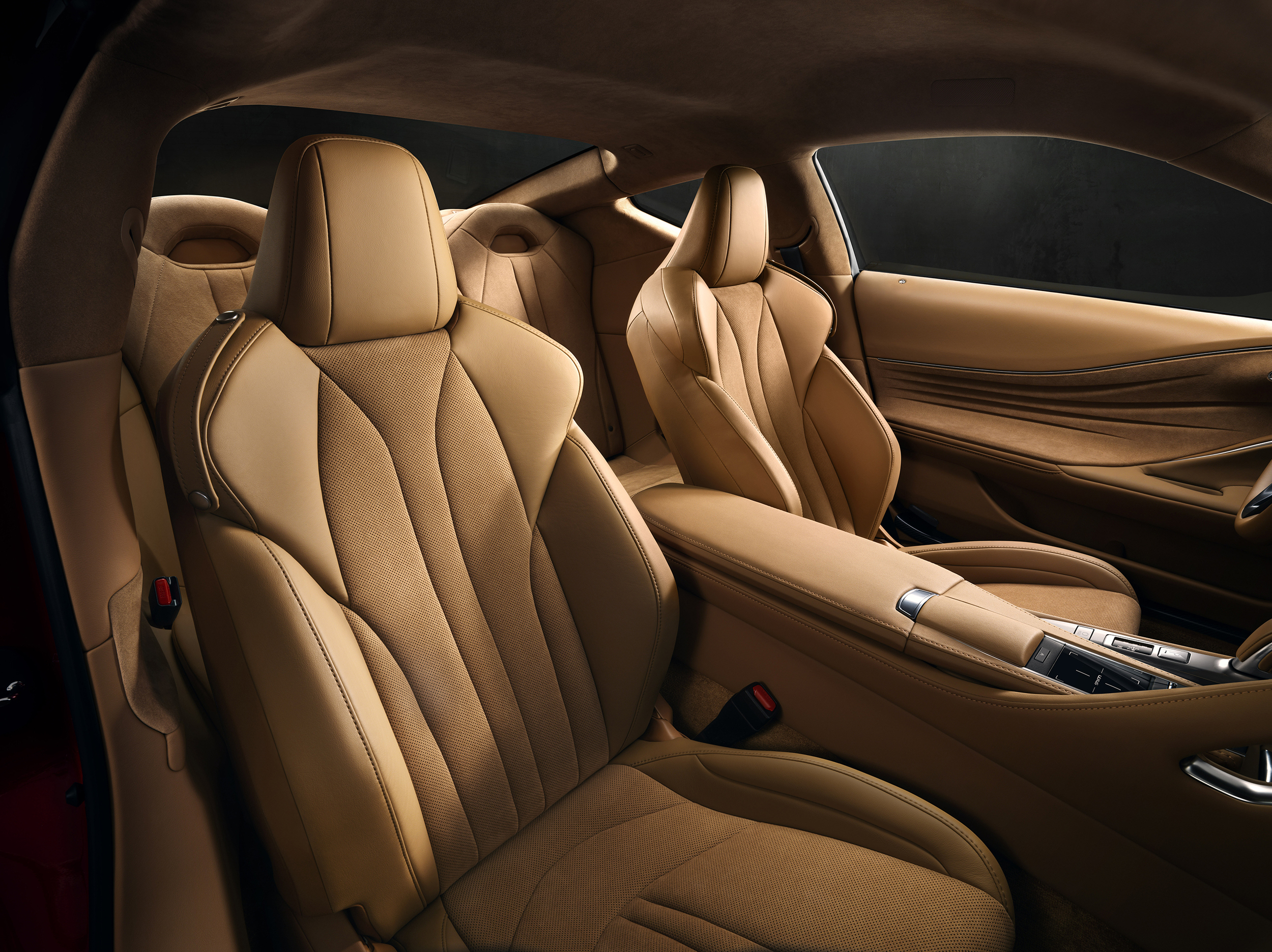
On the inside, the driving position was calculated to ‘invite spirited, sporting driving and help build confidence with a more intuitive layout for the controls’ says Lexus. The driver’s hip-point was engineered to be as close as possible to the car’s centre of gravity, where feedback from the car is strongest. Other features include magnesium alloy paddle shifts, supple leather and Alcantara seat upholsteries while the door panels, centre console and dashboard structures display Lexus’s takumi craftsmanship in their fine detailing and finish.

The LC 500 is the first model to use Lexus’s new rear-wheel drive platform, part of a new corporate global architecture for luxury vehicles (GA-L). The car’s underpinnings will provide the template for Lexus’s future front-engine/rear-wheel drive vehicles and places the mass, including the engine and vehicle occupants, lower and in a more central position in the chassis, improving the centre of gravity.

Akio Toyoda, Chief Branding Officer and Master Driver for Lexus, said: “The LC 500 has been an important product for Lexus and for me personally. A few years ago we decided to guide the future of Lexus with products that brought more passion and distinction to the luxury market. The new LC 500 coupe’s proportions, stunning design and performance make a strong statement about our brand’s emotional direction and will increase Lexus’s global luxury appeal.”

Saloon, News, Motorshow

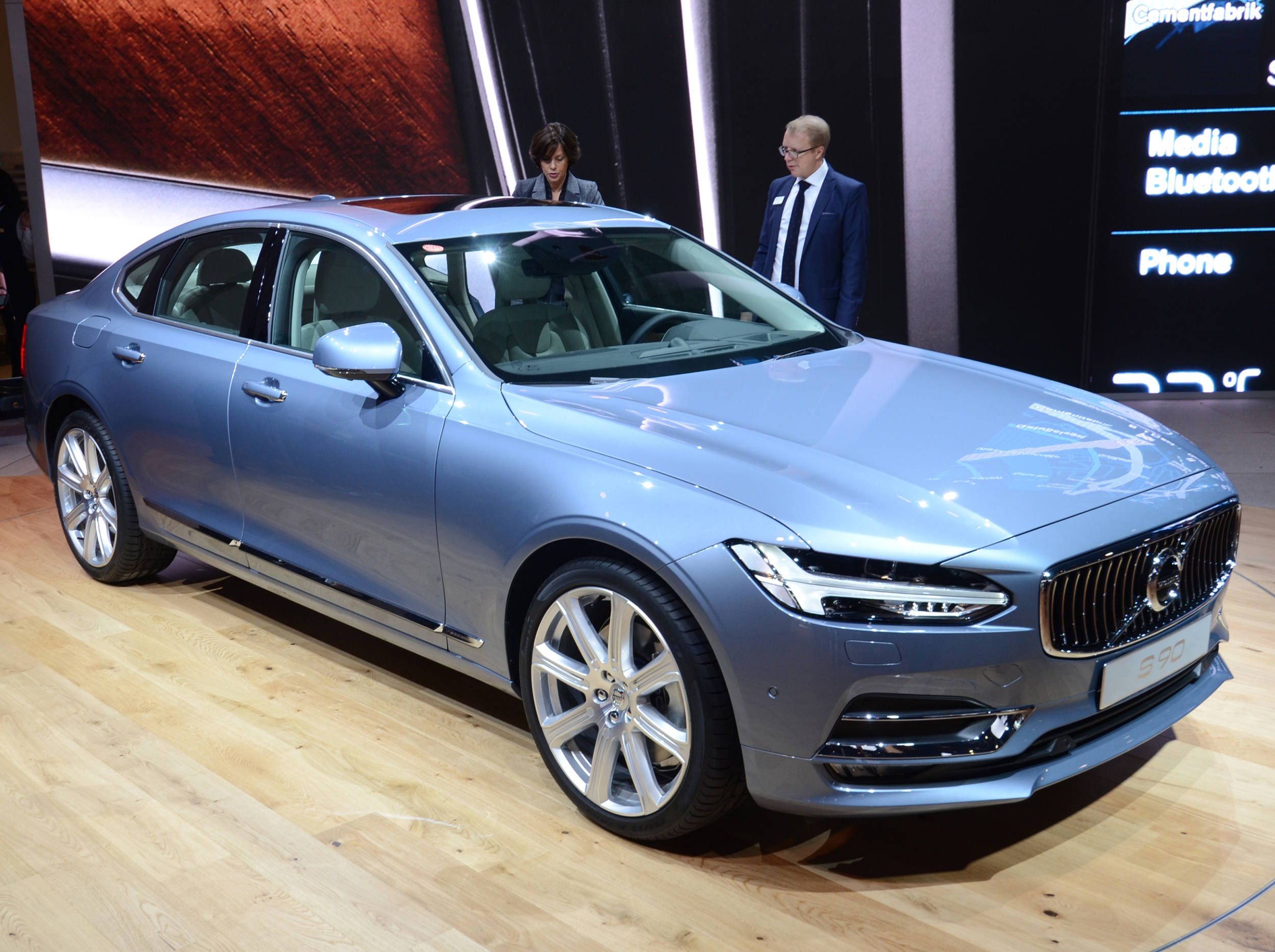
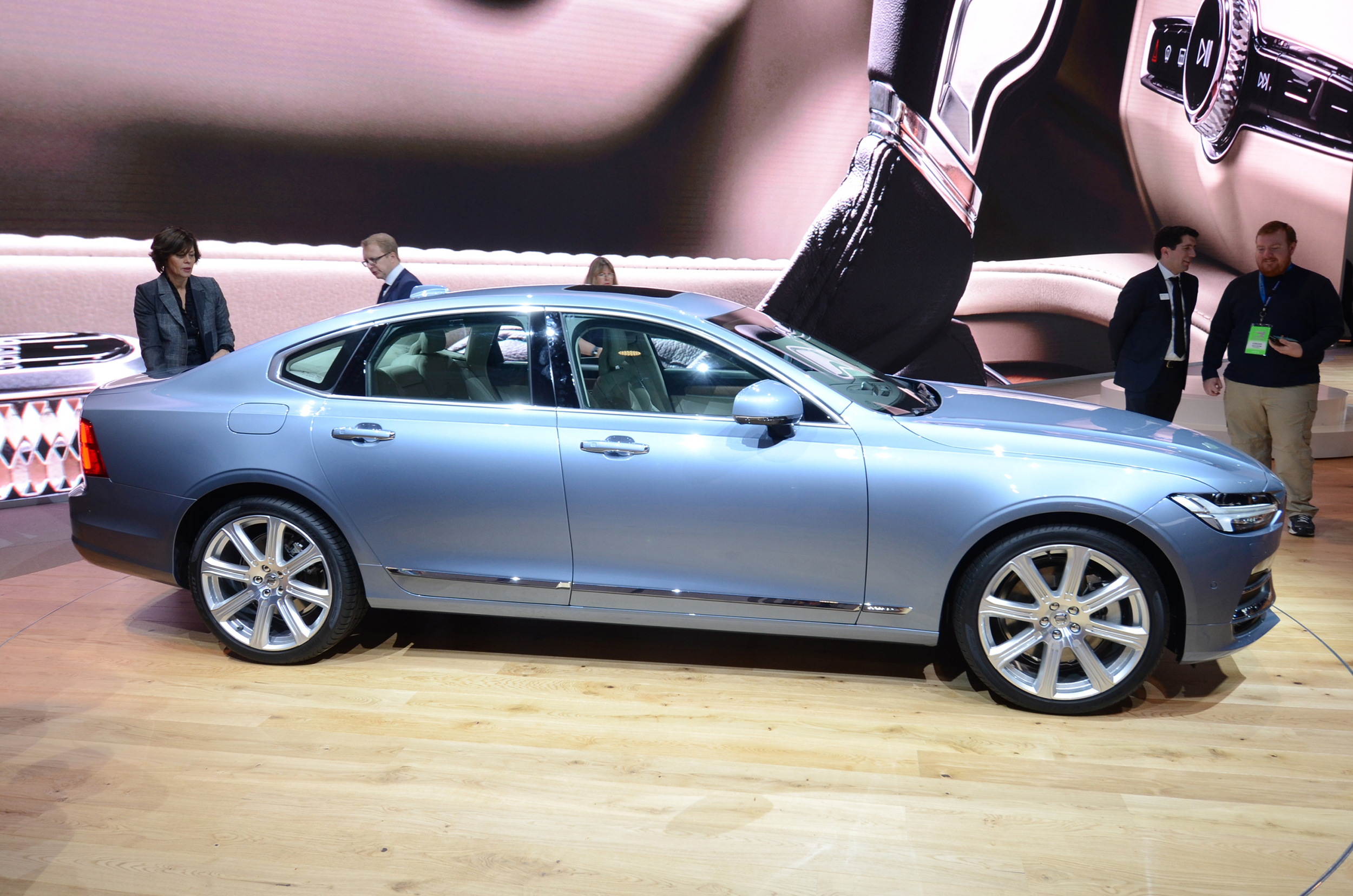
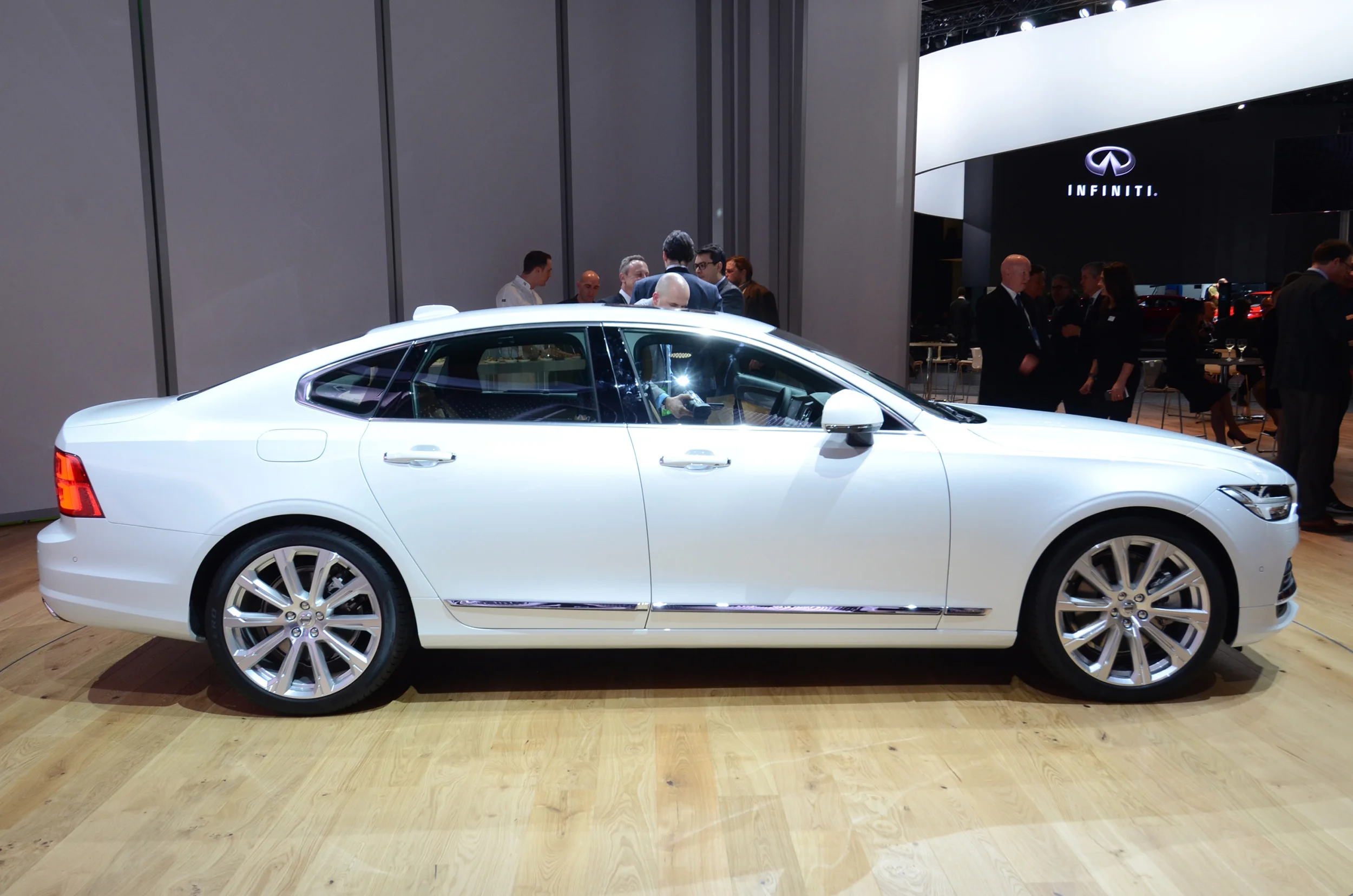
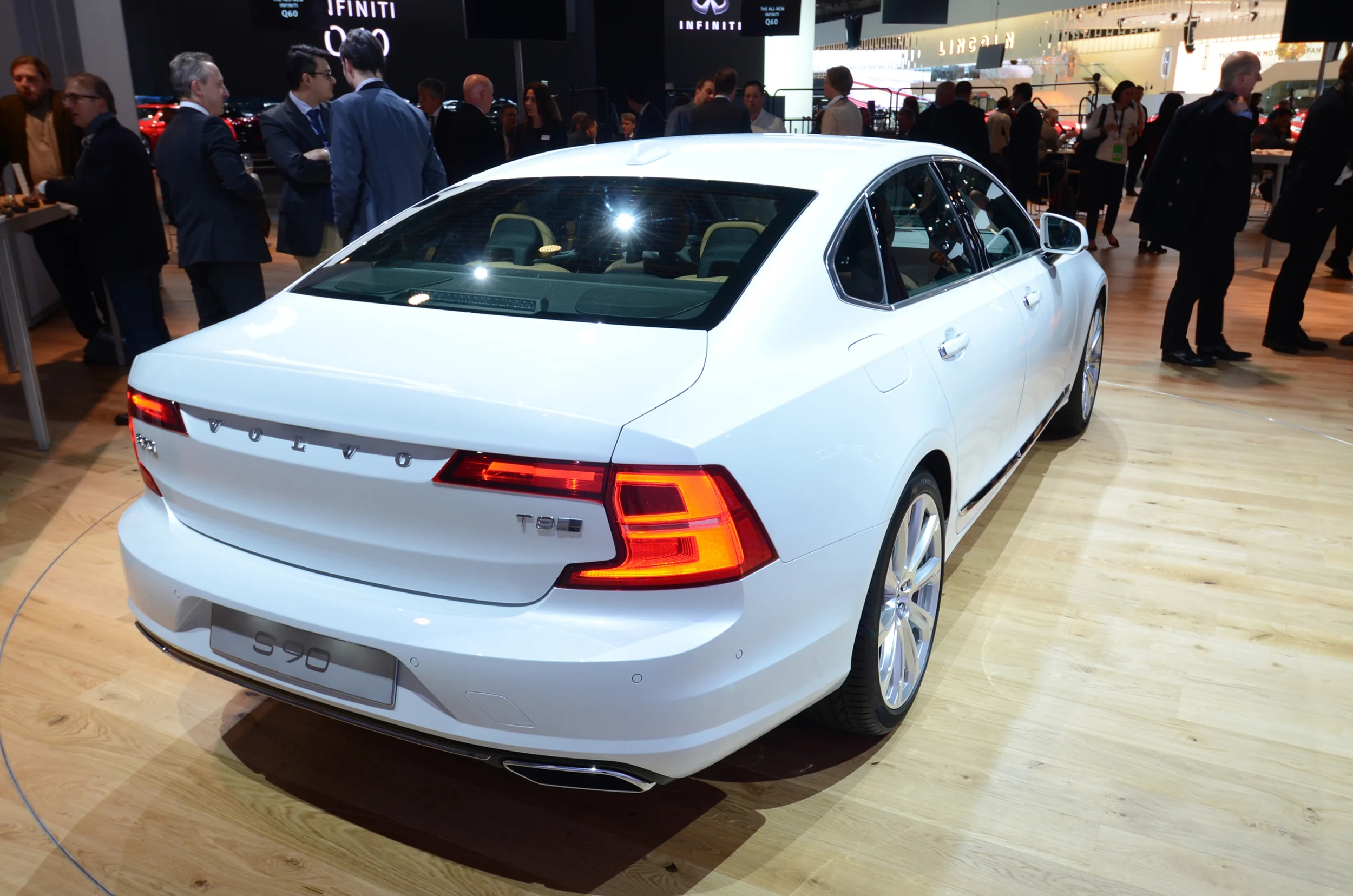
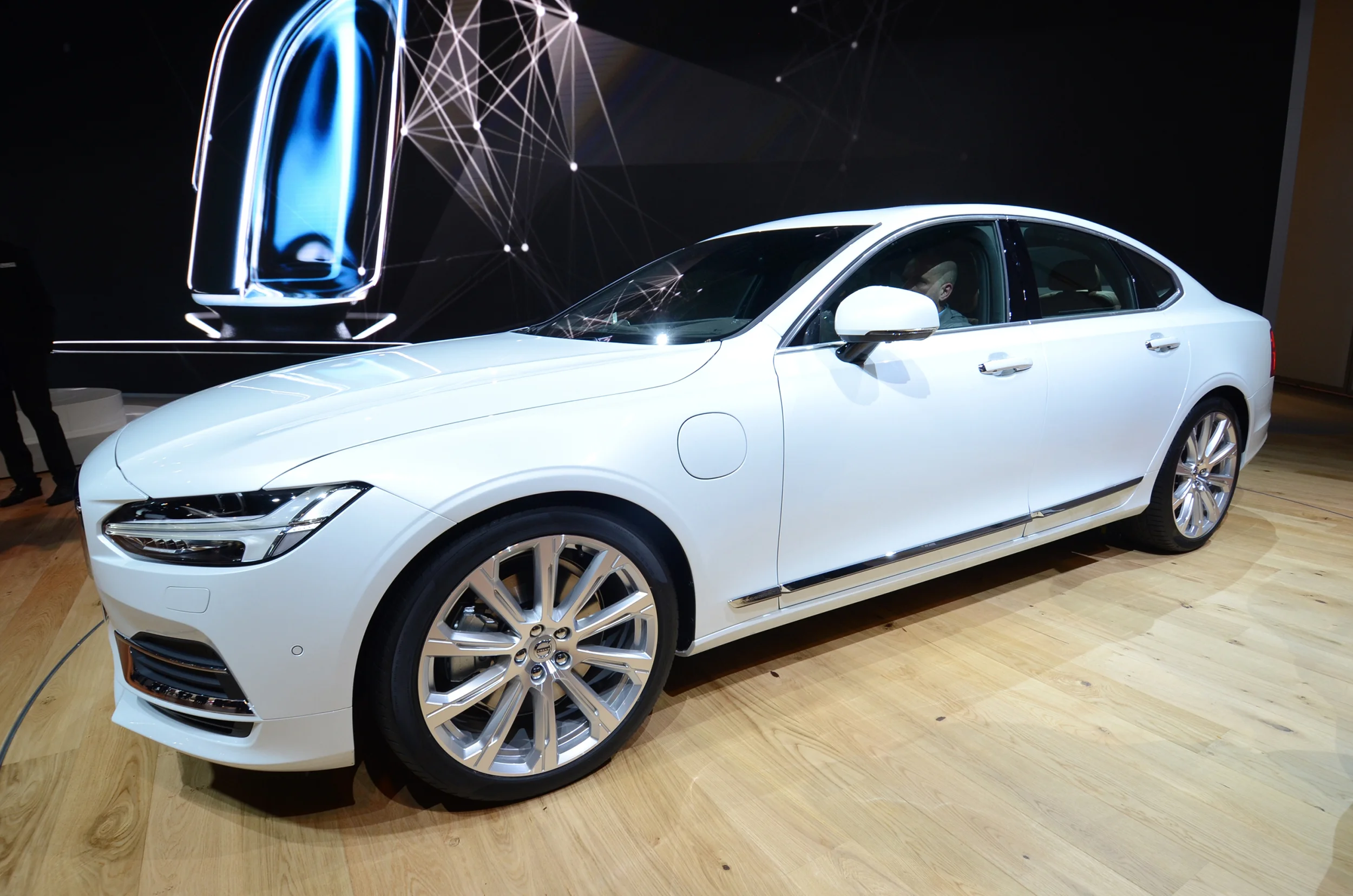
Volvo launches new S90 at NAIAS

Volvo has chosen the North American International Auto Show (or NAIAS) in Detroit to launch its new signature premium saloon - the S90.

This comes on the back of strong sales in the US, especially in the second half of 2015 where sales increased 24.3 per cent. “There are strong indications that Volvo is back on track in the US,” said Lex Kerssemakers, Senior Vice President of the Americas at Volvo Car Group. “We expect this strong sales momentum to continue in 2016, helped by the new S90.”

The launch of the new S90 forms the second chapter in the ‘complete renewal’ of Volvo’s product range, which began in 2015 with the new XC90 SUV. The XC90 received around 88,000 pre-orders in 2015, surpassing expectations.

The S90 features a concave grille – itself a homage to the Volvo P1800 – and is home to Volvo’s new Iron Mark. The T-shaped ‘Thor’s Hammer’ lights deliver a ‘powerful sense’ of direction that makes the S90 unmistakable on the road. Power comes from a clean and powerful T8 Twin Engine plug-in hybrid powertrain, delivering up to 410 hp and offers three different car experiences in one – Pure, Hybrid and Power.

Inside the low, four-door coupe, Volvo has taken cues from the success of its XC90 model and included what it describes as ‘stunning details’ on the new dashboard and instrument panel, including new air blades that stand vertically on each side of the Sensus user interface.

“We created our new flagship saloon, the Volvo S90, as a real game changer. It is classy and cool. The exterior is exceptionally well surfaced, with a fantastic stance and the sort of clean lines that are singularly appropriate of a Scandinavian design. The interior masters the art of blending innovative technology and natural materials into an elegant, welcoming and tasteful ambience – Swedishness at its best,” said Thomas Ingenlath, Senior Vice President, Design at Volvo Car Group.

The S90 will be launched with IntelliSafe Assist as standard. This includes Adaptive Cruise Control and Distance Alert, and the advanced semi-autonomous drive feature, Pilot Assist, which gives gentle steering input to keep the car properly aligned within lane markings up to motorway speeds of around 80 mph.

Concept Car, Motorshow, People Carrier, News

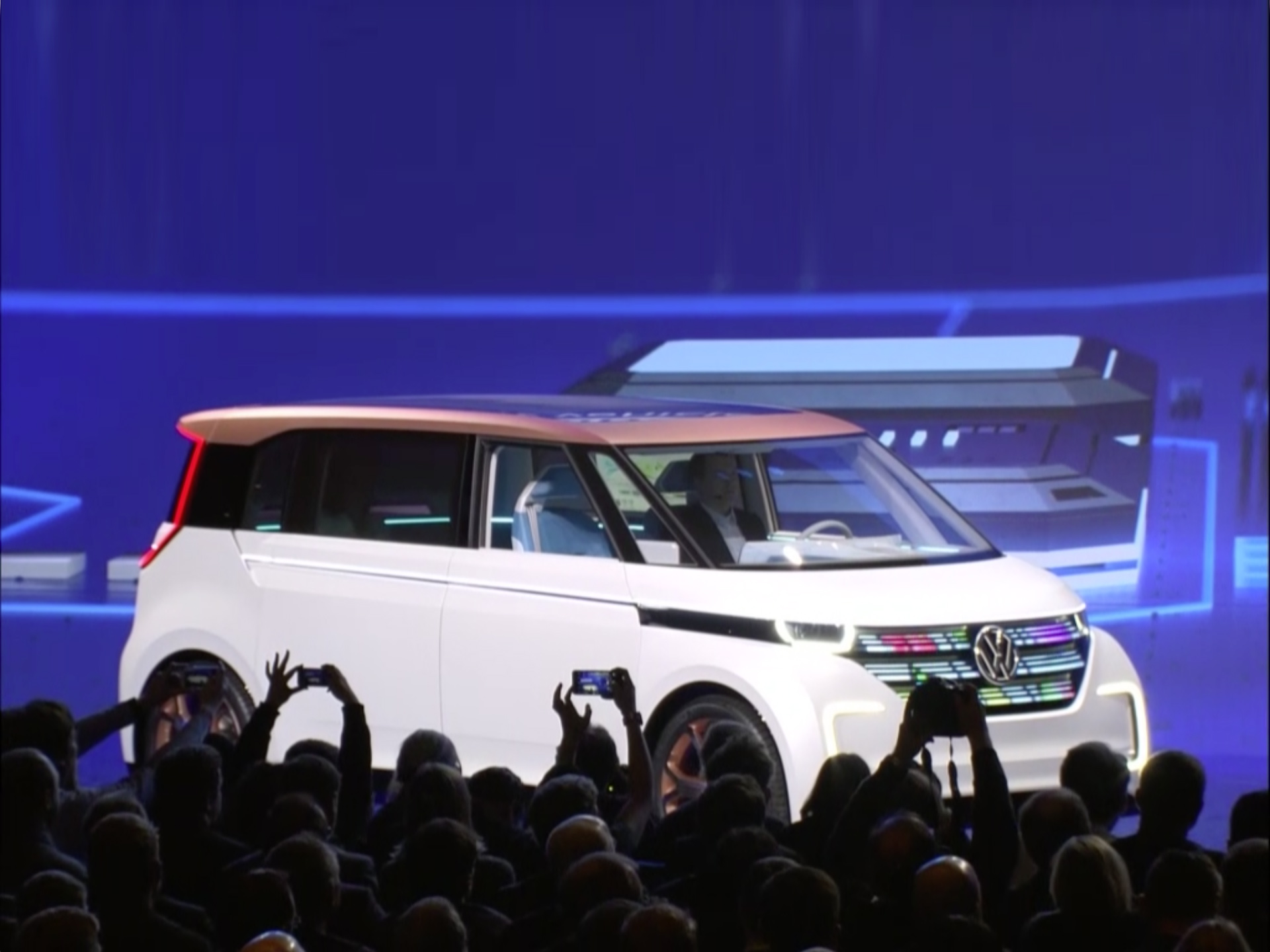
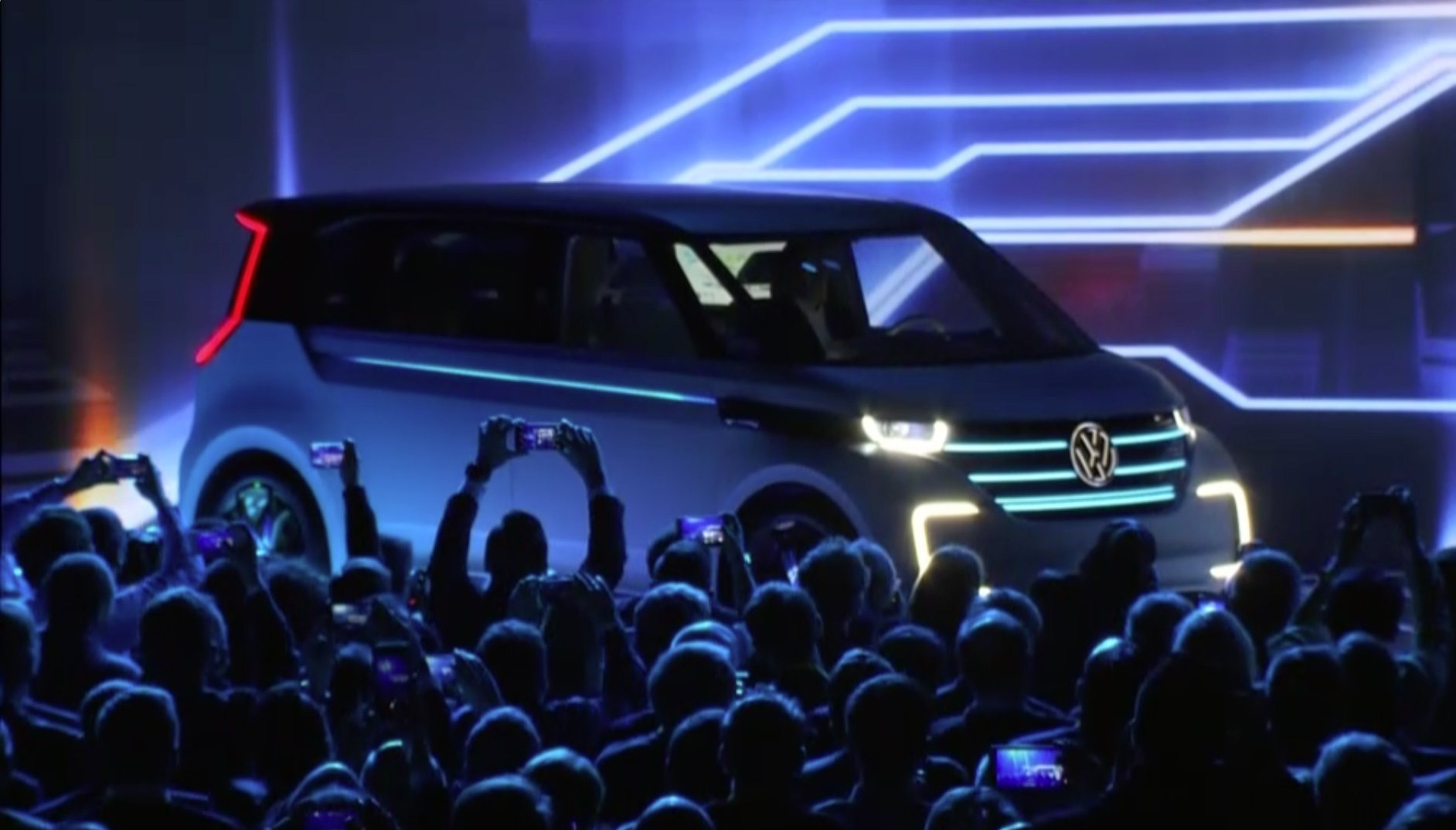
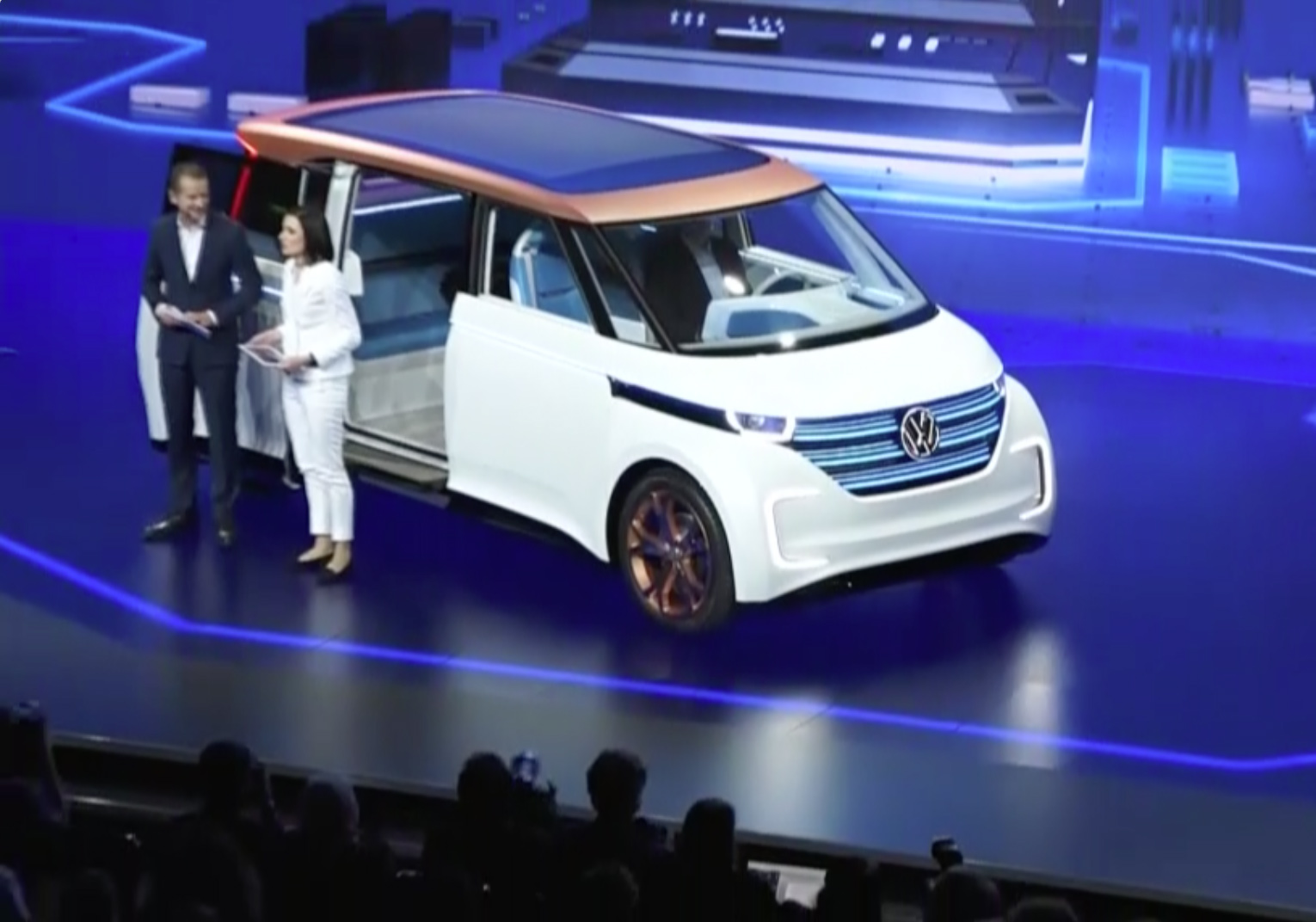
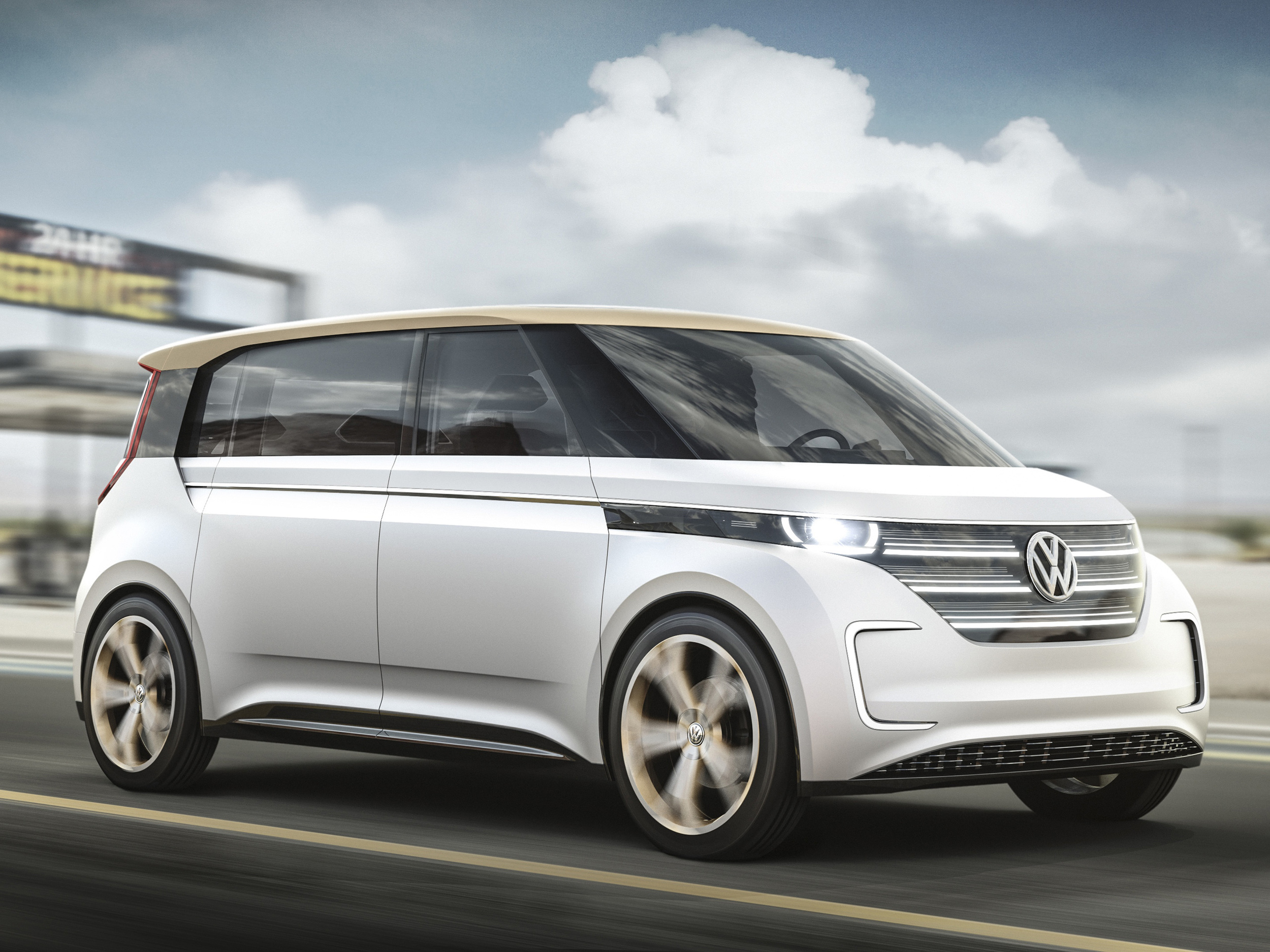
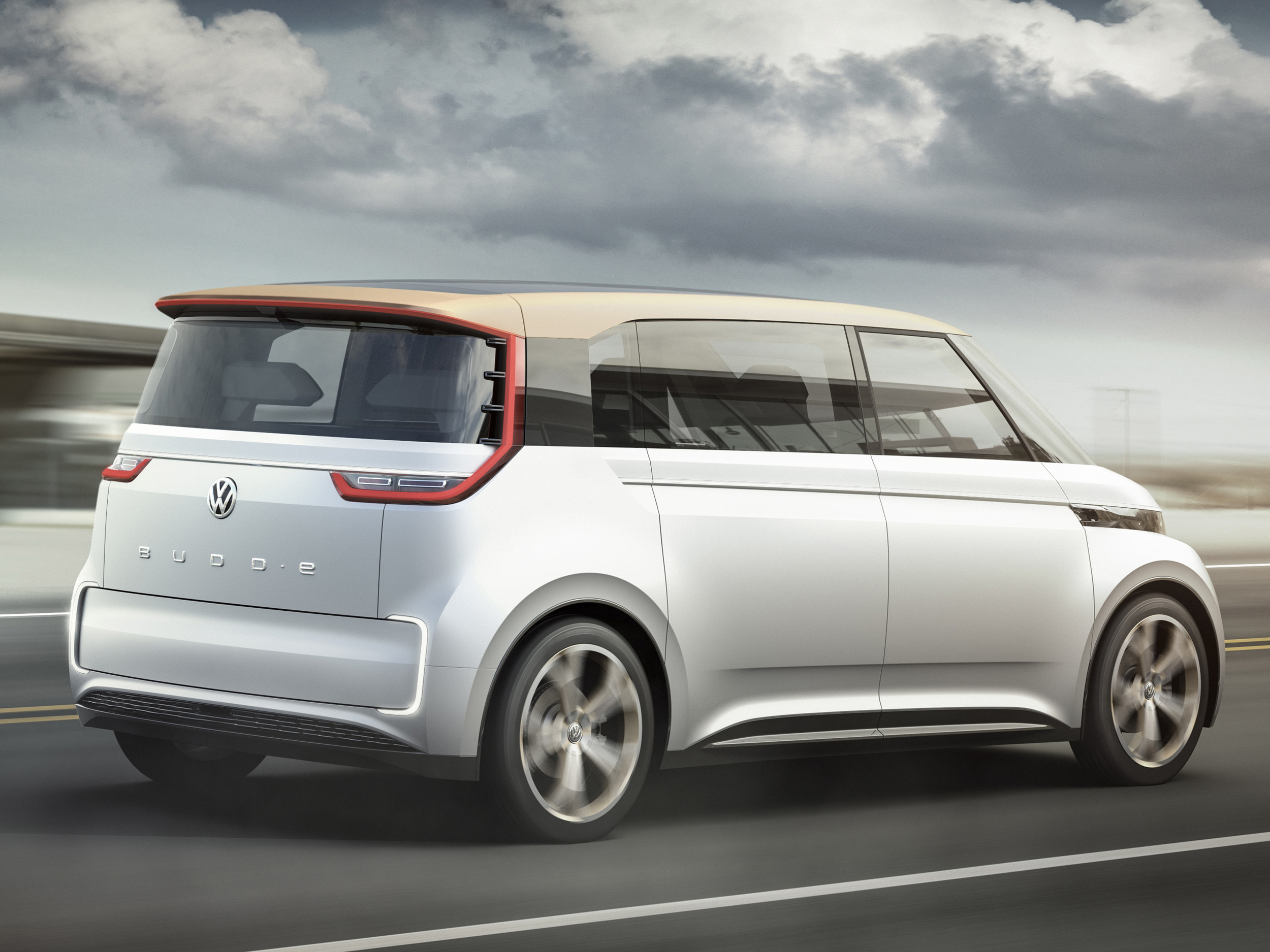
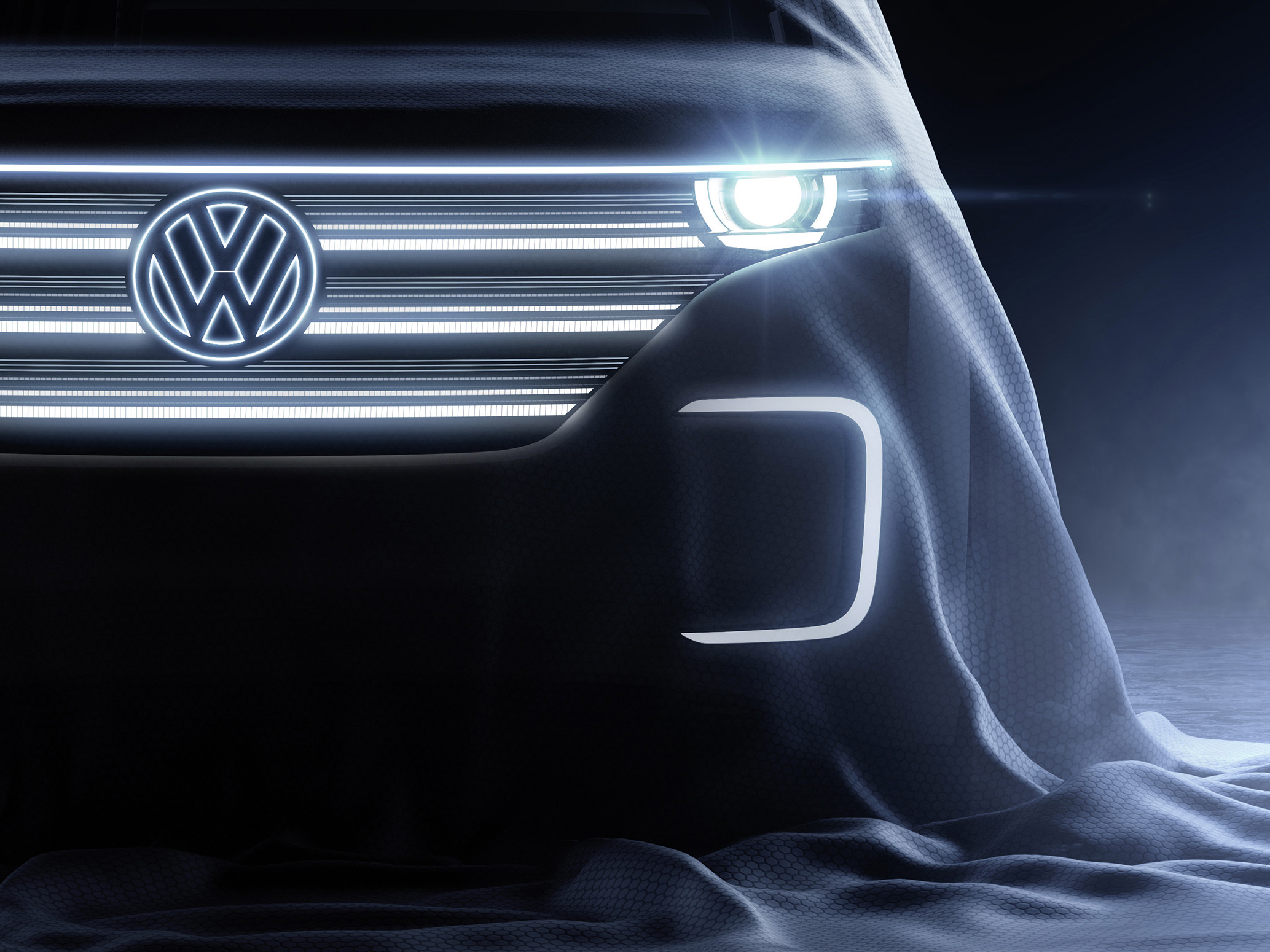
Volkswagen unveils BUDD-e concept minivan at CES

Making its world debut at the Consumer Electronics Show (CES) in Las Vegas, the BUDD-e minivan concept represents Volkswagen’s view of the future of the family transport.

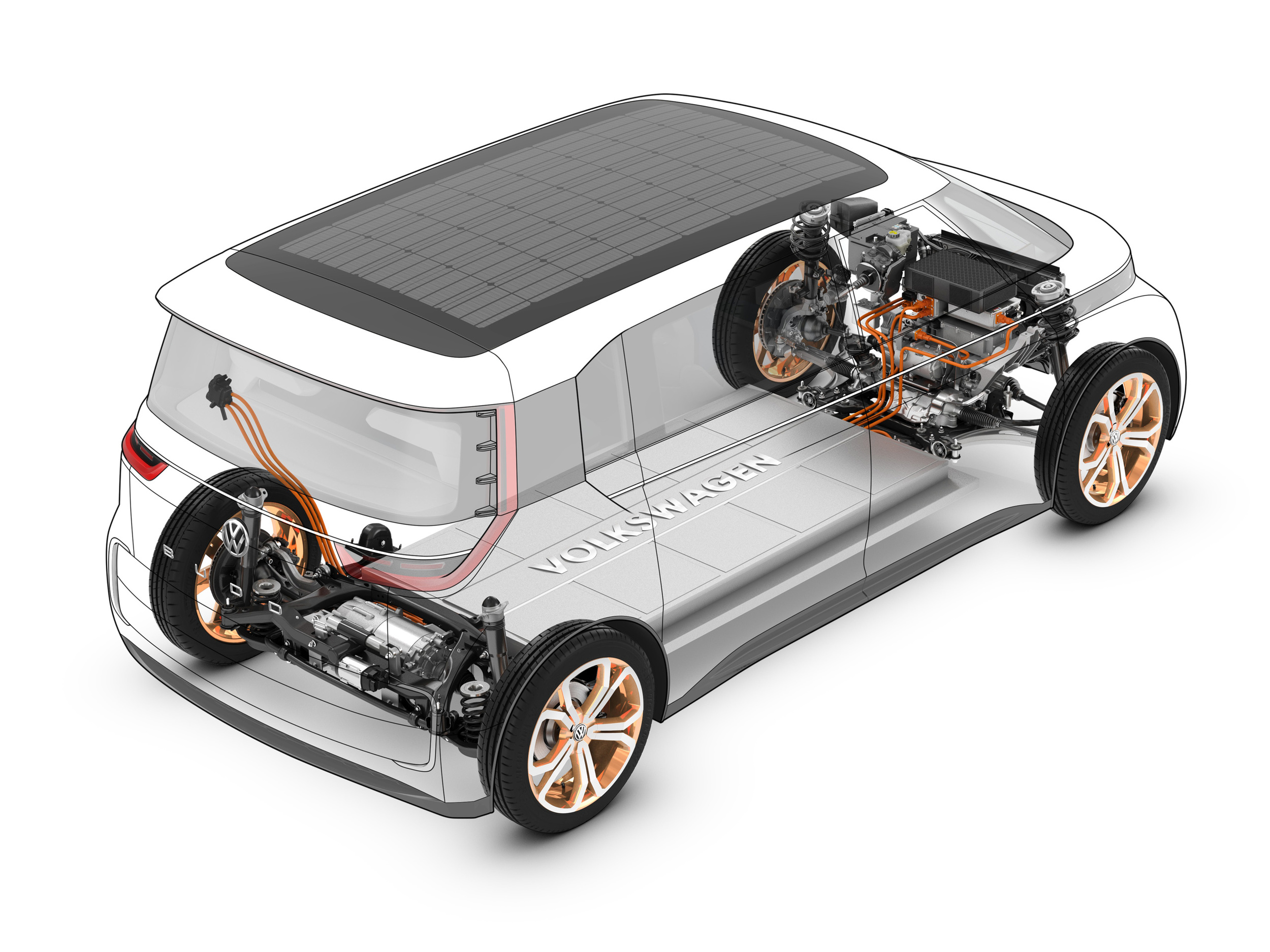
The zero-emission van is the first Volkswagen concept car based on the new Modular Electric Drive Kit (MEB), which has been specifically tailored for the use of compact electric motors and high-performance batteries. 

The flat and space-saving battery with an energy content of 92.4 kWh is integrated into almost the entire vehicle floor of the BUDD-e, powering two electric motors driving both axles. 

The front motor produces 110 kW, while the rear produces 125 kW, resulting in a top speed of 112 mph with acceleration from 0 to 60 mph in less than 7 seconds.

VW estimates that the battery will deliver a real-world driving range of up to 233 miles (EPA), enabling the BUDD-e to be used as the primary car in a household. The battery can be charged either by plugging it into a power socket or using inductive charging. An 80 percent charge can be achieved in about 30 minutes at a charging power of 150 kW (DC).

While paying tribute to the classic T-series minivans, Volkswagen says the concept’s design sets its sights firmly on the immediate future.

In terms of length, the BUDD-e sits between the Touran and the Multivan T6, although it is wider than both, and the MEB platform has enabled the designers to optimise its interior dimensions.

The heating and air conditioning unit system has been completely integrated in the front end of the car, creating more space for front seat passengers while at the same time improving acoustics thanks to a reduction in fan noise.

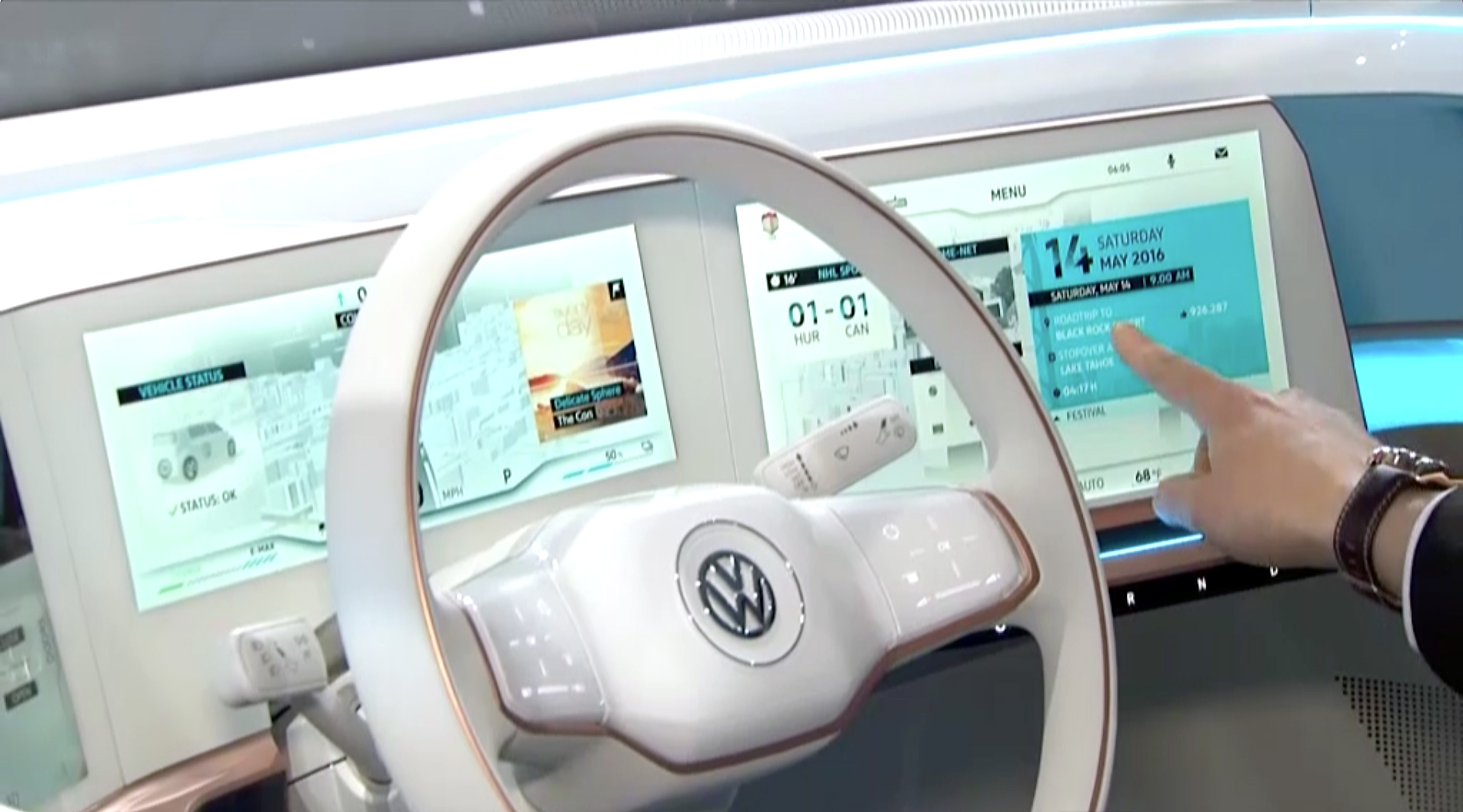
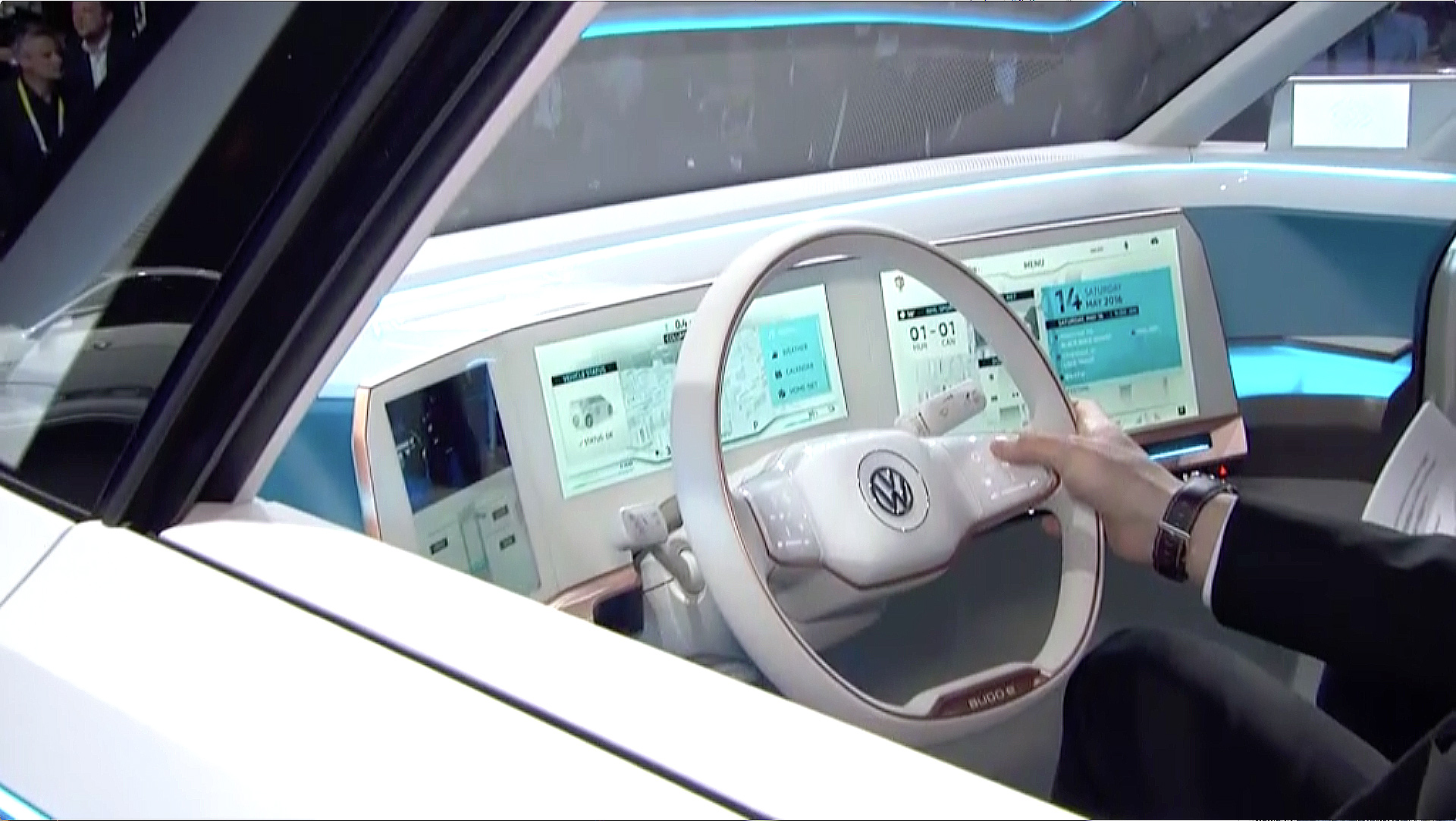
The BUDD-e becomes part of the Internet of Things, offering networked access to your home or your workplace. Equipped with next generation Infotainment for a completely new method of intuitive operation and information processing, buttons and switches are replaced by touch and gesture controls while individual displays blend into large infotainment panels and rear-view mirrors make way for digital screens.

VW says the matrix of these new, interactive infotainment and operating systems gently launches passengers aboard the Volkswagen concept car forward - to the end of the decade.

The Consumer Electronics Show runs from 6-9 January.

Concept Car, Family Car, Motorshow, News

Kia to unveil all-new SUV concept in Detroit

Kia will reveal a brand new concept car at the 2016 North American International Auto Show (NAIAS) in Detroit.

Conceived at the Korean carmaker’s California design studio, the concept features advanced technology – including state-of-the-art health-and-wellness technology – and takes Kia’s design language in a new direction, hinting at the styling of a possible future premium large SUV in the brand’s line-up.

Kia says that there are currently no plans for the concept to enter immediate production and decisions on which markets may receive a future production version will be made in due course.

The Detroit Auto Show opens its doors on January 11, 2016.

Concept Car, Events, News, Motorshow, Supercars

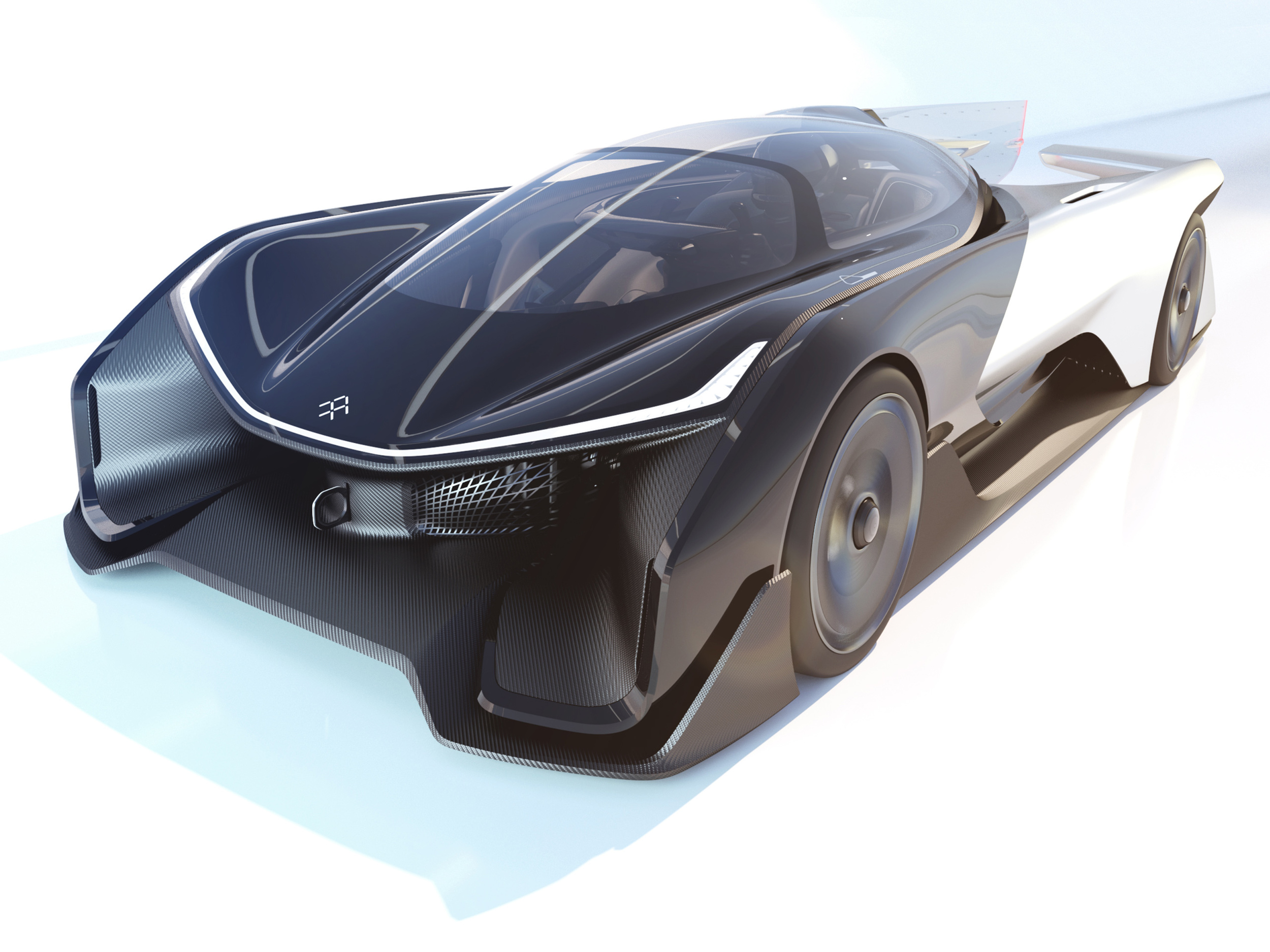
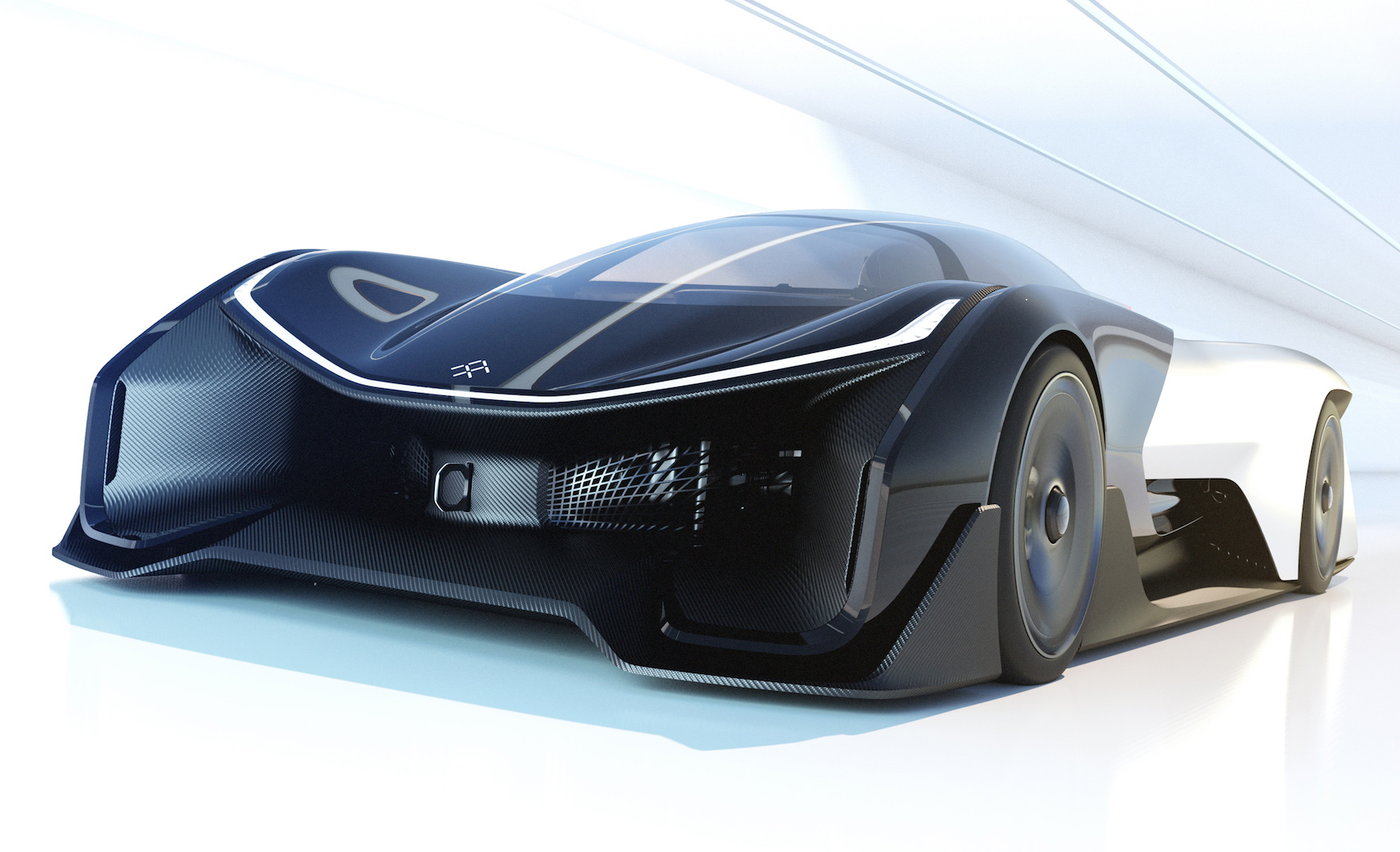
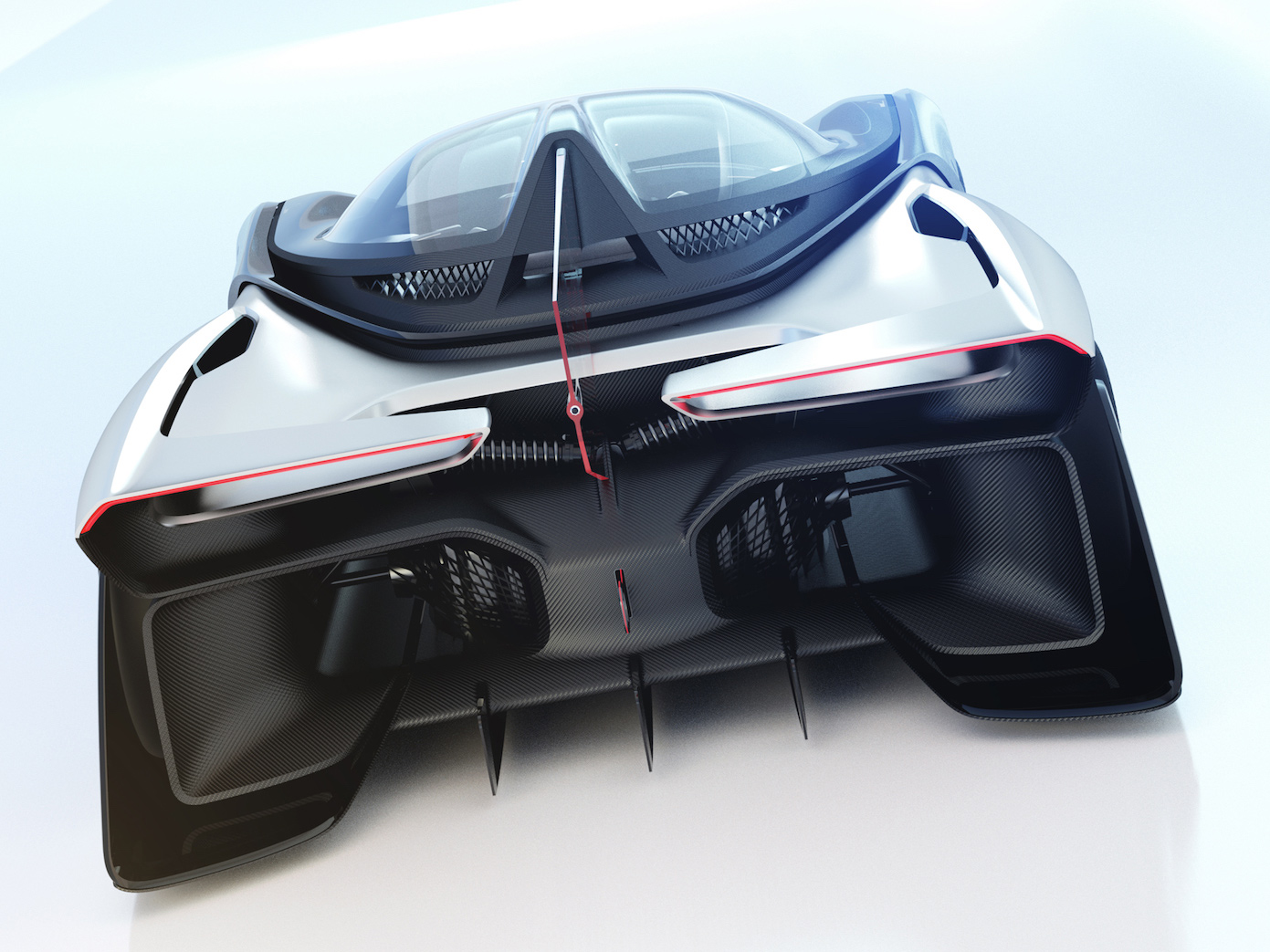
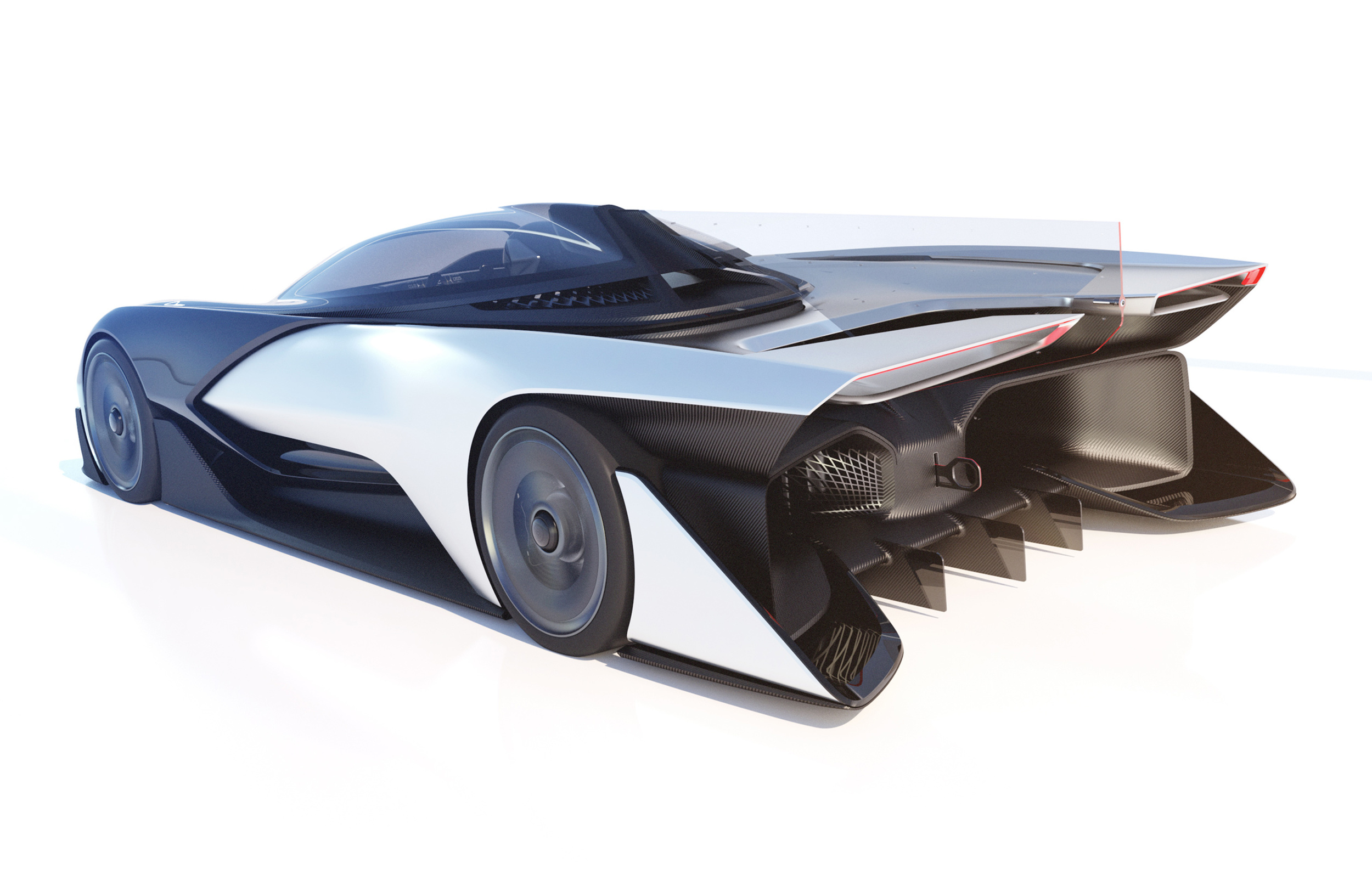
Faraday Future unveils FFZERO1 Concept at CES

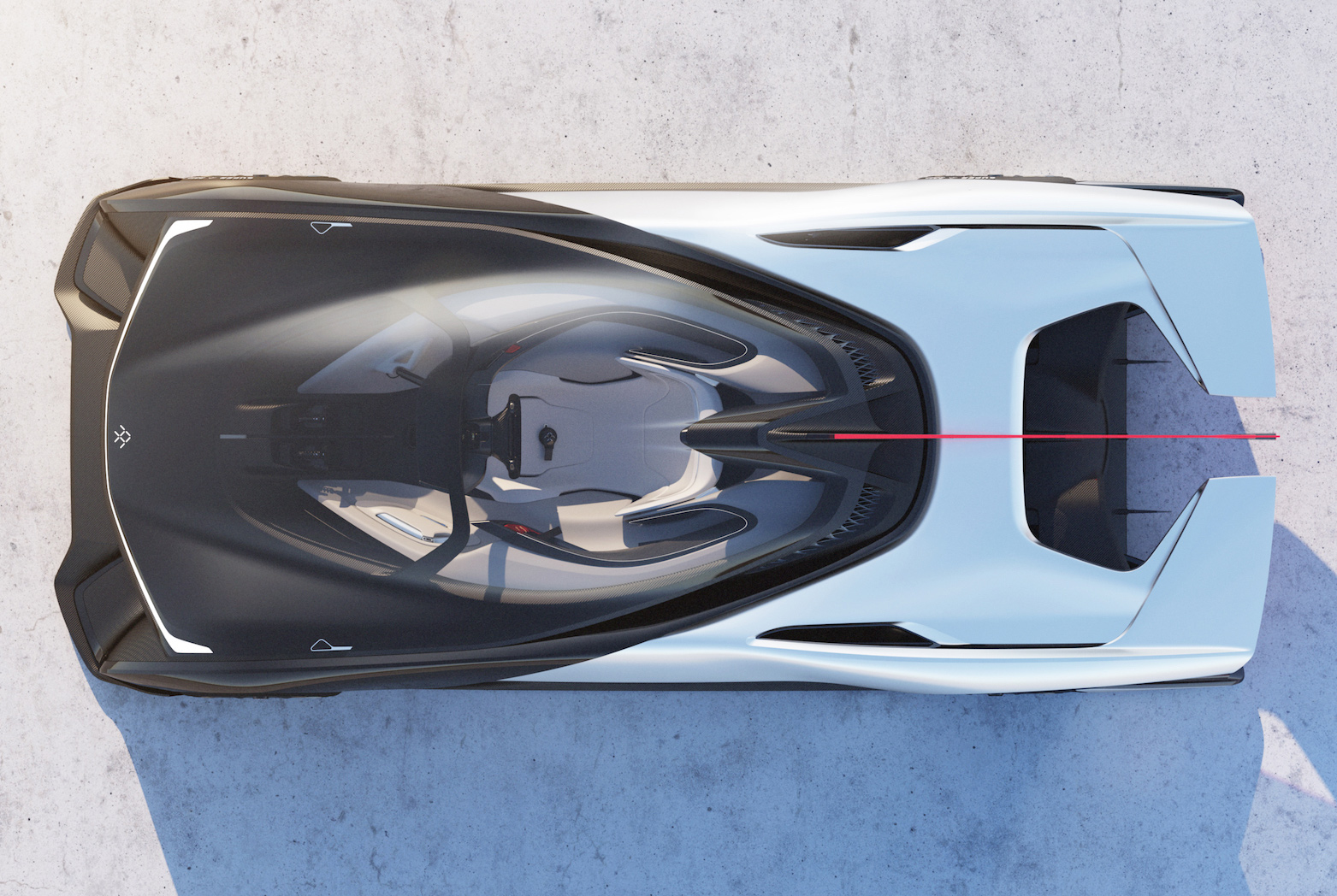
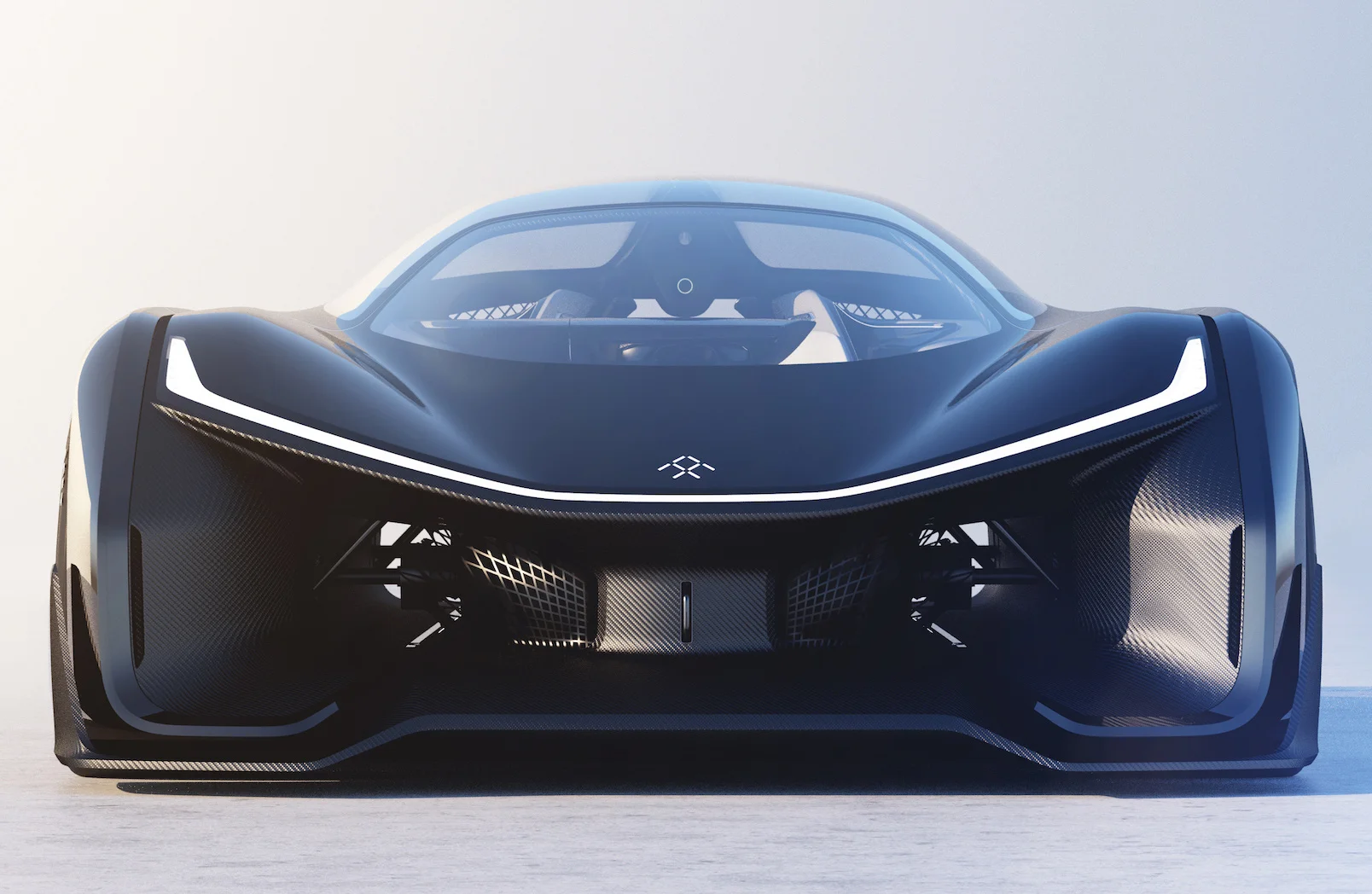
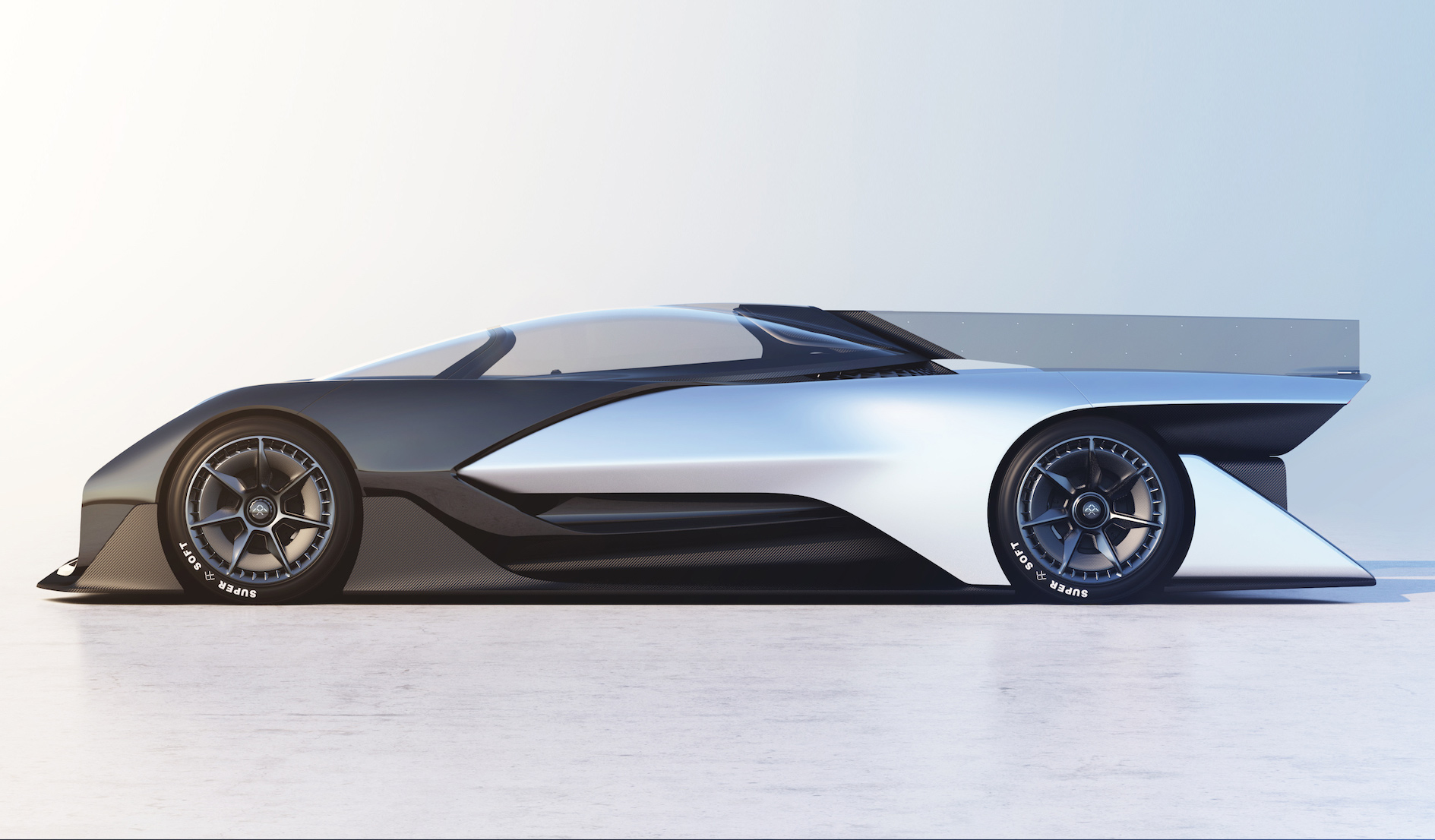
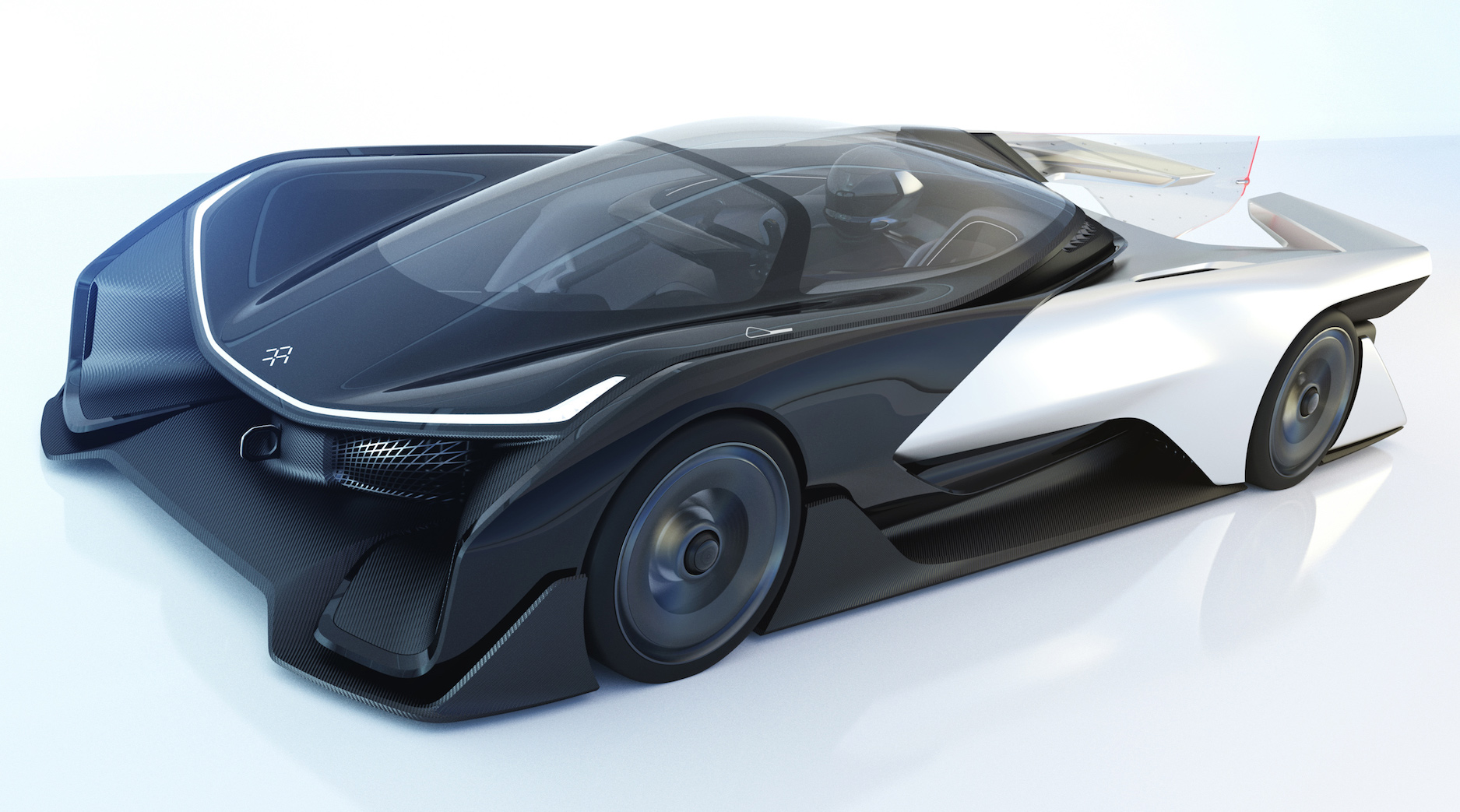
Automotive newcomer, Faraday Future (FF), has introduced its plan to rethink mobility, unveiling the FFZERO1 Concept, which is making its public debut at the Consumer Electronics Show (CES) in Las Vegas.

The company’s first ever concept is a high performance electric vehicle built upon FF’s Variable Platform Architecture (VPA), a modular engineering system optimised for electric vehicles, on which all future FF production vehicles will be based. 

The VPA is designed to minimise production costs, deliver quality and safety, increase speed to market, and support a range of different vehicle types and sizes.  

The high performance FFZERO1 Concept was applied to the VPA in order to maximise the platform’s potential and showcase its flexibility. 

It features adaptive personalisation, seamless transfer of custom vehicle configurations, access to live images and real time data visualisation. The smartphone has been directly integrated into the steering column, enabling it to serve as the interface between the vehicle and the driver in – and outside – of the car. 

The FFZERO1 Concept could be fully autonomous, meeting its driver at the track and perhaps taking a few perfect laps on its own to compare with, and improve upon, its driver’s performance. 

The interior, primarily white with a carbon fibre finish, features a NASA-inspired single-seat configuration, offering a comfortable, weightless body position, says FF, holding the driver at a perfect 45-degree angle, thereby helping to promote circulation. 

The propeller-shaped, asymmetric instrument panel is a theme that will be incorporated into the future FF design DNA. It runs seamlessly into a Halo Safety System with integrated head and neck support, oxygen, and water supply fed to the driver through a prototype helmet. The system could also gather biometric data about its driver. 

Utilising lightweight materials and composites on the VPA platform, the FF design team experimented with new driver-focused proportions, pushing the canopy forward for a perfectly aerodynamic teardrop profile. 

“The FFZERO1 Concept is an amplified version of the design and engineering philosophies informing FF’s forthcoming production vehicles,” said Richard Kim, head of design, Faraday Future. “This project liberated our designers and inspired new approaches for vehicle forms, proportions and packaging that we can apply to our upcoming production models.” 

Powered by four motors, one at each wheel, the FFZERO1 is built for the track. If developed for limited production, it will have more than 1000 horsepower and will accelerate from zero to 60 in under three seconds, with a top speed in excess of 200 miles per hour. 

FF has also announced a strategic cooperation with global technology brand, Letv. The two companies will build advanced electric vehicles by bringing together resources from four domains: technology, automotive, internet and cloud, and entertainment content. 

Headquartered in California, the FF team is composed of experts in automotive, aerospace and technology fields who believe the future mobility experience should integrate seamlessly to the connected age. 

The company plans to invest 1 billion US Dollars in the creation of a manufacturing facility in North Las Vegas. The company is set to break ground on this phase one investment in the next few weeks, and ultimately employ 4,500 people.

Motorshow, News, Quirky, Sports Car

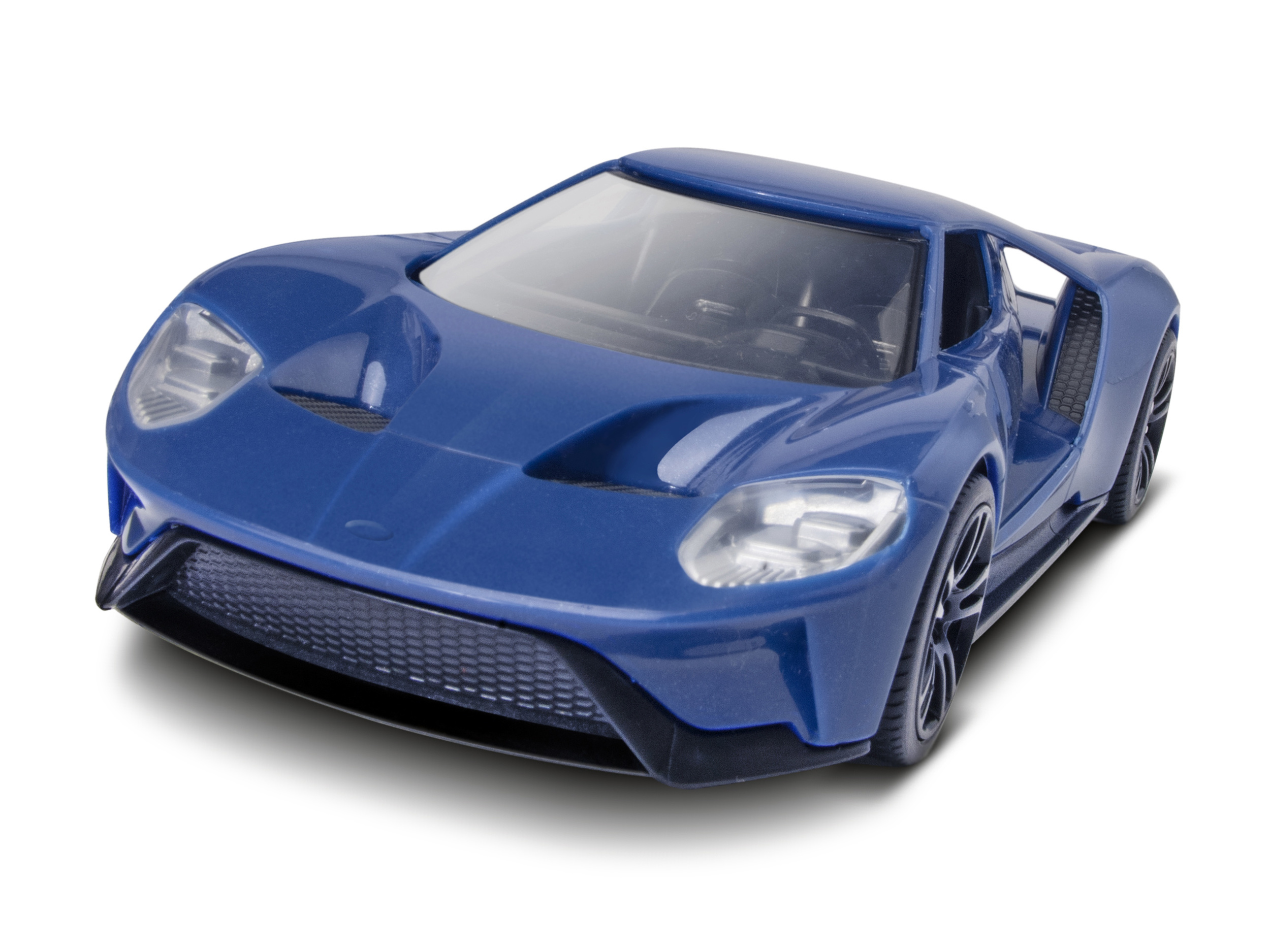
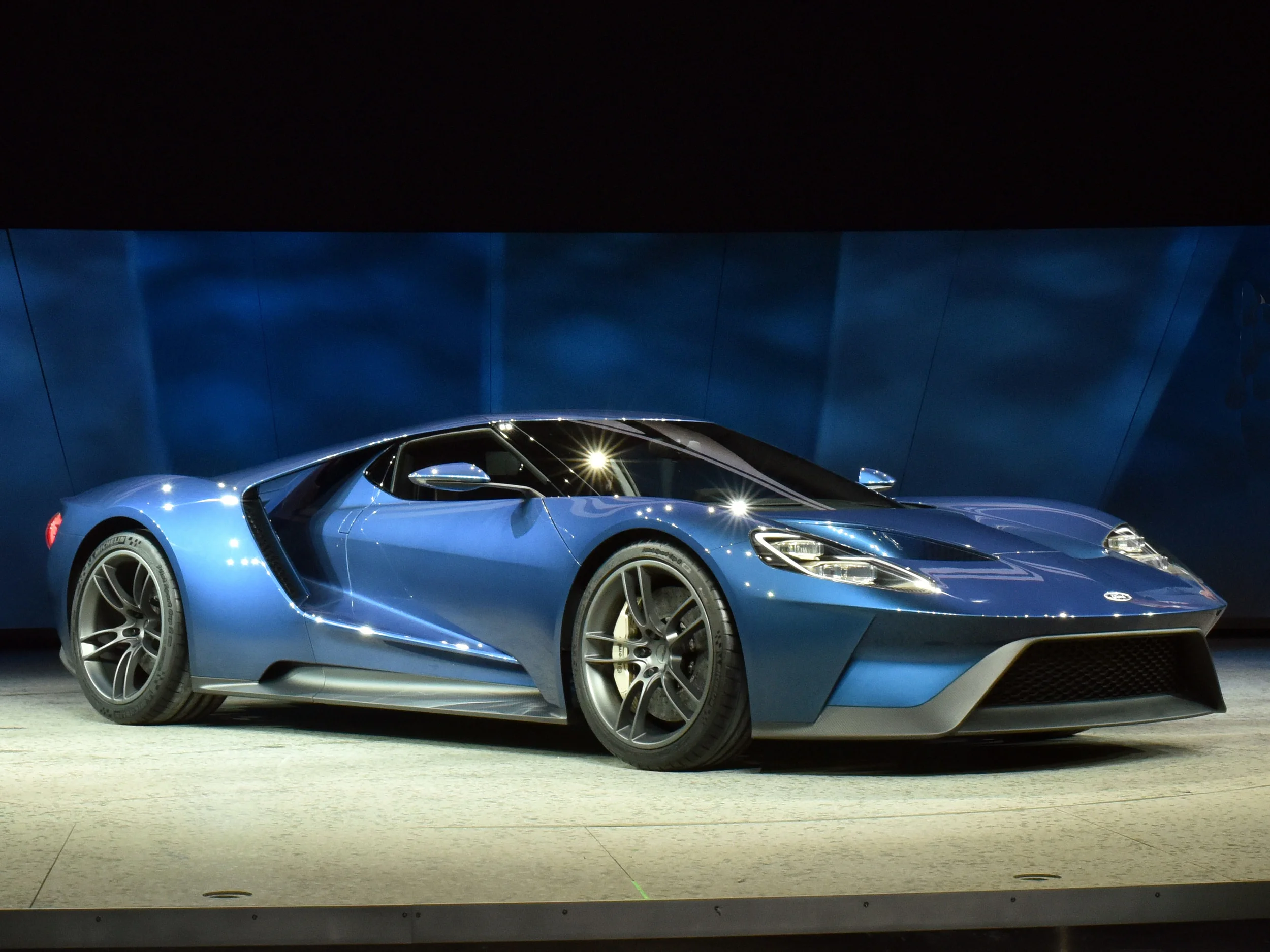
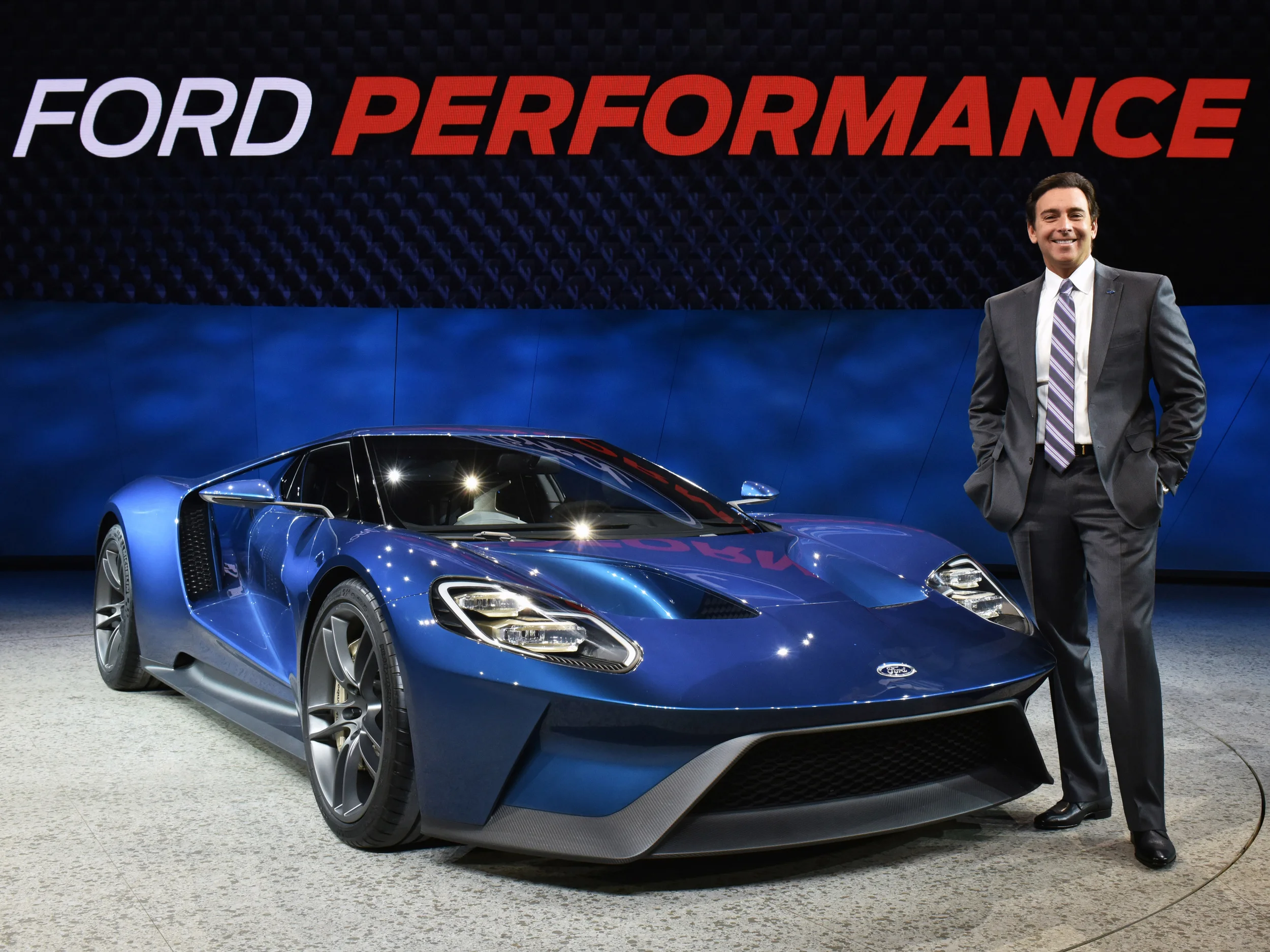
Revell Ford GT snap kits up for grabs at Detroit

Ford GT snap kits will be available to purchase through online stores and retailers starting in April

Kids can get their very first Ford GT when they stop by the Ford stand at the Detroit Auto Show in January. 

Ford is giving away Revell-built Ford GT model snap kits and will introduce a retail line in April. 

The auto show kit includes 14 pieces for easy assembly in just a few minutes, and will feature a unique auto show stamp on the bottom to signify the special edition. The retail model is more detailed; it has 28 pieces, takes 10 to 15 minutes to build, and will be widely available to purchase for $14.99.

“Our annual Revell Make ‘n Take model kit program has become a fun-filled auto show tradition,” said Mark Bentley, Ford Licensing manager. “Letting kids build their own Ford GT is a great way to introduce them to the Ford brand and create new enthusiasts.”

Ford has worked with Illinois-based Revell to build snap kits for motor shows and for retail sale since 2013. The licensing agreement started with Mustang, followed by a Raptor version. 

“We’ve always enjoyed building Ford products,” said Brian Eble, Revell’s Vice President of Marketing. “Ford’s iconic designs make them a great brand to replicate. From first time model builders to master builders; Ford products continue to be one of the most sought after subject matter for scale plastic model kits.”

Concept Car, News, Motorshow, Sports Car, Technology

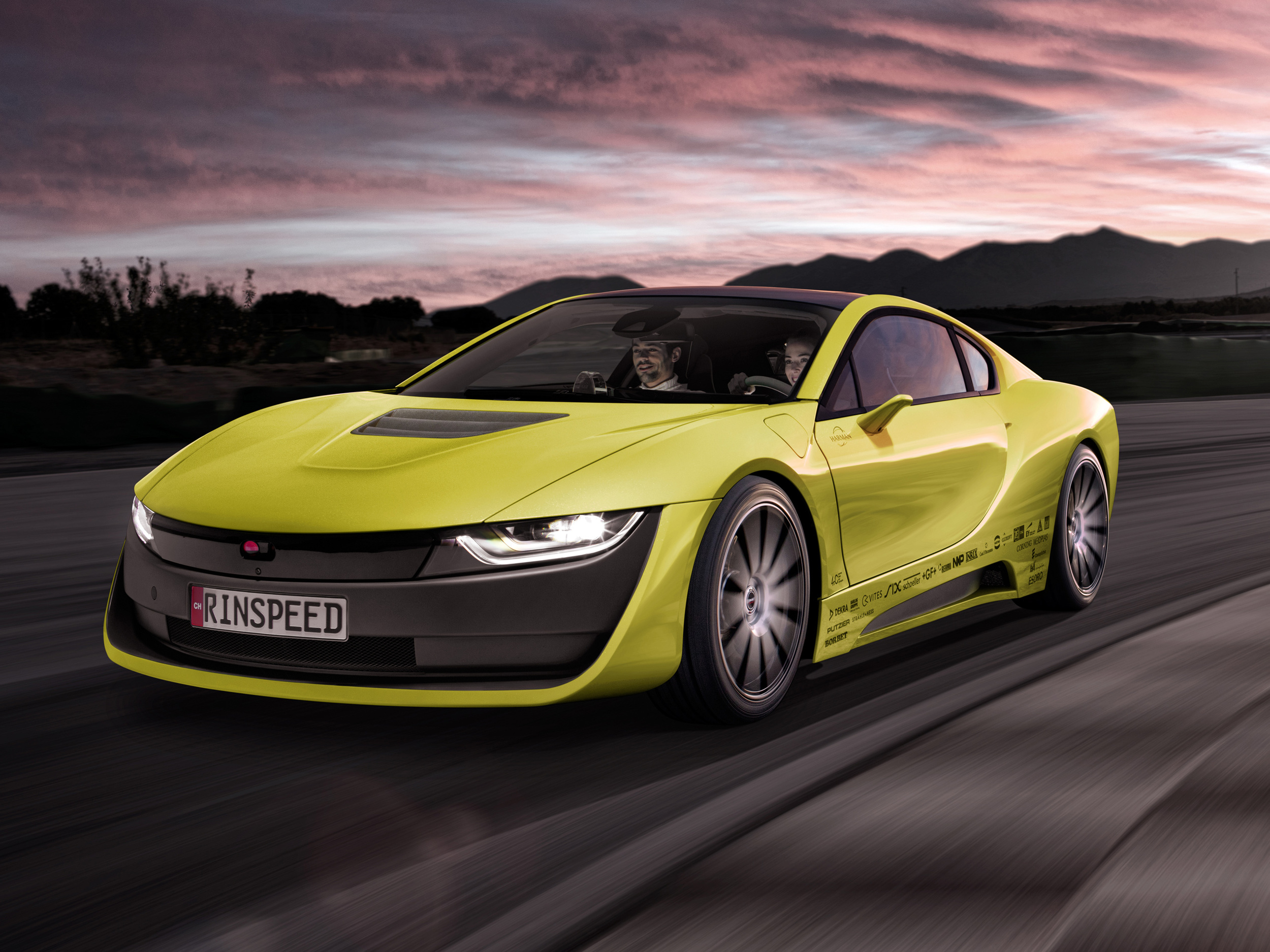
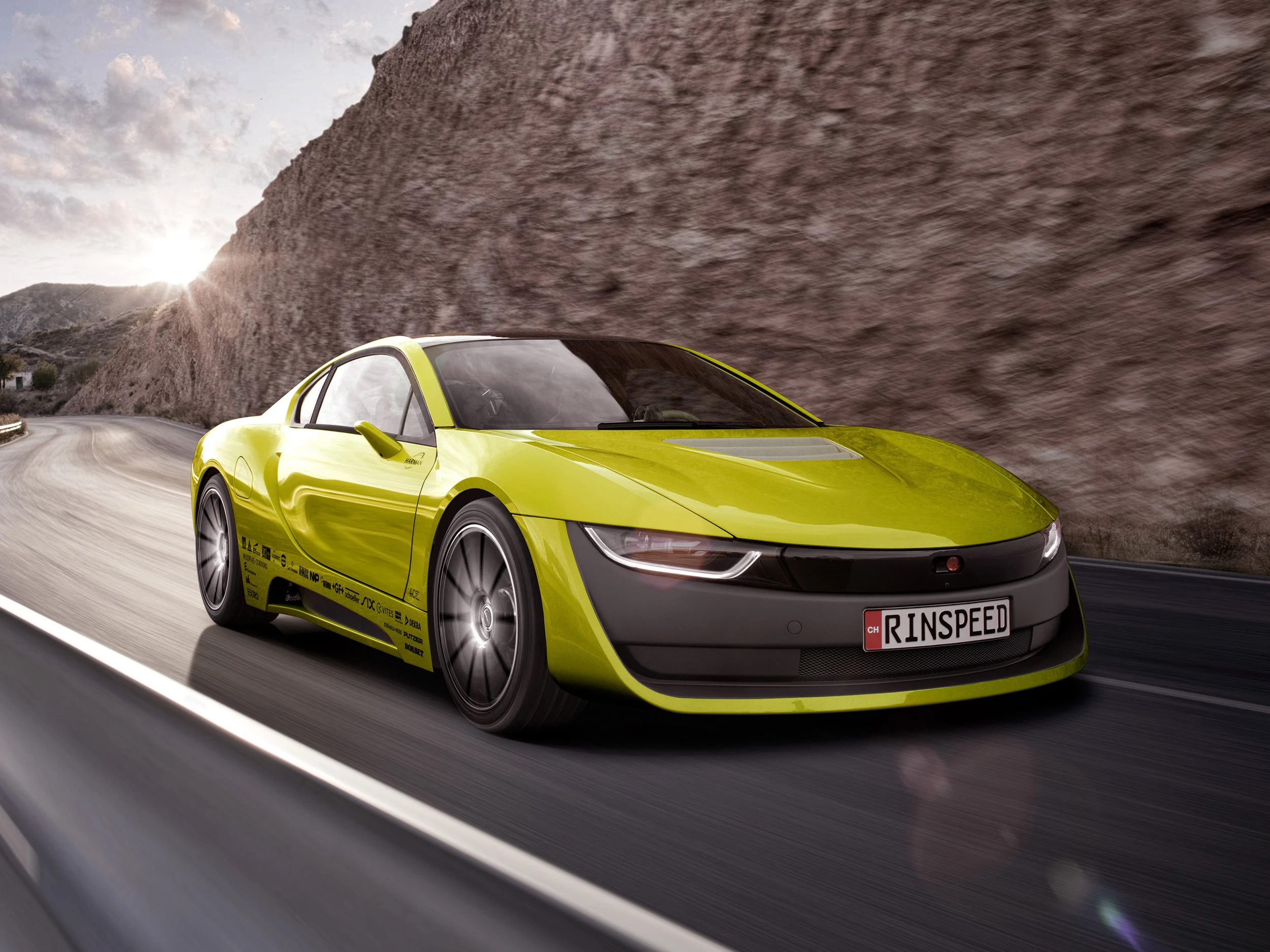
Rinspeed to debut self-driving Etos at CES

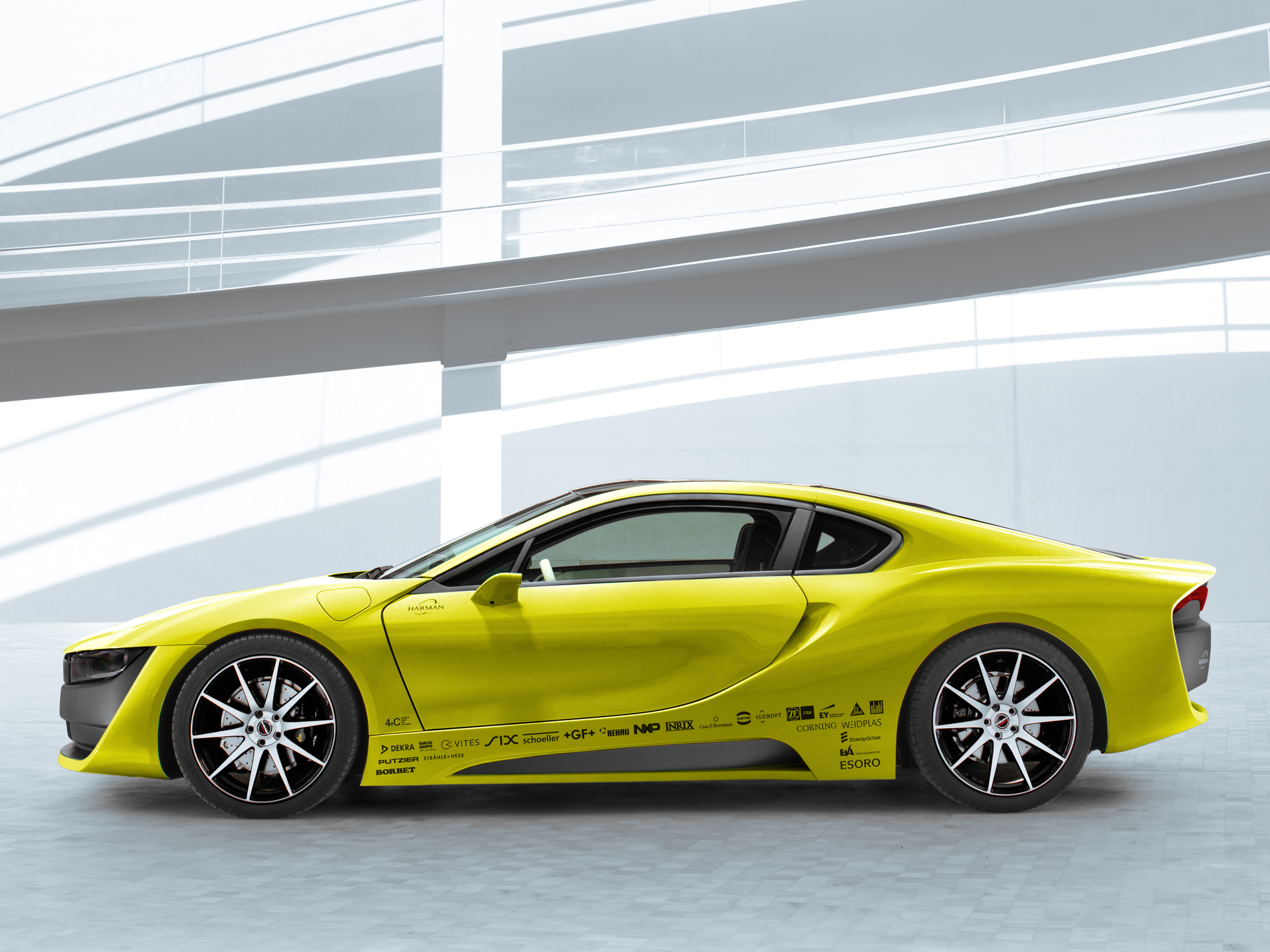
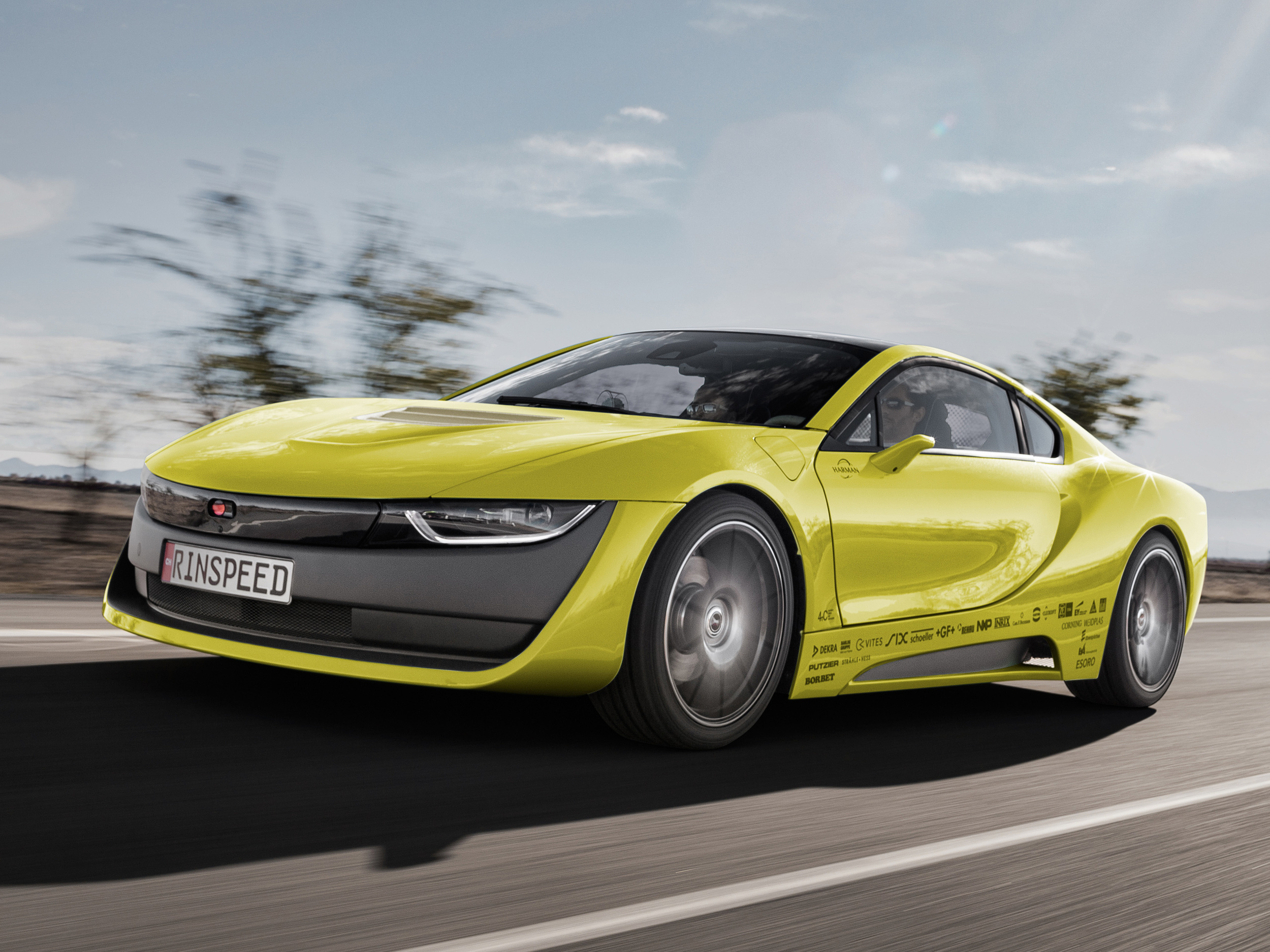
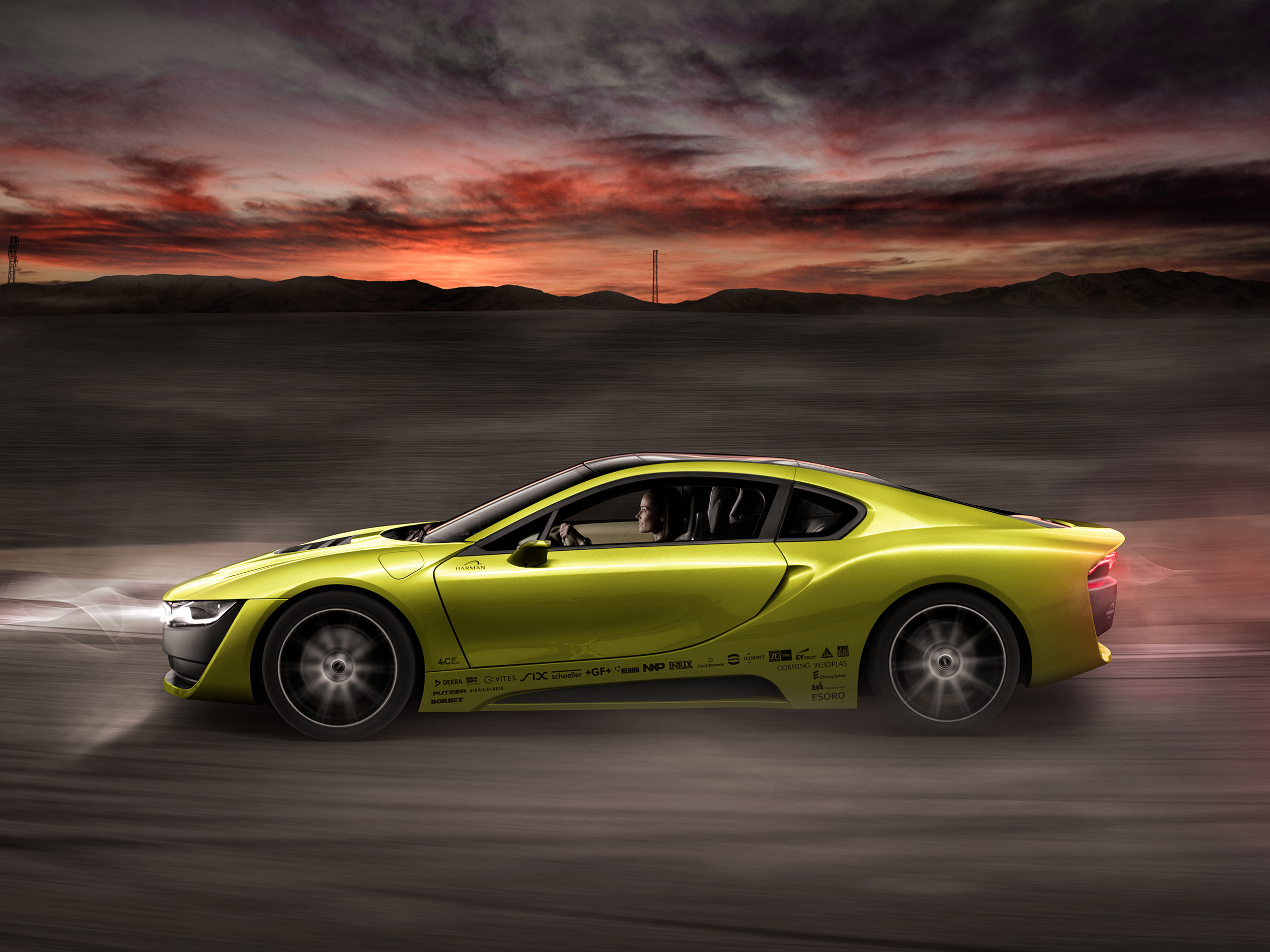
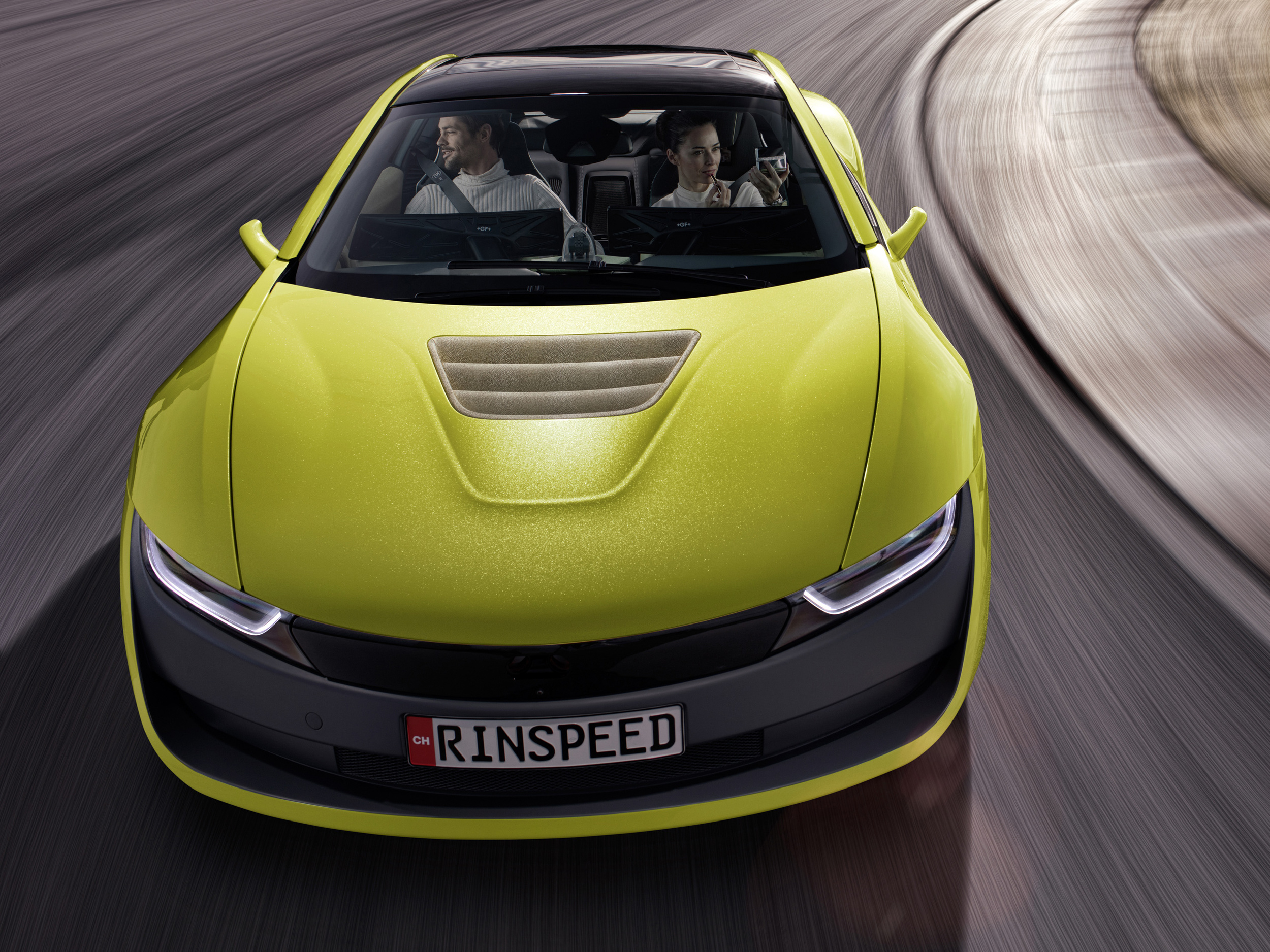
For the first time ever, Rinspeed is to debut a concept car outside of its Swiss homeland, choosing the Consumer Electronics Show (CES) in Las Vegas for the world premiere of its new autonomous Etos.

Rinspeed owner, Frank M. Rinderknecht, says: “The digital world will provide the major and above all the disruptive innovations in automotive engineering. That is why nowadays all major car manufacturers and suppliers are present at the CES Consumer Electronics Show.” 

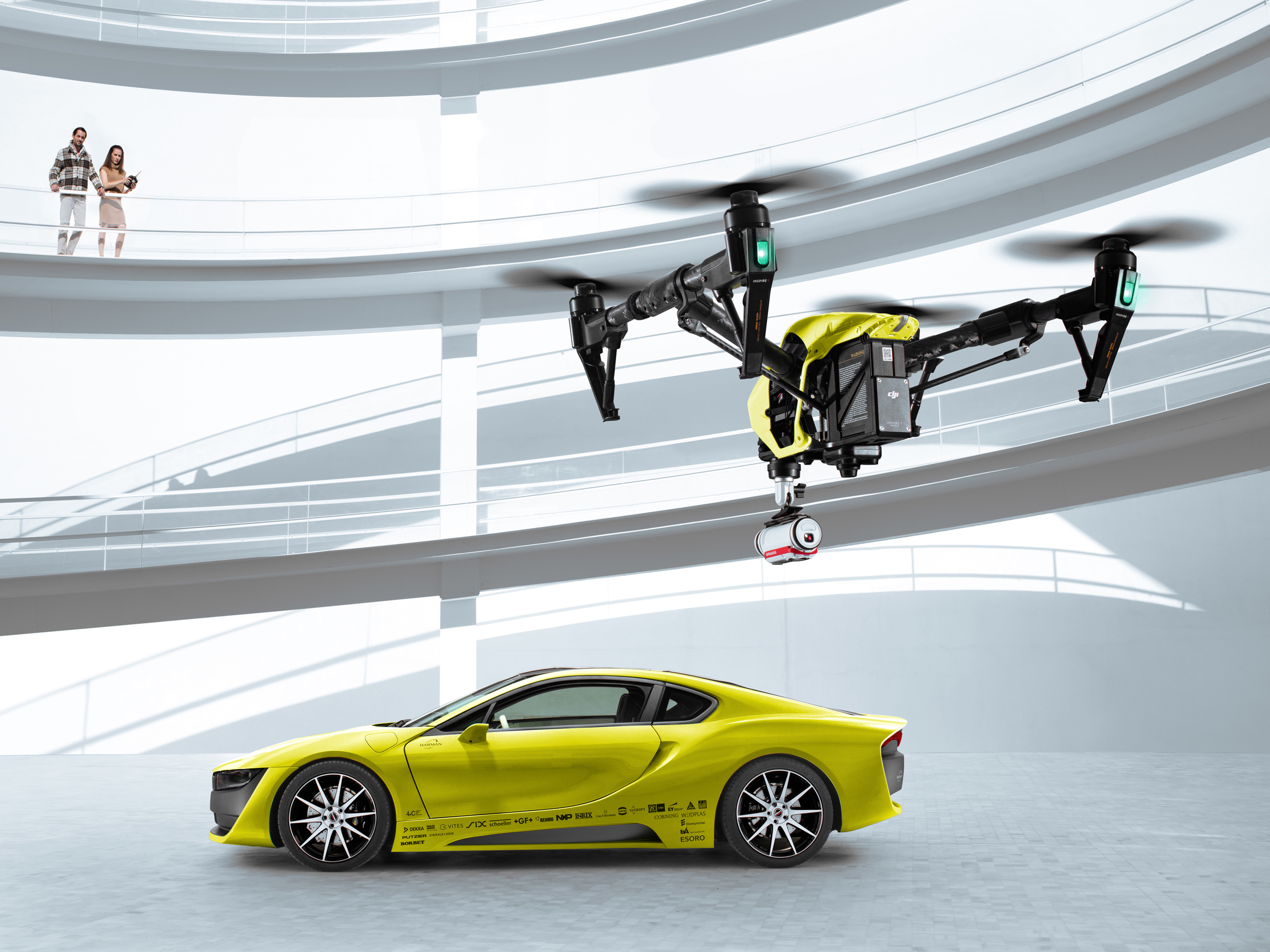
Based on BMW i8 underpinnings with design by the specialist team at 4erC, the Etos is described as a sustainable but also a fast racer.

The coupe bodywork utilises lightweight materials with an aluminum front structure bonded to a carbon fibre passenger cell, topped off with smartphone-style Gorilla glass for the roof.

The Etos is fitted with an on-board drone complete with landing platform in the rear (also made with Gorilla glass), fitted with 12,000 individually controlled LEDs which can transform it into an electronic message board or a visual dancefloor. 

The drone itself can provide some very useful services, says Rinspeed, like picking up a bouquet of flowers ordered on the way home or shooting a selfie of your drive and streaming it live to your friends. 

The technical highlight in the interior is the folding and retracting steering wheel from ZF TRW, which disappears into the dashboard in a few seconds, creating lots of space in front of the driver who can then read a book in comfort or work in a more relaxed atmosphere. 

An intelligent infotainment experience, provided by Harman Connected Car technologies, gets to know the appointments, wishes and needs of the occupants and then proactively offers up tailored selection options accordingly.

This reduces the number of manual entries required but when necessary, the system responds to voice commands, gestures, touch input, controller or the push of a button. 

A total of eight HD exterior cameras provide 180-degree panoramic views in front of the vehicle and behind, acting as virtual exterior mirrors with an expanded field of vision and no blind spots. 

The Rinspeed Etos will make its global debut at the CES, from 5-8 January, 2016, as part of the HARMAN event in the Muse Hall of the Hard Rock Hotel in Las Vegas.

Its European premiere will follow at the Geneva Motor Show in March. 
Events, Motorshow, News

Audi to present latest tech at CES

Audi set to attend world's largest electronics trade show for the sixth time

Audi is set to present its latest technologies and models at the International Consumer Electronics Show (CES) in Las Vegas next month. 
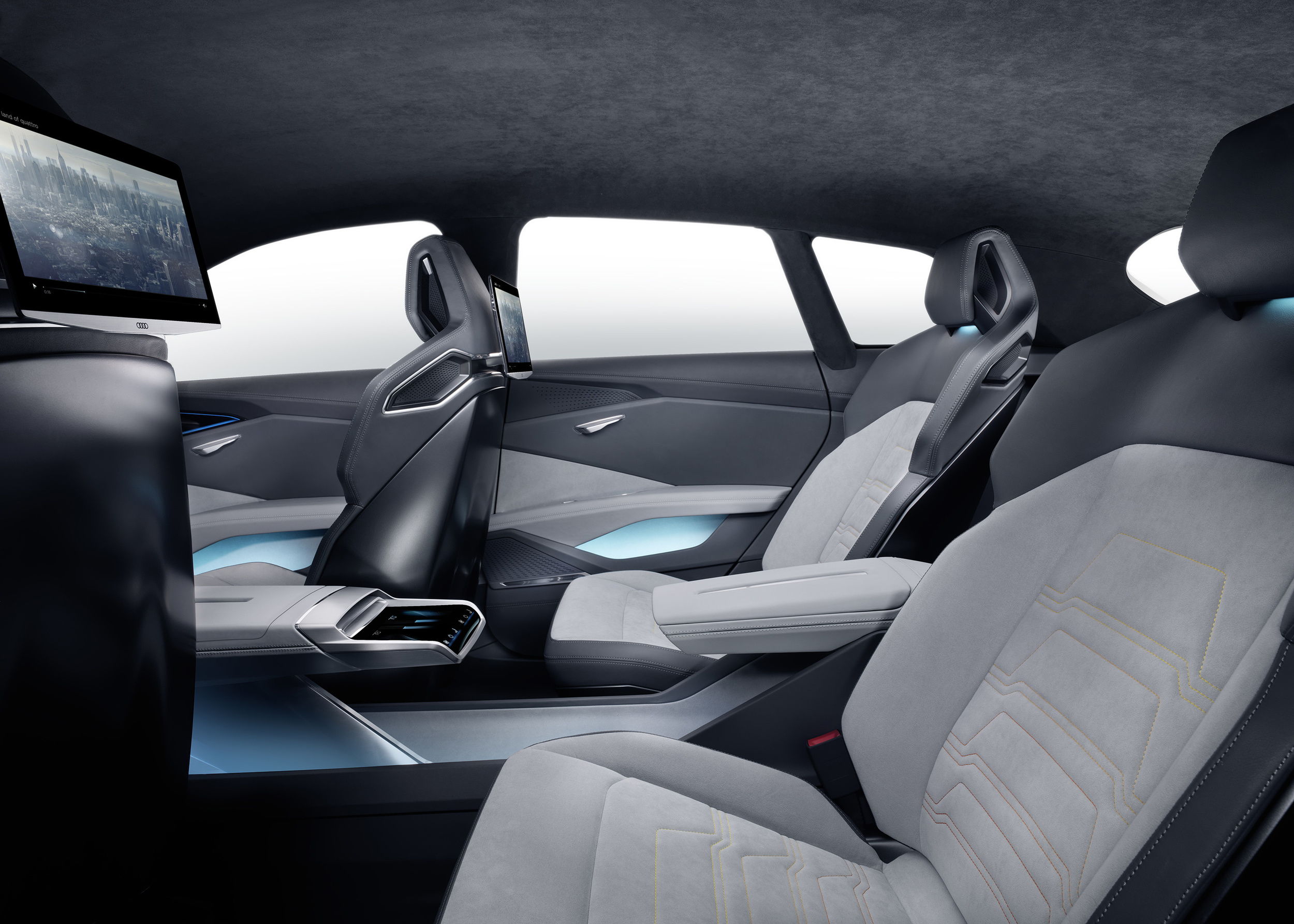
Once again, the press conference on the first day of the show will be followed by the Audi Tech Talk, at which technology experts will be available to answer questions.
At the press conference, Ricky Hudi, Head of Development Electrics/Electronics, and Scott Keogh, President of Audi of America, will address the latest trends, technologies and products in the areas of infotainment and Audi connect, controls and displays as well as electrification and lighting technology. 

With a concept car and numerous technology exhibits, Audi says it will be offering an outlook on the automotive future, which will be influenced more than ever by the electronics field.

At the Audi Tech Talk, which is open to the public, technology experts will offer an in-depth look at electronics development and will be available to answer questions from journalists and show visitors.

The world’s largest electronics trade show is highly significant for Audi. In 2011, it was the first carmaker to make an appearance at CES with its own exhibit space.

CES is being held in Las Vegas from 6-8 January, 2016.

Technology, Motorshow, Events, News

Toyota to preview new mapping technology at CES

Toyota’s new high-precision map generation system to support the safe implementation of automated driving, is set to go on display at CES (Consumer Electronics Show) in January.

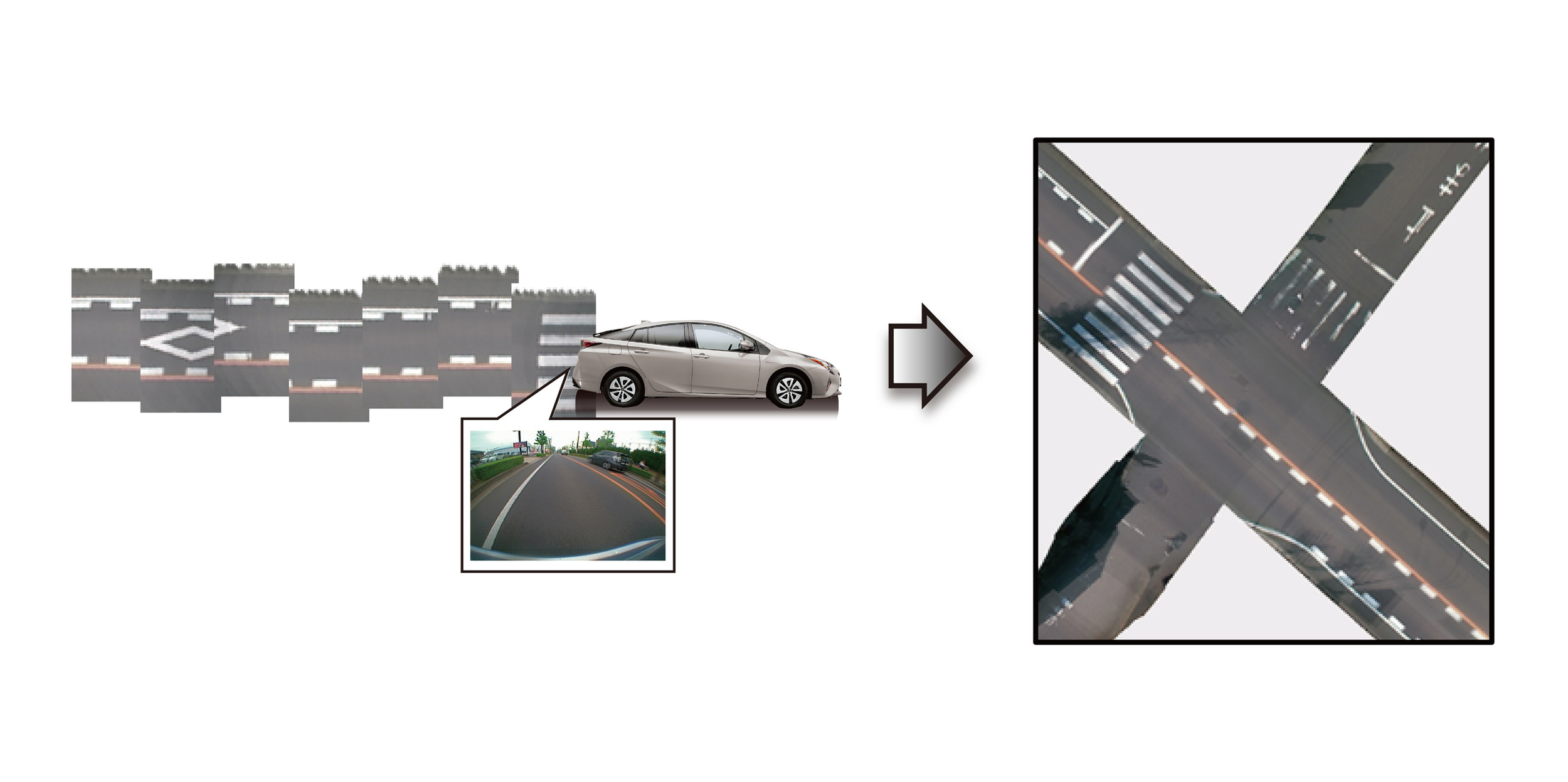
The new system will use data from on-board cameras and GPS devices installed in production vehicles. Road images and vehicle positional information is sent to data centres, where it is automatically pieced together, corrected and updated to generate high precision road maps that cover a wide area.

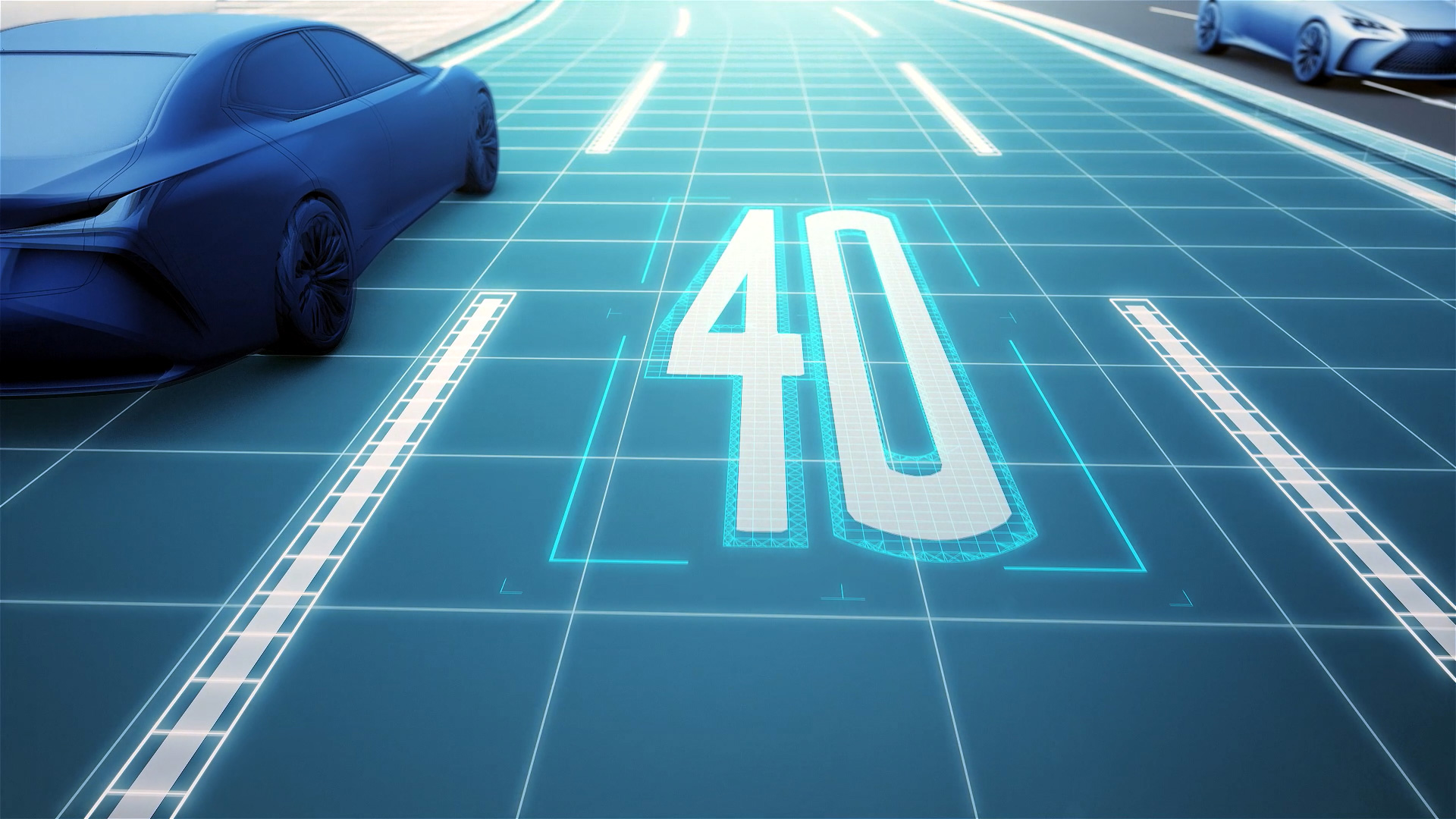
An understanding of road layouts and traffic rules (including speed limits and various road signs) is essential for the successful implementation of automated driving technologies. Additionally, high precision measurement of positional information requires the collection of information on dividing lines, kerbs, and other road characteristics.

Until now, map data for automated driving purposes has been generated using specially-built vehicles equipped with three-dimensional laser scanners. These vehicles are driven through urban areas and on highways, and data is collected and manually edited to incorporate information such as dividing lines and road signs. Due to the infrequent nature of data collection, maps generated in this manner are seldom updated, limiting their usefulness and they are also relatively costly to maintain. 

Toyota's newly developed system uses automated cloud-based spatial information generation technology (developed by Toyota Central R&D Labs) to generate high precision road image data from the databanks and GPS devices of designated user vehicles. While such a system has a higher probability of error than one using three-dimensional laser scanners, positional errors can be mitigated using image matching technologies that integrate and correct road image data collected from multiple vehicles, as well as high precision trajectory estimation technologies. This restricts the system's margin of error to a maximum of 5 cm on straight roads. Utilising production vehicles and existing infrastructure to collect information, this data can be updated in real time. Furthermore, the system can be implemented and scaled up at a relatively low cost.

To support the spread of automated driving technologies, Toyota plans to include this system as a core element in automated driving vehicles that will be made available in production vehicles by around 2020. While initial use of the system is expected to be limited to expressways, future development goals include expanding functionality to cover ordinary roads and assist in hazard avoidance.

Toyota will also seek to collaborate with mapmakers to encourage the use of high precision map data in services offered by both the public and private sectors.

CES 2016 takes place in Las Vegas, from 6-9 January.

Concept Car, Events, Motorshow, SUV, Technology

New VW concept car set for CES 2016

Volkswagen will present a completely new concept car at next month's Consumer Electronics Show, CES, in Las Vegas.

The concept is said to illustrate the major changes that the car is set to go through in the next few years, marking the beginning of a new era of affordable long-distance electromobility. 

VW claims that innovative features will demonstrate the benefits to the customer that it will soon be able to deliver, thanks to the increasing interconnectedness of the motor car. 

Dr Herbert Diess, Chairman of the Volkswagen Passenger Cars brand, will be the keynote speaker on the evening before the show opens its doors. The main focus of his speech will be on the latest developments in electromobility, as well as the next generation of connectivity.

Volkswagen's display will also preview the latest developments in in-car infotainment that are close to market launch, including innovations from the Golf R Touch concept car.

The CES has long been considered a barometer of the key trends in digitalisation and consumer electronics, presenting the latest products and services to more than 150,000 trade visitors every year.

CES 2016 takes place from 6-9 January in Las Vegas, USA.

Concept Car, Pick-up, Motorshow

VIDEO: Hyundai unveils Santa Cruz Concept at NAIAS

Hyundai has revealed a crossover truck concept at the Detroit Auto Show. The Santa Cruz is designed to offer more efficiency and manoeuvrability, and is powered by a 2.0-litre turbo diesel delivering 190bhp. The crossover is purposefully compact, focusing on the younger 'urban generation' who live in the city and who face tighter on street parking and  more congestion. Although the concept has four doors and seating for five, Hyundai says its overall footprint is similar to a small SUV.