

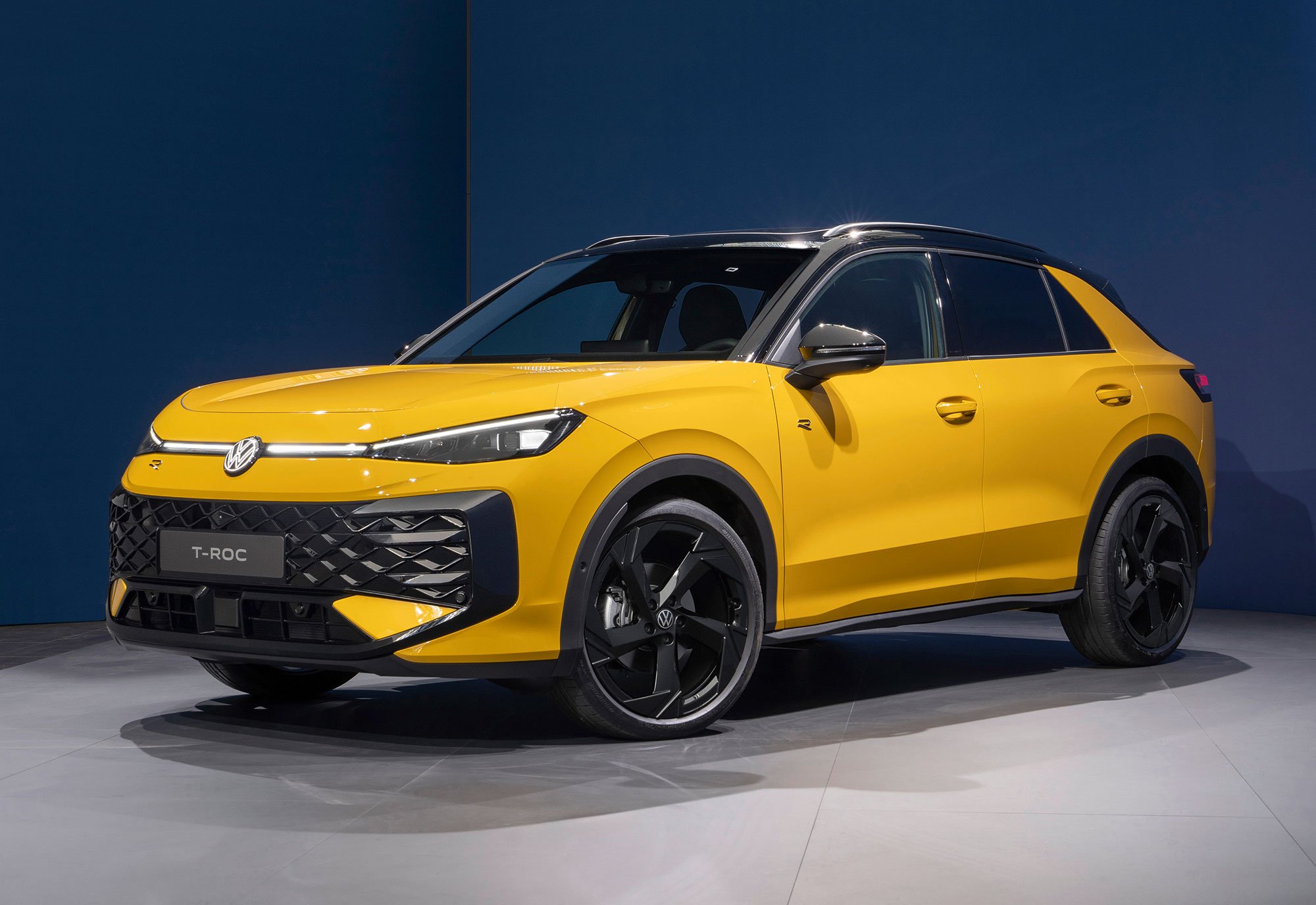
The all-new second-generation Volkswagen T-Roc represents a ground-up redesign of a model that found homes with over two million buyers worldwide since its launch.
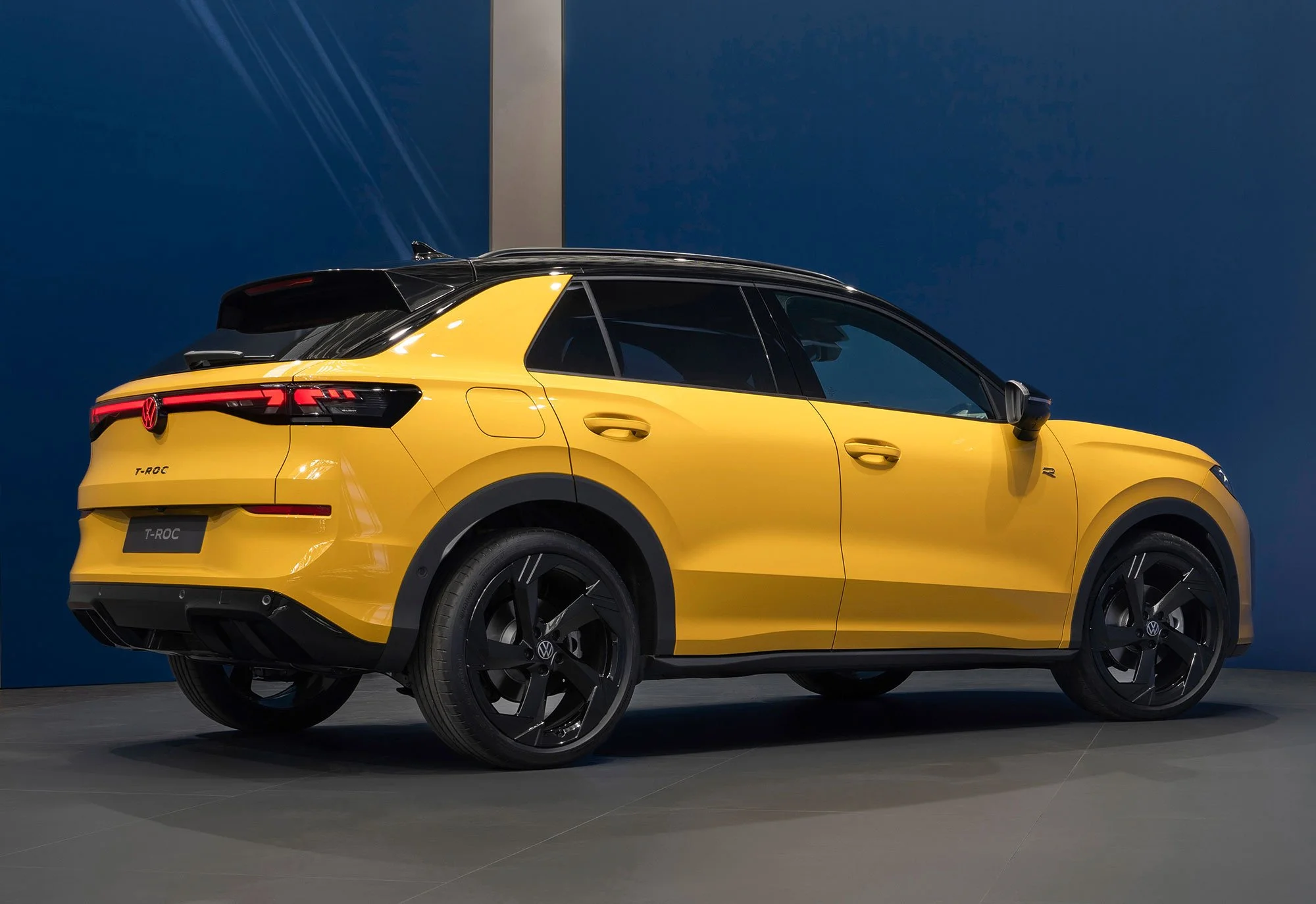
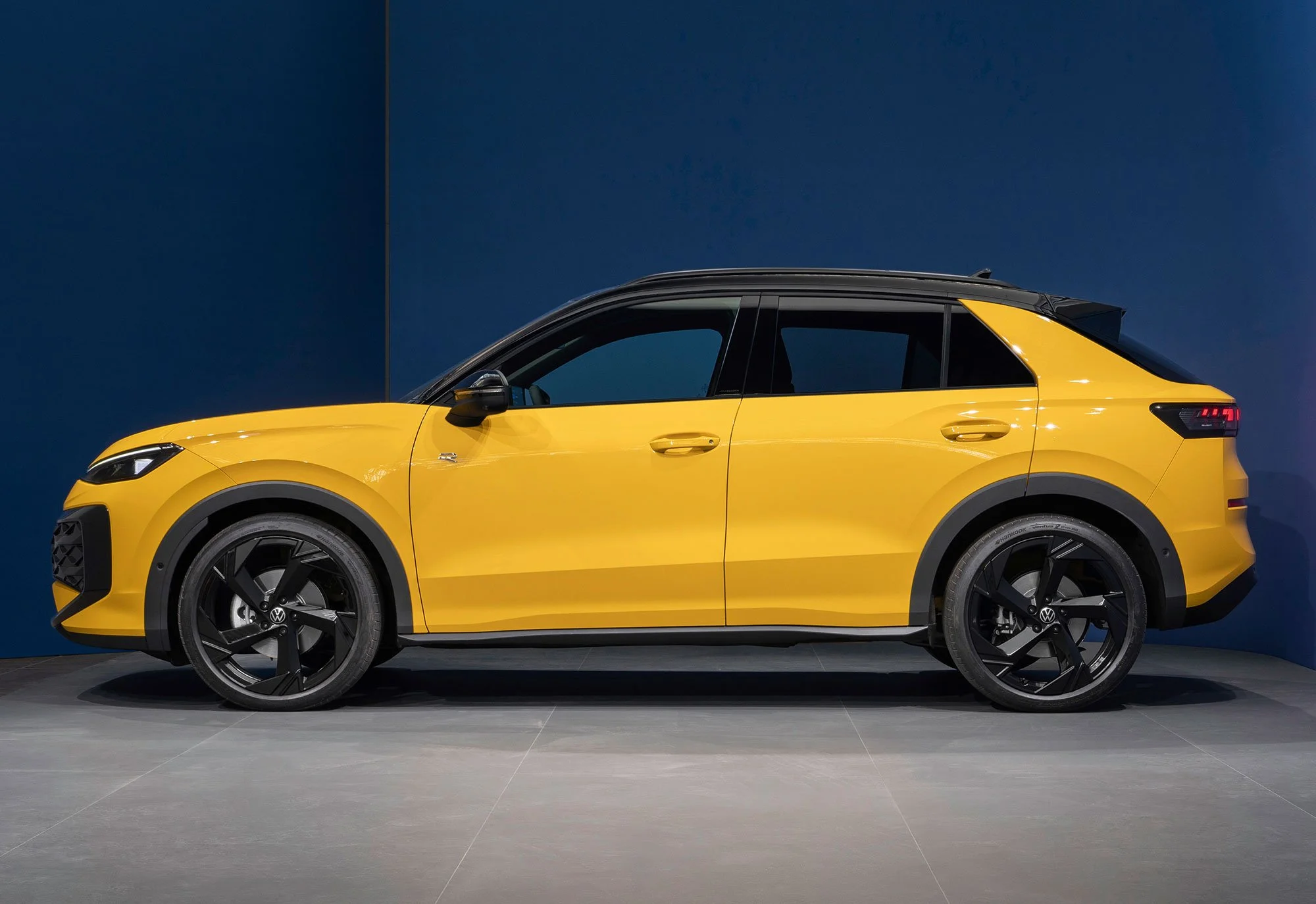
The most obvious change is the T-Roc's new proportions. At 12cm longer than its predecessor, the latest model uses its extra length to create what VW describes as, “…a more dynamic, powerful appearance while retaining the signature coupé-like rear end that helped define the original.”
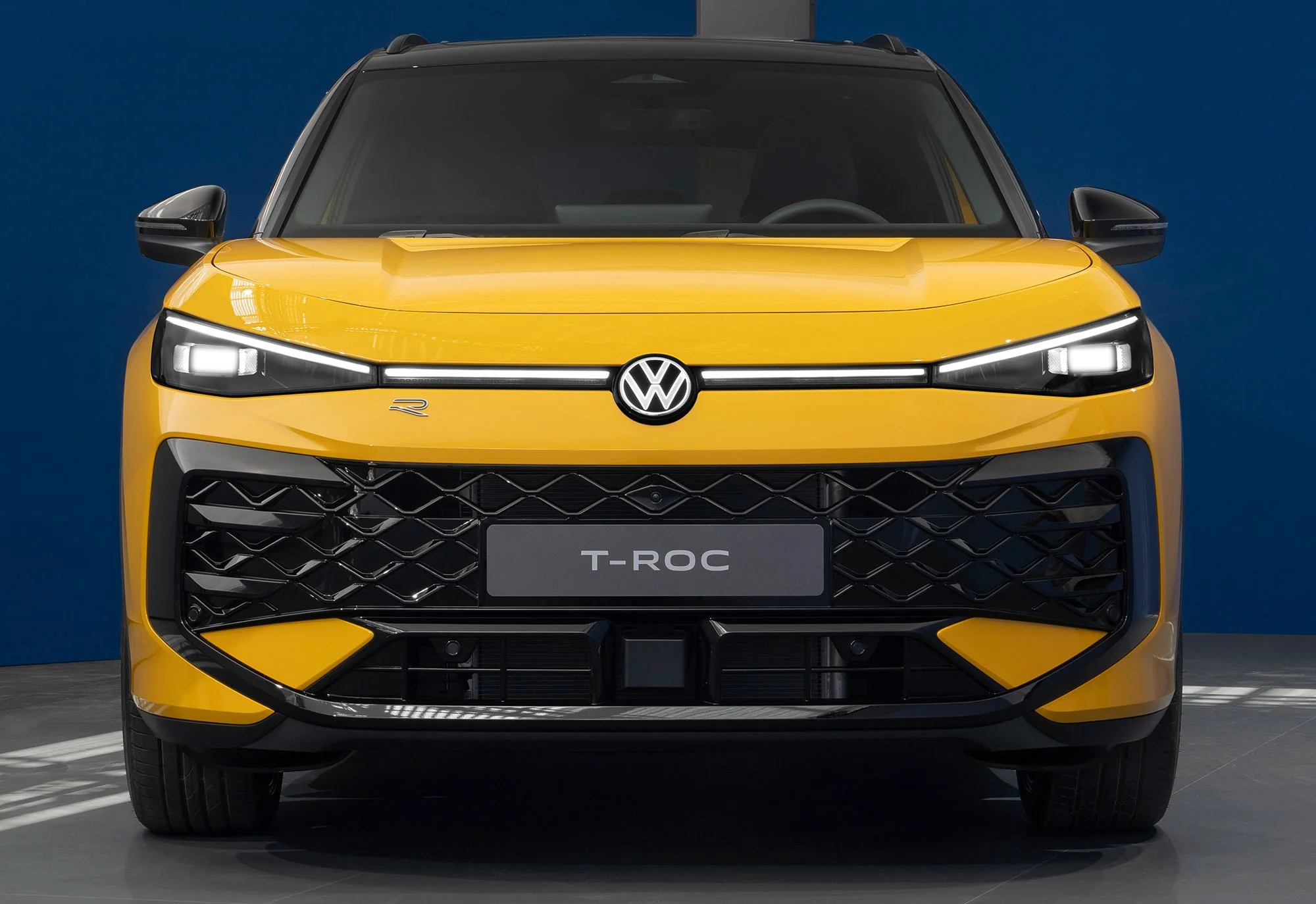
New LED headlights come as standard, with optional IQ.LIGHT matrix LEDs available that connect to the illuminated VW badge via a distinctive light strip. At the rear, a continuous LED light bar with backlit VW logo gives the T-Roc a more premium presence.
Six paint options will be available, including new colours Canary Yellow, Flamed Red, and Celestial Blue, with the option of a contrasting black roof.
Step inside and the improvements are immediately apparent. The dashboard now features soft fabric upholstery that, combined with ambient lighting, creates what VW calls a "lounge-style atmosphere" - a significant upgrade from the sometimes hard plastics of the outgoing model.
The new T-Roc borrows extensively from its larger Tiguan and Tayron siblings, including an infotainment screen measuring up to 33cm and the latest evolution of VW's driving experience control system. For the first time in this class, the T-Roc can be specified with a head-up display that projects key information directly onto the windscreen.
That extra 12cm of length translates into genuine improvements in practicality with more room for occupants while boot space increases by 30 litres to 475 litres. The top Style trim will even offer 14-way adjustable seats with massage function - luxury car territory for a compact SUV.
Perhaps the biggest change is under the bonnet. The new T-Roc will launch exclusively with hybrid powertrains, starting with two 48V mild-hybrid versions of VW's 1.5-litre eTSI engine producing either 115hp or 150hp, both paired with seven-speed dual-clutch automatic gearboxes.
Full hybrid versions will follow, along with a hot T-Roc R variant for performance fans. The decision to go hybrid-only reflects VW's push towards electrification, though the T-Roc stops short of offering a fully electric variant.
Built on VW's latest MQB evo platform, the new T-Roc benefits from technology typically reserved for larger, more expensive models. The latest Travel Assist system can now handle automatic lane changes and respond more intelligently to changing speed limits.
New Park Assist Pro uses memory function for fully automatic parking over distances up to 50 metres and can even be controlled via smartphone. An exit warning system alerts occupants to approaching traffic or cyclists before opening doors.
VW has streamlined the T-Roc's trim structure to make choosing easier. The range starts with a basic T-Roc version focused on value, moving through Life (comfort and functionality), Style (design and technology), and R-Line (sporty appearance) variants.
All versions can be fitted with a towing bracket rated for 80kg - designed specifically with heavy e-bikes in mind, reflecting changing recreational habits.
The original T-Roc quickly became VW's second best-selling SUV globally after the larger Tiguan, with around 292,000 units sold across Europe last year alone. Built at VW's Palmela plant in Portugal, it established the template for the premium compact SUV segment.
The new model faces stiff competition from rivals like the Nissan Qashqai, Peugeot 3008, and Hyundai Tucson, all of which have upped their game significantly in recent years.
UK pricing and specifications for the new T-Roc will be confirmed shortly, with first deliveries expected in November. Based on the German pricing, expect the UK market to see prices starting around £28,000 for the entry-level mild-hybrid model.